

Aircraft Carrier Power: CFS Sparc Fusion Reactor Installation 2026 Milestone
Commonwealth Fusion Systems announced at CES 2026 the installation of the first 24-ton magnet in its Sparc reactor. Backed by Nvidia and Google, CFS aims for net energy gain by 2027.
A magnet powerful enough to lift an aircraft carrier has officially been put in place. On January 6, 2026, at CES 2026, Commonwealth Fusion Systems (CFS) announced it had installed the first of 18 massive magnets in its Sparc fusion reactor. After decades of promise and delay, the race to deliver limitless clean energy has reached a tangible turning point.
CFS Sparc Fusion Reactor Installation 2026: 20 Tesla Field Strength
This D-shaped magnet, weighing 24 tons, is a critical component for the reactor's completion. When all 18 magnets are installed by the end of this summer, they'll generate a 20 tesla magnetic field—roughly 13 times stronger than a standard MRI machine. This field is essential to confine plasma burning at over 100 million degrees C. CFS CEO Bob Mumgaard noted that the assembly will proceed rapidly through the first half of this year as they prepare the device for its first turn-on in 2027.

Nvidia and Siemens Drive Digital Twin Integration
To optimize the reactor's performance, CFS is collaborating with Nvidia and Siemens to develop a digital twin of Sparc. Utilizing Nvidia Omniverse, this virtual replica allows engineers to run simulations and learn from the machine in real-time. With nearly $3 billion in funding from backers like Google and Nvidia, the company is aggressively targeting the early 2030s for its first commercial-scale power plant, Arc, to deliver fusion electrons to the grid.
Authors
Related Articles
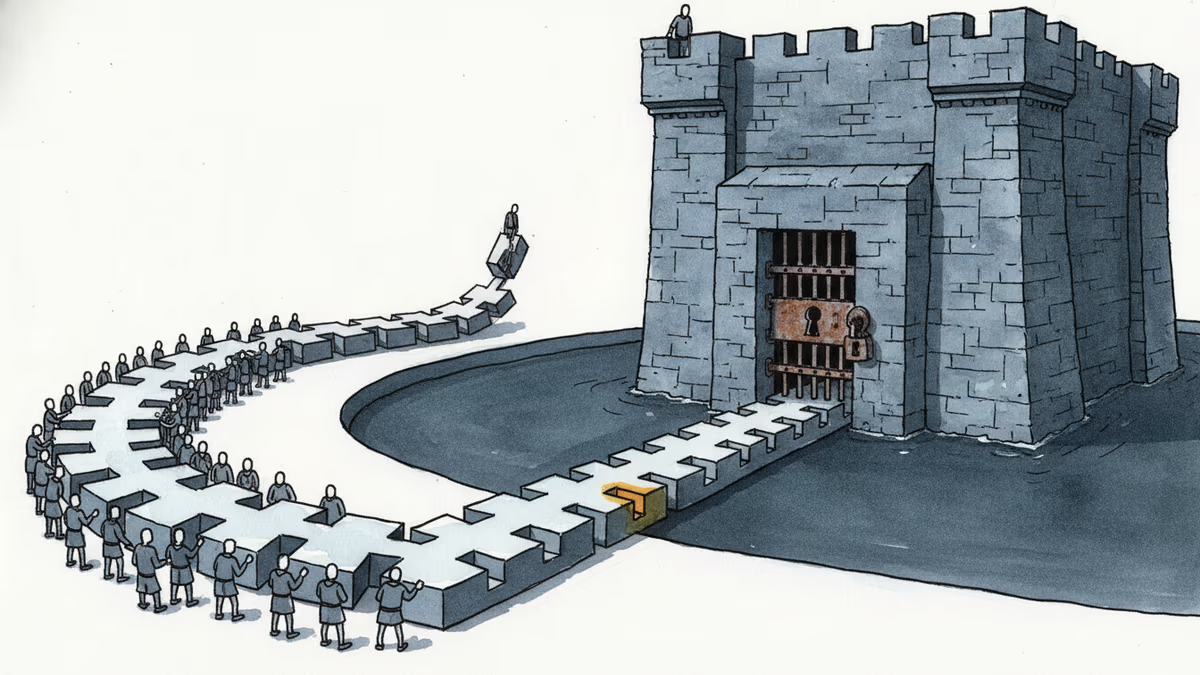
Nvidia shipped roughly a billion RISC-V cores in 2024, then announced it would run CUDA on the open standard. We break down how royalty-free instruction sets and open software stacks are trying to route around CUDA's lock-in. Part 2 of the Semiconductor Sovereignty series.
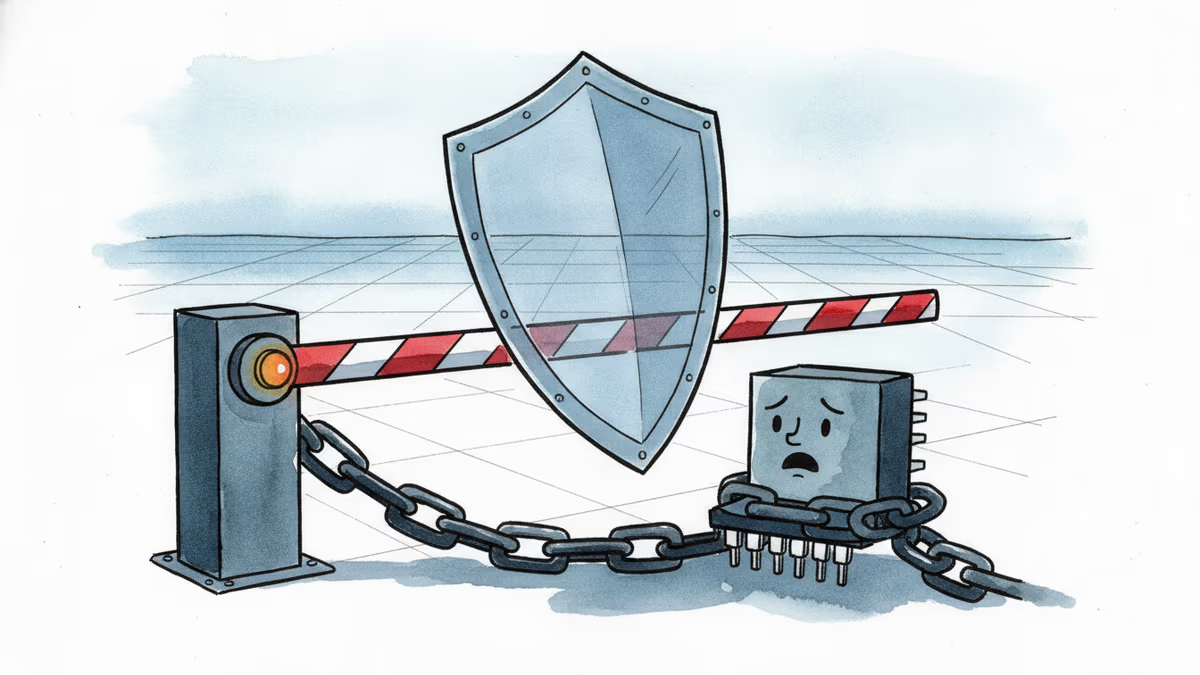
US AI-chip export controls split into three layers in the first half of 2026 — January easing, a May crackdown on circumvention, and a pending bill. Nvidia erased China from its guidance and still posted a record $81.6 billion quarter. A look at the export policy that both shields and cages it.
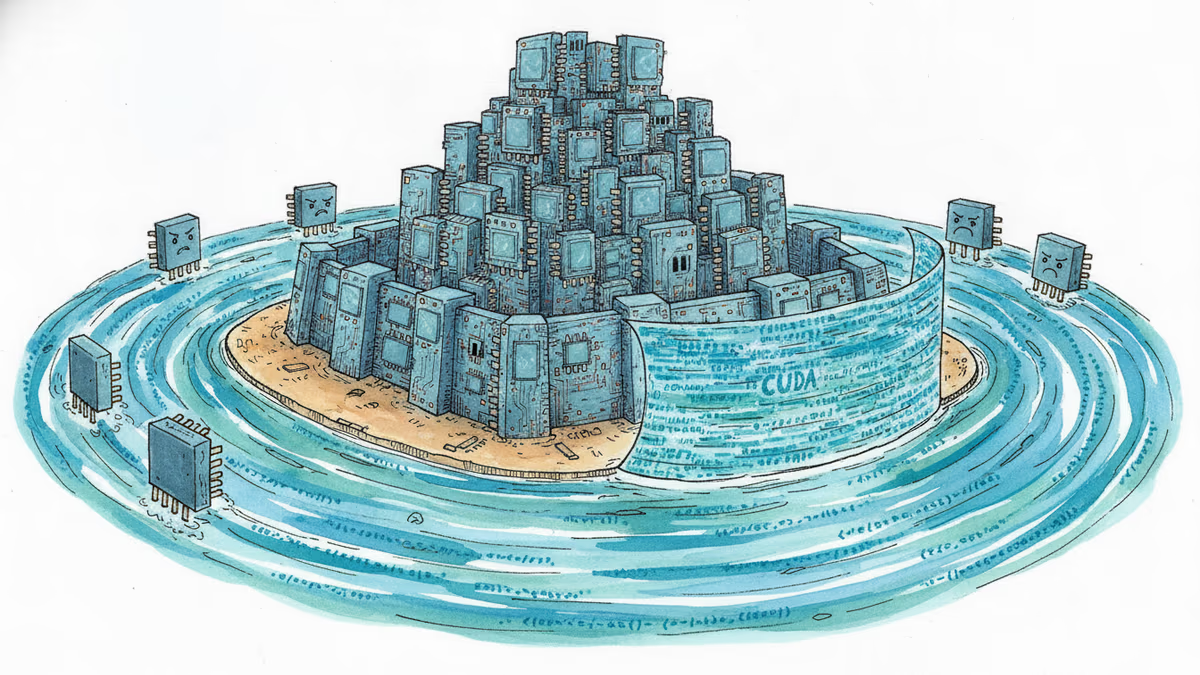
AMD's MI325X matches or beats Nvidia on memory and bandwidth — yet Nvidia's 86-92% share holds. The real moat is CUDA, 20 years in the making. Part 1 of 4.

Snowflake's new $6 billion AWS contract is about more than cloud spending. It signals a shift in AI infrastructure—away from Nvidia GPUs and toward cheaper, homegrown chips for the agent era.
Nvidia shipped roughly a billion RISC-V cores in 2024, then announced it would run CUDA on the open standard. We break down how royalty-free instruction sets and open software stacks are trying to route around CUDA's lock-in. Part 2 of the Semiconductor Sovereignty series.
US AI-chip export controls split into three layers in the first half of 2026 — January easing, a May crackdown on circumvention, and a pending bill. Nvidia erased China from its guidance and still posted a record $81.6 billion quarter. A look at the export policy that both shields and cages it.
AMD's MI325X matches or beats Nvidia on memory and bandwidth — yet Nvidia's 86-92% share holds. The real moat is CUDA, 20 years in the making. Part 1 of 4.
Snowflake's new $6 billion AWS contract is about more than cloud spending. It signals a shift in AI infrastructure—away from Nvidia GPUs and toward cheaper, homegrown chips for the agent era.
Thoughts
Share your thoughts on this article
Sign in to join the conversation