

CES 2026 Robot History: Why Most Humanoids Failed to Take Your Job
Exploring the CES 2026 robot history humanoid evolution. From failed prototypes like Asimo to the new Hyundai Atlas, discover which bots are actually working.
Will CES 2026 be the year robots finally take your job? The debut of Hyundai's new Atlas—a humanoid that can lift 110 pounds with a 'ripped' torso—suggests a dystopian future is closer than ever. But if history has taught us anything, it's that what happens at CES often stays at CES.
The CES 2026 Robot History of Broken Promises
Retrospect reveals a graveyard of ambitious prototypes. In 2004, the Sony Qrio was hailed as a harbinger of doom, yet it never hit store shelves. Honda's Asimo, the star of 2007, was defeated by its own viral pratfalls and ceased production in 2018. These icons proved that looking human isn't enough to secure a paycheck.

However, some have escaped the 'nightmare fuel' category. Waymo, which started as a nerdy Google car prototype in 2006, now operates commercial robotaxis in five U.S. cities. The success stories aren't those that mimic our faces, but those that solve our problems.
Survival of the Fittest: From Atlas to Grek
At CES 2026, Nvidia CEO Jensen Huang took the stage with Grek, a tiny robot developed with Disney Research. While Grek doesn't have a movie deal yet, the underlying tech is no joke. Unlike the lonely chess-playing arms of 2017, today's bots are powered by advanced AI that allows them to navigate real-world chaos, not just trade show floors.
Authors
Related Articles
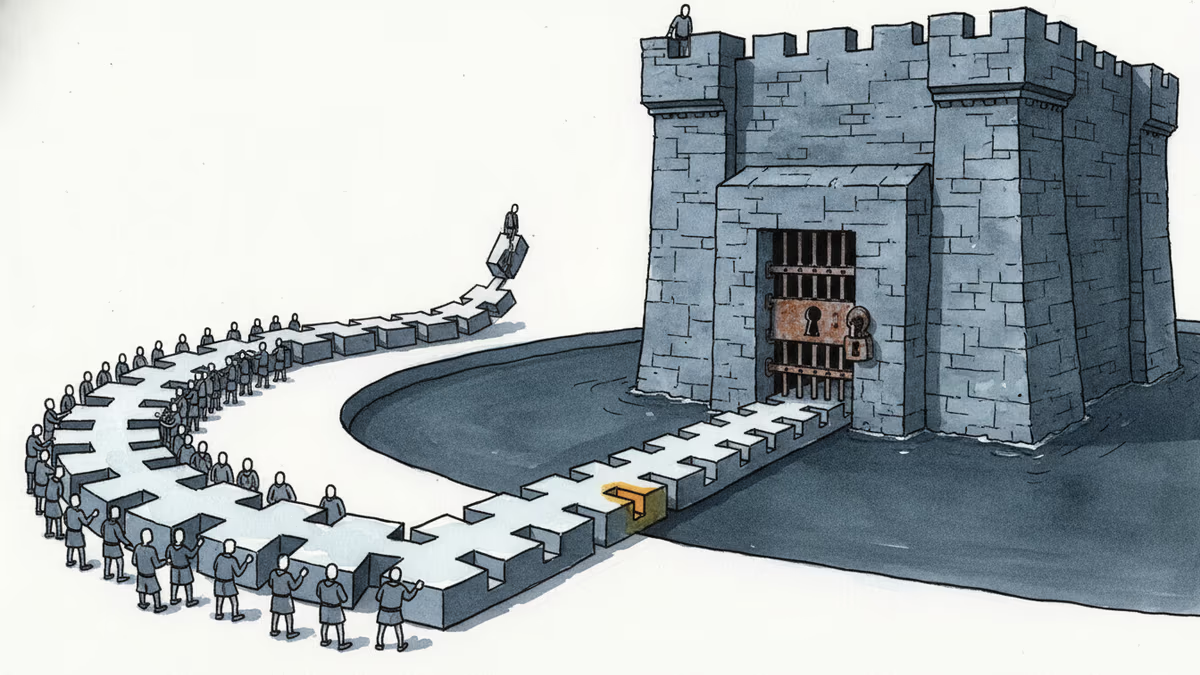
Nvidia shipped roughly a billion RISC-V cores in 2024, then announced it would run CUDA on the open standard. We break down how royalty-free instruction sets and open software stacks are trying to route around CUDA's lock-in. Part 2 of the Semiconductor Sovereignty series.
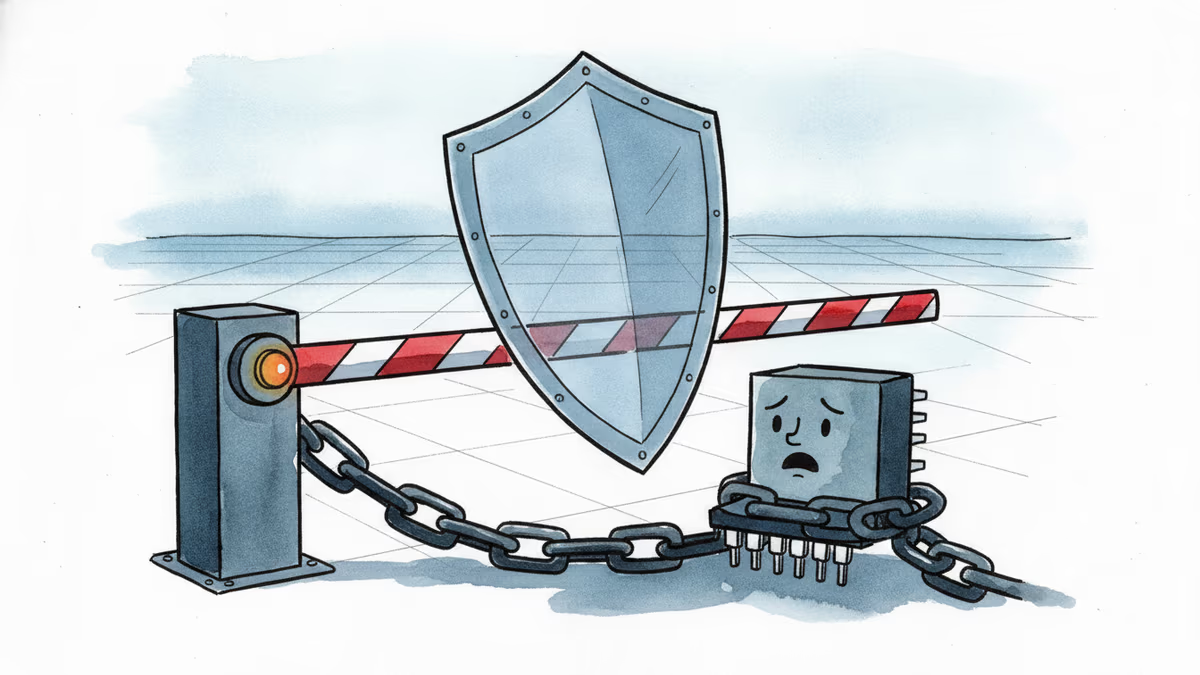
US AI-chip export controls split into three layers in the first half of 2026 — January easing, a May crackdown on circumvention, and a pending bill. Nvidia erased China from its guidance and still posted a record $81.6 billion quarter. A look at the export policy that both shields and cages it.

AMD's MI325X matches or beats Nvidia on memory and bandwidth — yet Nvidia's 86-92% share holds. The real moat is CUDA, 20 years in the making. Part 1 of 4.

Snowflake's new $6 billion AWS contract is about more than cloud spending. It signals a shift in AI infrastructure—away from Nvidia GPUs and toward cheaper, homegrown chips for the agent era.
Nvidia shipped roughly a billion RISC-V cores in 2024, then announced it would run CUDA on the open standard. We break down how royalty-free instruction sets and open software stacks are trying to route around CUDA's lock-in. Part 2 of the Semiconductor Sovereignty series.
US AI-chip export controls split into three layers in the first half of 2026 — January easing, a May crackdown on circumvention, and a pending bill. Nvidia erased China from its guidance and still posted a record $81.6 billion quarter. A look at the export policy that both shields and cages it.
AMD's MI325X matches or beats Nvidia on memory and bandwidth — yet Nvidia's 86-92% share holds. The real moat is CUDA, 20 years in the making. Part 1 of 4.
Snowflake's new $6 billion AWS contract is about more than cloud spending. It signals a shift in AI infrastructure—away from Nvidia GPUs and toward cheaper, homegrown chips for the agent era.
Thoughts
Share your thoughts on this article
Sign in to join the conversation