
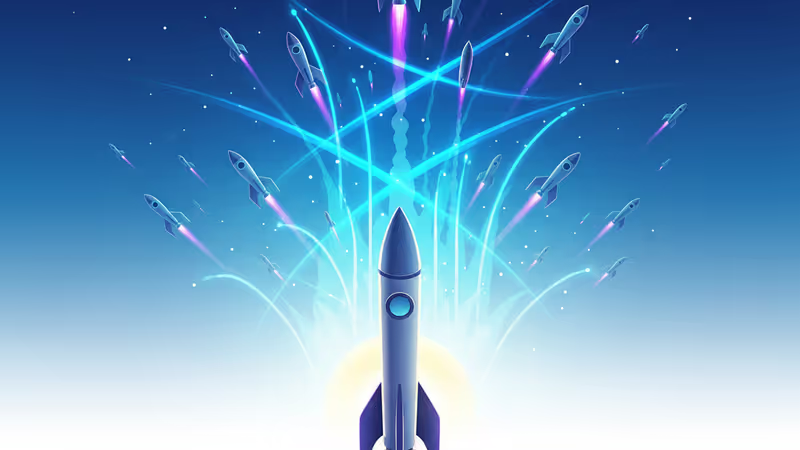
ULA CEO Tory Bruno Resigns After 12 Years, Just as SpaceX Rival's New Rocket Takes Flight
ULA CEO Tory Bruno has resigned after 12 years, following the long-awaited debut of the Vulcan rocket. We analyze what his departure means for the SpaceX rival's future in a fiercely competitive space launch market.
Tory Bruno, the CEO who has led SpaceX rival United Launch Alliance for 12 years, has resigned. According to the company, he is leaving “to pursue another opportunity.” The move comes at a pivotal moment for ULA, just after the long-delayed but successful inaugural launch of its next-generation Vulcan rocket, the cornerstone of its strategy to keep pace in a market now dominated by Elon Musk’s SpaceX.
“We are grateful for Tory’s service to ULA and the country, and we thank him for his leadership,” ULA chairs Robert Lightfoot and Kay Sears said in a statement. John Elbon, the company’s chief operating officer, will step in as interim CEO while the board searches for a permanent replacement.
Formed in 2006, ULA is a joint venture combining the space launch divisions of defense giants Boeing and Lockheed Martin. For years, it held a virtual monopoly on critical U.S. government and military launches until SpaceX disrupted the industry with its reusable rocket technology and aggressive pricing.

Bruno’s tenure was defined by this new competitive reality. His biggest project was overseeing the development of Vulcan, a rocket designed to achieve two critical goals: compete with SpaceX on performance and cost, and end the U.S. government's reliance on Russian-made engines for space access. While the project leveraged parts from legacy Atlas and Delta rockets to control costs, it made a significant bet on Jeff Bezos’s Blue Origin to supply its powerful BE-4 main engines.
The project was a decade-long saga, suffering numerous delays before its first liftoff in 2024. During that same timeframe, SpaceX ramped up its launch cadence dramatically, becoming the world’s most dominant launch provider for both government and commercial missions. While Vulcan has already secured key customers like Amazon for its Project Kuiper satellite constellation and space startup Astrobotic, it is only just beginning its operational life.
It has been a great privilege to lead ULA through its transformation and to bring Vulcan into service. My work here is now complete and I will be cheering ULA on.
Authors
Related Articles
American Airlines just signed Starlink for 500+ aircraft. It's not just about faster inflight internet — it's a calculated move in the run-up to what could be the largest IPO in history.
SpaceX's upgraded Starship V3 completed its first test flight, deploying 20 Starlink simulators but losing the Super Heavy booster. With an IPO weeks away, the stakes just got higher.
SpaceX's IPO filing puts AI at the center, claiming a $26.5 trillion market opportunity. But can Grok compete with OpenAI and Anthropic for enterprise customers?
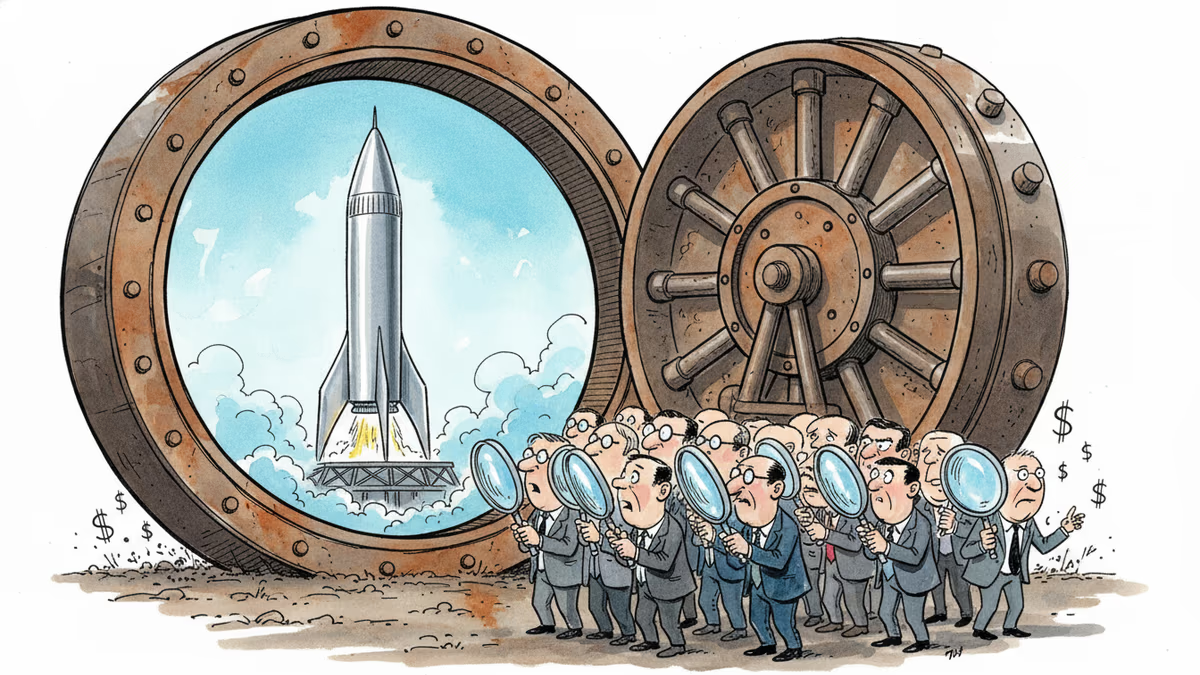
SpaceX filed a nearly 400-page S-1 with the SEC, targeting an IPO as early as June 12. Here's what the filing reveals—and what it doesn't.
American Airlines just signed Starlink for 500+ aircraft. It's not just about faster inflight internet — it's a calculated move in the run-up to what could be the largest IPO in history.
SpaceX's upgraded Starship V3 completed its first test flight, deploying 20 Starlink simulators but losing the Super Heavy booster. With an IPO weeks away, the stakes just got higher.
SpaceX's IPO filing puts AI at the center, claiming a $26.5 trillion market opportunity. But can Grok compete with OpenAI and Anthropic for enterprise customers?
SpaceX filed a nearly 400-page S-1 with the SEC, targeting an IPO as early as June 12. Here's what the filing reveals—and what it doesn't.
Thoughts
Share your thoughts on this article
Sign in to join the conversation