

Davos 2026 AI Insights: Tech Titans Predict a World with More Robots Than Humans
Explore the key AI insights from Davos 2026. From Elon Musk's 2027 Optimus launch to Jensen Huang's take on high-paying tradecraft jobs, discover the future of technology.
The era of the 'robot-to-human majority' is on the horizon. As the World Economic Forum (WEF) concluded in Davos this week, 84 world leaders and 800 CEOs grappled with a future dominated by artificial intelligence. From the bursting—or lack—of an AI bubble to the imminent release of domestic humanoid robots, the insights from Davos 2026 have set a clear, albeit complex, trajectory for the global economy.
Davos 2026 AI Insights: Why Industry Leaders Dismiss the Bubble
Despite ongoing market skepticism, the world's most powerful financiers remain bullish. Larry Fink, CEO of BlackRock, stated he "sincerely believes" there is no bubble, characterizing the current growth as a "smooth exponential line." Fink emphasized that hundreds of billions of dollars in capital expenditure are still required to build the necessary infrastructure, which will ultimately drive global GDP.
Anthropic's Dario Amodei echoed this sentiment, noting that while media sentiment flips every 3 to 6 months, the underlying technology's progress has remained constant. However, Amodei warned of a "scary" trend: the potential for AI to be used for individualized surveillance and propaganda by autocratic regimes, calling for stricter chip export policies.

The Great Job Shift: Plumbers Over Ph.D.s?
Nvidia CEO Jensen Huang provided a surprising take on the labor market. He noted that AI is creating high-paying "tradecraft" roles, with salaries for electricians and steelworkers doubling in some regions. "You don't need a Ph.D. in computer science to make a great living anymore," Huang remarked, highlighting the massive infrastructure buildout as a primary job creator. Conversely, software engineers might soon find 90% of their coding work handled by AI, forcing a radical evolution of the profession.
Elon Musk’s 2027 Optimus Timeline
Elon Musk stole the spotlight by predicting that Tesla could begin selling Optimus humanoid robots to the general public by late 2027. Musk envisions a world where robots handle domestic chores and elderly care, solving demographic crises. To power this, SpaceX plans to launch solar-powered AI satellites to bypass the limited 4% annual growth rate of Earth's electrical grid.
Authors
Related Articles
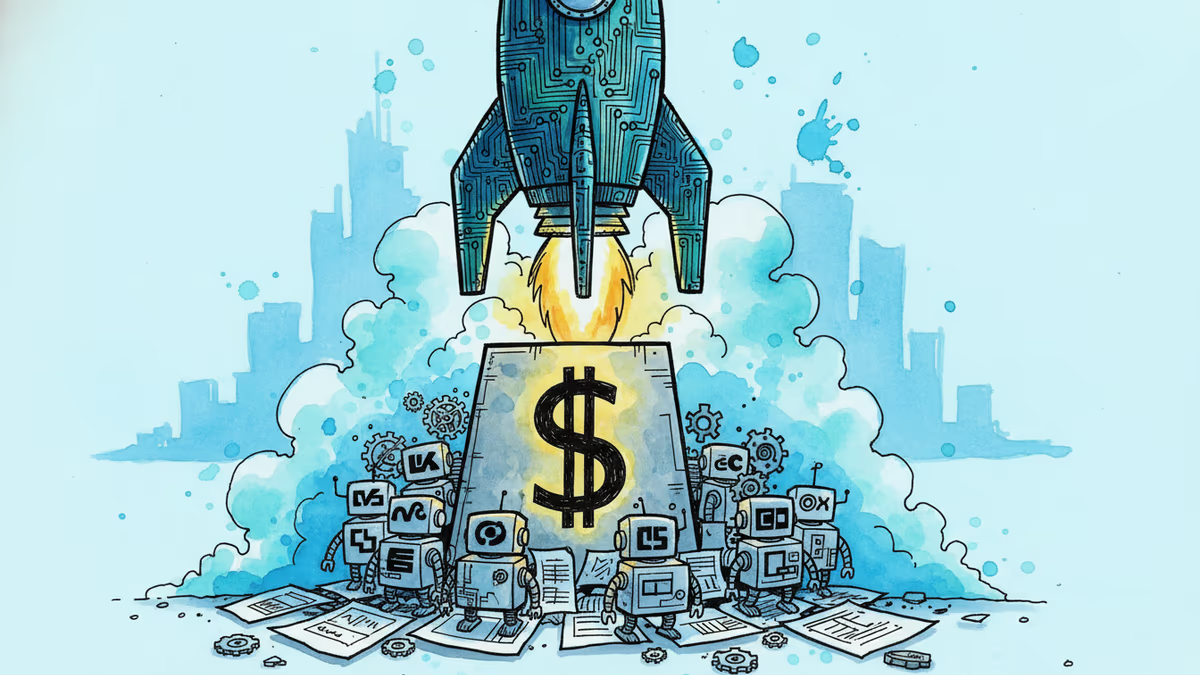
SpaceX's IPO filing puts AI at the center, claiming a $26.5 trillion market opportunity. But can Grok compete with OpenAI and Anthropic for enterprise customers?
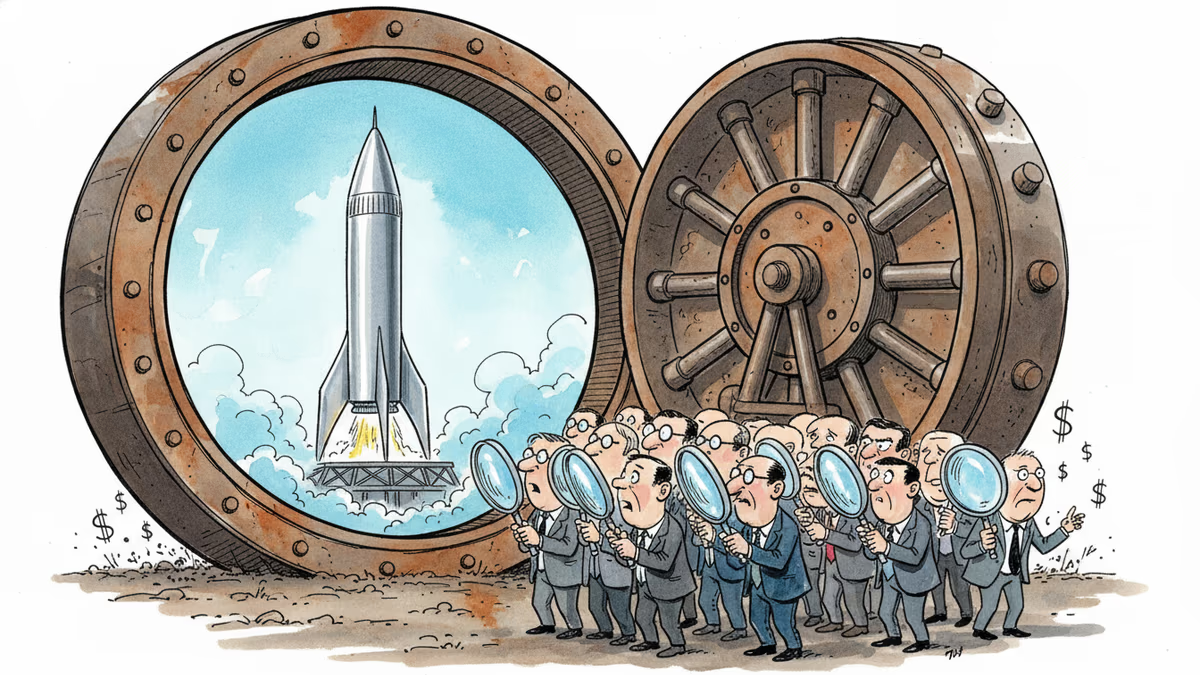
SpaceX filed a nearly 400-page S-1 with the SEC, targeting an IPO as early as June 12. Here's what the filing reveals—and what it doesn't.
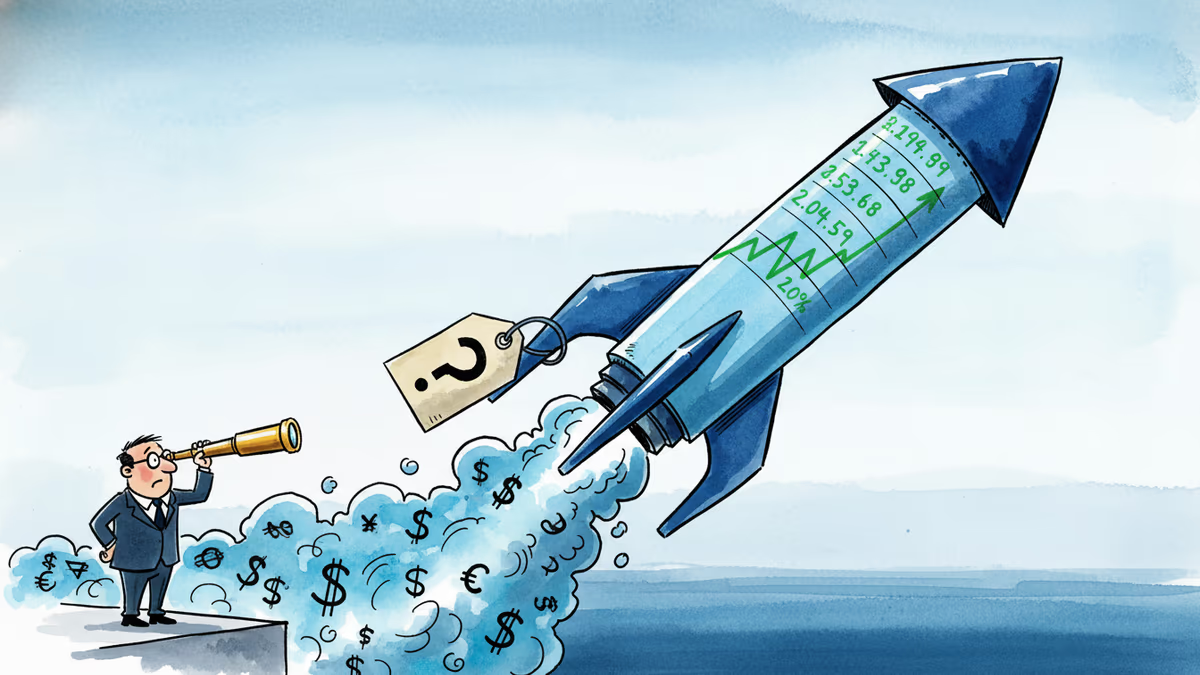
SpaceX has filed its S-1 with the SEC, targeting the Nasdaq under ticker SPCX. With $18.67B in revenue but a $4.9B loss, the IPO forces investors to answer one hard question.
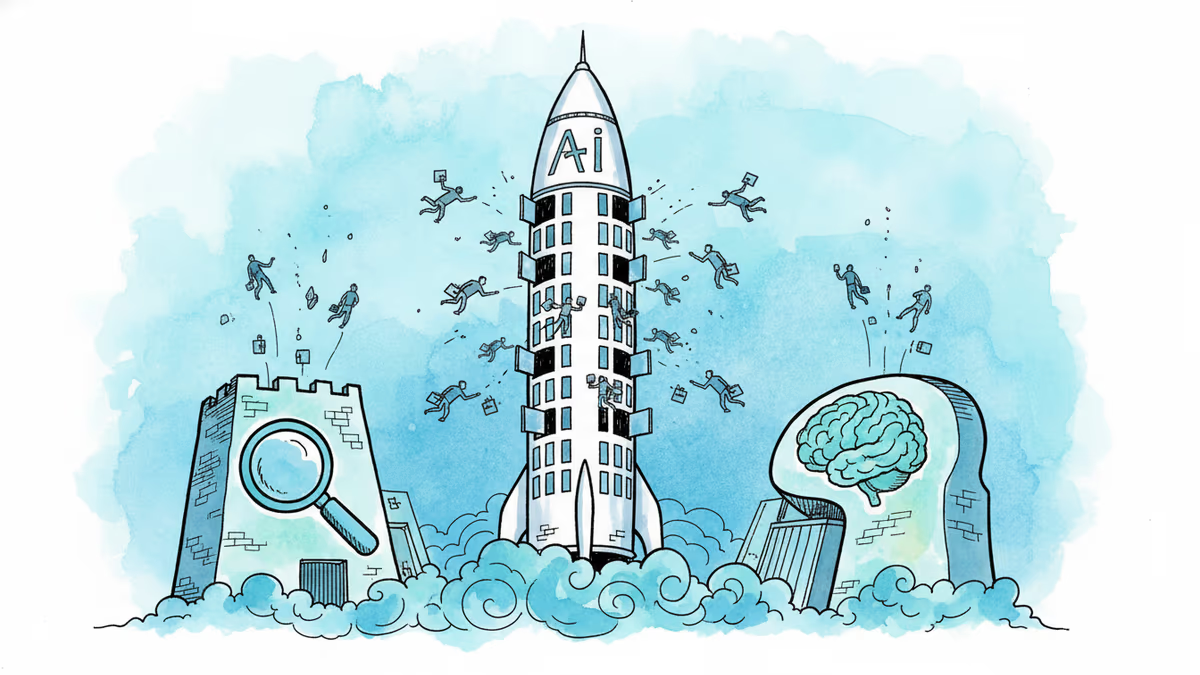
Over 50 researchers and engineers have left SpaceXAI since February's merger. With the pre-training team nearly gutted, questions mount about whether Musk's AI ambitions can survive his management style.
SpaceX's IPO filing puts AI at the center, claiming a $26.5 trillion market opportunity. But can Grok compete with OpenAI and Anthropic for enterprise customers?
SpaceX filed a nearly 400-page S-1 with the SEC, targeting an IPO as early as June 12. Here's what the filing reveals—and what it doesn't.
SpaceX has filed its S-1 with the SEC, targeting the Nasdaq under ticker SPCX. With $18.67B in revenue but a $4.9B loss, the IPO forces investors to answer one hard question.
Over 50 researchers and engineers have left SpaceXAI since February's merger. With the pre-training team nearly gutted, questions mount about whether Musk's AI ambitions can survive his management style.
Thoughts
Share your thoughts on this article
Sign in to join the conversation