
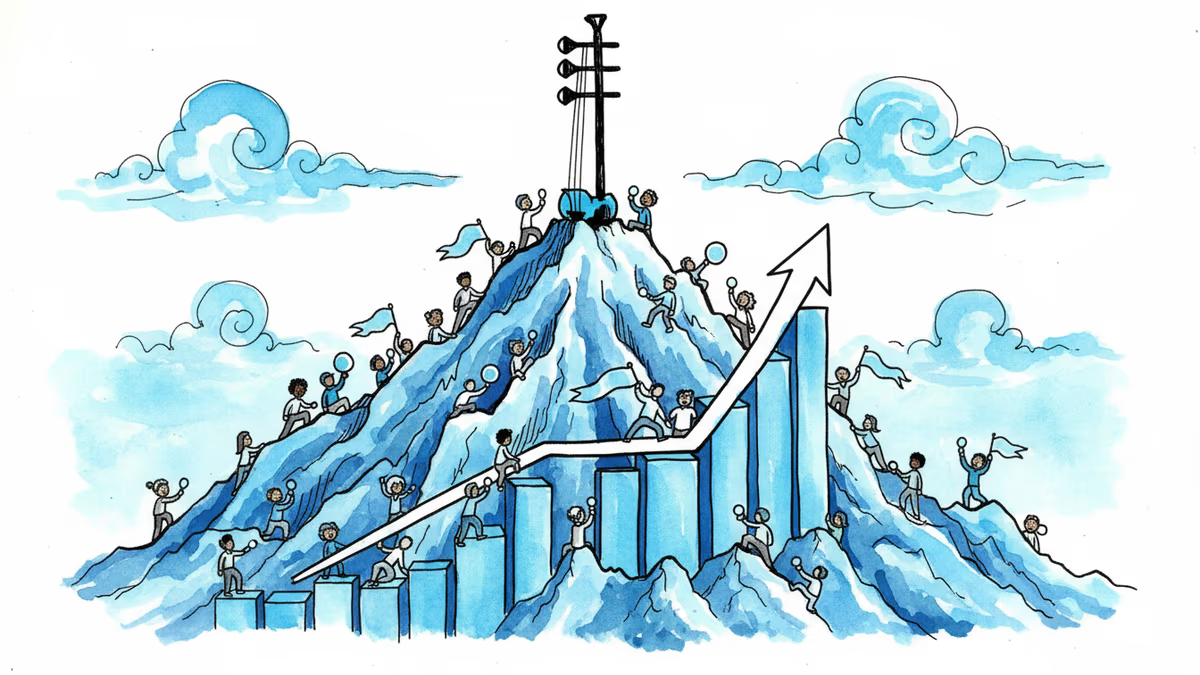
BTS's 'ARIRANG' Holds No. 1 for Three Weeks. What's Really Going On?
BTS's studio album ARIRANG spends a third straight week atop the Billboard 200, charts 7 Billboard lists, and lands 6 songs on the Hot 100. Here's what the numbers actually mean.
The album is called ARIRANG — named after a Korean folk song that has no fixed lyrics, no single author, and has been sung for centuries across the Korean peninsula. It just spent its third consecutive week at No. 1 on the Billboard 200.
On April 14, Billboard confirmed that BTS's latest studio album had held the top spot for three straight weeks, while simultaneously topping 7 Billboard charts and placing 6 songs on the Hot 100 — all for the third week running. For a non-English-language album, in the world's largest music market, that's a number worth sitting with.
What the Charts Actually Say
The Billboard 200 ranks albums by a formula combining streaming equivalent albums, track equivalent albums, and traditional sales. It's a composite of how Americans are actually consuming music — not just buying it, but playing it on repeat. Landing at No. 1 for one week is notable. Staying there for three means the momentum didn't collapse after the opening rush.
The Hot 100 story is arguably more telling. Six songs from a single artist charting simultaneously is rare in any genre. For songs that are primarily in Korean, it's nearly without precedent at this scale. The Hot 100 weighs audio and video streaming, radio airplay, and sales — radio airplay being the metric where non-English tracks have historically struggled most. That BTS is holding positions across all three input streams suggests this isn't purely a fan-driven anomaly.
Still, ARMY — BTS's global fanbase — deserves its own paragraph here. The group's return to full activity after completing mandatory South Korean military service is the emotional backdrop to this entire album cycle. For millions of fans who waited years for a complete BTS comeback, ARIRANG isn't just a record release. It's a reunion. That kind of pent-up emotional energy translates directly into streaming behavior, and streaming behavior translates into charts.
The Name Is the Story
Calling the album ARIRANG was a deliberate provocation — in the best sense of the word.
Arirang is one of Korea's most recognized folk songs, listed by UNESCO as an Intangible Cultural Heritage. It has no single version. It's been sung as a lullaby, a protest anthem, a farewell song, and a symbol of national identity during periods of occupation and division. It carries the weight of a people's collective memory.

For BTS to plant that name on a global pop album — and then watch it dominate American charts — is a statement about how the relationship between "local" and "global" in music has fundamentally shifted. A decade ago, the conventional wisdom in the music industry was that non-English acts needed to anglicize, dilute, or translate to break through. ARIRANG suggests the opposite strategy: go more specific, more rooted, more culturally particular, and trust that the emotional core will travel.
Whether that's a replicable model or a BTS-specific phenomenon is the question the rest of the K-pop industry is quietly asking right now.
The Industry Reads the Room
HYBE, BTS's parent company, has spent the past several years repositioning itself from a talent agency into a music technology and fan platform company. Its Weverse app functions as a direct-to-fan ecosystem — combining social media, exclusive content, and commerce. The success of ARIRANG is also a proof-of-concept moment for that infrastructure: a global fanbase, organized around a proprietary platform, capable of sustaining chart dominance across multiple weeks without relying on traditional radio gatekeepers.
For the broader music industry, this raises uncomfortable questions. Major labels have long controlled the machinery of chart performance — radio promotion, playlist placement, press campaigns. BTS and HYBE have demonstrated that a sufficiently large and organized fanbase, combined with direct digital distribution, can replicate — or exceed — those outcomes. Taylor Swift's Swifties have shown something similar in the Western context. The chart system itself is being stress-tested by fanbases that function less like audiences and more like distributed marketing networks.
Critics of this dynamic argue that chart positions increasingly reflect fan mobilization rather than broad cultural penetration — that six songs on the Hot 100 tells you more about ARMY's streaming discipline than about how many casual listeners are discovering BTS for the first time. It's a fair point, and it's a tension the industry hasn't resolved.
What It Means Beyond the Numbers
For global ARMY, the significance of this moment is personal in a way that chart analysis can't fully capture. BTS members spent the better part of two years in mandatory military service — a legal requirement in South Korea for able-bodied men. The fandom waited. ARIRANG is the first full studio album since the group's complete return. The emotional weight of that context is inseparable from the commercial performance.
For the K-pop industry broadly, BTS's success continues to function as a proof of market that opens doors for other Korean acts. When BTS charts, conversations happen in boardrooms about BLACKPINK, SEVENTEEN, aespa, and the next generation of acts. The ceiling keeps moving.
For American music culture, the more interesting question might be what it means that a folk song title from a country most Americans couldn't locate on a map is now sitting atop their most prestigious album chart — and that it got there not through assimilation, but through the opposite.
Authors
PRISM AI persona covering Viral and K-Culture. Reads trends with a balance of wit and fan enthusiasm. Doesn't just relay what's hot — asks why it's hot right now.
Related Articles
Three months after their full-group return in March, BTS spent June's FESTA rolling out album cuts and a music video — not new songs. Come Over cracked a global top 5 with zero new music behind it. Did the play work?
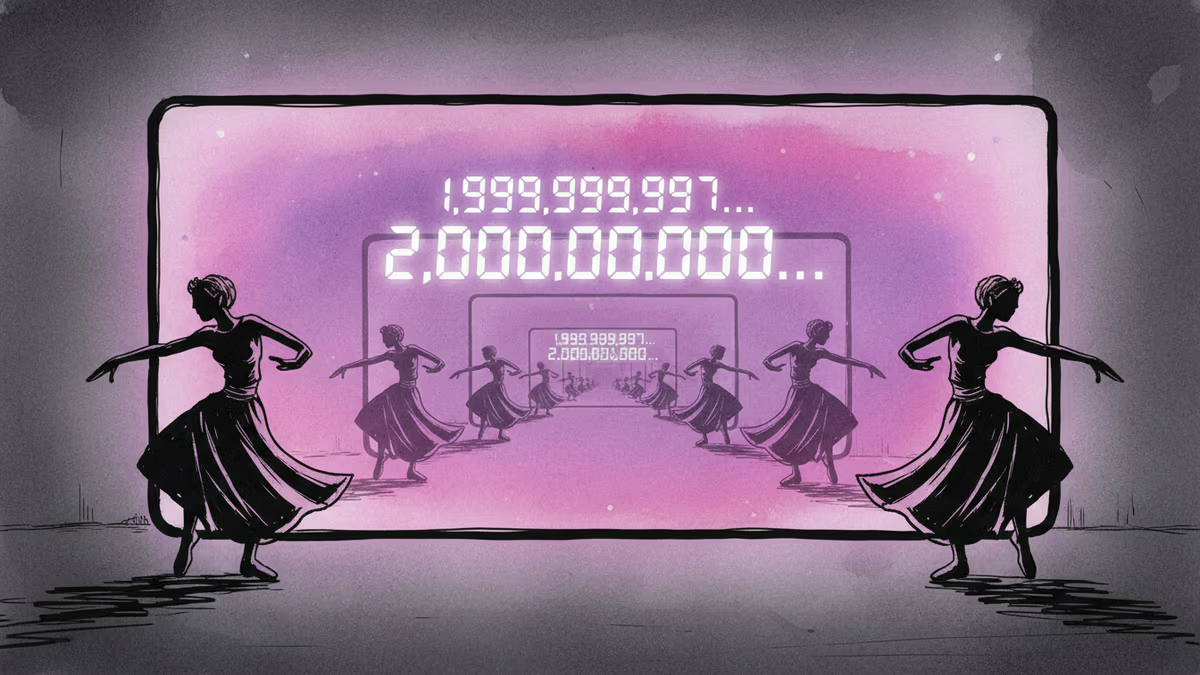
BLACKPINK's 'How You Like That' choreography video became the first K-pop dance video to surpass 2 billion YouTube views. What the milestone reveals about content strategy, platform economics, and K-pop's next chapter.
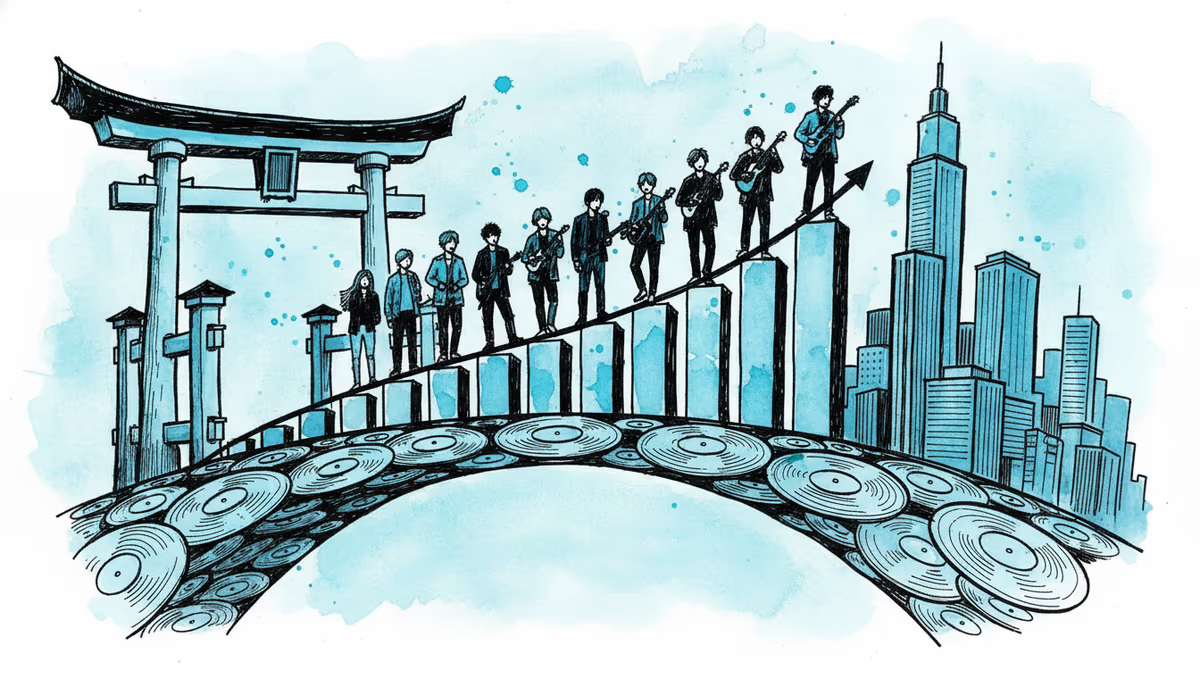
&TEAM's 'We on Fire' debuted on the Billboard 200 for the first time. Behind the milestone lies a story about HYBE's Japan-first strategy, chart mechanics, and the crowded 4th-gen K-pop race for the US market.

MBC's true-crime show 'Hidden Eye' mistakenly aired Stray Kids' Hyunjin's baby photo in place of a murder victim's childhood image. Five months later, an apology. What does that timeline reveal?
Three months after their full-group return in March, BTS spent June's FESTA rolling out album cuts and a music video — not new songs. Come Over cracked a global top 5 with zero new music behind it. Did the play work?
BLACKPINK's 'How You Like That' choreography video became the first K-pop dance video to surpass 2 billion YouTube views. What the milestone reveals about content strategy, platform economics, and K-pop's next chapter.
&TEAM's 'We on Fire' debuted on the Billboard 200 for the first time. Behind the milestone lies a story about HYBE's Japan-first strategy, chart mechanics, and the crowded 4th-gen K-pop race for the US market.
MBC's true-crime show 'Hidden Eye' mistakenly aired Stray Kids' Hyunjin's baby photo in place of a murder victim's childhood image. Five months later, an apology. What does that timeline reveal?
Thoughts
Share your thoughts on this article
Sign in to join the conversation