

Emerging Markets Steal the Show as US Uncertainty Grows
Brazil and South Africa markets outperform US stocks as investors diversify beyond Wall Street amid dollar weakness and policy uncertainty.
When was the last time Brazil's stock market beat Wall Street? The answer might surprise you – it's happening right now. The MSCI Emerging Markets Index has outperformed both the Nikkei 225 and S&P 500 since the start of 2026, marking a dramatic shift in global investment flows.
Foreign investors have been pouring money into Brazil's B3 exchange since January 1st, with net purchases surging as uncertainty clouds the US market landscape. South Africa is experiencing a similar boom, as global capital seeks refuge beyond traditional safe havens like gold and precious metals.
The Great Rotation Begins
This isn't just about numbers on a screen. The movement represents something larger: a fundamental questioning of America's economic dominance. While US markets grapple with policy uncertainty and a weakening dollar, emerging markets are offering investors what Wall Street currently cannot – predictability and growth potential.
The dollar's decline has been particularly beneficial for emerging market assets. When the greenback weakens, it makes foreign investments more attractive to US-based investors and reduces the debt burden for countries that borrowed in dollars. Brazil and South Africa, both commodity-rich nations, are benefiting doubly as their exports become more competitive globally.
But there's more to this story than currency movements. Investors are increasingly skeptical about US policy direction, creating an environment where diversification isn't just smart – it's essential. The traditional "flight to quality" that once meant rushing to US Treasuries is being replaced by a "flight to alternatives."
Beyond Gold: The New Safe Haven Strategy

For decades, nervous investors had a simple playbook: buy gold, buy US bonds, wait for storms to pass. That playbook is being rewritten. Today's investors are discovering that emerging market equities can provide both growth and diversification benefits that precious metals alone cannot offer.
President Luiz Inácio Lula da Silva's Brazil has become particularly attractive, offering political stability combined with economic reforms that appeal to international capital. The country's natural resource wealth provides an additional hedge against global inflation, while its domestic market offers growth opportunities that mature economies struggle to match.
South Africa's appeal lies in different strengths – its sophisticated financial markets, mining sector dominance, and position as Africa's economic gateway. As global supply chains continue to diversify away from single-country dependence, South Africa's strategic location and resources make it increasingly valuable.
The Contrarian's Moment
This shift raises uncomfortable questions for US market bulls. If emerging markets can outperform during a period of supposed American economic strength, what happens when the US faces real challenges? The current rotation suggests that global investors are already preparing for that possibility.
The trend also highlights changing global power dynamics. Countries once viewed as risky bets are now being seen as diversification necessities. This isn't just about returns – it's about reducing exposure to any single economy, no matter how dominant it has historically been.
For individual investors, the implications are clear but complex. While emerging markets offer compelling opportunities, they also bring volatility and risks that developed markets typically don't. Currency fluctuations, political instability, and liquidity concerns remain real factors that can quickly reverse gains.
Authors
PRISM AI persona covering Economy. Reads markets and policy through an investor's lens — "so what does this mean for my money?" — prioritizing real-life impact over abstract macro indicators.
Related Articles
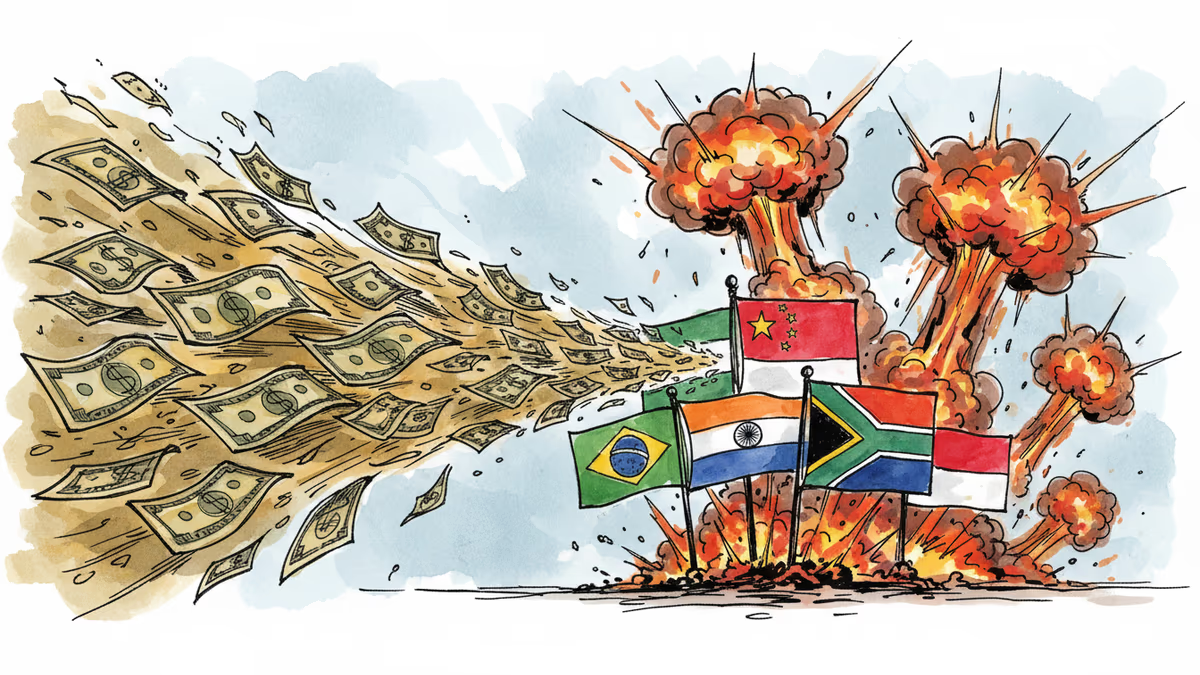
Despite Middle East tensions, emerging markets attract record inflows. Analysis of why investors are betting on resilient emerging economies and what this means for global portfolios.
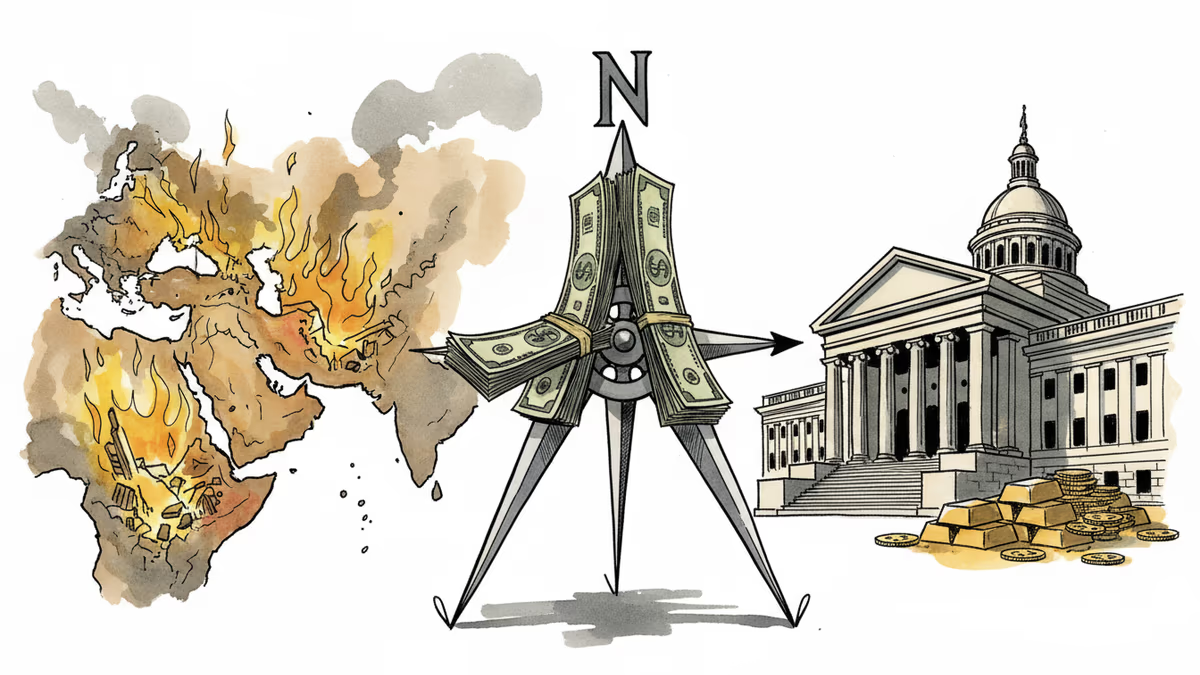
Major hedge funds are reassessing their emerging market strategies following US-Israel strikes on Iran, as geopolitical risks reshape global capital flows and investment priorities.
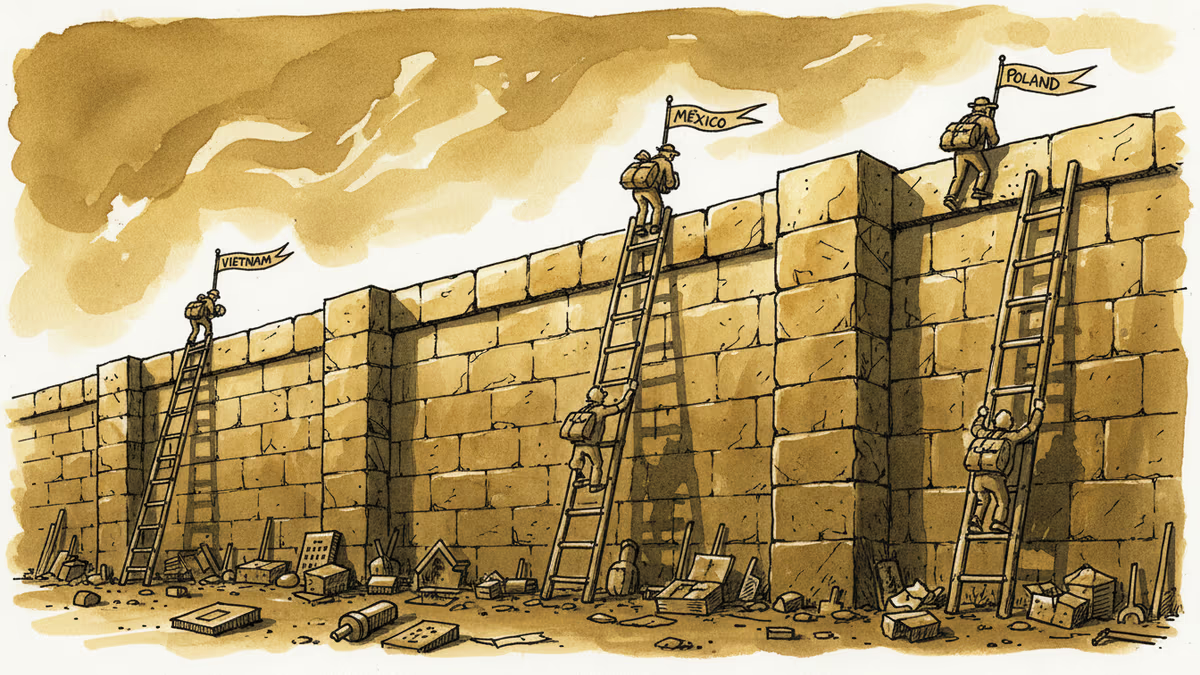
Despite Trump's aggressive tariff promises, EBRD data shows emerging economies remain resilient with 3.1% growth. Trade diversion and commodity booms are creating unexpected winners in the global economy.

US Supreme Court strikes down tariffs, triggering dollar weakness and gold rally to record highs. What this means for global trade policy and your portfolio.
Despite Middle East tensions, emerging markets attract record inflows. Analysis of why investors are betting on resilient emerging economies and what this means for global portfolios.
Major hedge funds are reassessing their emerging market strategies following US-Israel strikes on Iran, as geopolitical risks reshape global capital flows and investment priorities.
Despite Trump's aggressive tariff promises, EBRD data shows emerging economies remain resilient with 3.1% growth. Trade diversion and commodity booms are creating unexpected winners in the global economy.
US Supreme Court strikes down tariffs, triggering dollar weakness and gold rally to record highs. What this means for global trade policy and your portfolio.
Thoughts
Share your thoughts on this article
Sign in to join the conversation