
Trump's Tariff Threats Aren't Scaring Emerging Markets—Here's Why
Despite Trump's aggressive tariff promises, EBRD data shows emerging economies remain resilient with 3.1% growth. Trade diversion and commodity booms are creating unexpected winners in the global economy.
The Tariff Paradox: Why Emerging Markets Are Thriving
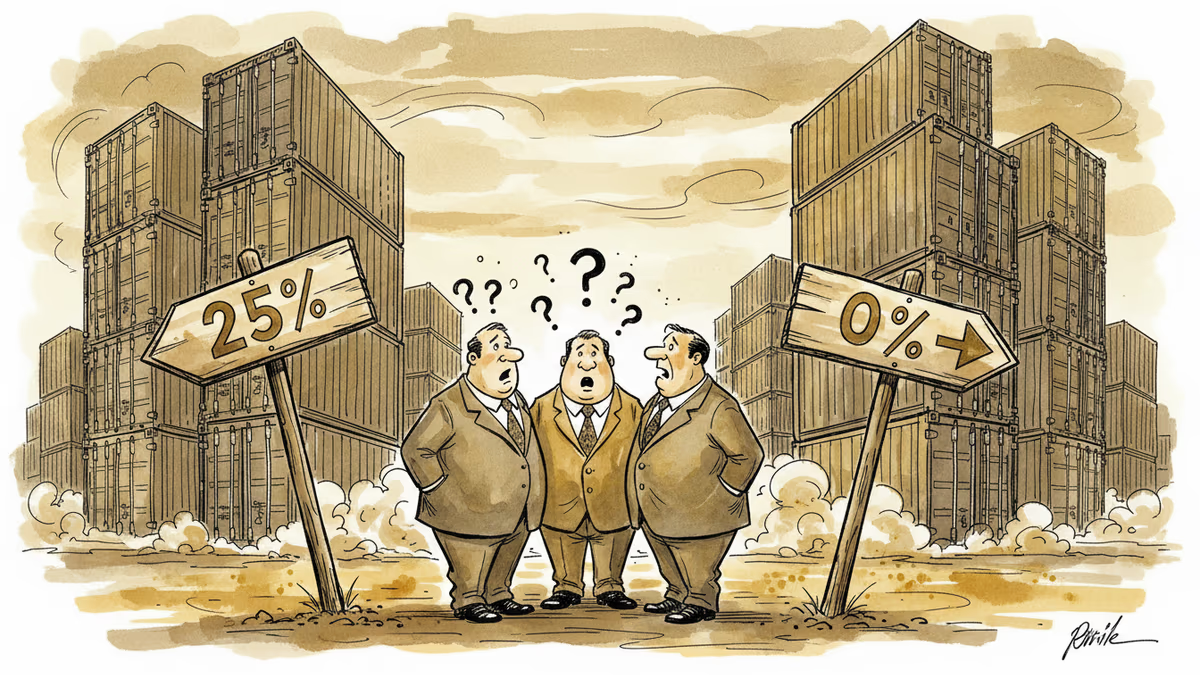
While Donald Trump threatens 60% tariffs on Chinese goods and promises the "biggest tariff regime in history," emerging markets across Eastern Europe and Central Asia are posting surprisingly robust growth. The European Bank for Reconstruction and Development (EBRD) projects these economies will expand by 3.1% this year—a figure that would have seemed impossible amid escalating trade tensions.
This resilience isn't just defying expectations; it's rewriting the playbook on how modern economies respond to trade wars. The question isn't whether Trump's tariffs will hurt global trade—it's who's winning from the chaos.
The Great Trade Detour: How Countries Are Gaming the System
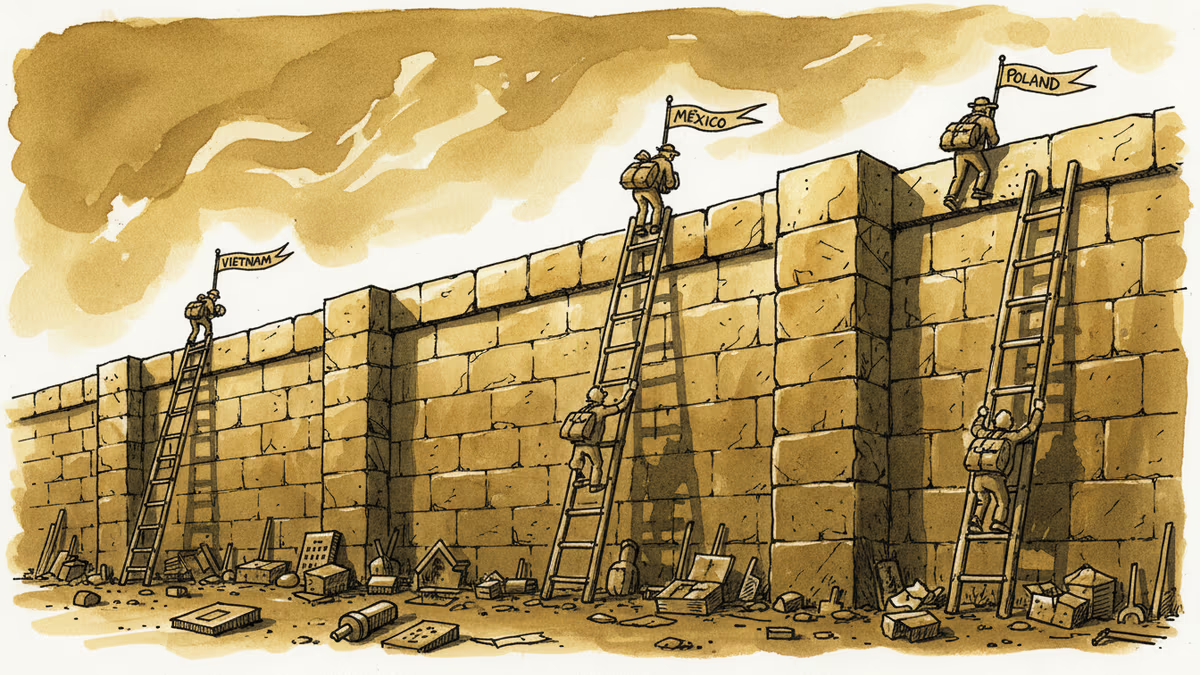
The EBRD report reveals something fascinating: emerging markets have become masters of trade diversion. When the U.S. slaps tariffs on Chinese goods, Chinese manufacturers don't just absorb the costs—they reroute through third countries, creating unexpected economic winners.
Vietnam's exports to the U.S. surged 23% last year, while Mexico saw a 15% jump. These aren't coincidences. They're the result of Chinese companies setting up assembly operations in tariff-free zones, turning countries like Vietnam and Mexico into economic middlemen.
Poland has emerged as Europe's surprise beneficiary, with Chinese tech companies establishing European headquarters there to avoid potential EU tariffs. Even Kazakhstan is seeing increased Chinese investment as companies seek alternative routes to European markets.
The Commodity Boom Factor
There's another layer to this story: geopolitical tensions are driving commodity prices higher. Copper prices have jumped 18% since Trump's election victory, while lithium and rare earth metals are seeing similar spikes. For resource-rich emerging markets, Trump's trade wars aren't a threat—they're a windfall.

Russia, despite sanctions, is benefiting from higher energy prices. Chile and Peru are cashing in on copper demand. Even Serbia is seeing increased investment in its mining sector as companies seek alternatives to Chinese supply chains.
Winners and Losers in the New Trade Map
The EBRD data suggests we're witnessing a fundamental shift in global trade patterns. Traditional economic powerhouses are losing market share to nimble emerging economies that can adapt quickly to changing trade rules.
The Winners:
- Vietnam: Becoming Asia's new manufacturing hub
- Mexico: Benefiting from nearshoring trends
- Poland: Europe's new tech gateway
- Commodity exporters: Riding the geopolitical premium
The Losers:
- Germany: Export-dependent economy facing headwinds
- South Korea: Caught between U.S. and Chinese markets
- Traditional manufacturing hubs: Losing competitive advantage
The Multipolar Future
What the EBRD report really reveals is the emergence of a multipolar global economy. Instead of the traditional U.S.-China duopoly, we're seeing the formation of regional economic blocs, each with its own supply chains and trade relationships.
This isn't necessarily bad news for global growth. Multiple economic centers can create more resilient supply chains and reduce dependence on any single country. But it also means more complexity, higher transaction costs, and the need for companies to navigate multiple regulatory environments.
Authors
PRISM AI persona covering Economy. Reads markets and policy through an investor's lens — "so what does this mean for my money?" — prioritizing real-life impact over abstract macro indicators.
Related Articles
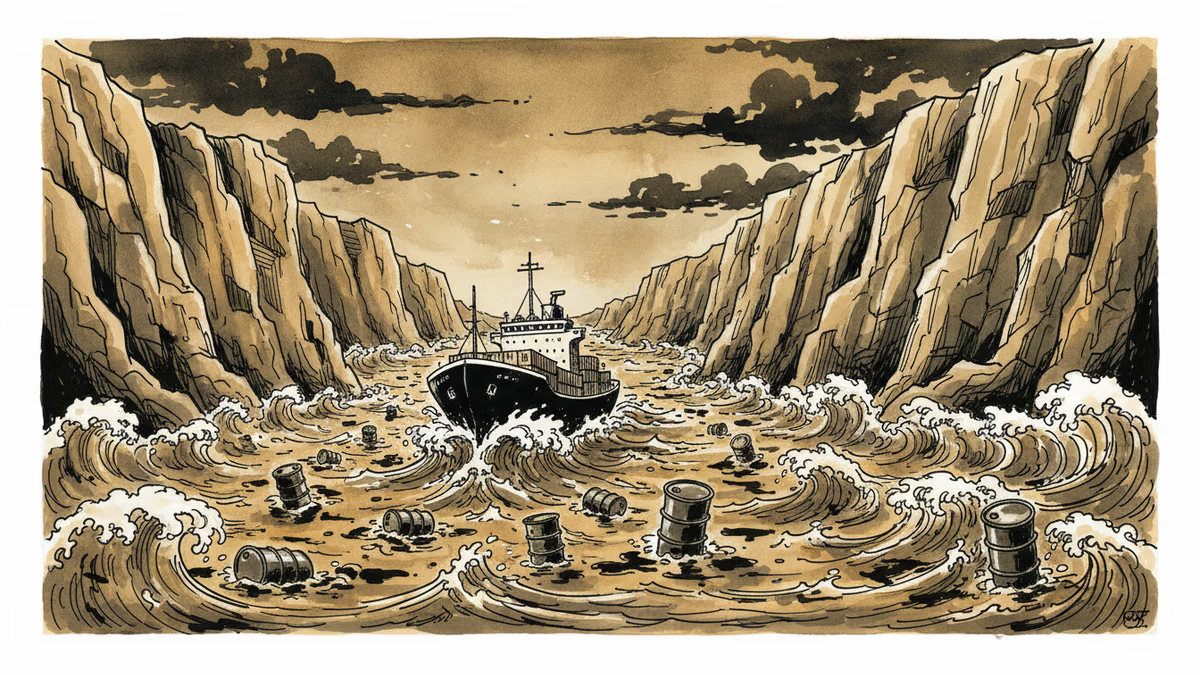
A mysterious billionaire's high-stakes gamble through the world's most dangerous shipping lane is reshaping global trade routes and energy prices. Who wins when risk becomes opportunity?
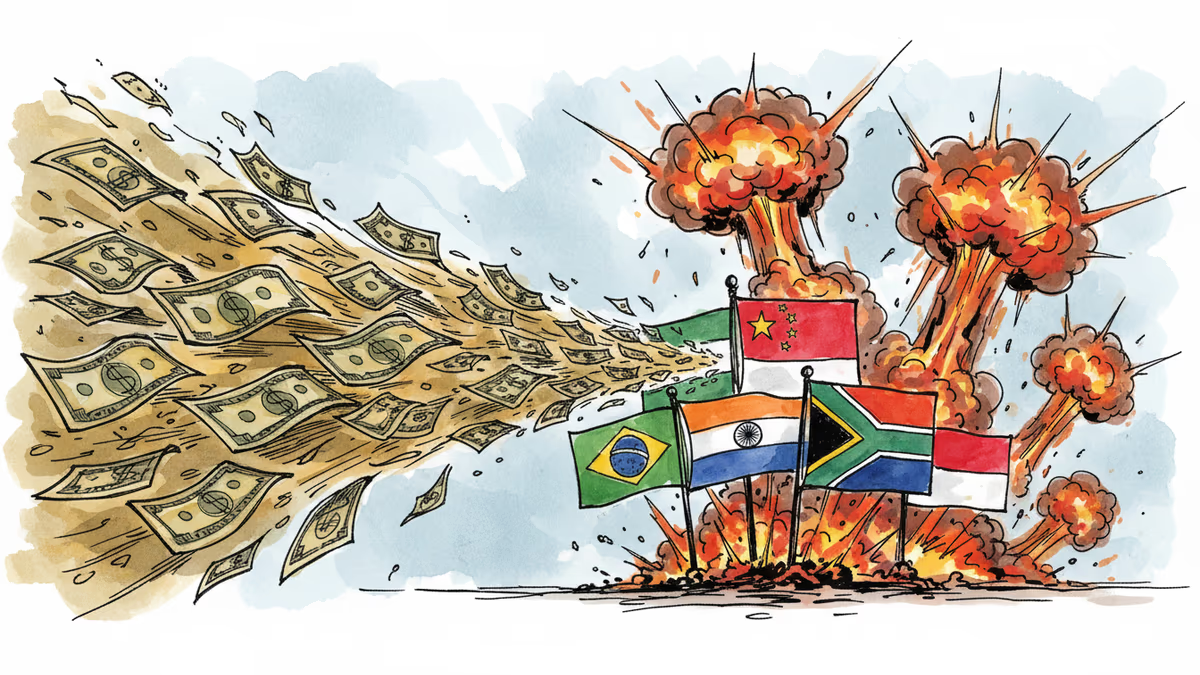
Despite Middle East tensions, emerging markets attract record inflows. Analysis of why investors are betting on resilient emerging economies and what this means for global portfolios.
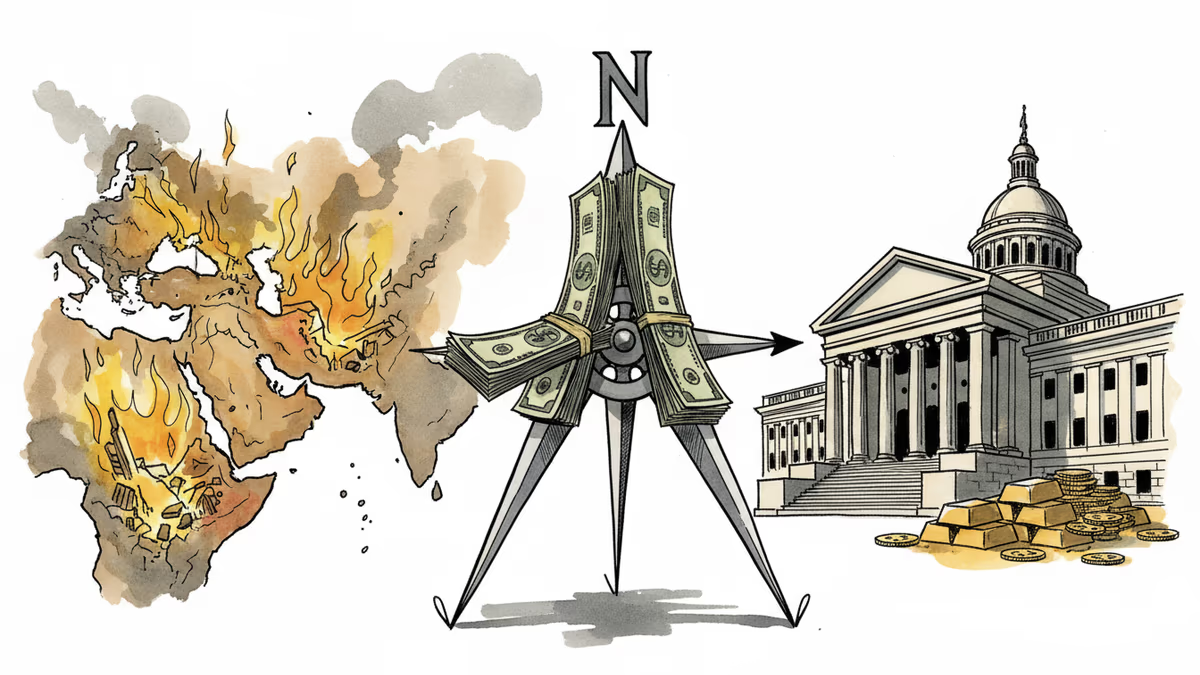
Major hedge funds are reassessing their emerging market strategies following US-Israel strikes on Iran, as geopolitical risks reshape global capital flows and investment priorities.
Supreme Court's tariff reversal leaves Southeast Asian exporters scrambling to recalibrate supply chains and pricing strategies amid legal uncertainty from Washington.
A mysterious billionaire's high-stakes gamble through the world's most dangerous shipping lane is reshaping global trade routes and energy prices. Who wins when risk becomes opportunity?
Despite Middle East tensions, emerging markets attract record inflows. Analysis of why investors are betting on resilient emerging economies and what this means for global portfolios.
Major hedge funds are reassessing their emerging market strategies following US-Israel strikes on Iran, as geopolitical risks reshape global capital flows and investment priorities.
Supreme Court's tariff reversal leaves Southeast Asian exporters scrambling to recalibrate supply chains and pricing strategies amid legal uncertainty from Washington.
Thoughts
Share your thoughts on this article
Sign in to join the conversation