

The Unceasing Hum: A Texas Town's Fight Against Bitcoin Mine Noise
A Texas town is in an uproar over the nonstop noise from a massive bitcoin mining facility. This article explores the conflict between residents' well-being and the crypto industry's economic impact.
A Community Under Siege by Sound
In a quiet corner of Texas, the promise of the digital future has arrived with a deafening roar. A massive bitcoin mining facility, operating around the clock, has shattered the peace of a small town, pitting residents' quality of life against the economic arguments of the global crypto industry. It's a conflict playing out in a regulatory gray zone, with no easy resolution in sight.
Residents vs. Revenue
For the people living nearby, the noise is more than a nuisance; it's a daily torment. "It's like having a jet engine in your backyard that never shuts off," one resident reported, citing sleep deprivation and constant stress. Others have complained of headaches and anxiety, and a coalition of homeowners is now reportedly exploring legal action. Their demand is simple: the company must invest in sound-mitigation technology, such as acoustic barriers.
The mining company, however, argues it is operating legally and providing significant local benefits. A company spokesperson noted that the facility has created hundreds of jobs and contributes millions in tax revenue annually. They point to Texas's business-friendly environment and lack of specific noise ordinances for their industry as key reasons for their investment. While stating they are "looking into solutions," they claim a quick fix isn't feasible.
Lost in a Regulatory Void
At the heart of the conflict is a regulatory vacuum. States like Texas, with their cheap energy and light-touch regulation, have become global hotspots for crypto mining. Yet, the laws on the books were not designed for this new type of industrial-scale data processing. Local officials are caught between angry constituents and the promise of economic development, leaving the community's fight against the noise in a prolonged state of limbo.
This content is AI-generated based on source articles. While we strive for accuracy, errors may occur. We recommend verifying with the original source.
Related Articles
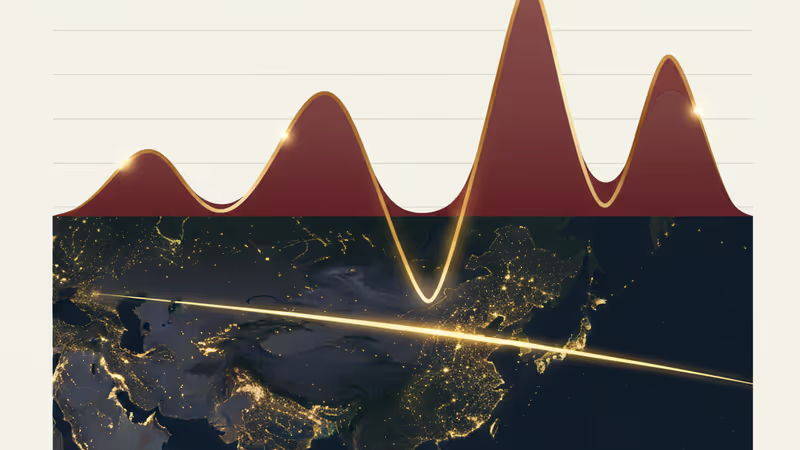
A new KPMG report finds three in four multinational corporations in China maintained or increased investment in 2025, despite mounting political pressure from Washington to decouple.

Analysts note a 'significant departure' in President Trump's foreign policy during the first year of his second term. PRISM explores what this 2025 strategic shift means for key global relationships with NATO and China.

Donald Trump claims he will build the most powerful warship ever, but the promise clashes with the U.S. Navy's recent cancellation of a smaller ship due to cost overruns, raising questions about feasibility.
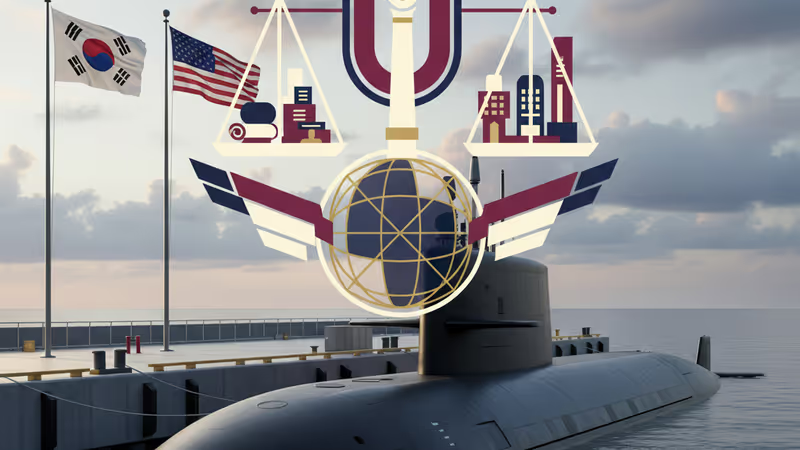
The U.S. nuclear submarine USS Greeneville arrived in Busan, South Korea, on Dec. 23, 2025, for a logistical stop. This visit reinforces the U.S.-South Korea defense alliance and serves as a strategic signal of deterrence in the region.