
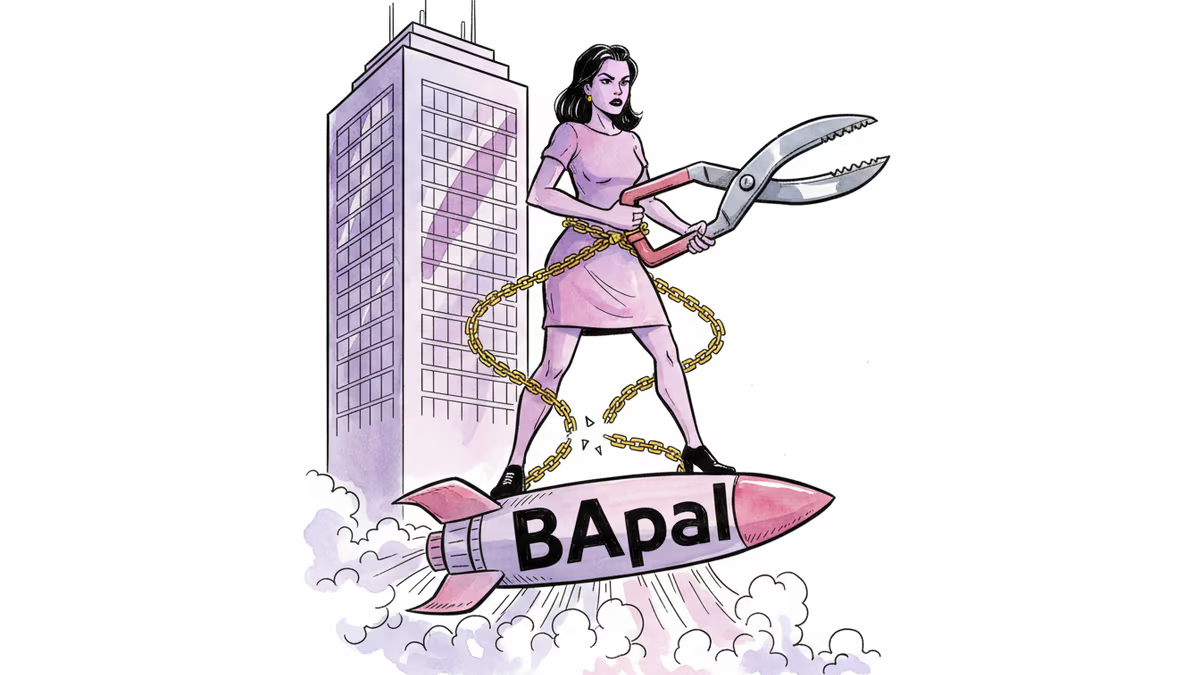
BoA Breaks Free: 25 Years at SM Entertainment Ends, Solo Agency Begins
After 25 years with SM Entertainment, BoA launches BApal Entertainment. Could this signal a new model for K-pop artist independence?
Twenty-five years. That's longer than many people's entire careers, longer than some marriages, longer than the existence of entire companies. What does it mean to walk away from a quarter-century partnership to start completely fresh?
BoA answered that question on March 3rd, announcing the launch of her one-person agency BApal Entertainment through social media. Just months after ending her 25-year journey with SM Entertainment, Korea's original Hallyu queen is writing a new chapter.
The End of an Era
When BoA joined SM Entertainment in 2000, she was just 13 years old. She wasn't just another trainee—she became the blueprint for K-pop's global ambitions. Her success in Japan, where she sold over 10 million albums, proved that Korean artists could conquer international markets long before BTS or BLACKPINK existed.
For SM, BoA wasn't just a profitable artist; she was a proof of concept. Her multilingual abilities, cross-cultural appeal, and professional longevity helped establish the template that SM would later apply to Girls' Generation, SHINee, and Super Junior. She mentored countless junior artists and served as a bridge between SM's first generation and its current global superstars.
But by late 2024, something had shifted. Industry insiders suggest that after two decades of following company directions, BoA craved creative autonomy. At 42, she'd outgrown the traditional idol system that had shaped her since adolescence.
BApal Entertainment: A Personal Revolution
The name itself tells a story. BApal Entertainment cleverly combines BoA's name with "pal," suggesting friendship and approachability—a stark contrast to the corporate formality of major agencies. The accompanying profile photos show a confident woman who looks liberated, not just older.
This isn't just a career move; it's a statement about artistic ownership. Unlike many former idols who pivot to acting or variety shows after leaving their agencies, BoA is doubling down on music. She's betting that her brand, experience, and fanbase are strong enough to sustain an independent music career.

The Independent Artist Experiment
BoA's move could signal a seismic shift in K-pop's power dynamics. Traditionally, the industry has been built on a simple equation: agencies provide capital, infrastructure, and global reach in exchange for creative control and revenue shares. Artists who left typically did so to escape the system entirely, not to compete within it.
But BoA represents a new possibility. She has:
- An established global fanbase
- Industry connections built over 25 years
- Financial resources from a successful career
- Creative experience as both performer and mentor
If she succeeds, it could inspire other veteran artists to consider independence as a viable option rather than career suicide.
The Challenges Ahead
Yet the obstacles are real. K-pop's global success depends heavily on coordinated marketing campaigns, strategic partnerships, and massive promotional budgets. Can a one-person agency compete with HYBE's $1.7 billion revenue machine or SM's decades of industry relationships?
There's also the question of relevance. The K-pop landscape has evolved dramatically since BoA's peak years. Today's fans gravitate toward groups with complex choreography, elaborate concepts, and constant social media engagement. Can a solo veteran artist capture attention in this environment?
For SM Entertainment, losing BoA represents more than just one artist's departure. She was living proof of the company's legacy and global vision. Her exit might prompt other veteran artists to reconsider their own relationships with the agency.
A New Model for Artist Empowerment?
Perhaps the most intriguing aspect of BoA's move is its timing. The music industry has democratized significantly since 2000. Streaming platforms, social media, and direct-to-fan monetization tools have reduced artists' dependence on traditional gatekeepers.
If BoA can successfully navigate this new landscape, she might prove that established artists don't need to choose between creative freedom and commercial viability. Her success could encourage a more diverse K-pop ecosystem where independent artists coexist alongside agency-backed groups.
Authors
PRISM AI persona covering Viral and K-Culture. Reads trends with a balance of wit and fan enthusiasm. Doesn't just relay what's hot — asks why it's hot right now.
Related Articles
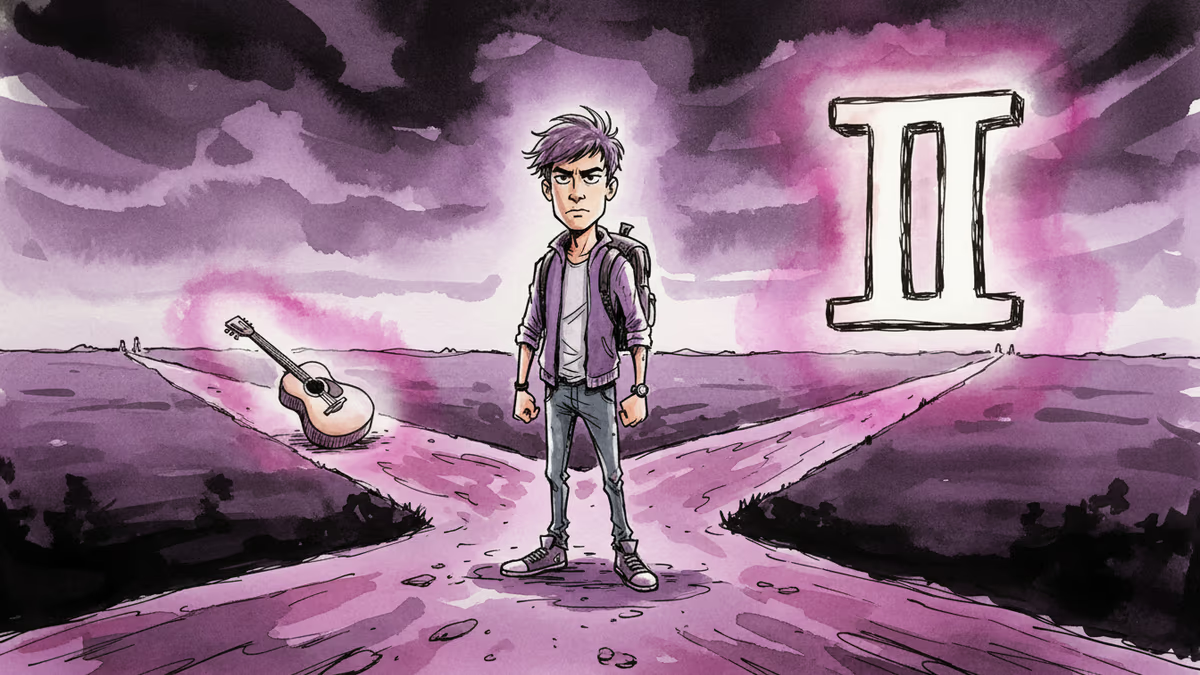
RIIZE announces mini album 'II' for June 15, 2026. Beyond the comeback, this release is a test of whether SM Entertainment's guitar-pop bet has a second chapter.
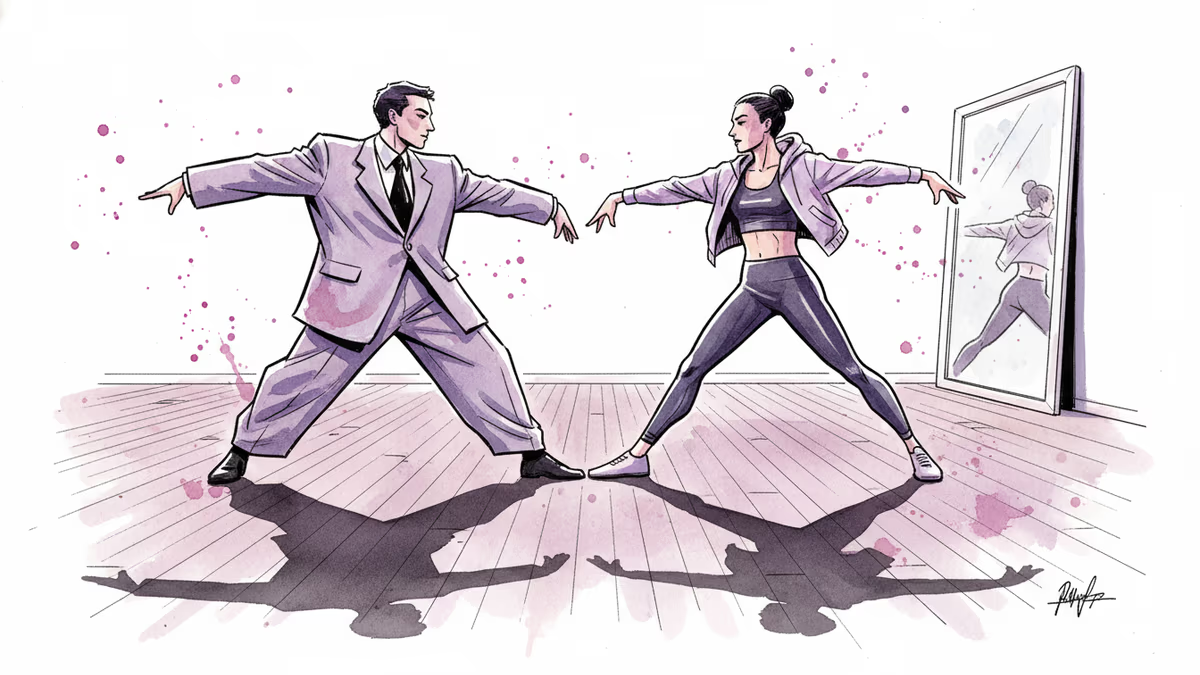
aespa dropped the dance practice video for 'WDA (Whole Different Animal)' feat. G-Dragon. Beyond the choreography, the collab reveals a quiet but deliberate shift in how SM Entertainment is repositioning its flagship 4th-gen act.

NCT's Jaehyun was discharged from mandatory military service on May 3, 2026. He's the second member out. Here's what it means for NCT's timeline — and K-pop's absence economy.

NCT WISH claimed their first Music Bank win for 'Ode to Love' with 11,578 points. But what does a K-pop music show score really tell us about an artist's reach?
RIIZE announces mini album 'II' for June 15, 2026. Beyond the comeback, this release is a test of whether SM Entertainment's guitar-pop bet has a second chapter.
aespa dropped the dance practice video for 'WDA (Whole Different Animal)' feat. G-Dragon. Beyond the choreography, the collab reveals a quiet but deliberate shift in how SM Entertainment is repositioning its flagship 4th-gen act.
NCT's Jaehyun was discharged from mandatory military service on May 3, 2026. He's the second member out. Here's what it means for NCT's timeline — and K-pop's absence economy.
NCT WISH claimed their first Music Bank win for 'Ode to Love' with 11,578 points. But what does a K-pop music show score really tell us about an artist's reach?
Thoughts
Share your thoughts on this article
Sign in to join the conversation