
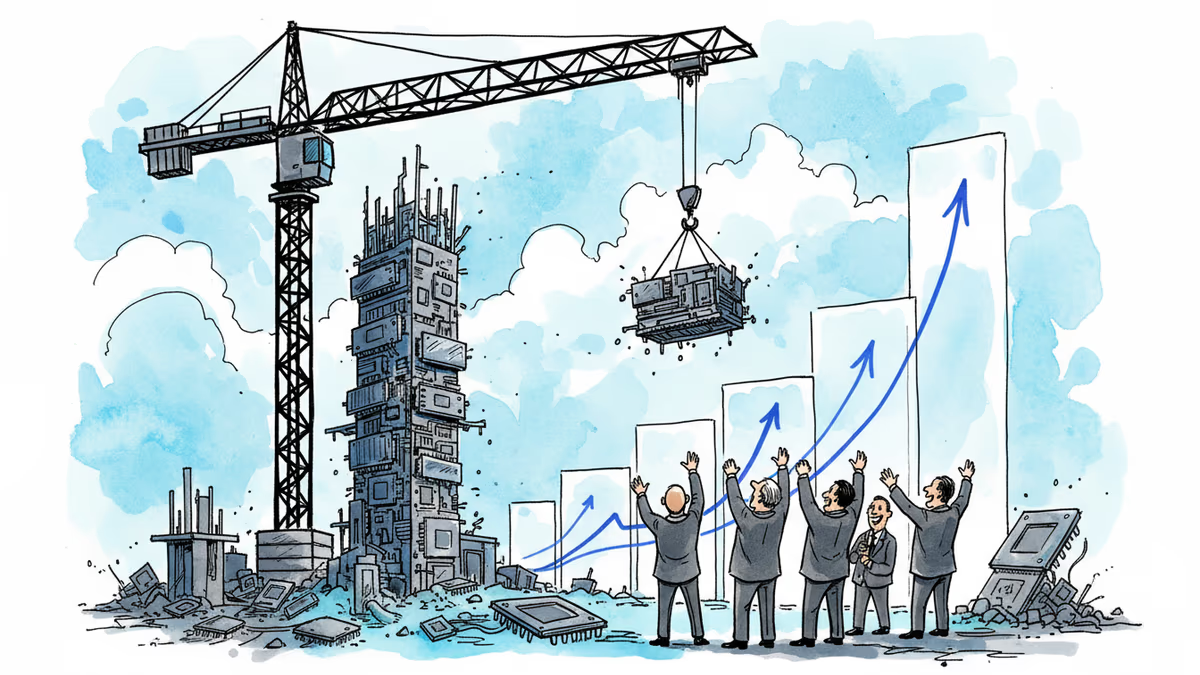
India's AI Gold Rush Attracts $600M Blackstone Bet
Blackstone invests $600M in Indian AI startup Neysa as GPU demand set to grow 30x. Why India's AI infrastructure boom matters for global tech strategy.
From 60,000 to 2 Million GPUs
India currently has fewer than 60,000 GPUs deployed. Blackstone believes this number will scale nearly 30 times to over 2 million in the coming years. That projection just convinced the private equity giant to write a $600 million check to Neysa, a Mumbai-based AI infrastructure startup most people haven't heard of.
The math is staggering. Neysa currently operates 1,200 GPUs but plans to scale to over 20,000. Founded just three years ago, the company is already planning to more than triple its revenue next year. But this isn't just about one startup's growth story—it's about India positioning itself as the next battleground for AI infrastructure.
The Neo-Cloud Opportunity
Why would anyone bet against Amazon Web Services or Google Cloud? The answer lies in what industry insiders call the "neo-cloud" segment—specialized providers that offer something hyperscalers often can't: white-glove service.
"A lot of customers want hand-holding, and a lot of them want round-the-clock support with a 15-minute response," explains Neysa CEO Sharad Sanghi. "Those are the kinds of things that we provide that some of the hyperscalers don't."
This isn't just about customer service. India's regulated sectors—financial services, healthcare, government—require data to stay local. Global AI companies with massive Indian user bases need computing capacity closer to users to reduce latency. Traditional cloud providers, optimized for scale and standardization, often struggle with these specific requirements.
Blackstone's Infrastructure Play

For Blackstone, this investment extends a broader thesis about AI infrastructure scarcity. The firm has previously backed CoreWeave in the U.S., AirTrunk in Australia, and QTS globally. The pattern is clear: identify markets where demand for specialized AI computing outstrips supply, then bet big on providers who can bridge that gap.
Ganesh Mani, a senior managing director at Blackstone Private Equity, points to three demand drivers: government digitization initiatives, enterprises in regulated sectors needing local data processing, and AI developers building India-specific models. The combination creates what he sees as a "perfect storm" for infrastructure investment.
Neysa plans to raise an additional $600 million in debt financing, bringing total funding to $1.2 billion—a massive jump from the $50 million it had raised previously.
The Global Context
This investment reflects broader shifts in AI infrastructure. As model training becomes more expensive and specialized, the traditional "one-size-fits-all" cloud approach is showing limitations. Enterprises want dedicated GPU clusters, custom networking configurations, and compliance guarantees that hyperscalers often can't provide at scale.
India represents a particularly attractive market because local demand is growing faster than local supply. Government AI initiatives, a booming startup ecosystem, and multinational corporations establishing Indian AI operations all need computing power. But unlike mature markets where hyperscalers dominate, India's AI infrastructure landscape remains relatively open.
Beyond the Numbers Game
The 30x GPU growth projection raises questions about sustainability and strategy. Can India's power grid handle this massive increase in energy-intensive computing? Will the skilled workforce scale proportionally? And most importantly, will local providers like Neysa maintain their competitive edge as global giants inevitably increase their Indian presence?
Neysa's current team of 110 employees across Mumbai, Bengaluru, and Chennai will need to scale rapidly. The startup's software platforms for orchestration, observability, and security—built specifically for Indian market needs—represent its key differentiator as competition intensifies.
Authors
Related Articles

Snowflake's new $6 billion AWS contract is about more than cloud spending. It signals a shift in AI infrastructure—away from Nvidia GPUs and toward cheaper, homegrown chips for the agent era.
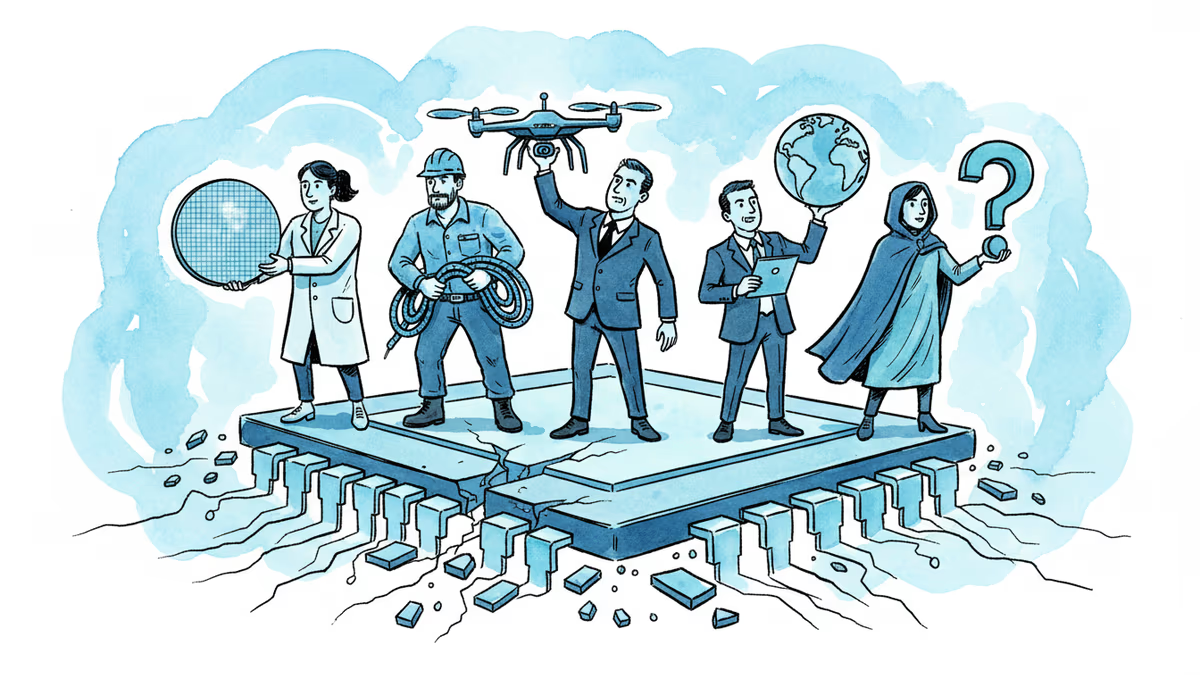
At Milken 2026, five AI insiders—from the CEO of ASML to a quantum physicist challenging LLMs—laid out the physical, energy, and geopolitical limits the AI boom is running into.
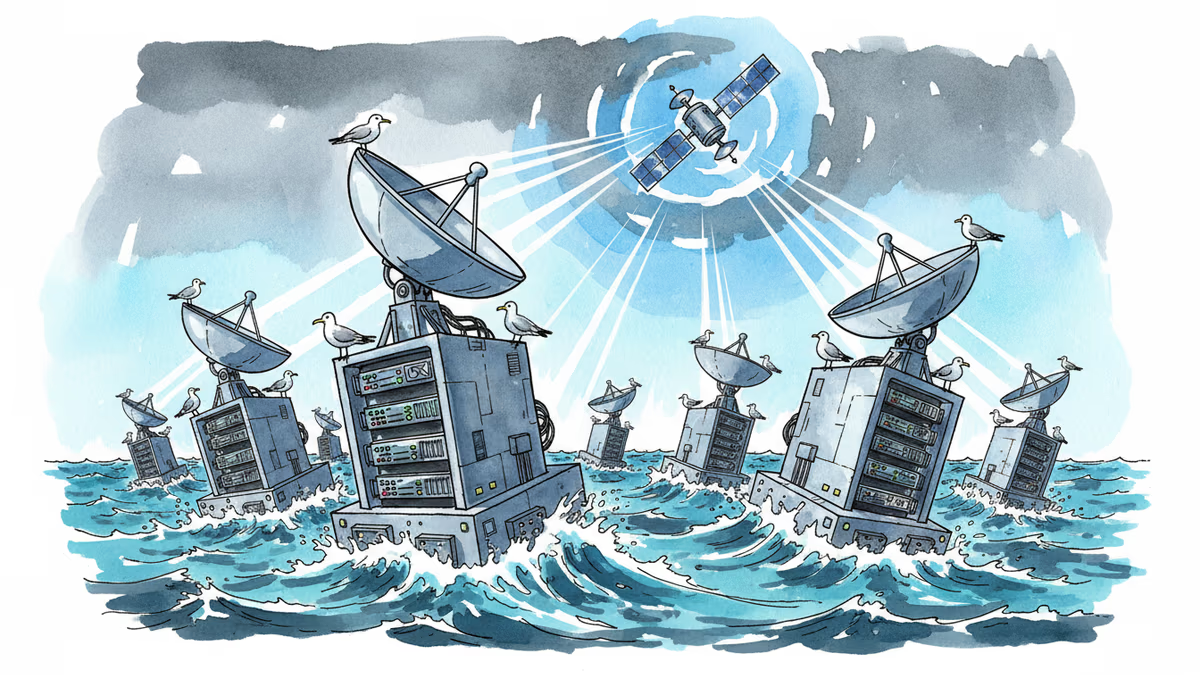
Palantir co-founder Peter Thiel and other Silicon Valley investors have poured $140 million into Panthalassa, a startup building wave-powered floating AI data centers in the open ocean. Here's what that actually means.
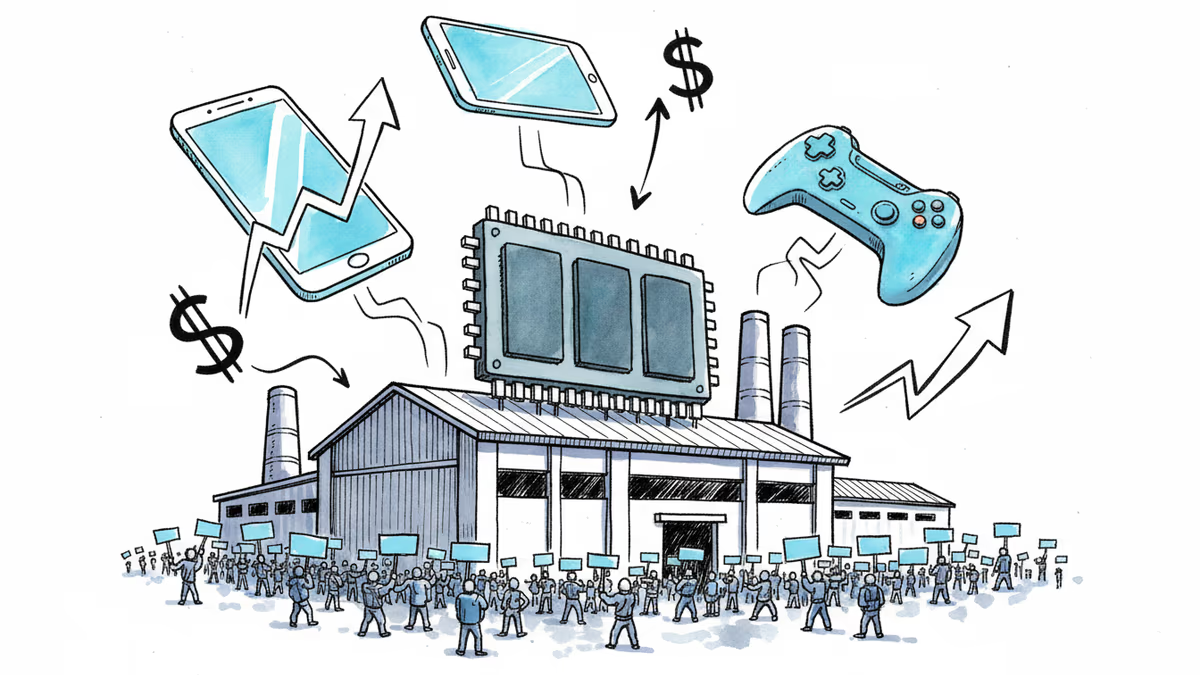
40,000 Samsung union workers rallied at its Pyeongtaek chip plant, threatening an 18-day strike over wages. With AI-driven RAM shortages already lifting consumer prices, the timing couldn't be worse.
Snowflake's new $6 billion AWS contract is about more than cloud spending. It signals a shift in AI infrastructure—away from Nvidia GPUs and toward cheaper, homegrown chips for the agent era.
At Milken 2026, five AI insiders—from the CEO of ASML to a quantum physicist challenging LLMs—laid out the physical, energy, and geopolitical limits the AI boom is running into.
Palantir co-founder Peter Thiel and other Silicon Valley investors have poured $140 million into Panthalassa, a startup building wave-powered floating AI data centers in the open ocean. Here's what that actually means.
40,000 Samsung union workers rallied at its Pyeongtaek chip plant, threatening an 18-day strike over wages. With AI-driven RAM shortages already lifting consumer prices, the timing couldn't be worse.
Thoughts
Share your thoughts on this article
Sign in to join the conversation