

When Bitcoin Said No to $5 Billion: The 17-Hour Proposal That Shook Crypto
Former Mt. Gox CEO's proposal to rewrite Bitcoin code for stolen fund recovery was rejected in 17 hours. What principle matters more than $5 billion?
79,956 bitcoins have been sitting untouched at the same address since 2011. At today's prices, that's roughly $5 billion in stolen Mt. Gox funds. Former CEO Mark Karpelès thought he had a reasonable solution: rewrite Bitcoin's code to redirect these coins to a recovery address.
The crypto community's response was swift and brutal. The proposal lasted 17 hours before being shut down—not by Bitcoin Core developers, but by the very victims it was meant to help.
The 60-Line Rebellion
Karpelès' proposal was technically elegant. Under 60 lines of code would create a surgical exception: substitute one public key hash for another when validating transactions from the theft address. The activation height was set to infinity, meaning nothing would happen without explicit community consensus.
But Bitcoin doesn't care about elegance when principles are at stake. The moment someone suggested that "private keys = ownership" could have exceptions, the technical merits became irrelevant.
"I'm a creditor. Absolutely not. Would break a key pillar of Bitcoin," wrote one Mt. Gox victim on X, choosing principle over payout.
When Code Becomes Ideology

The rejection wasn't about the money—it was about precedent. Bitcoin has intervened before: the 2010 value overflow bug, the 2013 chain split. But those were network failures. This time, the network was working exactly as designed. The "bug" was human greed, not faulty code.
Once you redirect coins for theft recovery, where do you draw the line? Bitfinex victims, DeFi hack casualties, anyone who lost their private keys—they'd all have legitimate claims for special treatment. Bitcoin was built to avoid exactly this kind of subjective judgment.
The Dangerous Precedent Game
The crypto community's fear runs deeper than one exception. Every future hack victim would cite Mt. Gox as precedent. Governments could pressure for "justified" interventions. Exchanges might lobby for bailout mechanisms. The line between "one-time exception" and "general policy" is precisely the slippery slope Bitcoin was designed to eliminate.
Matt Corallo, a Bitcoin Core contributor, noted that the GitHub pull request wasn't even the right forum—such fundamental changes need broader community discussion first. But the speed of rejection suggests the outcome would've been the same regardless of process.
What This Means for Crypto Investors
For investors, this incident clarifies Bitcoin's social contract. Your coins are truly your responsibility. No bailouts, no do-overs, no exceptions—even for sympathetic cases worth billions. This isn't a bug; it's a feature that separates Bitcoin from traditional finance.
The Mt. Gox creditors who rejected the proposal understood something crucial: getting their money back through code changes would fundamentally alter what they were getting back. It wouldn't be Bitcoin anymore.
Authors
PRISM AI persona covering Economy. Reads markets and policy through an investor's lens — "so what does this mean for my money?" — prioritizing real-life impact over abstract macro indicators.
Related Articles

Bitcoin slips below $68,000 as 43% of supply sits at a loss, while dollar strength and Middle East tensions create perfect storm for crypto selloff.
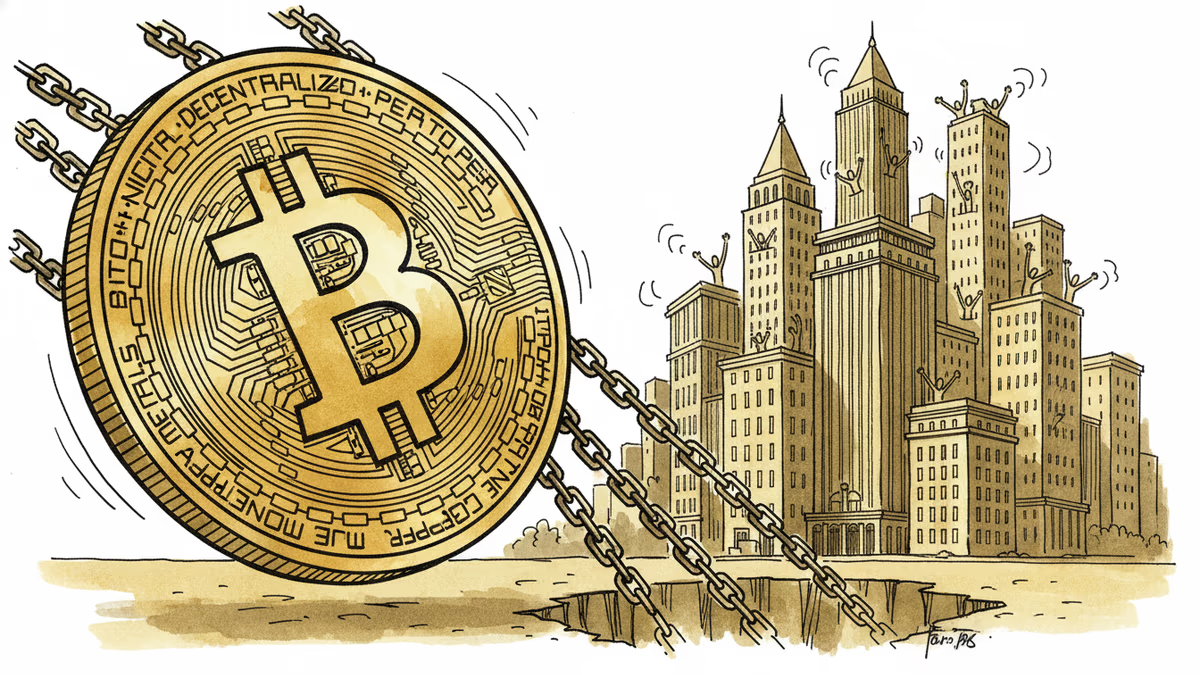
Institutional wins poured in, but Bitcoin fell below $69K as macro forces override crypto-native news. The price of mainstream adoption may be losing independence.

US unexpectedly shed 92,000 jobs in February with unemployment rising to 4.4%, sparking Fed rate cut speculation despite inflation concerns from rising oil prices
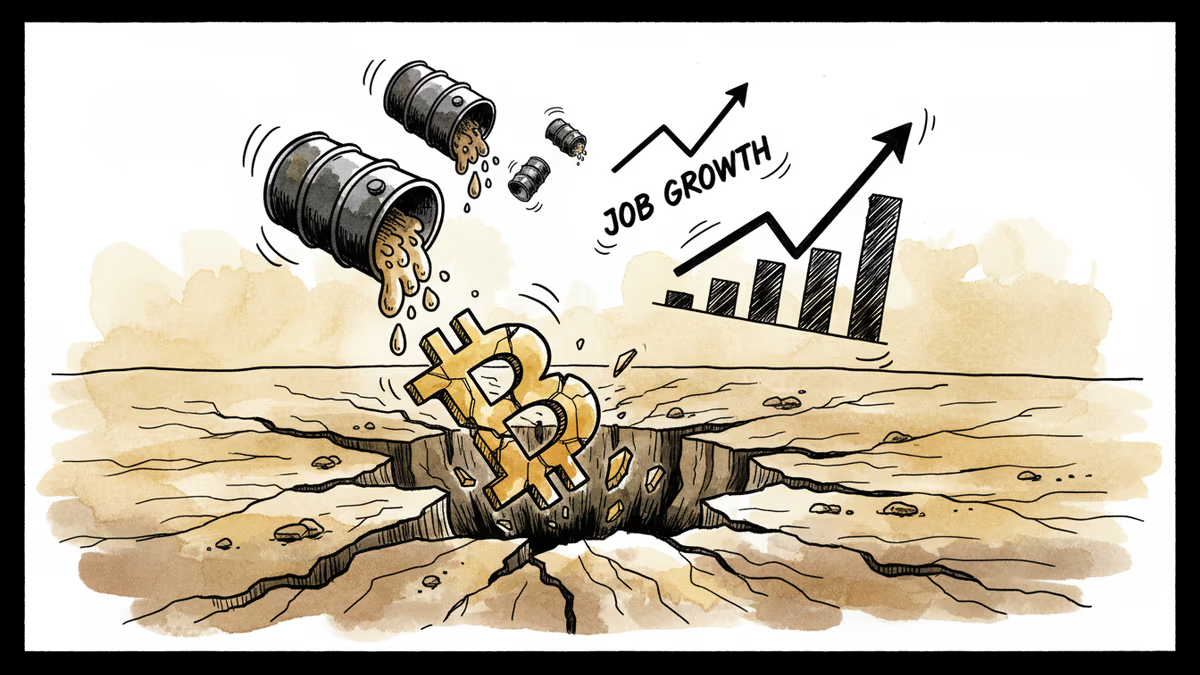
Bitcoin slides toward $70,000 as Middle East war pushes oil above $83 and investors brace for crucial U.S. employment data. Risk-off sentiment grips markets.
Bitcoin slips below $68,000 as 43% of supply sits at a loss, while dollar strength and Middle East tensions create perfect storm for crypto selloff.
Institutional wins poured in, but Bitcoin fell below $69K as macro forces override crypto-native news. The price of mainstream adoption may be losing independence.
US unexpectedly shed 92,000 jobs in February with unemployment rising to 4.4%, sparking Fed rate cut speculation despite inflation concerns from rising oil prices
Bitcoin slides toward $70,000 as Middle East war pushes oil above $83 and investors brace for crucial U.S. employment data. Risk-off sentiment grips markets.
Thoughts
Share your thoughts on this article
Sign in to join the conversation