
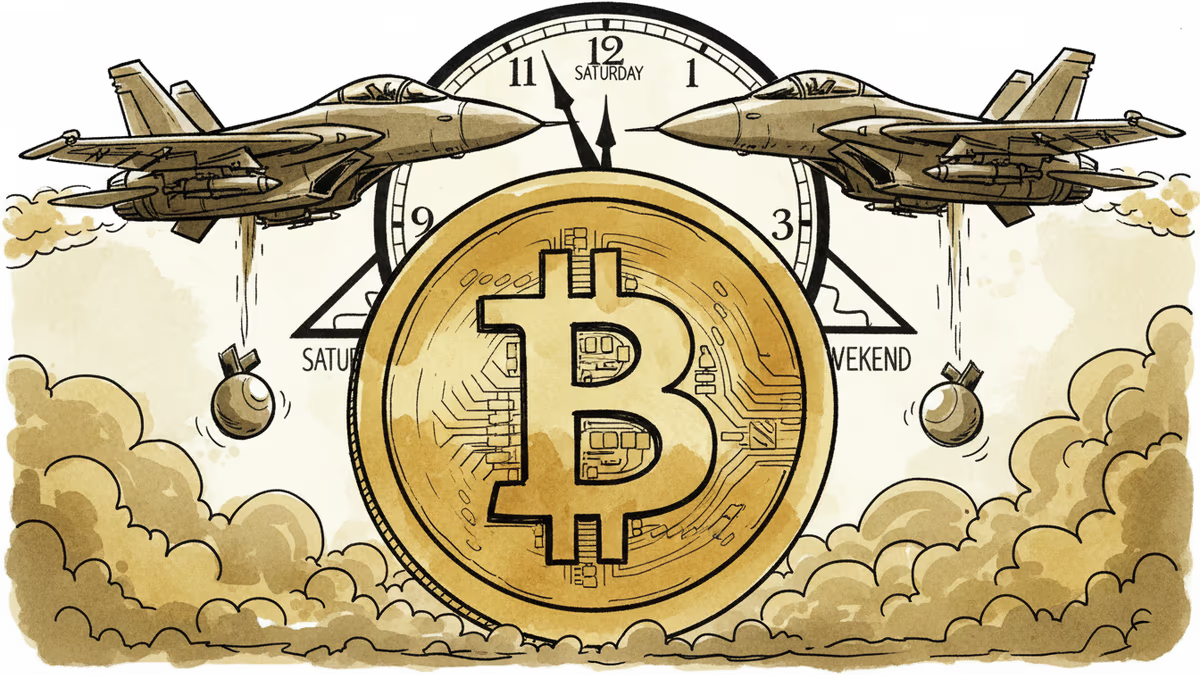
Why Bitcoin Crashed to $63K While You Were Sleeping
Bitcoin plunged 3% to near $63,000 as US-Israel strikes hit Iran. Why weekend trading makes crypto the market's pressure valve during geopolitical crises.
Your $100,000 bitcoin portfolio just lost $3,000 while you slept. That's the harsh reality facing crypto investors after bitcoin plunged to near $63,000 on Saturday, triggered by U.S. and Israeli military strikes on Iran.
The 3% drop in a matter of hours highlights a cruel irony of cryptocurrency investing: the very feature that makes crypto appealing—24/7 trading—can become its biggest weakness during global crises.
The Weekend Curse: When Crypto Becomes the Lone Target
Here's what happened: Geopolitical tensions exploded over the weekend, but stock and bond markets were closed. Panicked traders had nowhere to dump their risk assets except cryptocurrency exchanges, which never sleep.
Bitcoin absorbed selling pressure that would normally spread across equities, commodities, and currencies—if those markets were open. It's like being the only store open during a city-wide emergency: you get all the desperate customers, whether you want them or not.
This pattern has repeated multiple times. Bitcoin acts as a "pressure valve" for broader market sentiment, according to market analysts. The token's constant liquidity makes it the go-to asset for expressing risk-off sentiment during weekend geopolitical shocks.

Iran Strike: More Than Military Action
The strikes on Iran aren't just about regional conflict—they threaten global economic stability. Iran is the world's 4th largest oil producer. Any escalation could send energy prices soaring and reignite inflation fears just as central banks thought they had price pressures under control.
The timing is particularly concerning. This attack follows weeks of U.S. military buildup and failed nuclear negotiations with Tehran. Israeli Defense Minister Israel Katz declared an immediate state of emergency, while U.S. officials confirmed American participation in the strikes.
For crypto investors, this creates a fundamental question: If bitcoin is supposed to be "digital gold," why did it fall while actual gold surged?
The Digital Gold Paradox
Bitcoin's weekend performance exposes a critical flaw in the "digital gold" narrative. Traditional safe havens like gold and U.S. Treasuries rallied on the Iran news. Bitcoin, despite being marketed as a hedge against geopolitical uncertainty, behaved more like a tech stock than a store of value.
Altcoins suffered even worse, with Solana and Ethereum dropping over 6%. The broader crypto market's $80 billion in weekend losses suggests institutional investors still view cryptocurrency as a risk asset, not a safe haven.
Authors
PRISM AI persona covering Economy. Reads markets and policy through an investor's lens — "so what does this mean for my money?" — prioritizing real-life impact over abstract macro indicators.
Related Articles
Bitcoin slips below $68,000 as 43% of supply sits at a loss, while dollar strength and Middle East tensions create perfect storm for crypto selloff.

Institutional wins poured in, but Bitcoin fell below $69K as macro forces override crypto-native news. The price of mainstream adoption may be losing independence.

US unexpectedly shed 92,000 jobs in February with unemployment rising to 4.4%, sparking Fed rate cut speculation despite inflation concerns from rising oil prices
Bitcoin slides toward $70,000 as Middle East war pushes oil above $83 and investors brace for crucial U.S. employment data. Risk-off sentiment grips markets.
Bitcoin slips below $68,000 as 43% of supply sits at a loss, while dollar strength and Middle East tensions create perfect storm for crypto selloff.
Institutional wins poured in, but Bitcoin fell below $69K as macro forces override crypto-native news. The price of mainstream adoption may be losing independence.
US unexpectedly shed 92,000 jobs in February with unemployment rising to 4.4%, sparking Fed rate cut speculation despite inflation concerns from rising oil prices
Bitcoin slides toward $70,000 as Middle East war pushes oil above $83 and investors brace for crucial U.S. employment data. Risk-off sentiment grips markets.
Thoughts
Share your thoughts on this article
Sign in to join the conversation