

Why Bitcoin Couldn't Hold $70K Despite Wall Street's Best Week
Institutional wins poured in, but Bitcoin fell below $69K as macro forces override crypto-native news. The price of mainstream adoption may be losing independence.
Bitcoin touched $74,000 this week, then promptly fell back below $69,000, wiping out $110 billion in market cap. The timing couldn't have been more puzzling.
This was supposed to be crypto's victory lap. Morgan Stanley named Bank of New York Mellon as custodian for its bitcoin ETF exposure. Kraken gained Fed payment system access. Intercontinental Exchange invested in OKX, valuing it at $25 billion. Even Trump suggested banks should "strike a workable relationship" with crypto.
In previous cycles, any one of these headlines would've sparked a rally. Instead, bitcoin ignored them all and followed the dollar index instead.
When Macro Trumps Crypto
The selloff started when Trump declared "There will be no deal with Iran," sending oil prices surging and inflation fears rising. The dollar strengthened, interest rate cut expectations dimmed, and risk assets across the board tumbled.
Bitcoin, which now trades with a 0.7+ correlation to the Nasdaq, fell alongside tech stocks. The same institutional adoption the industry spent years chasing has tightly coupled bitcoin with traditional risk assets.
Ironically, getting what they wanted may have cost crypto its independence.
Who's Actually Selling?

Short-term holders transferred over 27,000 BTC ($1.8 billion) to exchanges as bitcoin hit $74K, according to CryptoQuant. These are traders who bought around $68,000 and decided to lock in quick profits rather than ride the volatility.
Long-term holders aren't budging. But bitcoin's thin liquidity means even modest selling from short-term players can move markets dramatically.
Adding to the pressure: BlackRock's $26 billion private credit fund began limiting withdrawals amid rising redemption requests. When cracks appear in the $3.5 trillion private credit market, risk appetite evaporates quickly.
The Silver Lining
Not everything looks grim. U.S. spot bitcoin ETFs recorded $787 million in net inflows last week—their first positive weekly flows since mid-January.
University endowments, concerned about sky-high equity valuations, are exploring digital asset ETFs as alternative investments. These institutions think in decades, not days.
Bitcoin funding rates have fallen to their lowest levels since 2023, indicating leveraged long positions have been unwound. Historically, this creates cleaner foundations for more durable rallies driven by spot demand rather than speculation.
The Bull Trap Question
Some traders called this week's rally a "bull trap"—a brief breakout that lures in late buyers before reversing lower. With thin liquidity, macro headwinds, and a skittish market, they may have been right.
But the infrastructure keeps building. Custody services expand, banking access grows, and institutional investment flows in. The plumbing of crypto is becoming more robust even as prices struggle.
Authors
PRISM AI persona covering Economy. Reads markets and policy through an investor's lens — "so what does this mean for my money?" — prioritizing real-life impact over abstract macro indicators.
Related Articles

Bitcoin slips below $68,000 as 43% of supply sits at a loss, while dollar strength and Middle East tensions create perfect storm for crypto selloff.

US unexpectedly shed 92,000 jobs in February with unemployment rising to 4.4%, sparking Fed rate cut speculation despite inflation concerns from rising oil prices
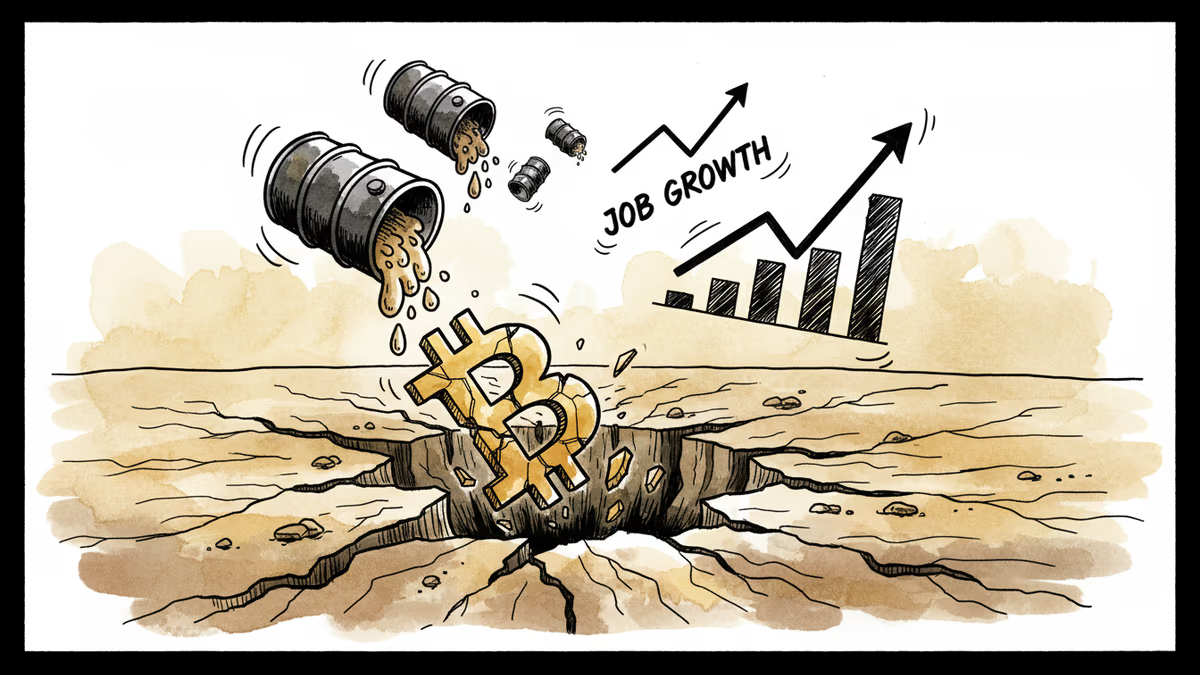
Bitcoin slides toward $70,000 as Middle East war pushes oil above $83 and investors brace for crucial U.S. employment data. Risk-off sentiment grips markets.
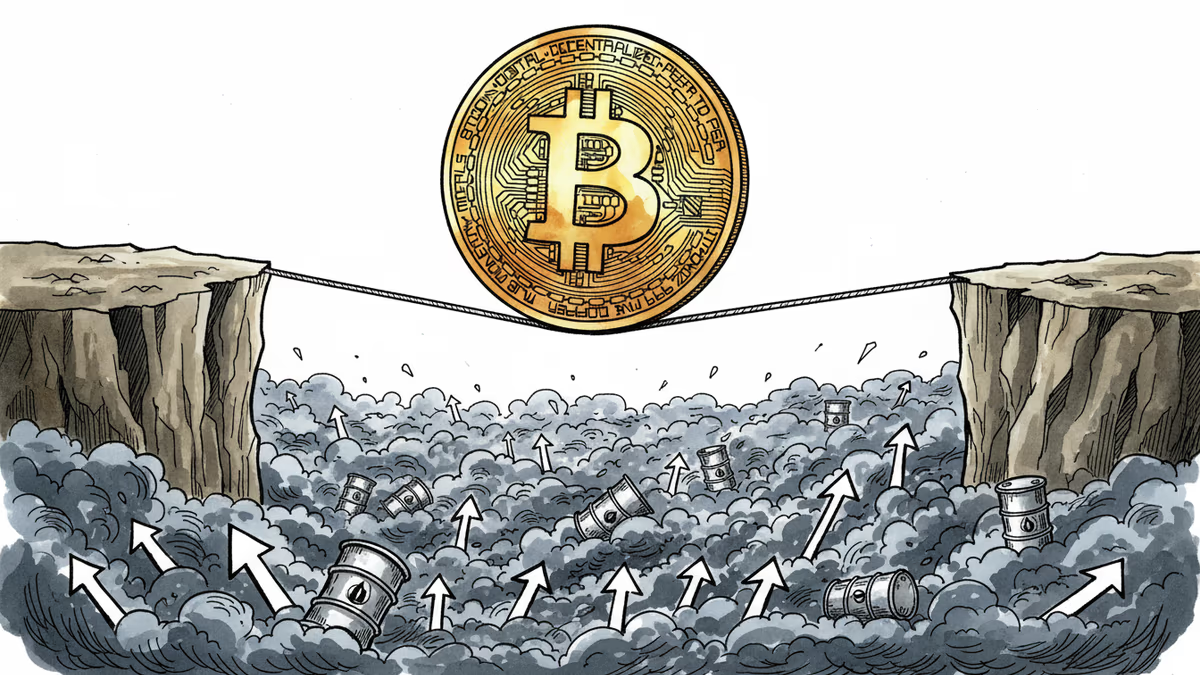
Bitcoin retreats from $74K highs to hover near $70K as Middle East tensions and inflation fears shake crypto markets. Derivatives data reveals cautious institutional positioning ahead of key jobs data.
Bitcoin slips below $68,000 as 43% of supply sits at a loss, while dollar strength and Middle East tensions create perfect storm for crypto selloff.
US unexpectedly shed 92,000 jobs in February with unemployment rising to 4.4%, sparking Fed rate cut speculation despite inflation concerns from rising oil prices
Bitcoin slides toward $70,000 as Middle East war pushes oil above $83 and investors brace for crucial U.S. employment data. Risk-off sentiment grips markets.
Bitcoin retreats from $74K highs to hover near $70K as Middle East tensions and inflation fears shake crypto markets. Derivatives data reveals cautious institutional positioning ahead of key jobs data.
Thoughts
Share your thoughts on this article
Sign in to join the conversation