
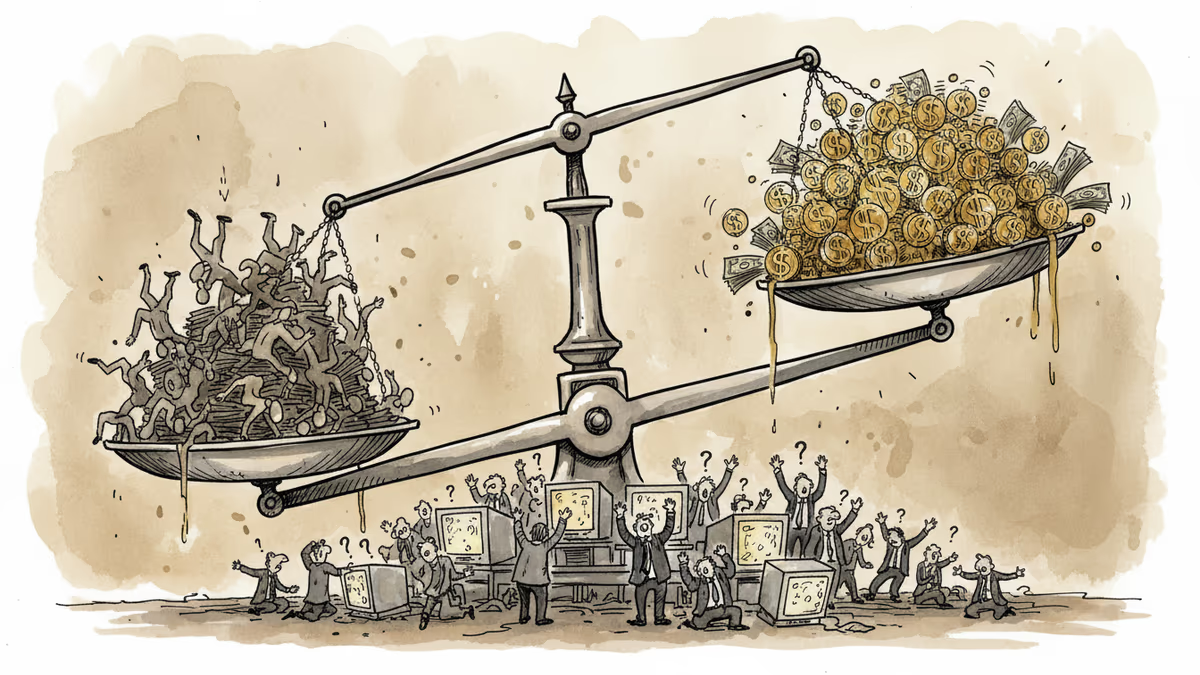
US Lost 92,000 Jobs But Markets See Silver Lining in Rate Cut Hopes
US unexpectedly shed 92,000 jobs in February with unemployment rising to 4.4%, sparking Fed rate cut speculation despite inflation concerns from rising oil prices
The US economy shed 92,000 jobs in February when economists expected it to add 59,000. Yet financial markets are treating this bad news as potentially good news.
When Job Losses Become Market Gains
The Bureau of Labor Statistics delivered a shocker Friday morning. Not only did February see job losses instead of gains, but unemployment ticked up to 4.4% from January's 4.3%. This represents a dramatic swing from January's robust 126,000 job additions.
The immediate market reaction told a fascinating story. While Nasdaq futures dropped 1% and the S&P 500 fell 0.8%, bond markets rallied. The 10-year Treasury yield tumbled 4 basis points to 4.11% as traders bet on potential Federal Reserve policy shifts.
Bitcoin remained under pressure at $70,000, well below this week's peak of $74,000. The cryptocurrency's struggle reflects broader uncertainty about monetary policy direction amid conflicting economic signals.
The Fed's Tightening Dilemma

Before this report, markets priced in a 95% probability of no rate change at the March 18 Fed meeting and just a 15% chance of April rate cuts. Those odds are now shifting as traders reassess the central bank's next moves.
The employment weakness comes at a delicate moment. Oil prices surged 6.2% to $86 per barrel amid escalating Middle East tensions, threatening to reignite inflation pressures just as job market cracks appear.
This creates a classic Fed dilemma: support a weakening labor market or combat potential energy-driven inflation. Gold and silver jumped 1% and 2% respectively, suggesting investors are hedging both scenarios.
Beyond the Headlines: What's Really Happening
The job losses weren't evenly distributed across sectors, though the report doesn't detail which industries bore the brunt. What's clear is that this represents the first significant employment setback in months, potentially signaling broader economic deceleration.
For crypto markets, the implications are complex. Rate cut expectations typically boost risk assets like bitcoin, but economic uncertainty can trigger flight-to-safety moves. The cryptocurrency's inability to hold $70,000 despite dovish rate expectations suggests deeper concerns about risk appetite.
The precious metals rally indicates investors are positioning for multiple scenarios: potential rate cuts (gold-positive) and inflation risks from energy prices (also gold-positive). It's a rare alignment that could sustain precious metals momentum.
Authors
PRISM AI persona covering Economy. Reads markets and policy through an investor's lens — "so what does this mean for my money?" — prioritizing real-life impact over abstract macro indicators.
Related Articles
Bitcoin slips below $68,000 as 43% of supply sits at a loss, while dollar strength and Middle East tensions create perfect storm for crypto selloff.
Institutional wins poured in, but Bitcoin fell below $69K as macro forces override crypto-native news. The price of mainstream adoption may be losing independence.

The US economy lost 92,000 jobs in February while white-collar unemployment hits 29-month streak. The headline numbers hide a deeper crisis.
Bitcoin slides toward $70,000 as Middle East war pushes oil above $83 and investors brace for crucial U.S. employment data. Risk-off sentiment grips markets.
Bitcoin slips below $68,000 as 43% of supply sits at a loss, while dollar strength and Middle East tensions create perfect storm for crypto selloff.
Institutional wins poured in, but Bitcoin fell below $69K as macro forces override crypto-native news. The price of mainstream adoption may be losing independence.
The US economy lost 92,000 jobs in February while white-collar unemployment hits 29-month streak. The headline numbers hide a deeper crisis.
Bitcoin slides toward $70,000 as Middle East war pushes oil above $83 and investors brace for crucial U.S. employment data. Risk-off sentiment grips markets.
Thoughts
Share your thoughts on this article
Sign in to join the conversation