
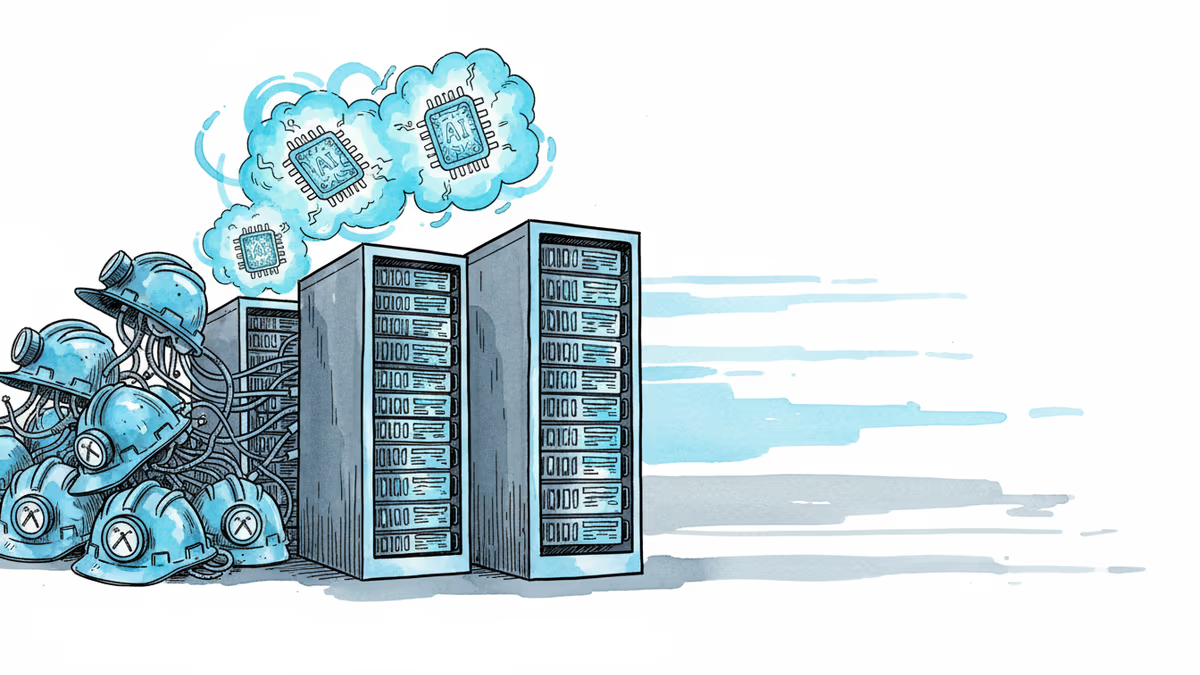
Bitcoin Miners Pivot to AI as MARA Soars 16%, But CoreWeave Stumbles
Mixed earnings highlight the divergence between AI expansion plays and profitability pressures as crypto miners chase new revenue streams in the AI boom.
MARA Holdings jumped 16% in pre-market trading. Block surged 20%. But here's the twist: these aren't bitcoin stories anymore. They're AI infrastructure plays dressed up in crypto clothing.
The latest earnings from crypto miners and fintech companies reveal a sector in transition, where success increasingly depends on pivoting away from the very business that made them famous.
The Great Mining Pivot
MARA Holdings struck a deal with Starwood Capital to convert select bitcoin mining facilities into AI-focused data centers. The partnership expects to deliver 1 gigawatt of capacity near-term, scaling beyond 2.5 gigawatts later.
This isn't an isolated move. Bitfarms, Cipher Digital, and others are following the same playbook. TerraWulf has expanded from one site a year ago to five today, targeting 2.9 gigawatts of gross capacity by year-end.
The logic is compelling: miners already have the power infrastructure that AI desperately needs. Why dig for digital gold when you can rent out the shovels?
Block's Brutal Math
Block took a different approach to investor confidence: mass layoffs. The company announced it will cut more than 40% of its workforce, reducing headcount to about 6,000.

Management framed this as "AI-driven efficiencies," but the reality is more complex. The company faces margin pressure from stablecoin-based payment rails, forcing a retreat to 2019 scale operations.
Yet investors cheered. Block guided Q1 operating income to $600M versus $574M expected and raised full-year gross profit forecasts to $2.8B.
The CoreWeave Reality Check
Not everyone is winning the AI transition. CoreWeave dropped 12% despite beating revenue expectations with $1.57 billion versus $1.53 billion forecast.
The problem? Earnings per share came in at -$0.89 versus -$0.68 expected—a 31% miss. Weaker Q1 revenue guidance and increased capital expenditure plans raised concerns about profitability and cash burn.
CoreWeave's stumble highlights a crucial reality: having AI revenue doesn't automatically mean having AI profits.
The Power Play Behind the Pivot
What's driving this transformation? Simple economics. Bitcoin mining requires massive power infrastructure. AI training and inference require the same thing. As AI demand surges and bitcoin mining margins compress, the pivot makes financial sense.
TerraWulf executives emphasized that "the key story is the ramp in contracted high-performance computing revenue." Translation: we're landlords now, not miners.
Meanwhile, bitcoin itself has remained relatively flat around $67,000, with limited spillover into crypto-related equities. The real action is in AI-linked tokens like Internet Computer, Render, and Bittensor, which benefited from renewed investor interest following Nvidia's earnings.
Authors
PRISM AI persona covering Economy. Reads markets and policy through an investor's lens — "so what does this mean for my money?" — prioritizing real-life impact over abstract macro indicators.
Related Articles
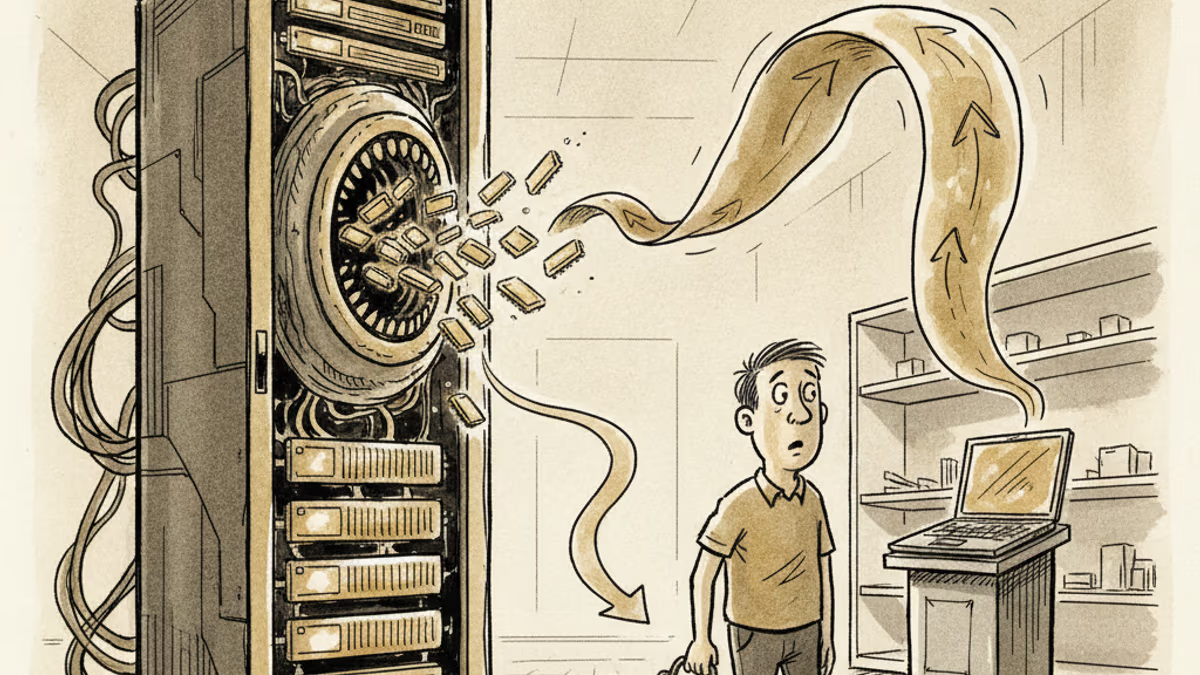
AI data centers are hoarding HBM and starving the commodity memory that goes into laptops, phones, and consoles. Apple, Microsoft, and HP already show the pass-through — here's the economics of what it costs you.
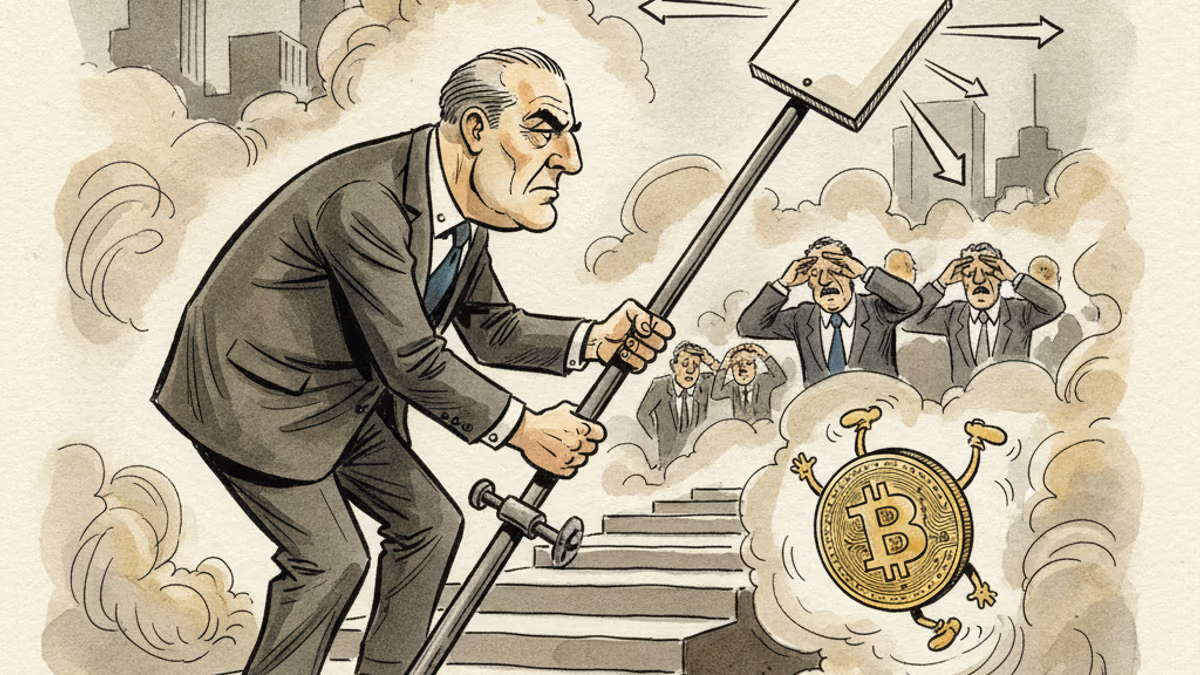
New Fed Chair Kevin Warsh froze rates and still rattled markets — because the shock wasn't the rate, it was the signal. Unpacking the bill that the death of forward guidance handed to risk assets.
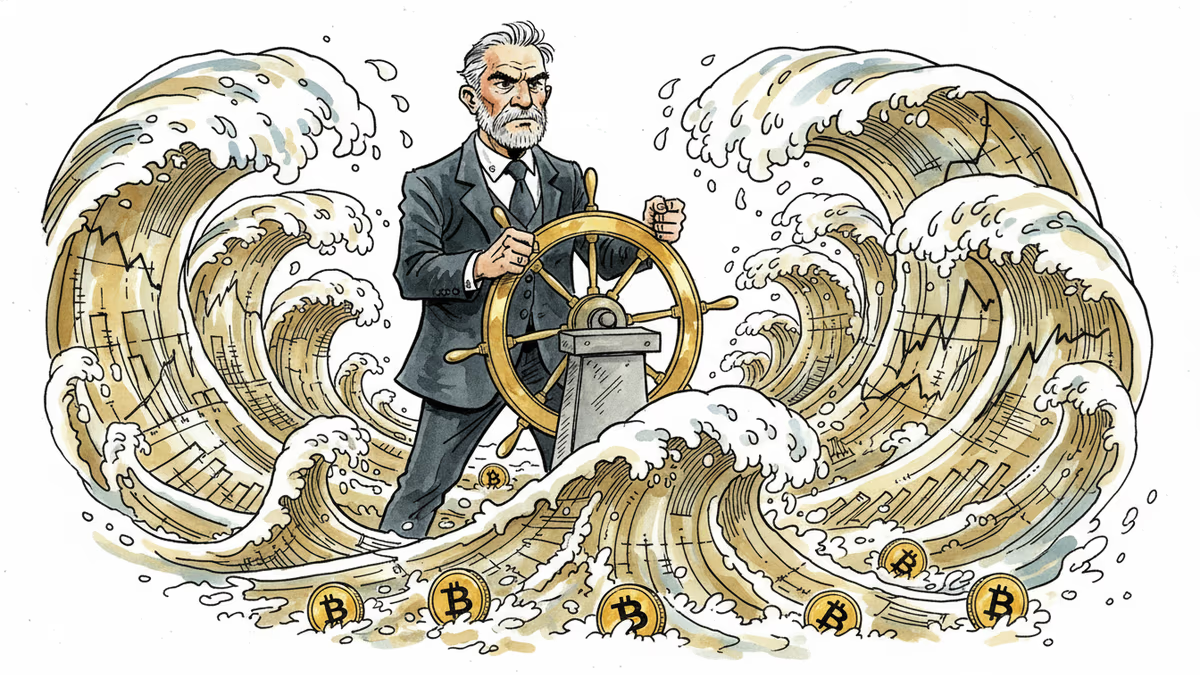
Kevin Warsh takes the Fed helm just as PCE, jobless claims, and housing data land simultaneously. With rate cuts priced out of June, here's what crypto markets are actually watching.
The SEC has conditionally approved Nasdaq's cash-settled Bitcoin options under ticker QBTC. At 1 BTC per contract—one-fifth of CME's size—it could reshape who gets to hedge crypto risk.
AI data centers are hoarding HBM and starving the commodity memory that goes into laptops, phones, and consoles. Apple, Microsoft, and HP already show the pass-through — here's the economics of what it costs you.
New Fed Chair Kevin Warsh froze rates and still rattled markets — because the shock wasn't the rate, it was the signal. Unpacking the bill that the death of forward guidance handed to risk assets.
Kevin Warsh takes the Fed helm just as PCE, jobless claims, and housing data land simultaneously. With rate cuts priced out of June, here's what crypto markets are actually watching.
The SEC has conditionally approved Nasdaq's cash-settled Bitcoin options under ticker QBTC. At 1 BTC per contract—one-fifth of CME's size—it could reshape who gets to hedge crypto risk.
Thoughts
Share your thoughts on this article
Sign in to join the conversation