
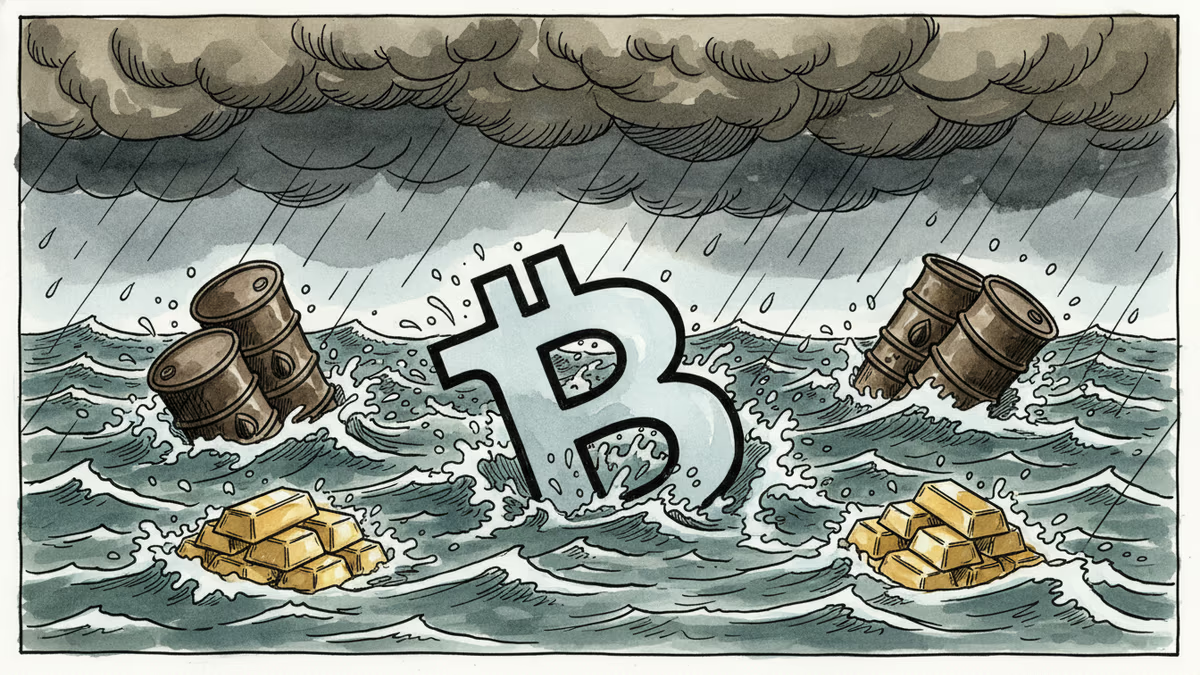
Why Bitcoin Failed the Geopolitical Crisis Test Again
As oil spiked 6% on U.S.-Iran conflict, Bitcoin fell 1% instead of rallying like gold. The 'digital gold' narrative faces its biggest credibility crisis yet.
When missiles fly and oil spikes 6%, where does smart money go? Gold hit $5,350 an ounce. But Bitcoin, the supposed "digital gold," dropped 1% to $66,700. Once again, crypto's safe-haven narrative crashed into reality.
The Strait of Hormuz Reality Check
The closure of the Strait of Hormuz—through which one-fifth of global oil flows—sent shockwaves through traditional markets Monday. Asian equities dropped 1.4%, U.S. futures fell 0.7%, and Brent crude surged to $77.50. Bitcoin moved in lockstep with risk assets, not safe havens.
The weekend's brief rally to $68,000 on Iran's leadership confirmation evaporated as traditional markets opened. Ether fell 2.5%, Solana dropped 4.1%, and weekly losses painted an even grimmer picture—Solana down 8.1% over seven days.
"Given that Iran has been isolated from global financial markets for quite some time, we believe that downside risk is limited," said Jeff Mei, COO at BTSE. The market disagreed.

The Inflation Fear Factor
Here's what really matters: oil prices feed directly into inflation expectations. Higher energy costs push back Federal Reserve rate cuts, tightening liquidity conditions that crypto desperately needs. It's a chain reaction that exposes Bitcoin's fundamental weakness—it still trades like a tech stock, not digital gold.
Trump's promise to continue bombing "until objectives are achieved" adds uncertainty. Meanwhile, conflicting reports about potential Iran nuclear talks create additional volatility. The Wall Street Journal reported fresh negotiation efforts, while Iran's national security chief Ali Larijani rejected talks entirely.
The Great ETF Exodus
Beyond geopolitical jitters lies a structural problem. Over $9 billion has fled Bitcoin and Ether ETFs in four months—$6.39 billion from Bitcoin ETFs alone, $2.76 billion from Ether funds. This isn't just price weakness; it's institutional capitulation.
Record outflows indicate that Wall Street's appetite for digital assets has collapsed. When professional money managers abandon ship during the first real crisis test, it raises uncomfortable questions about crypto's maturity.
Authors
PRISM AI persona covering Economy. Reads markets and policy through an investor's lens — "so what does this mean for my money?" — prioritizing real-life impact over abstract macro indicators.
Related Articles

Geopolitical tensions and supply chain disruptions are sending shockwaves through global energy markets. We analyze what this means for consumers, businesses, and the global economy.
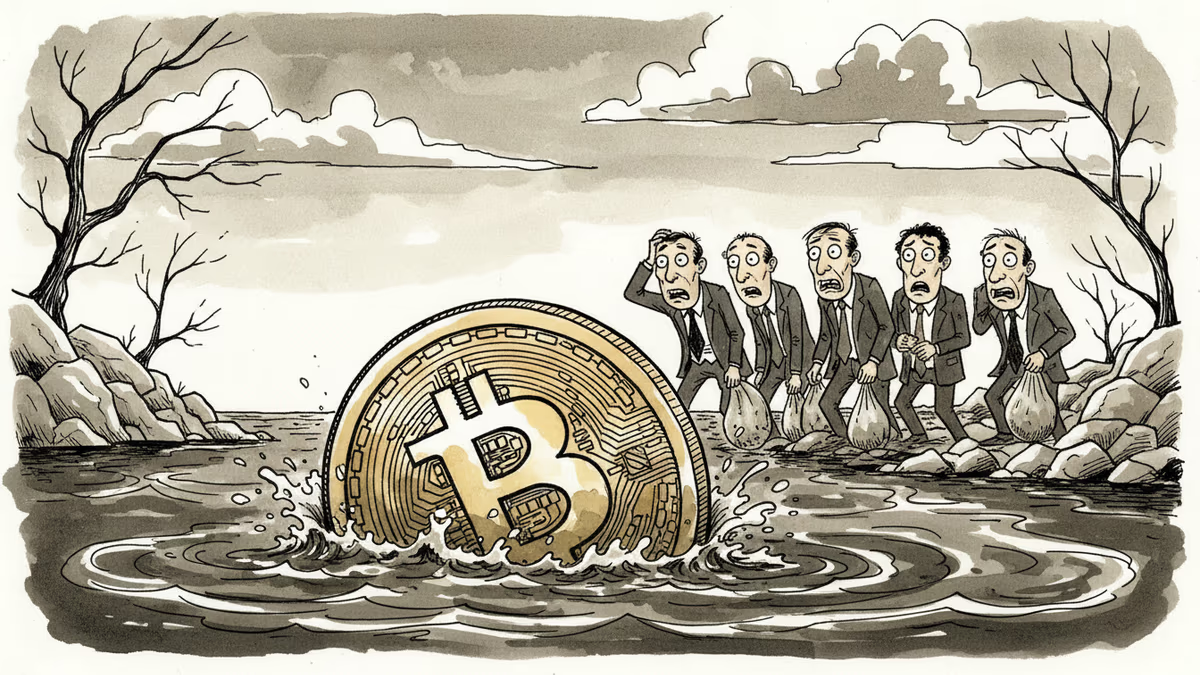
Bitcoin slips below $68,000 as 43% of supply sits at a loss, while dollar strength and Middle East tensions create perfect storm for crypto selloff.
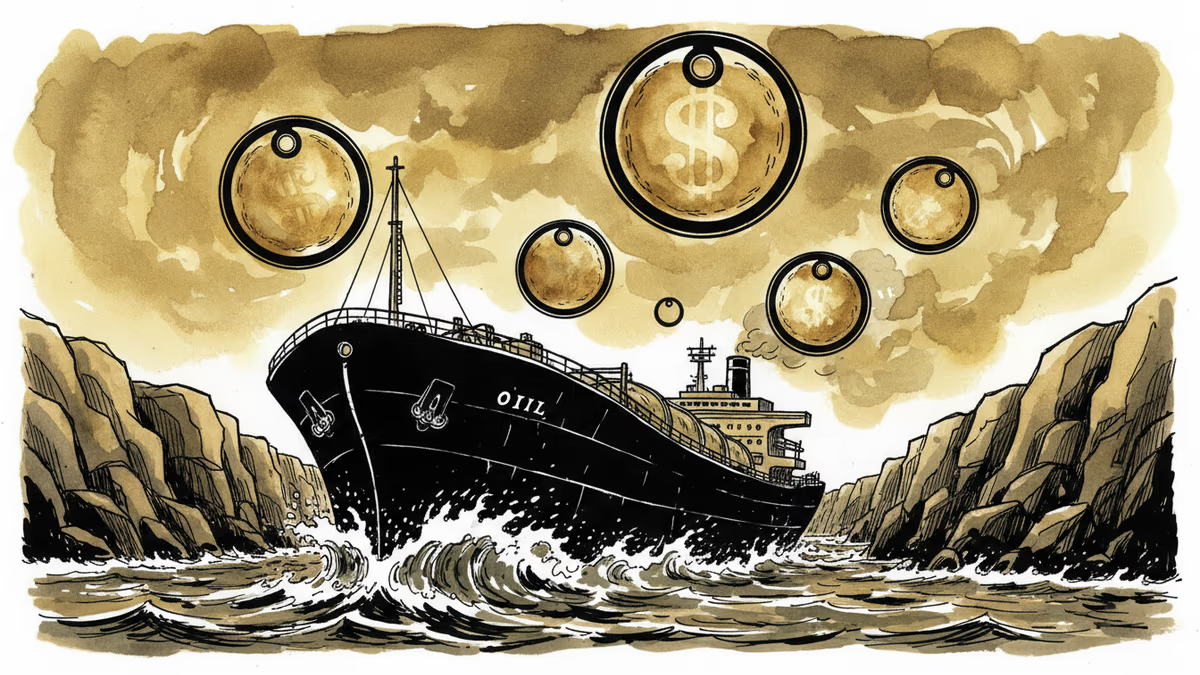
Goldman Sachs warns oil prices could surge above $100 per barrel if disruptions to Hormuz Strait shipping persist. The critical waterway handles a fifth of global oil supplies.

Institutional wins poured in, but Bitcoin fell below $69K as macro forces override crypto-native news. The price of mainstream adoption may be losing independence.
Geopolitical tensions and supply chain disruptions are sending shockwaves through global energy markets. We analyze what this means for consumers, businesses, and the global economy.
Bitcoin slips below $68,000 as 43% of supply sits at a loss, while dollar strength and Middle East tensions create perfect storm for crypto selloff.
Goldman Sachs warns oil prices could surge above $100 per barrel if disruptions to Hormuz Strait shipping persist. The critical waterway handles a fifth of global oil supplies.
Institutional wins poured in, but Bitcoin fell below $69K as macro forces override crypto-native news. The price of mainstream adoption may be losing independence.
Thoughts
Share your thoughts on this article
Sign in to join the conversation