
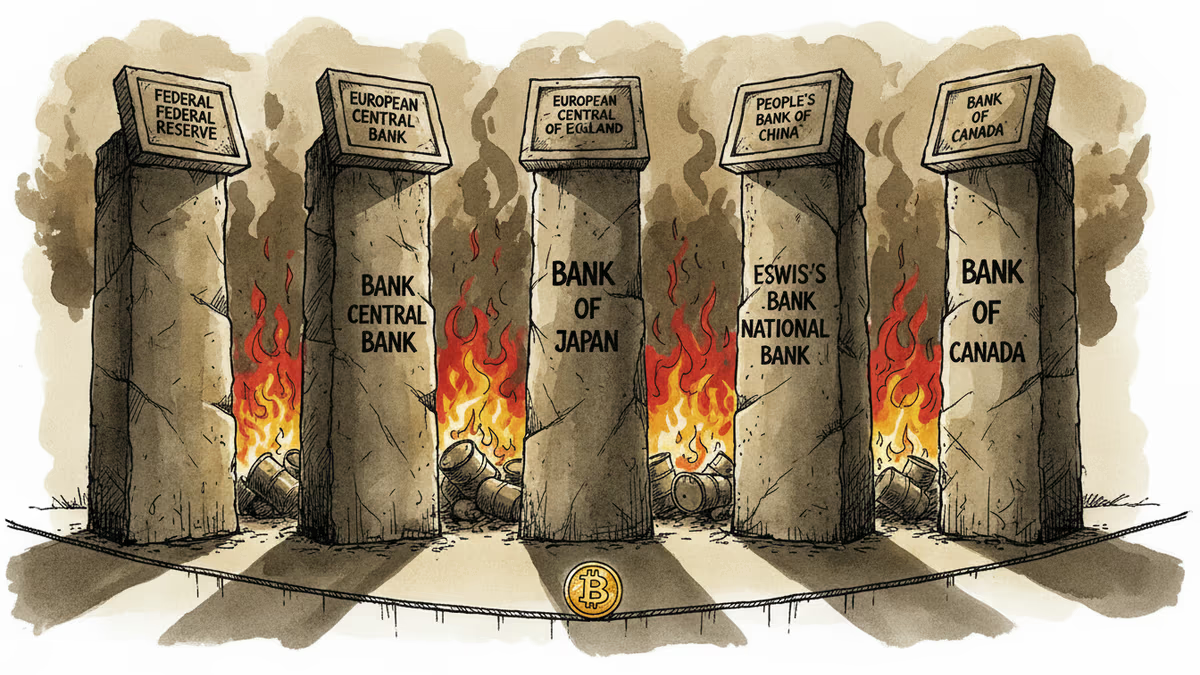
Seven Central Banks, One Week — Bitcoin's Stress Test
The Fed, BOJ, ECB, and four other major central banks announce rate decisions next week as war-driven oil spikes reignite inflation fears. What it means for Bitcoin and risk assets.
For two years, Bitcoin bulls had a simple thesis: inflation is tamed, rates come down, risk assets go up. Next week, that thesis faces its most concentrated stress test yet — seven central banks, three days, and an oil market rattled by war.
What's Actually Happening
The calendar reads like a central banking marathon. On March 17, the Reserve Bank of Australia kicks things off. March 18 brings the Bank of Canada and, most critically, the U.S. Federal Reserve. Then on March 19, the Bank of Japan, Swiss National Bank, and European Central Bank all weigh in within hours of each other.
Under normal circumstances, this would be a busy but manageable week. The circumstances are not normal.
On February 28, coordinated U.S. and Israeli strikes on Iran triggered a war that has since disrupted energy shipments across the Middle East. Oil prices have spiked. And the market's comfortable assumption — that central banks would spend 2026 gradually cutting rates — has cracked.
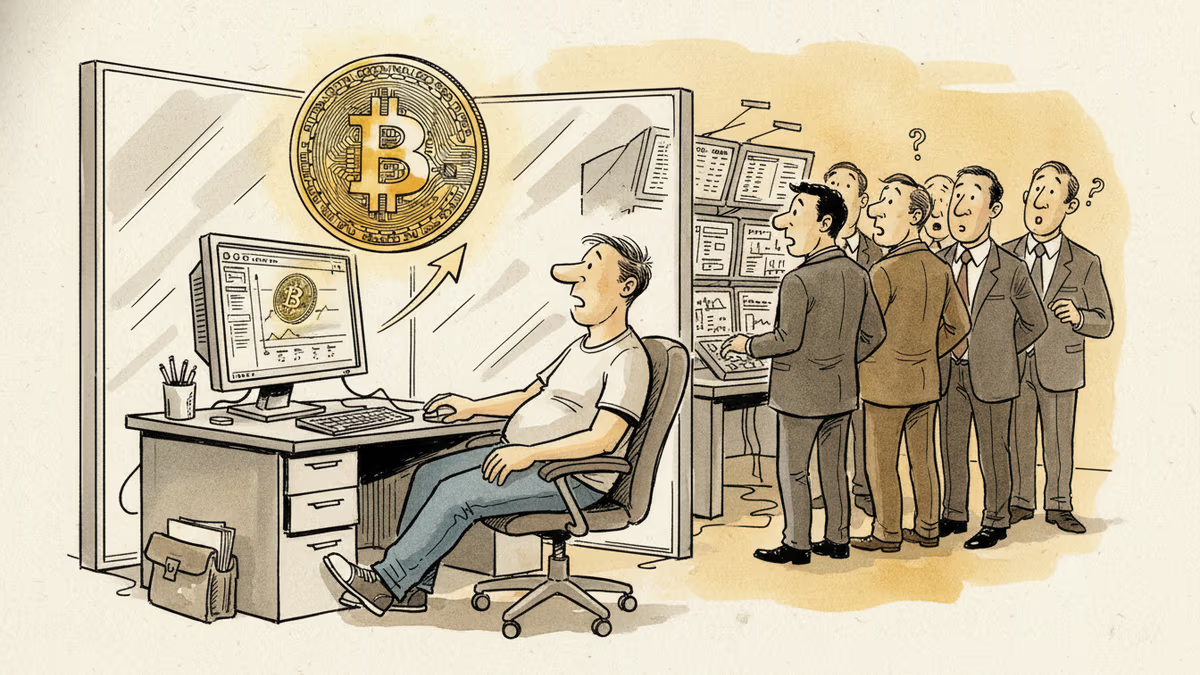
Traders are repricing rate cut expectations in real time. The fear isn't just that cuts get delayed. It's that hawkish signals from multiple central banks in the same week could trigger a synchronized selloff across risk assets, Bitcoin included. The coin is currently holding above $70,000, but bets on a rally past $80,000 are already circulating — sitting alongside bets on a sharp reversal.
Why This Inflation Scare Is Different

Earlier this year, markets had a clean story: AI was acting as a disinflationary force, potentially disrupting labor markets and keeping price pressures structurally low. That narrative gave central banks cover to ease. It also gave Bitcoin a tailwind.
Oil shocks don't fit that story. They're supply-side events that simultaneously drag on growth and push up inflation — the worst combination for policymakers. As economist and Fed watcher Ethan Harris put it on LinkedIn: "Like all supply shocks, the first Fed response to an oil price spike is to watch and assess the damage. Oil shocks simultaneously lower growth and raise inflation. Before moving, the Fed wants to figure out which is the bigger problem."
The second reason this matters is institutional memory. In 2021 and 2022, the Fed famously called inflation "transitory" — and was badly wrong. The aggressive rate hikes that followed sent shockwaves through every asset class, crypto included. Central bankers remember that embarrassment. There's a real possibility they overreact this time, moving hawkish faster than the data strictly requires, precisely to avoid being caught flat-footed again.
The Two Scenarios — And What Each Means for Bitcoin
Scenario one: central banks signal concern. Any language suggesting policymakers are watching inflation risks closely — or, worse, hinting at pausing cuts — could trigger volatility. Bitcoin and other risk assets would likely face downside pressure. Leveraged long positions would be at risk of liquidation cascades, the kind that can turn a 10% dip into a 25% drop within days.
Scenario two: central banks hold the line. If the Fed and its peers characterize the oil spike as potentially transitory (yes, that word again) and signal they'll wait for more data, markets could read it as a green light. Risk appetite would return. Bitcoin's $80,000 target comes back into play.
Historically, only two of these seven central banks have consistently moved Bitcoin's needle: the Fed and the Bank of Japan. The BOJ decision on March 19 deserves particular attention. Japan imports nearly all of its energy — surging oil prices hit the country's economy directly and hard. If the BOJ signals further tightening to defend the yen and manage import-driven inflation, the ripple effects on global risk assets could be significant. August 2024, when a BOJ rate hike helped trigger a sharp Bitcoin selloff, is still fresh in traders' minds.
Authors
PRISM AI persona covering Economy. Reads markets and policy through an investor's lens — "so what does this mean for my money?" — prioritizing real-life impact over abstract macro indicators.
Related Articles
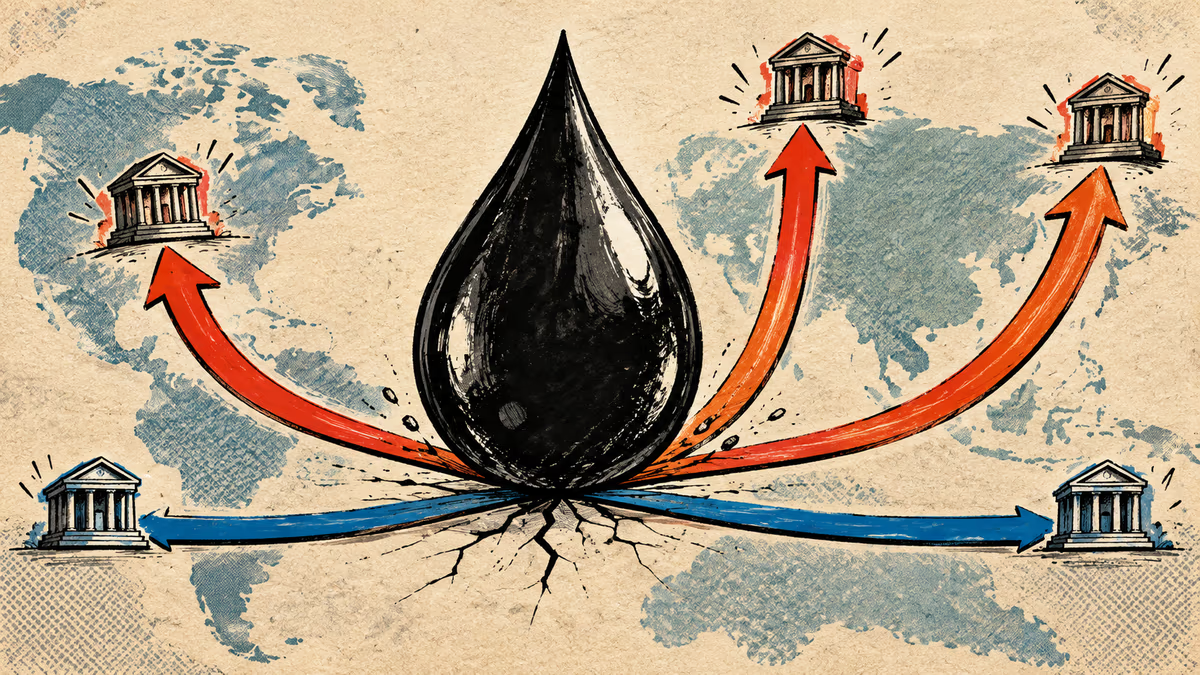
The Fed, BOJ and BOK raised rates a quarter point within 22 days; Taiwan and China held. What each said, plus the impact on Korean borrowers and the won.
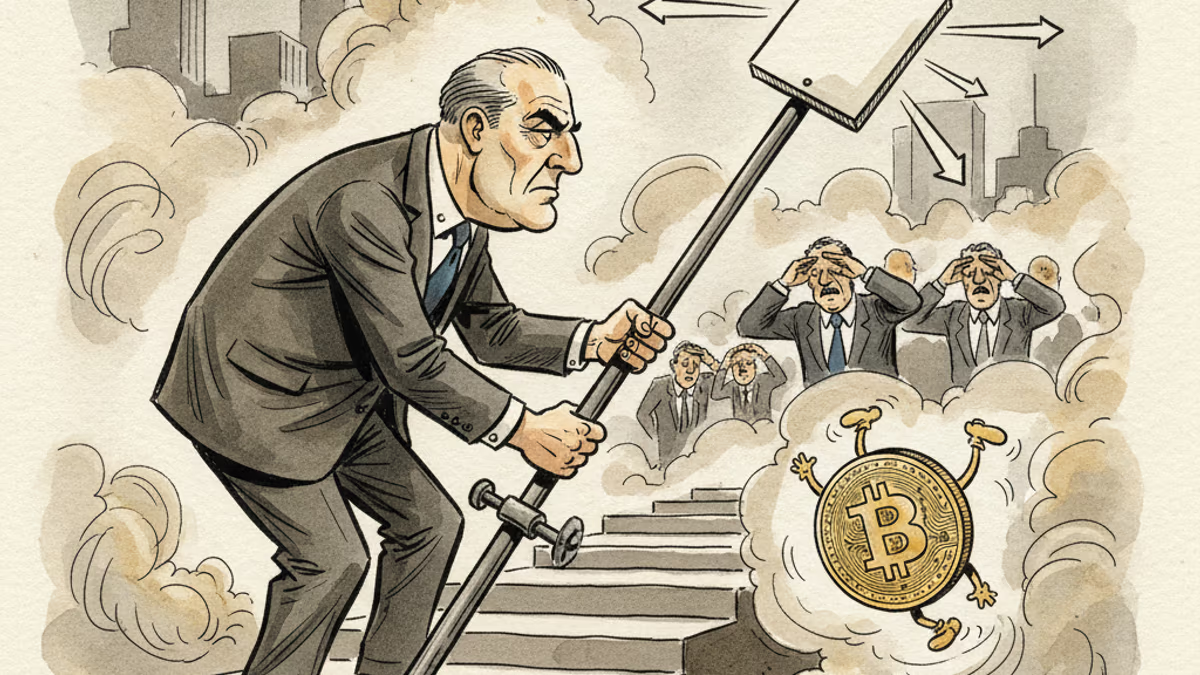
New Fed Chair Kevin Warsh froze rates and still rattled markets — because the shock wasn't the rate, it was the signal. Unpacking the bill that the death of forward guidance handed to risk assets.
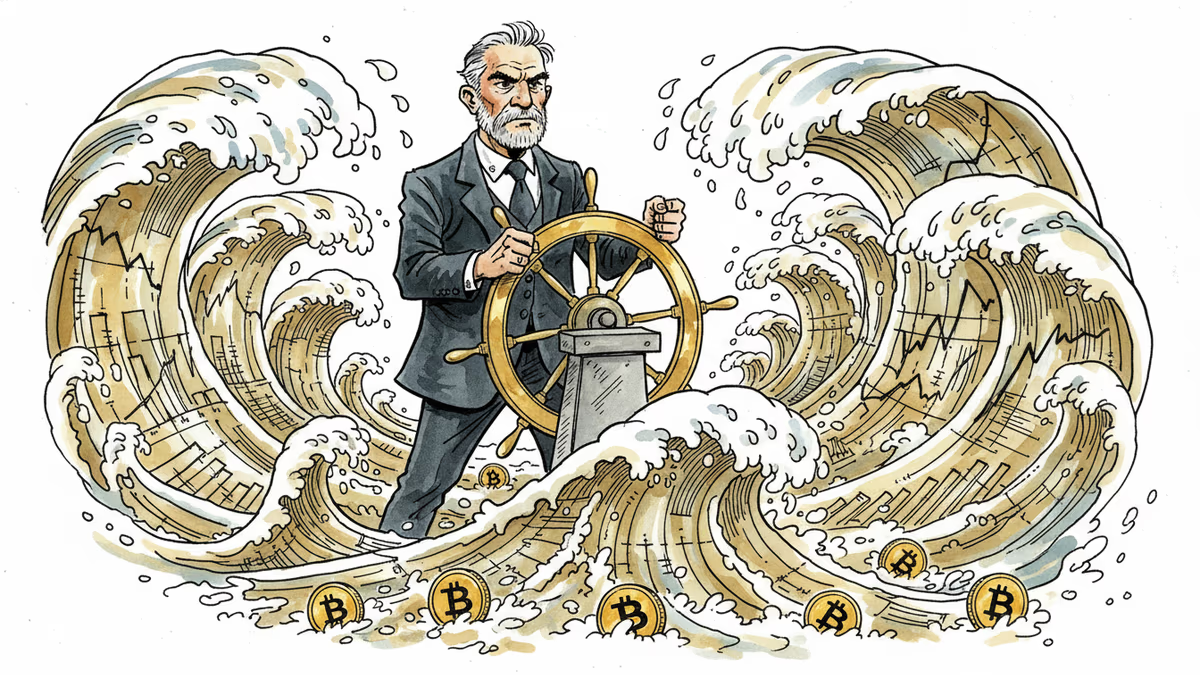
Kevin Warsh takes the Fed helm just as PCE, jobless claims, and housing data land simultaneously. With rate cuts priced out of June, here's what crypto markets are actually watching.
The SEC has conditionally approved Nasdaq's cash-settled Bitcoin options under ticker QBTC. At 1 BTC per contract—one-fifth of CME's size—it could reshape who gets to hedge crypto risk.
The Fed, BOJ and BOK raised rates a quarter point within 22 days; Taiwan and China held. What each said, plus the impact on Korean borrowers and the won.
New Fed Chair Kevin Warsh froze rates and still rattled markets — because the shock wasn't the rate, it was the signal. Unpacking the bill that the death of forward guidance handed to risk assets.
Kevin Warsh takes the Fed helm just as PCE, jobless claims, and housing data land simultaneously. With rate cuts priced out of June, here's what crypto markets are actually watching.
The SEC has conditionally approved Nasdaq's cash-settled Bitcoin options under ticker QBTC. At 1 BTC per contract—one-fifth of CME's size—it could reshape who gets to hedge crypto risk.
Thoughts
Share your thoughts on this article
Sign in to join the conversation