
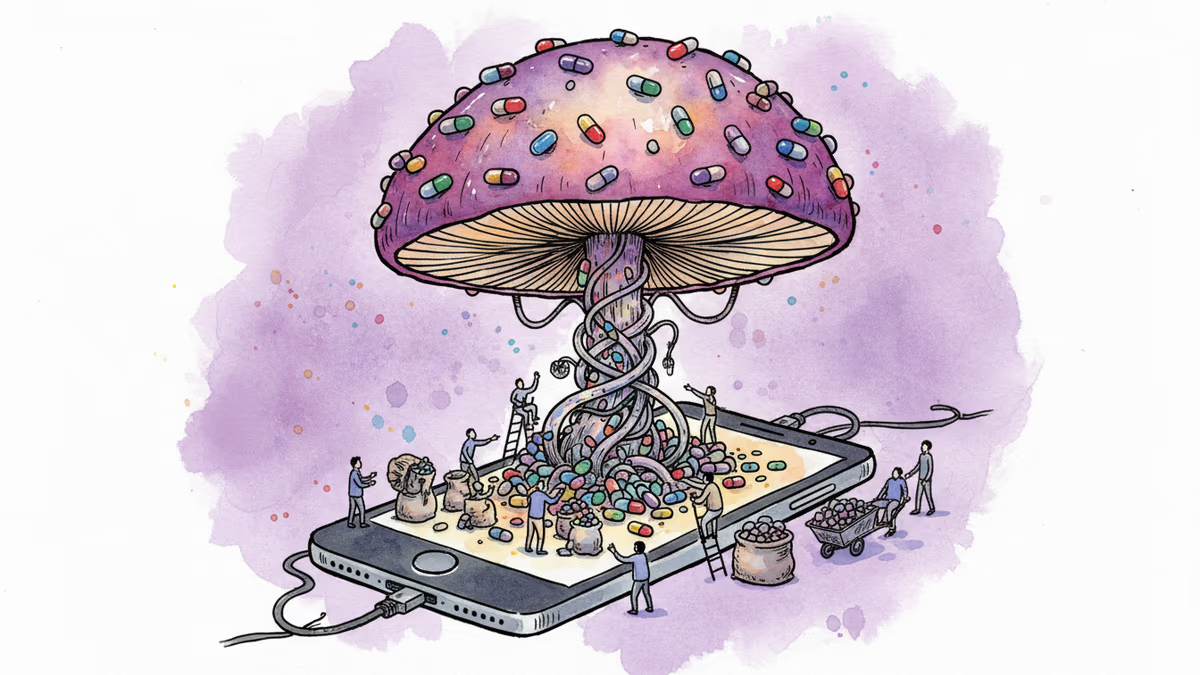
The $75 Billion Mushroom Revolution: Ancient Wisdom or Modern Snake Oil?
From Gisele's Instagram to your medicine cabinet, functional mushrooms have exploded into a massive industry. But as the hype grows, where does science end and marketing begin?
When Celebrities Made Fungi Cool Again
Gisele Bündchen posts a photo of her morning mushroom latte. Gwen Stefani shares her adaptogenic smoothie recipe. Suddenly, the global functional mushroom market hits $75 billion—double what it was just five years ago.
Here's the strange part: mushrooms aren't new. Hippocrates used them for inflammation. Ötzi the Iceman carried them 5,300 years ago. Traditional Chinese medicine has prescribed reishi for over 2,000 years. So why the sudden explosion?
The answer isn't in the mushrooms—it's in the packaging. What once required foraging, drying, and brewing now comes in a convenient capsule. Companies like Four Sigmatic and Ryze didn't discover functional mushrooms; they made them Instagram-ready.
The Science Behind the Hype
Nutritionist Brigitte Zeitlin switched from coffee to mushroom blends and hasn't looked back. "If you have autoimmune issues like Hashimoto's or psoriasis, chaga mushrooms are awesome because they reduce inflammation," she explains.
The research does look promising. A Singapore clinical trial found that people eating 2+ cups of mushrooms weekly had a 50% lower risk of cognitive impairment. Cancer studies suggest just 1/8 cup daily might reduce cancer risk by 45%.
But here's the catch: most studies focus on whole mushrooms, not the powders and extracts flooding the supplement market. Lion's mane shows potential for nerve growth in lab studies, but can a capsule deliver the same benefits as fresh fungi?
The Biohacker's Dilemma

In Silicon Valley, cordyceps has become the performance mushroom of choice. Athletes swear by its ATP-boosting properties. Entrepreneurs microdose lion's mane for cognitive enhancement. The wellness industry has transformed ancient remedies into modern nootropics.
Yet many of these claims rest on preliminary research. Turkey tail shows promise in oncology, but it's studied as supportive therapy, not a cure. Reishi may help with stress and blood sugar, but the mechanisms aren't fully understood.
When Tradition Meets Venture Capital
The mushroom boom reflects a broader trend: the commercialization of traditional knowledge. Indigenous Siberians have used chaga for centuries. Now it's marketed as an "antioxidant superfood" at $40 per bottle.
This raises uncomfortable questions about cultural appropriation and scientific validation. When does honoring traditional wisdom cross into exploitation? And who benefits when ancient remedies become modern commodities?
Regulators are scrambling to keep up. The FDA doesn't evaluate most mushroom supplements, leaving consumers to navigate a market filled with varying quality and unsubstantiated claims.
The Real Market Forces
Timing explains everything. COVID-19 made immune support a priority. The biohacking movement normalized self-experimentation. Social media transformed supplements into lifestyle brands.
Reishi isn't just sold as a sleep aid—it's marketed as "the mushroom of immortality." Cordyceps isn't just an energy booster—it's positioned for "peak human performance." The language matters as much as the molecules.
Investors have taken notice. Mushroom startups raised over $2 billion in funding last year. Fantastic Fungi became a cultural phenomenon. What was once alternative medicine is now mainstream wellness.
Authors
Related Articles
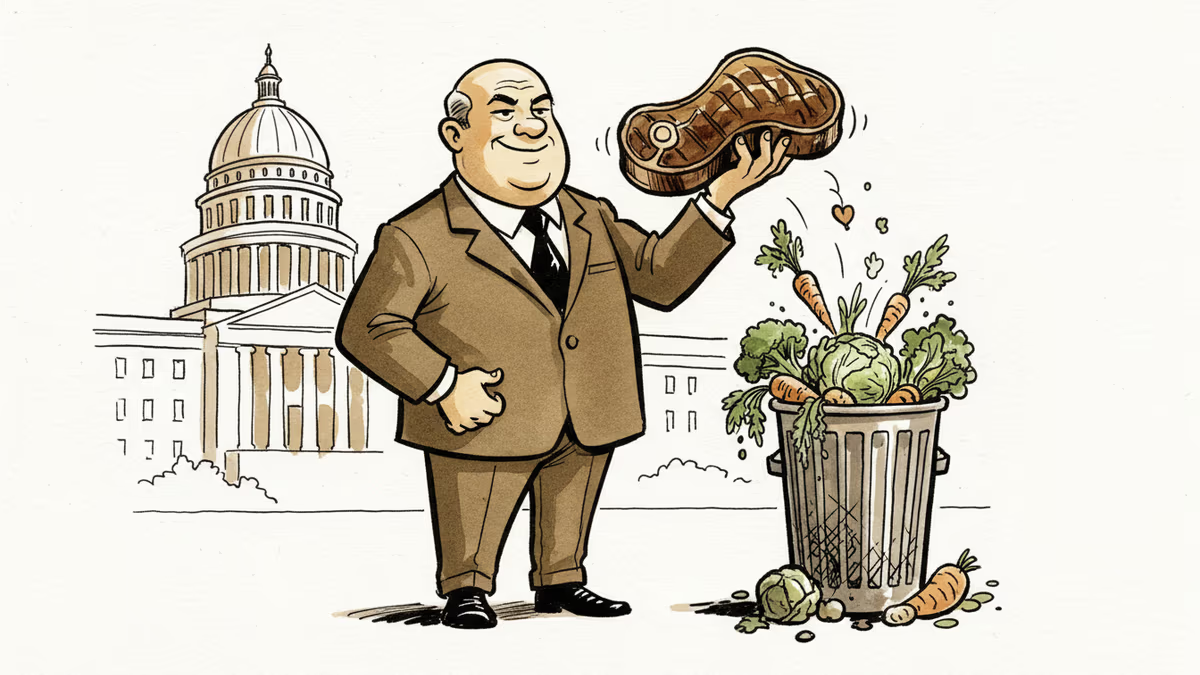
RFK Jr. and Trump's health appointees are promoting meat-only diets while dismissing vegetables. What happens when government authority contradicts scientific consensus?
From Gwyneth Paltrow to Joe Rogan, everyone's talking NAD+. But can these supplements really slow aging, or are we chasing another wellness mirage?

New research reveals the optimal cold plunge duration for metabolic benefits. From 30-second mood boosts to 5-minute mental training - here's your science-backed guide.

A 20-year-old man developed an unexplained rash after starting keto diet. Medical case reveals potential hidden side effects of popular low-carb lifestyle.
RFK Jr. and Trump's health appointees are promoting meat-only diets while dismissing vegetables. What happens when government authority contradicts scientific consensus?
From Gwyneth Paltrow to Joe Rogan, everyone's talking NAD+. But can these supplements really slow aging, or are we chasing another wellness mirage?
New research reveals the optimal cold plunge duration for metabolic benefits. From 30-second mood boosts to 5-minute mental training - here's your science-backed guide.
A 20-year-old man developed an unexplained rash after starting keto diet. Medical case reveals potential hidden side effects of popular low-carb lifestyle.
Thoughts
Share your thoughts on this article
Sign in to join the conversation