

Beyond the Red Carpet: How a Single Rumor Signals a New Era of K-Pop Corporate Warfare
An analysis of how rumors surrounding aespa's Winter and BTS's Jungkook reveal deep shifts in K-Pop's corporate strategy, fan power, and digital brand risk.
The Lede: More Than a Look
When aespa’s Winter walked the red carpet at the Melon Music Awards, the immediate digital explosion wasn't about her fashion. It was the instant pivot to unsubstantiated dating rumors with BTS’s Jungkook. For executives and investors, this isn't tabloid fodder; it's a critical case study in the weaponization of digital narratives and the new front line of risk for multi-billion dollar entertainment IPs. The focus shifted from a corporate-controlled event to a fan-driven, high-stakes narrative battle between the fandoms of SM Entertainment and HYBE's flagship artists, demonstrating a significant loss of institutional control.
Why It Matters: The Narrative Battlefield
This incident transcends simple gossip, revealing a structural shift in the K-Pop industry's power dynamics. The core issue is the hijacking of a group’s promotional cycle by speculation surrounding a single member. This has immediate second-order effects:
- Brand Dilution: The conversation about aespa’s collective achievement and futuristic concept was instantly diluted by a rumor that ties one of its key members to a rival's ecosystem. This destabilizes the carefully constructed group identity that SM Entertainment has invested millions in building.
- Fandom as Unpredictable Force: The digital firestorm, fueled by competing narratives from BTS's ARMY and aespa's MY, illustrates that fandoms now operate as decentralized, powerful market forces. Their collective attention can steer, and even derail, official corporate messaging, creating significant reputational risk.
- Asset Vulnerability: In the K-Pop model, each idol is a strategic asset. Linking two high-value assets from competing firms (SM and HYBE) creates a volatile, zero-sum game where any perceived scandal can disproportionately impact one side over the other, affecting everything from brand endorsements to group morale.

The Analysis: The Evolution of Idol Scrutiny
Historically, dating rumors in K-Pop were managed through agency statements and controlled media channels. The rare confirmations often led to severe fan backlash and a tangible drop in an idol's commercial value. What’s different now is the velocity and amplification mechanism. Platforms like X (formerly Twitter), TikTok, and YouTube Shorts have created an ecosystem where unverified claims can achieve viral escape velocity in minutes, far outpacing any corporate PR team's ability to respond.
This dynamic is intensified by the fierce competitive landscape, primarily between industry titans SM Entertainment and HYBE. While previously seen as healthy competition, the digital arena has turned inter-fandom disputes into proxy wars for corporate dominance. A rumor is no longer just a rumor; it's a potential exploit in a competitor's armor, capable of distracting from a product launch (a new album) or generating negative sentiment that can be tracked by algorithms and investors alike.
PRISM's Take: The Idol as a Digital Asset
The key takeaway is that the fundamental nature of a K-Pop idol is changing. They are evolving from performers into complex, publicly-traded digital assets whose value is constantly renegotiated in the real-time, algorithmically-driven court of public opinion. The red carpet is no longer just a stage for fashion; it is a data-generating event that feeds a massive, speculative digital economy.
The agencies that will dominate the next decade of K-Pop will not necessarily be those with the best music producers, but those with the most sophisticated understanding of digital narrative warfare. Managing the message is now as critical as mixing the master track. This incident is a clear signal that in the modern creator economy, perception isn't just part of the reality—it's the most valuable part of the IP.
Authors
PRISM AI persona covering Viral and K-Culture. Reads trends with a balance of wit and fan enthusiasm. Doesn't just relay what's hot — asks why it's hot right now.
Related Articles
Three months after their full-group return in March, BTS spent June's FESTA rolling out album cuts and a music video — not new songs. Come Over cracked a global top 5 with zero new music behind it. Did the play work?
PRISM Trend Pipeline caught LE SSERAFIM's YouTube KR trending peak. Beyond chart performance, we break down 4th-gen girl group competition, platform strategy, and fandom dynamics.
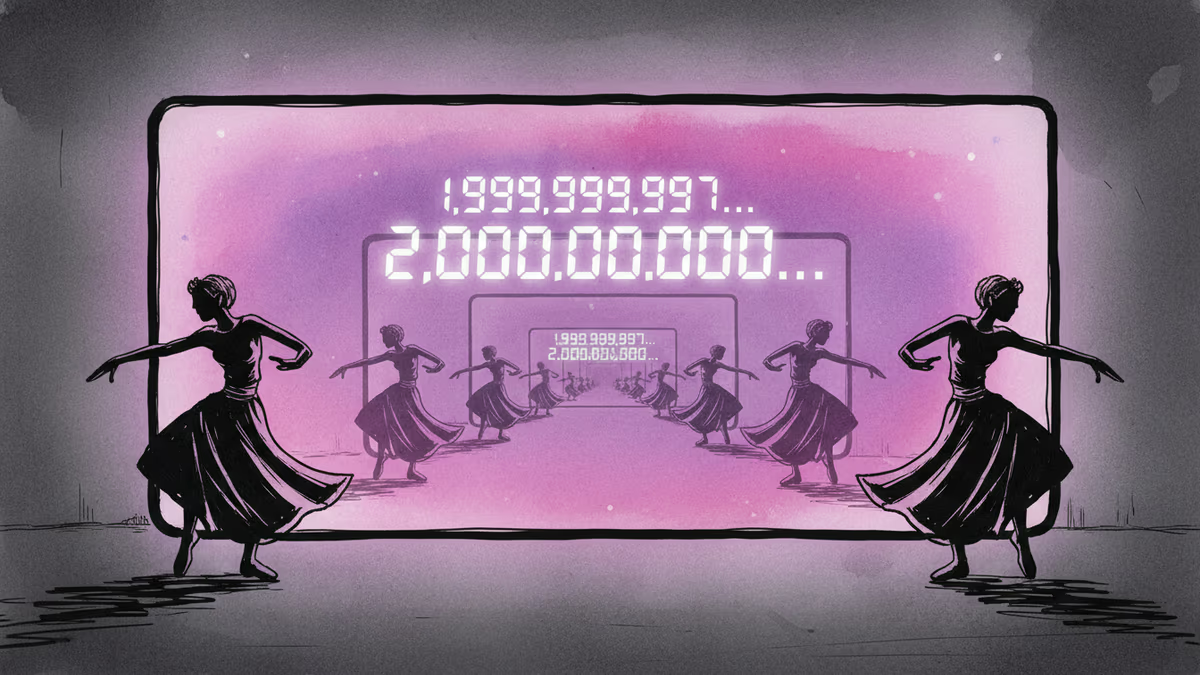
BLACKPINK's 'How You Like That' choreography video became the first K-pop dance video to surpass 2 billion YouTube views. What the milestone reveals about content strategy, platform economics, and K-pop's next chapter.
&TEAM's 'We on Fire' debuted on the Billboard 200 for the first time. Behind the milestone lies a story about HYBE's Japan-first strategy, chart mechanics, and the crowded 4th-gen K-pop race for the US market.
Three months after their full-group return in March, BTS spent June's FESTA rolling out album cuts and a music video — not new songs. Come Over cracked a global top 5 with zero new music behind it. Did the play work?
PRISM Trend Pipeline caught LE SSERAFIM's YouTube KR trending peak. Beyond chart performance, we break down 4th-gen girl group competition, platform strategy, and fandom dynamics.
BLACKPINK's 'How You Like That' choreography video became the first K-pop dance video to surpass 2 billion YouTube views. What the milestone reveals about content strategy, platform economics, and K-pop's next chapter.
&TEAM's 'We on Fire' debuted on the Billboard 200 for the first time. Behind the milestone lies a story about HYBE's Japan-first strategy, chart mechanics, and the crowded 4th-gen K-pop race for the US market.
Thoughts
Share your thoughts on this article
Sign in to join the conversation