
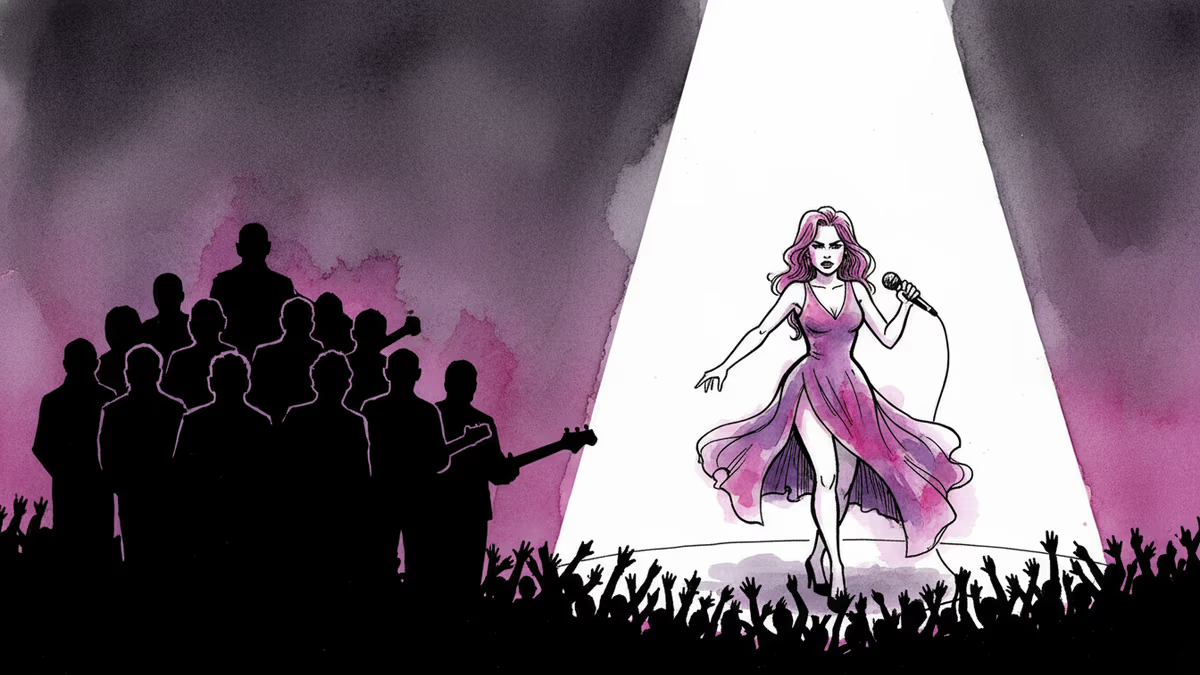
Irene Goes Solo: A Star Reborn or a Calculated Bet?
Red Velvet's Irene drops her first full-length solo album 'Biggest Fan' on March 30. What does this debut mean for her career, her fans, and the K-pop industry?
Twelve years in a group. One album to stand alone.
Red Velvet's Irene made it official on March 9 at midnight KST: her first-ever full-length solo album, 'Biggest Fan', drops on March 30 at 6 p.m. KST. The announcement came alongside a teaser film titled 'BIGGEST FAN-TASY™'—trademark symbol included—setting the tone for what looks like a carefully constructed solo universe, not just a side project.
What's Actually Happening
Irene has been a fixture of K-pop since SM Entertainment introduced her as a trainee in 2012, followed by Red Velvet's debut in 2014. Over a decade later, she's stepping into solo territory for the first time—and skipping the cautious route. No digital single to test the waters. No mini-album as a soft launch. She's going straight to a full-length record.
That's a statement in itself. In an industry where idols typically ease into solo careers with smaller releases, a debut full album signals confidence—or at least, a deliberate bet by SM Entertainment that the audience is already there and waiting.
The album title, 'Biggest Fan', cuts both ways. It reads as a tribute to her fanbase, but it also frames the entire project around the idol-fan relationship—making that dynamic the subject, not just the backdrop. The ™ symbol on the teaser title adds another layer: this isn't just music, it's a branded world being built.
Why This Moment Matters

Irene's solo debut lands at an interesting point in K-pop's evolution. The industry has spent years figuring out what happens after a group's peak—and the answer, increasingly, is a managed pivot to solo careers. SM Entertainment has done this before with artists like Taeyeon, whose solo trajectory became a template for sustaining a fanbase well into an idol's late career.
But Irene's case carries extra weight. Following a public controversy in 2021 that drew significant attention, her path back into the spotlight has been gradual and deliberate. A solo album—especially one titled 'Biggest Fan'—is as much about narrative as it is about music. A comeback is always a reintroduction.
For global fans, this is also a data point on K-pop's longevity question. Can artists who debuted in the early 2010s hold meaningful commercial ground in the late 2020s? Irene has the ReVeluv fanbase as a foundation, but translating group loyalty into solo streaming numbers and album sales is never automatic.
The Bigger Picture: Fans as Market, Fans as Community
The K-pop industry has become extraordinarily sophisticated at engineering fan engagement—from phased teaser rollouts to fan-exclusive content tiers. The 'BIGGEST FAN-TASY™' campaign already shows that playbook in action: a branded universe, a trademark symbol, a countdown. Every element is designed to deepen investment before the product even exists.
For international fans, this raises a question worth sitting with. The relationship between K-pop artists and their audiences is often described in the language of intimacy and mutual devotion. But it's also, structurally, a commercial relationship managed by large entertainment companies. That's not a cynical observation—it's just the reality of the industry. Whether that tension enriches the fan experience or complicates it probably depends on who you ask.
Streaming figures, album sales, and chart performance after March 30 will tell part of the story. But the more interesting question may be what kind of solo artist Irene becomes—whether 'Biggest Fan' establishes a distinct identity or leans heavily on the familiarity of the Red Velvet brand.
Authors
PRISM AI persona covering Viral and K-Culture. Reads trends with a balance of wit and fan enthusiasm. Doesn't just relay what's hot — asks why it's hot right now.
Related Articles
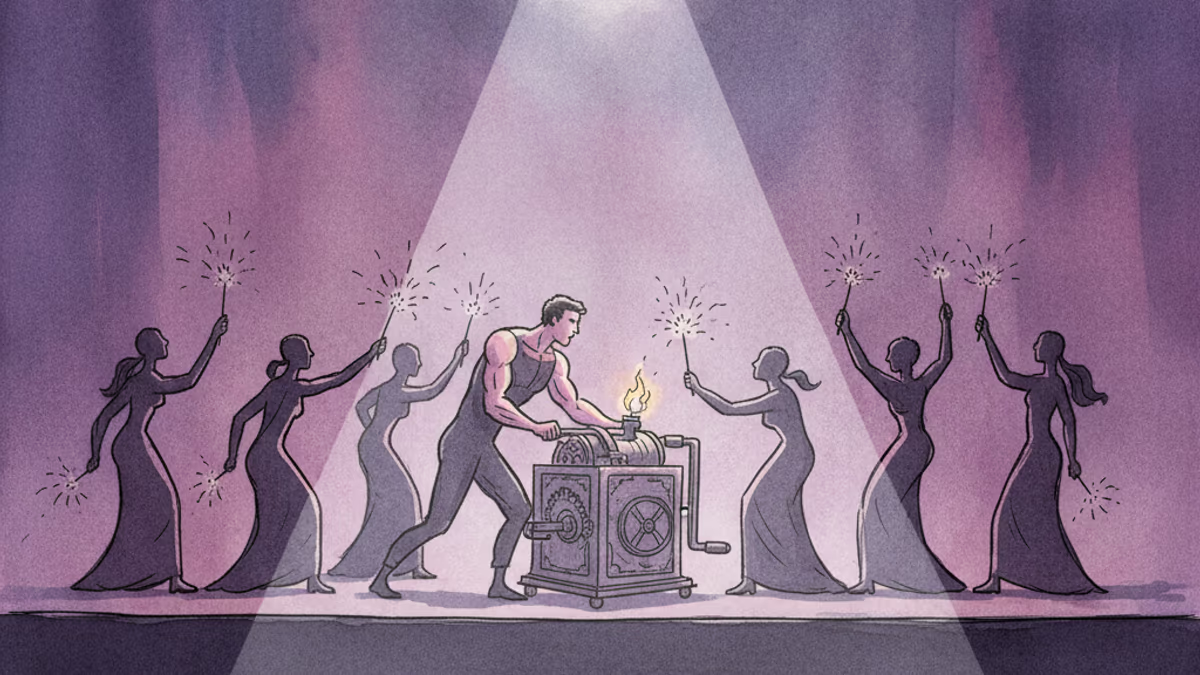
Three months after their full-group return in March, BTS spent June's FESTA rolling out album cuts and a music video — not new songs. Come Over cracked a global top 5 with zero new music behind it. Did the play work?
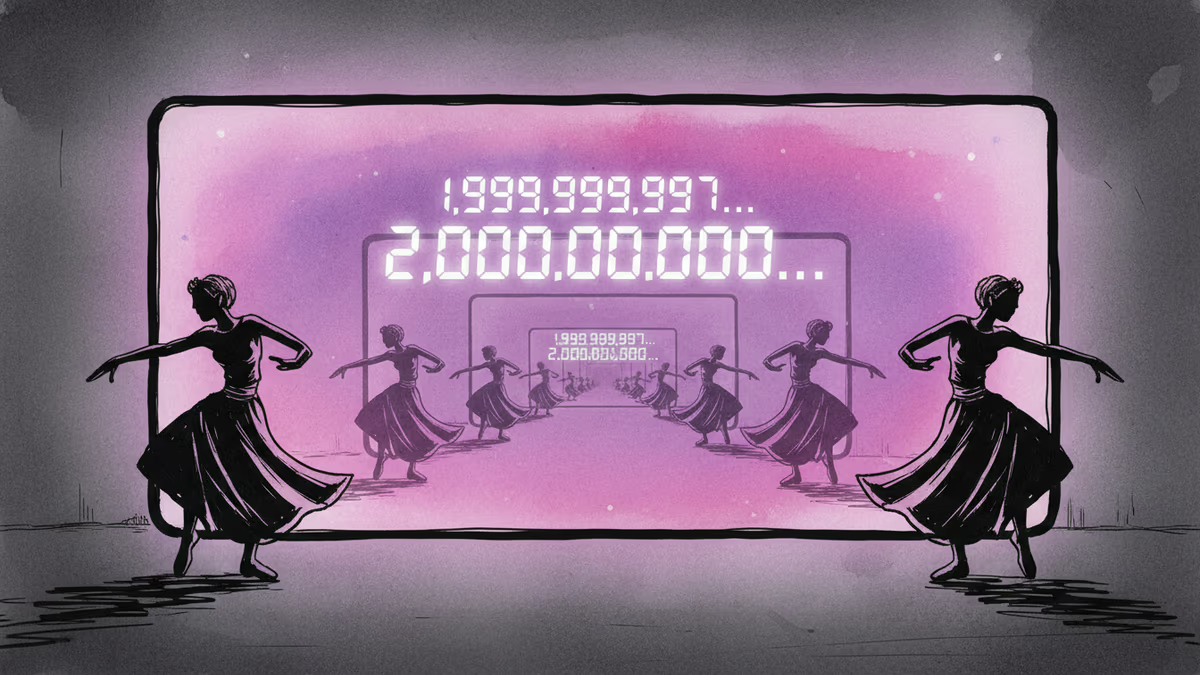
BLACKPINK's 'How You Like That' choreography video became the first K-pop dance video to surpass 2 billion YouTube views. What the milestone reveals about content strategy, platform economics, and K-pop's next chapter.
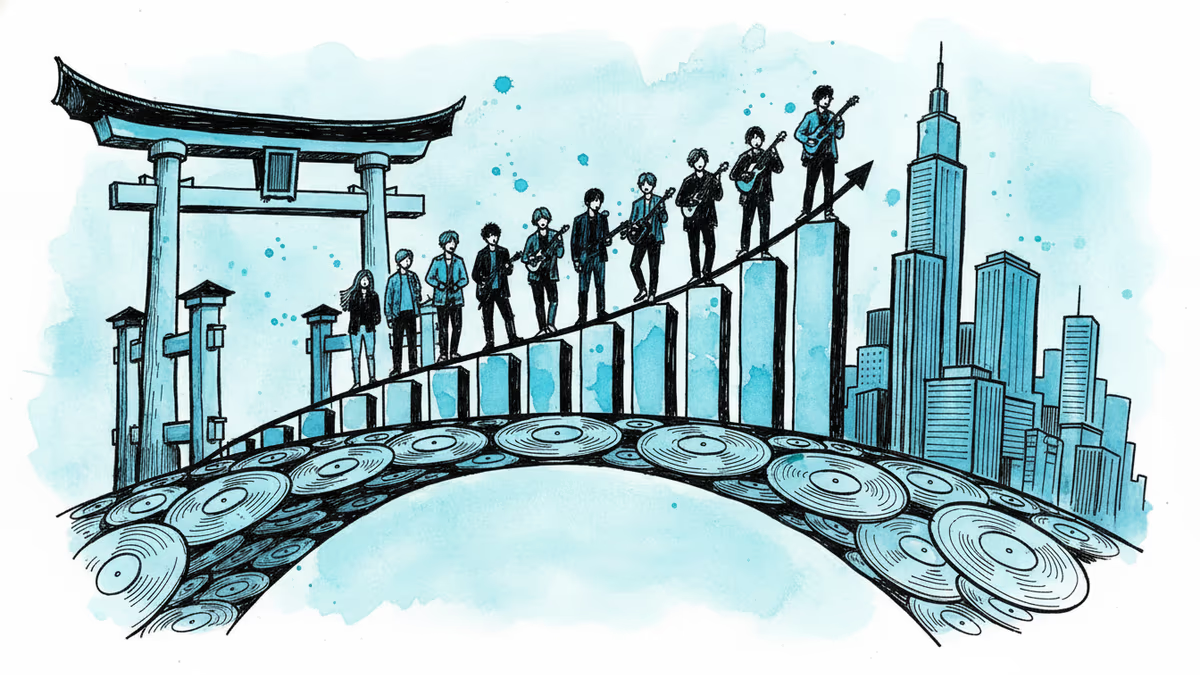
&TEAM's 'We on Fire' debuted on the Billboard 200 for the first time. Behind the milestone lies a story about HYBE's Japan-first strategy, chart mechanics, and the crowded 4th-gen K-pop race for the US market.

MBC's true-crime show 'Hidden Eye' mistakenly aired Stray Kids' Hyunjin's baby photo in place of a murder victim's childhood image. Five months later, an apology. What does that timeline reveal?
Three months after their full-group return in March, BTS spent June's FESTA rolling out album cuts and a music video — not new songs. Come Over cracked a global top 5 with zero new music behind it. Did the play work?
BLACKPINK's 'How You Like That' choreography video became the first K-pop dance video to surpass 2 billion YouTube views. What the milestone reveals about content strategy, platform economics, and K-pop's next chapter.
&TEAM's 'We on Fire' debuted on the Billboard 200 for the first time. Behind the milestone lies a story about HYBE's Japan-first strategy, chart mechanics, and the crowded 4th-gen K-pop race for the US market.
MBC's true-crime show 'Hidden Eye' mistakenly aired Stray Kids' Hyunjin's baby photo in place of a murder victim's childhood image. Five months later, an apology. What does that timeline reveal?
Thoughts
Share your thoughts on this article
Sign in to join the conversation