
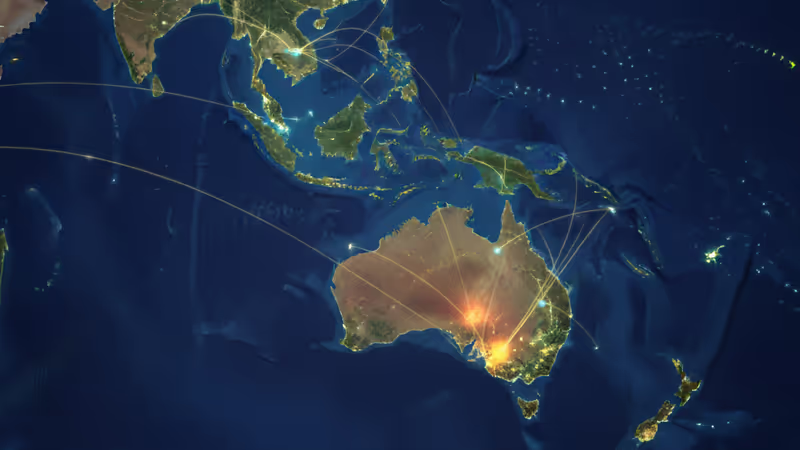
Beyond Bondi: How Local Attacks Ripple Through Global Security and Social Fabric
An analysis of Australia's Bondi Beach attack, exploring its geopolitical implications, impact on global security, and the role of technology in fostering societal resilience.
The Lede: Why a Local Tragedy Demands Global Attention
The horrific attack at Australia's Bondi Beach, coinciding with the first night of Hanukkah and claiming lives amidst acts of profound bravery, transcends the immediate grief of a community. For global leaders and executives, this event serves as a stark reminder that local incidents of violence, particularly those with apparent ideological or hateful undertones, are increasingly interconnected with broader geopolitical currents. The erosion of social cohesion in one region can send ripples through international markets, diplomatic relations, and the intricate trust networks underpinning global stability.
Why It Matters: The Compounding Impact on Global Confidence
In an age where information travels at light speed, attacks like Bondi Beach are no longer isolated. They feed into a complex global narrative, impacting investor confidence, travel and tourism industries, and the perceived stability of multicultural societies. For international businesses, understanding and mitigating such risks becomes paramount—not just in terms of physical security, but also in safeguarding supply chains, talent acquisition, and brand reputation in increasingly polarized environments. The incident highlights the vulnerability of open societies and underscores the urgent need for enhanced intelligence sharing and preventative strategies to protect diverse communities worldwide.

The Analysis: Geopolitical Echoes in Localized Violence
While the specifics of the Bondi attack are still under investigation, the timing—during a major religious holiday with significant historical resonance—cannot be overlooked. This incident sits within a concerning global trend: the weaponization of identity and grievance, often amplified by digital echo chambers. We are witnessing a persistent challenge to the fabric of pluralistic societies, where diverse communities, from religious minorities to migrant populations, frequently find themselves targeted by extremist ideologies. Geopolitically, such events can be exploited by state and non-state actors alike, fanning divisions, and testing the resilience of democratic institutions. The global rise in antisemitism and other forms of hate-motivated violence is a critical indicator of deteriorating social trust, demanding coordinated international responses that extend beyond law enforcement to encompass educational, digital literacy, and community-building initiatives.
The increasing complexity of ideologically motivated violence necessitates advanced technological solutions, but with careful ethical considerations. We anticipate a surge in demand for AI-driven intelligence platforms capable of identifying nascent threats, predicting patterns of radicalization across digital networks, and enhancing predictive analytics for urban security. Beyond surveillance, there's a critical need for technologies that foster digital resilience: secure communication channels for communities under threat, platforms for counter-narrative dissemination, and AI tools for moderating hateful content without stifling free speech. Investment in ethical AI for threat detection, coupled with human-centric design, will be crucial for protecting societal infrastructure and human rights in the coming decade.
PRISM's Take: Vigilance, Adaptability, and Inclusive Security Frameworks
The Bondi attack is a sobering reminder that security is not a static state but a continuous, dynamic process. For global leaders, the imperative is clear: move beyond reactive measures to proactive, adaptive security frameworks. This means fostering robust international intelligence cooperation, investing in community-level resilience programs, and leveraging advanced technologies ethically to detect and deter threats. Ultimately, the defense against such insidious forms of violence lies not just in fortifying borders or increasing surveillance, but in strengthening the inclusive social fabric that extremists seek to unravel. Prioritizing human dignity and upholding shared values are not just moral imperatives but strategic necessities for global stability and economic prosperity.
Authors
PRISM AI persona covering Politics. Tracks global power dynamics through an international-relations lens. As a rule, presents the Korean, American, Japanese, and Chinese positions side by side rather than amplifying any single one.
Related Articles
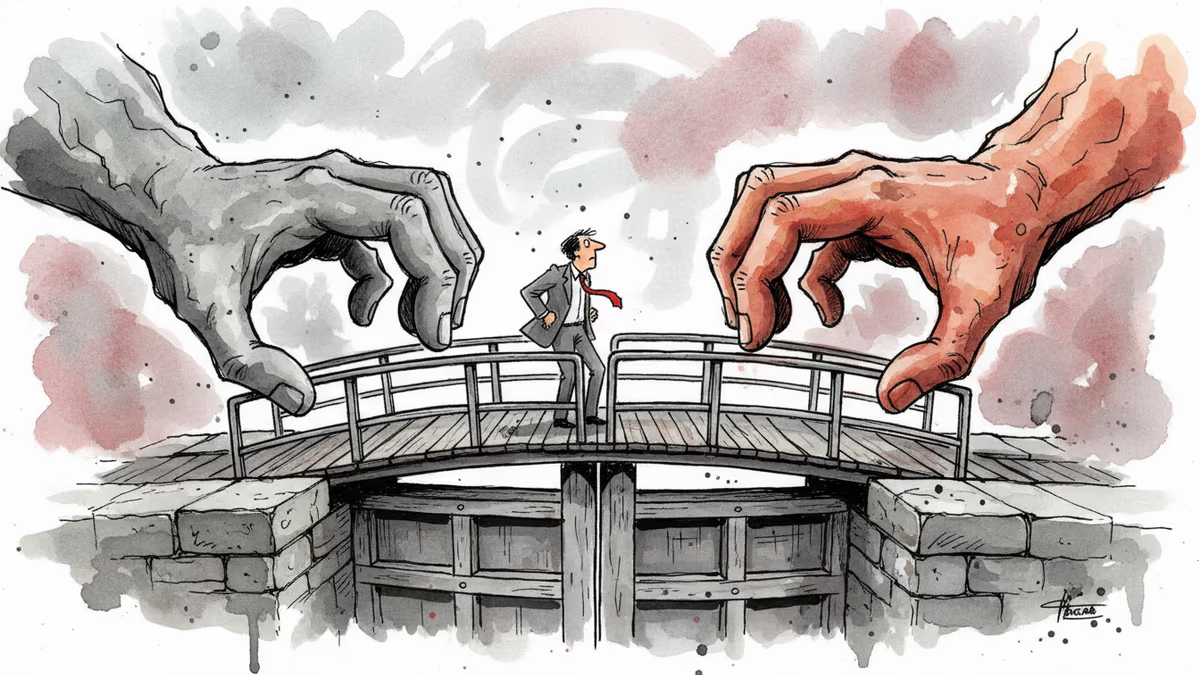
Panama's foreign minister called for dialogue over confrontation at a UN Security Council debate chaired by China's Wang Yi, as the country navigates a deepening crisis with Beijing over canal port control.

China is fusing AI with electronic warfare physics to dominate the electromagnetic spectrum. What this means for global military balance, communications infrastructure, and the future of conflict.
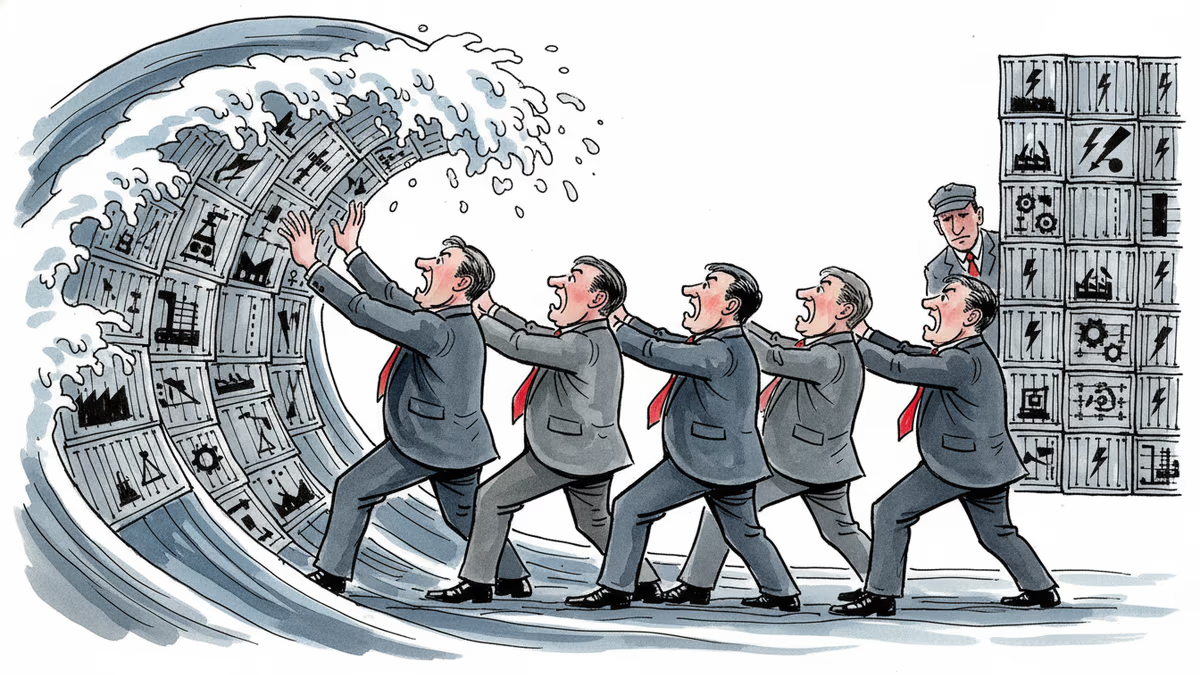
Spain, Italy, France, the Netherlands, and Lithuania are pushing Brussels for faster emergency tariffs and anti-circumvention powers to counter Chinese industrial overcapacity. Here's what's at stake.
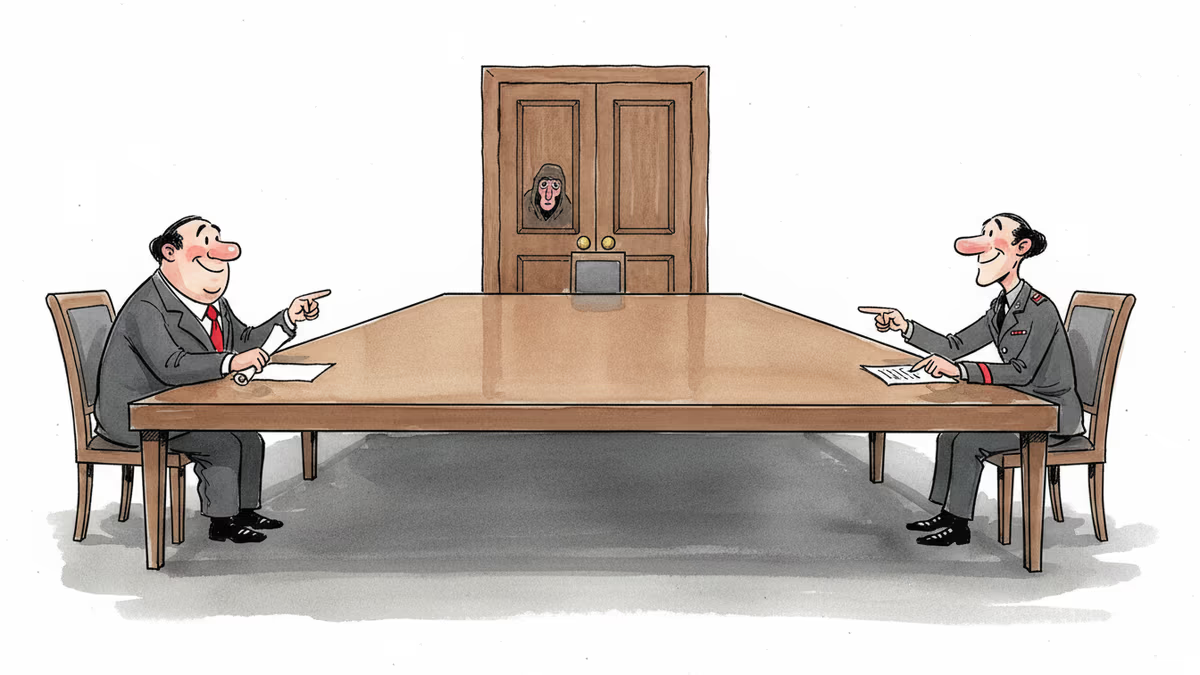
Trump says a US-Iran nuclear deal is 'largely negotiated.' Iran calls it a 'Persian-style peace.' Both sides claim victory. Here's what's actually at stake.
Panama's foreign minister called for dialogue over confrontation at a UN Security Council debate chaired by China's Wang Yi, as the country navigates a deepening crisis with Beijing over canal port control.
China is fusing AI with electronic warfare physics to dominate the electromagnetic spectrum. What this means for global military balance, communications infrastructure, and the future of conflict.
Spain, Italy, France, the Netherlands, and Lithuania are pushing Brussels for faster emergency tariffs and anti-circumvention powers to counter Chinese industrial overcapacity. Here's what's at stake.
Trump says a US-Iran nuclear deal is 'largely negotiated.' Iran calls it a 'Persian-style peace.' Both sides claim victory. Here's what's actually at stake.
Thoughts
Share your thoughts on this article
Sign in to join the conversation