

Red Light Therapy Masks Are Turning Your Living Room Into a Dermatology Clinic
At-home LED therapy devices are reshaping beauty routines with medical-grade technology. But can a $470 mask really replace professional skin treatments?
Your Instagram feed is full of people looking like Hannibal Lecter, but they're not sipping Chianti—they're bathing their faces in 630 to 1072 nanometer wavelengths of therapeutic light.
The CurrentBody LED Face Mask Series 2 costs $470. The iRestore Illumina runs $399. These aren't beauty gadgets anymore; they're medical devices disguised as skincare accessories.
When Dermatologists Start Paying Attention
Board-certified dermatologists are no longer dismissing LED masks as wellness theater. The science is getting harder to ignore, especially when devices pack 236 LEDs delivering three distinct wavelengths simultaneously.
CurrentBody's latest mask hits you with red light (633nm), near-infrared (830nm), and deep near-infrared (1072nm). That deepest wavelength supposedly reaches areas most prone to visible aging—territory that used to require professional intervention.
One tester reported "subtle but consistent improvements in inflammation and skin texture," particularly when skin was stressed. The Shark CryoGlow user saw measurable changes in skin scanning: less inflammation, reduced pigmentation, improved fine lines after eight weeks.
But here's the thing: these aren't miracle cures. They're consistent, low-level interventions that require discipline most people don't have.
The $50 Billion Question
The global skincare market is worth $50 billion annually, with Americans spending an average of $3,756 per person on beauty treatments. Professional LED therapy sessions run $75-150 each, typically requiring 6-12 treatments.
Do the math: a $470 device pays for itself after 4-6 professional sessions. If it works.

That's a big "if" that's reshaping entire industries. Sephora now dedicates floor space to devices that look more like medical equipment than makeup. Ulta stocks masks alongside serums. Beauty retailers are becoming device showrooms.
The shift is forcing traditional skincare brands to rethink their entire value proposition. Why buy a $200 anti-aging cream when you can invest in a device that delivers measurable light therapy?
The Regulation Gray Zone
FDA clearance doesn't mean FDA approval—a distinction most consumers don't understand. These devices are cleared for "cosmetic purposes," not medical treatment, even though they're using the same wavelengths as professional equipment.
Dr. Dennis Gross built a beauty empire around LED technology, but even his $455 mask comes with careful disclaimers. The clinical studies exist, but they're often small-scale and short-term.
One dermatologist put it bluntly: "We have good evidence for LED therapy's effectiveness, but most of that evidence comes from professional-grade devices in controlled settings. The home device market is still catching up."
The regulatory landscape is scrambling to keep pace. When does a beauty device become a medical device? When does skincare become healthcare?
The Democratization Dilemma
This technology represents something bigger than skincare: the democratization of medical-grade treatments. Laser therapy, once exclusive to dermatology offices, is moving into living rooms.
But democratization comes with trade-offs. Professional treatments include professional oversight, proper eye protection, customized protocols. At-home devices rely on user compliance and self-monitoring.
The iRestore Illumina includes blue light therapy for acne—territory that traditionally required dermatological supervision. One user reported success treating eczema, a medical condition, with a "cosmetic" device.
Authors
Related Articles

Grab a deal with the Solawave BOGO sale 2026. Get two viral LED wands or masks for the price of one. Check specs and pricing now.

Samsung Electronics' union branch revealed that 84% of survey respondents oppose the government's roughly $290 billion (₩400 trillion) semiconductor megaproject in Gwangju. Government, management, the union and shareholders are all reading the same national project in sharply different ways.
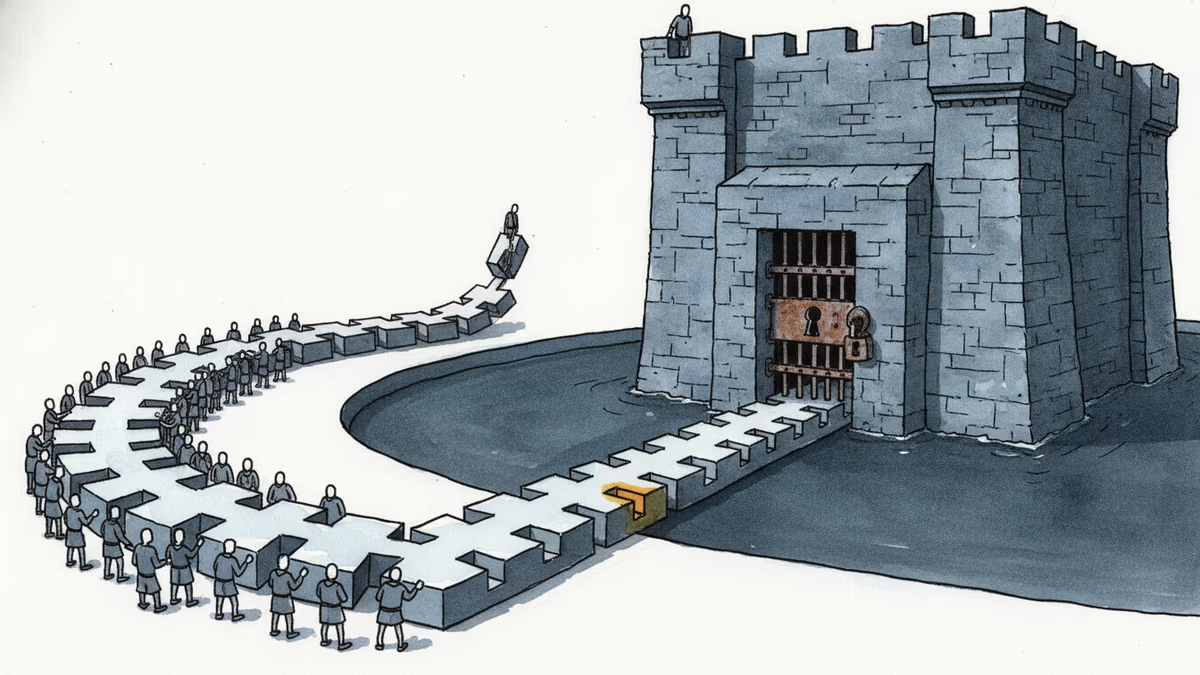
Nvidia shipped roughly a billion RISC-V cores in 2024, then announced it would run CUDA on the open standard. We break down how royalty-free instruction sets and open software stacks are trying to route around CUDA's lock-in. Part 2 of the Semiconductor Sovereignty series.
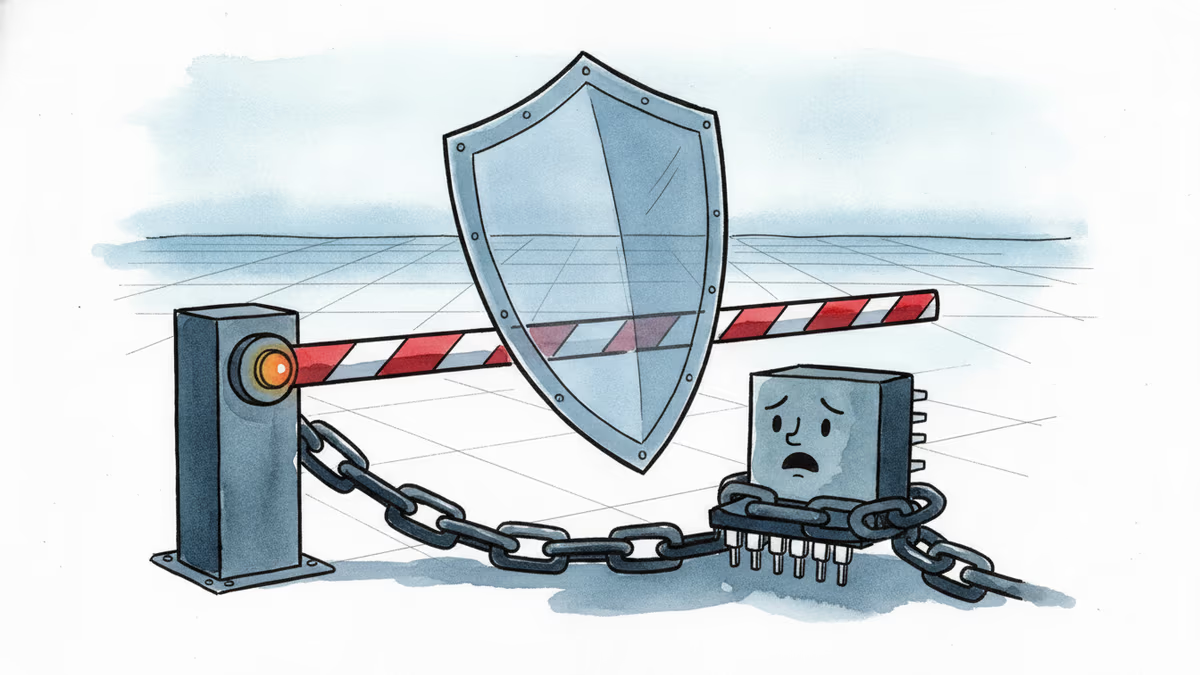
US AI-chip export controls split into three layers in the first half of 2026 — January easing, a May crackdown on circumvention, and a pending bill. Nvidia erased China from its guidance and still posted a record $81.6 billion quarter. A look at the export policy that both shields and cages it.
Grab a deal with the Solawave BOGO sale 2026. Get two viral LED wands or masks for the price of one. Check specs and pricing now.
Samsung Electronics' union branch revealed that 84% of survey respondents oppose the government's roughly $290 billion (₩400 trillion) semiconductor megaproject in Gwangju. Government, management, the union and shareholders are all reading the same national project in sharply different ways.
Nvidia shipped roughly a billion RISC-V cores in 2024, then announced it would run CUDA on the open standard. We break down how royalty-free instruction sets and open software stacks are trying to route around CUDA's lock-in. Part 2 of the Semiconductor Sovereignty series.
US AI-chip export controls split into three layers in the first half of 2026 — January easing, a May crackdown on circumvention, and a pending bill. Nvidia erased China from its guidance and still posted a record $81.6 billion quarter. A look at the export policy that both shields and cages it.
Thoughts
Share your thoughts on this article
Sign in to join the conversation