
The Camera Spec Wars Are Over. Now It's About Who Makes It Easier
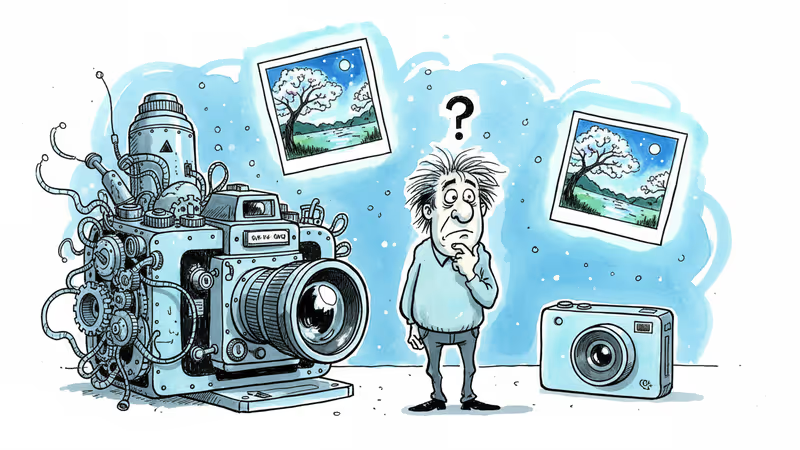
Sony A7V and Nikon Z5II signal a shift from megapixel madness to user-friendly design. Entry-level cameras now rival expensive gear in image quality.
What if a $2,000 camera could take photos nearly identical to a $4,000 one? That's exactly what's happening in 2026's camera market, and it's forcing the entire industry to rethink what actually matters.
Sony's new A7V boasts a 33-megapixel sensor and 30-fps burst shooting. But the real story isn't in the specs—it's that Nikon's$1,597Z5II delivers remarkably similar image quality for half the price.
The End of Megapixel Madness
For decades, camera manufacturers chased higher resolution like it was the holy grail. Sony's61-megapixelA7RV and Canon's45-megapixelR5 represent the peak of this arms race. But something fundamental has shifted.
The Nikon Z5II proves that 24 megapixels is more than enough for most photographers. It handles 8x10 prints beautifully and provides more resolution than social media or web use requires. The difference? Usability over spec sheets.
Instead of cramming in more pixels, Nikon focused on making photography accessible. The Z5II features three custom slots on the mode dial, letting users save different settings for various scenarios. No menu diving, no complicated setup—just point and shoot excellence.
AI Becomes the New Battleground

Sony'sA7V showcases where the industry is heading with its AI Smart Reframe feature. The camera uses its full 7K sensor to automatically zoom and pan, keeping subjects centered without human intervention. It's like having a professional camera operator built into the device.
Autofocus has evolved beyond simple face detection. Modern cameras recognize humans, animals, birds, insects, cars, trains, and planes—automatically adjusting tracking behavior for each subject type. What once required years of experience now happens with a button press.
The Democratization Effect
This shift has profound implications for creative industries. Professional-quality results are no longer locked behind expensive gear and steep learning curves. Solo content creators, small businesses, and hobbyists can now produce work that rivals traditional studios.
The change is already visible in stock photography markets, where images from entry-level cameras compete directly with those from professional rigs. YouTube creators and Instagram influencers are discovering they don't need to spend thousands to create compelling visual content.
Camera retailers are adapting by shifting focus from high-margin body sales to ecosystem products—lenses, accessories, and services. The real money isn't in selling the camera anymore; it's in supporting the creative journey.
When Good Enough Becomes Great
Perhaps most significantly, this trend challenges our relationship with perfectionism in technology. The Z5II's11+ stops of dynamic range rivals cameras costing twice as much. Its autofocus, powered by the same processor found in Nikon's flagship models, performs nearly identically to far more expensive alternatives.
This raises uncomfortable questions for premium manufacturers. If entry-level gear delivers professional results, what justifies the price premium? Weather sealing, build quality, and specialized features matter—but only to a shrinking segment of users who actually need them.
Authors
Related Articles
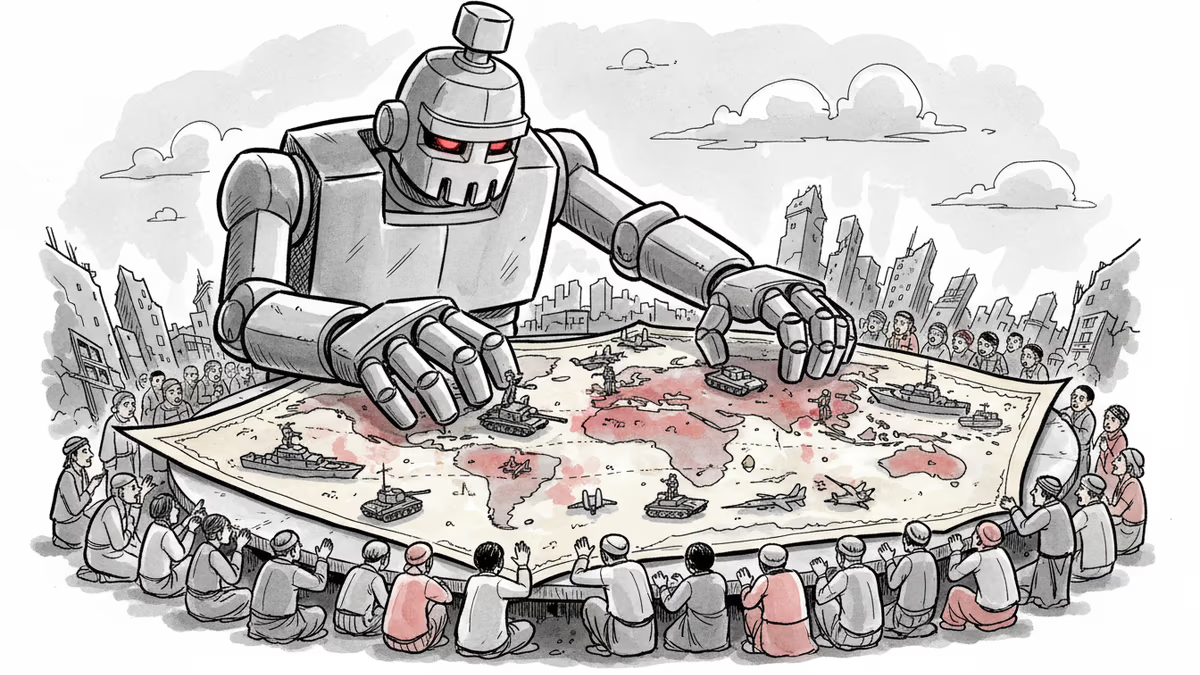
Middle East conflict reveals AI weapons reality. Claude AI selects targets, drones attack autonomously. 90% accuracy, zero regulation. The gap between deployment and governance widens.

Casio's AI pet Moflin promised companionship through artificial intelligence, but users are experiencing unexpected rejection. Can technology truly replace emotional bonds?

EVA AI hosted pop-up café dates where people brought their AI companions for Valentine's Day. With 16% of people now using AI as romantic partners, we explore what this means for human connection.

Insta360's new grip transforms the Ace Pro 2 action cam into a pocket camera, challenging the smartphone photography dominance with specialized functionality.
Middle East conflict reveals AI weapons reality. Claude AI selects targets, drones attack autonomously. 90% accuracy, zero regulation. The gap between deployment and governance widens.
Casio's AI pet Moflin promised companionship through artificial intelligence, but users are experiencing unexpected rejection. Can technology truly replace emotional bonds?
EVA AI hosted pop-up café dates where people brought their AI companions for Valentine's Day. With 16% of people now using AI as romantic partners, we explore what this means for human connection.
Insta360's new grip transforms the Ace Pro 2 action cam into a pocket camera, challenging the smartphone photography dominance with specialized functionality.
Thoughts
Share your thoughts on this article
Sign in to join the conversation