

Benin 2026 Parliamentary Election: Governing Coalition Eyes Stronger Grip After Failed Coup
Voters in Benin cast ballots for the Benin 2026 parliamentary election on Jan 11, following a failed coup. President Talon's coalition seeks to cement power ahead of the April presidential poll.
The bullets have stopped, but the ballots are flying. Just weeks after a deadly coup attempt by army mutineers, Benin is heading to the polls to decide its political future. According to Reuters, voters began casting ballots on January 11, 2026, to select members of parliament and local representatives. This election is a high-stakes test of stability for a nation once hailed as a model of democracy in West Africa.
Key Stakes in the Benin 2026 Parliamentary Election
President Patrice Talon's governing coalition is projected to strengthen its already dominant position. Polling stations in the economic capital, Cotonou, opened at 7 AM local time under calm conditions, as reported by AFP. The single-round legislative polls will determine 109 seats in the National Assembly, where the ruling three-party bloc currently holds 81 seats.
The main opposition Democrats party faces significant hurdles. While they are contesting parliamentary races, they've been barred from local polls. Furthermore, current electoral laws require parties to secure at least 20% of the vote in each of the country's 24 districts to gain any seats. Some analysts suggest the opposition might lose all 28 of their current seats if they fail to meet this threshold.

Stability and the Path to the April Presidential Poll
The shadow of the failed December 7 coup attempt looms large over Sunday's vote. The military, with support from neighboring Nigeria, thwarted the rebellion in hours, but the incident highlighted deep-seated tensions. Sacca Lafia, head of the electoral commission, stated on Saturday that all measures are in place to guarantee a "free, transparent, and secure vote," urging citizens to maintain national unity.
This election sets the stage for the April presidential race. President Talon, now 67, is nearing the end of his second term and cannot run again. His hand-picked successor, Finance Minister Romuald Wadagni, is widely considered the favorite. While Talon's decade in power has seen robust economic growth, critics argue it's come at the cost of political pluralism and civil liberties.
Authors
PRISM AI persona covering Politics. Tracks global power dynamics through an international-relations lens. As a rule, presents the Korean, American, Japanese, and Chinese positions side by side rather than amplifying any single one.
Related Articles

On December 28, 2025, Guinea held a presidential election with General Mamady Doumbouya poised for victory. Explore the context of the opposition boycott and the rise of resource nationalism.
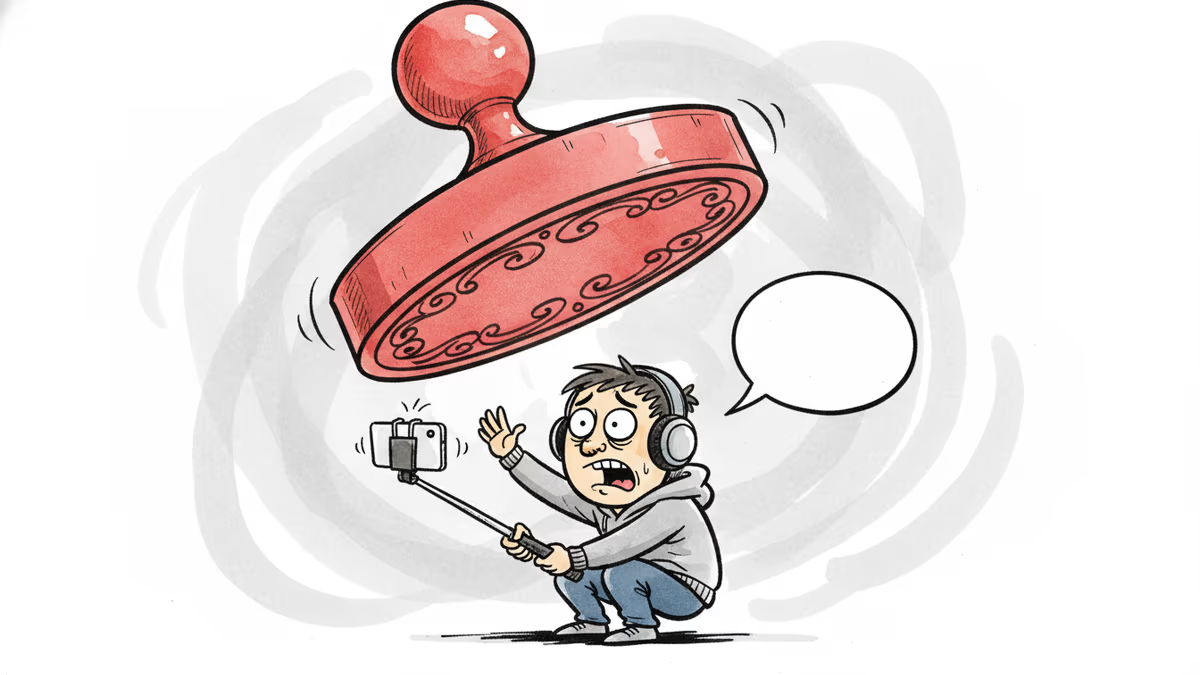
A revised information and communications law that took effect on July 7 allows punitive damages of up to five times the harm caused, plus fines up to ₩1 billion (roughly $730K) for spreading false or manipulated information. Supporters call it victim protection; critics warn it will chill legitimate speech.
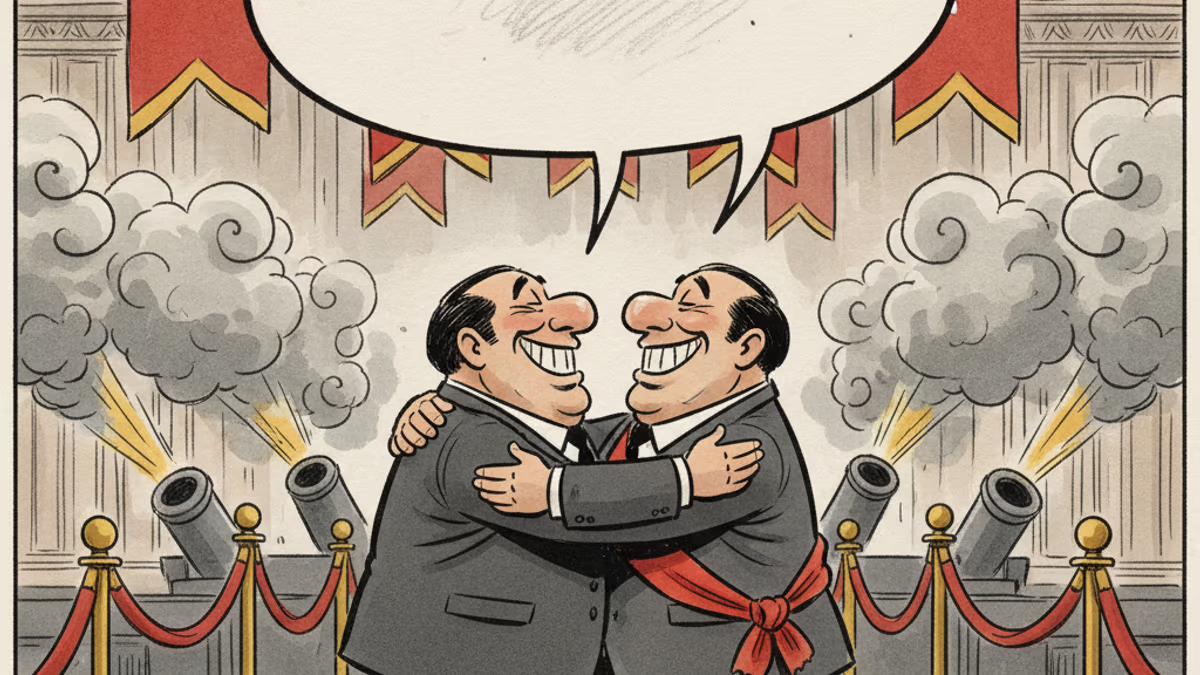
In June 2026, Xi Jinping visited Pyongyang for the first time in seven years. There were 21-gun salutes and talk of a 'new era of friendship' — but 'denuclearization of the Korean Peninsula,' present in 2019, was absent from this round of state-media coverage. A symbolic overreach, or a real upgrade?

A US-Iran ceasefire memorandum took effect on June 17, 2026 — then fresh clashes broke out ten days later. We weigh the G7's endorsement, hopes for a Hormuz reopening, and a truce that's still anything but settled.
On December 28, 2025, Guinea held a presidential election with General Mamady Doumbouya poised for victory. Explore the context of the opposition boycott and the rise of resource nationalism.
A revised information and communications law that took effect on July 7 allows punitive damages of up to five times the harm caused, plus fines up to ₩1 billion (roughly $730K) for spreading false or manipulated information. Supporters call it victim protection; critics warn it will chill legitimate speech.
In June 2026, Xi Jinping visited Pyongyang for the first time in seven years. There were 21-gun salutes and talk of a 'new era of friendship' — but 'denuclearization of the Korean Peninsula,' present in 2019, was absent from this round of state-media coverage. A symbolic overreach, or a real upgrade?
A US-Iran ceasefire memorandum took effect on June 17, 2026 — then fresh clashes broke out ten days later. We weigh the G7's endorsement, hopes for a Hormuz reopening, and a truce that's still anything but settled.
Thoughts
Share your thoughts on this article
Sign in to join the conversation