
The Battery Gold Rush Is Going Underwater
A 70-ton machine crawling the Pacific seafloor could reshape the critical minerals supply chain. But at what cost to the deep ocean ecosystem?
The cobalt inside your EV's battery probably came from the Democratic Republic of Congo—where 70% of the world's supply is mined, often under conditions that make ethically-minded consumers look away. Now, a Canadian company thinks the answer is 13,000 feet below the Pacific Ocean. The question is whether the cure might be as troubling as the disease.
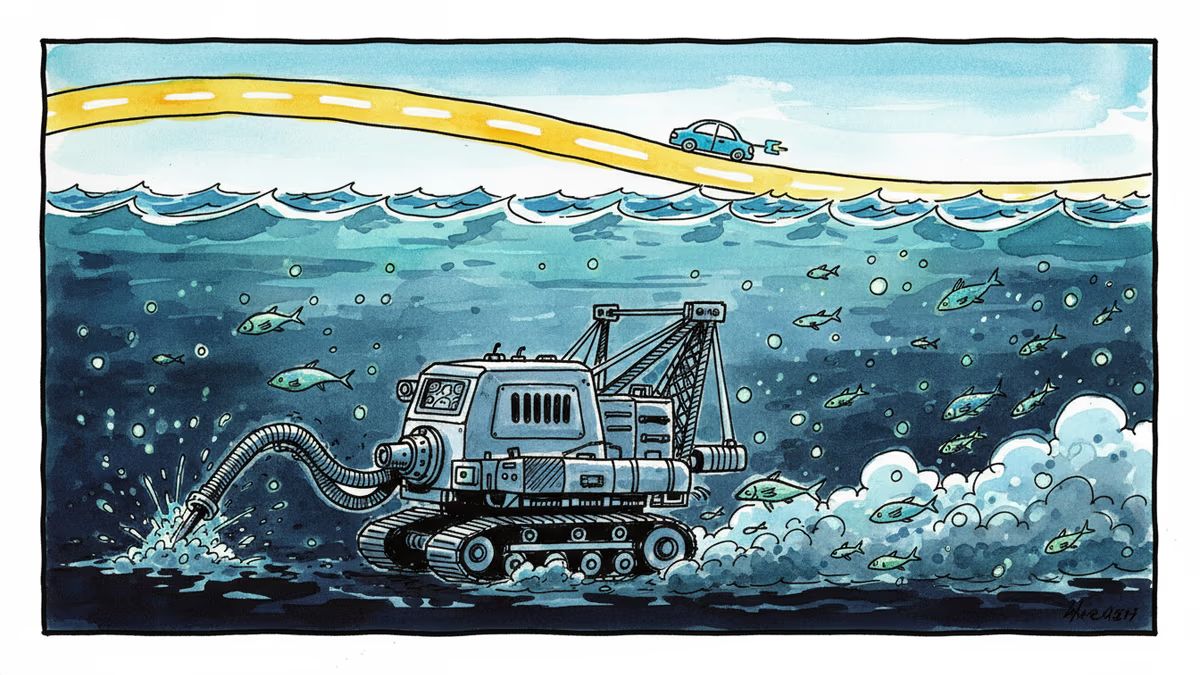
A Tank on the Ocean Floor
In 2022, The Metals Company ran a machine the size of a small house along the Pacific seafloor. It weighed over 70 tons, moved on caterpillar tracks, and vacuumed up potato-sized rocks called polymetallic nodules—dense little spheres packed with copper, manganese, cobalt, and nickel. The test run covered about a tenth of a mile. The company called it a success.
Now they want to do it at scale. The target zone: 65,000 square kilometers of Pacific seafloor—roughly the size of West Virginia—holding an estimated 600 million metric tons of nodules. Each one is essentially a battery ingredient wrapped in rock, formed over millions of years.
The Metals Company isn't alone. 31 entities—including China, India, and the tiny Pacific island nation of Nauru—are racing to analyze nodules and test harvesting equipment. The deep sea, long treated as an untouchable frontier, is becoming the next arena of resource geopolitics.
Why This Moment Matters
The timing isn't accidental. The IEA projects cobalt demand could grow more than sixfold by 2040 as EV adoption accelerates. Lithium, nickel, and manganese face similar supply crunches. Land-based mines, concentrated in politically volatile or ethically fraught regions, can't keep up—or at least that's the industry argument.
Geopolitics is accelerating the push. The pandemic exposed how dangerously concentrated critical mineral supply chains are. Governments from Washington to Brussels to Seoul are now treating battery minerals as strategic assets. Deep-sea nodules, spread across international waters and theoretically accessible to any nation with the technology, look like a way out of that dependency trap.
For investors, the calculus is straightforward: whoever controls the supply chain for battery minerals controls a significant piece of the clean energy transition. The nodule fields are essentially pre-positioned inventory for a market that hasn't peaked yet.

The Environmental Knot
Here's where it gets complicated. Environmental scientists and conservation groups aren't celebrating.
Deep-sea ecosystems operate on geological timescales. Recovery from disturbance can take decades to centuries. The sediment plumes kicked up by harvesting machines can drift for hundreds of kilometers, smothering filter feeders and disrupting habitats that remain poorly understood. WWF and other groups have called for a moratorium on commercial deep-sea mining until comprehensive impact assessments are completed.
The regulatory framework is still a work in progress. The International Seabed Authority (ISA)—the UN body that governs mining in international waters—has yet to finalize commercial mining rules. In 2021, Nauru invoked a little-known procedural clause forcing the ISA to complete those rules within two years. That deadline passed without resolution. Companies continue exploring in the legal gray zone.
The core paradox is hard to escape: decarbonizing the economy requires batteries, batteries require minerals, and sourcing those minerals cleanly—whether from land or sea—has no obvious answer. Every option trades one set of harms for another.
Nauru's Complicated Bet
Nauru's involvement deserves a closer look. This island nation of roughly 10,000 people was once the world's wealthiest country per capita, thanks to phosphate mining. When the phosphate ran out, the economy collapsed. That same nation is now The Metals Company's sponsoring state for ISA applications—essentially lending its national status to push commercial deep-sea mining forward.
For developing nations, the environmental debate looks different. When wealthy countries with diversified economies advocate for deep-sea moratoriums, smaller nations hear something else: a closed door on a potential revenue stream. The politics of who gets to decide what counts as acceptable environmental risk are rarely straightforward.
The Consumer Blind Spot
For the average person buying an EV or a smartphone, the supply chain that makes those products possible is almost entirely invisible. The shift from Congolese mines to Pacific seafloors doesn't change that invisibility—it just relocates it to somewhere even harder to see or audit.
Regulators in the EU are already pushing for battery supply chain transparency through legislation like the EU Battery Regulation, which will require carbon footprint disclosures and due diligence on sourcing. Whether deep-sea minerals will eventually face similar scrutiny—or whether their remote origin makes them easier to market as "clean"—remains an open question.
Authors
Related Articles
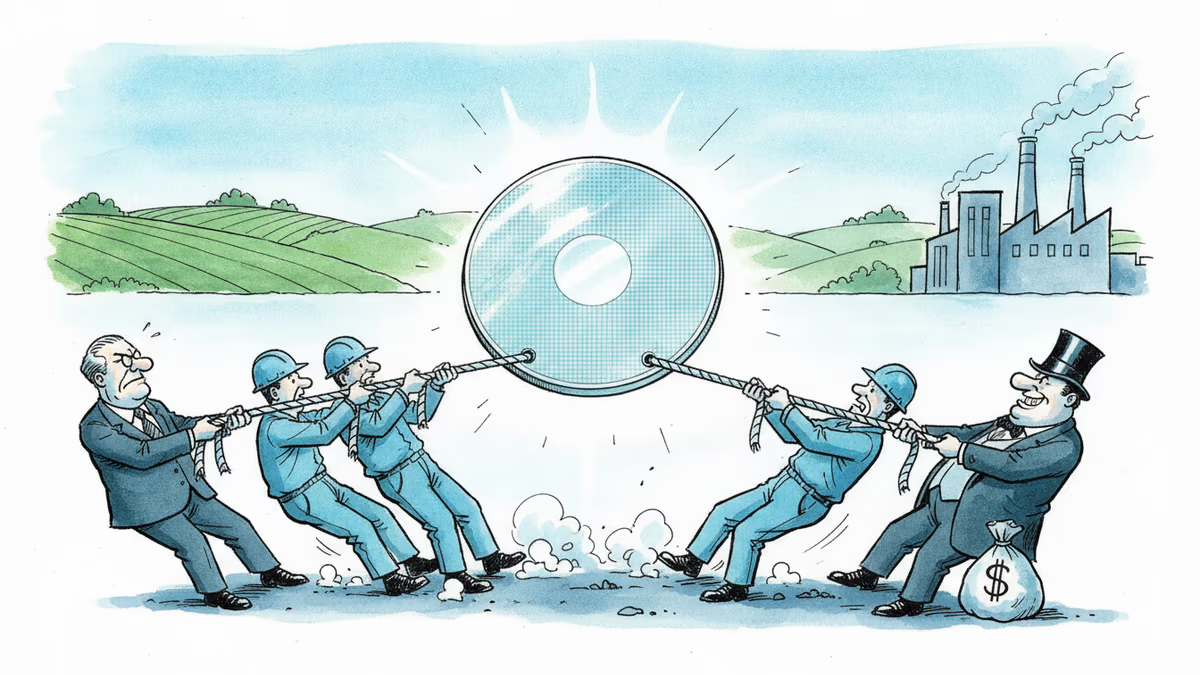
Samsung Electronics' union branch revealed that 84% of survey respondents oppose the government's roughly $290 billion (₩400 trillion) semiconductor megaproject in Gwangju. Government, management, the union and shareholders are all reading the same national project in sharply different ways.
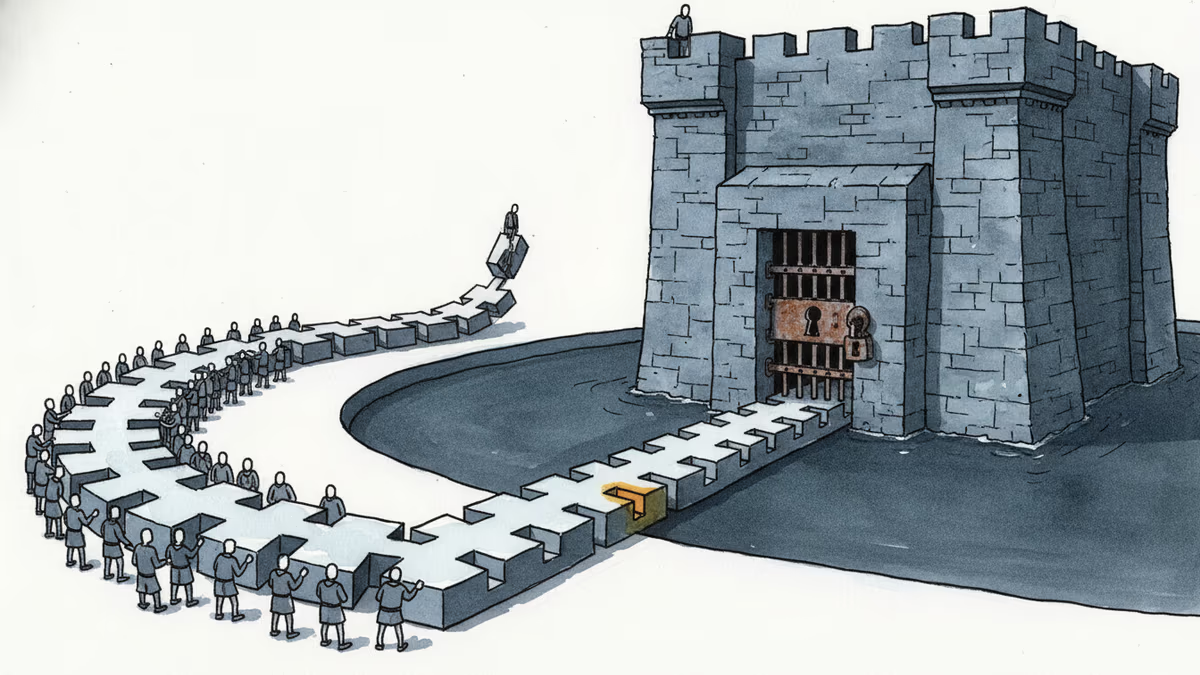
Nvidia shipped roughly a billion RISC-V cores in 2024, then announced it would run CUDA on the open standard. We break down how royalty-free instruction sets and open software stacks are trying to route around CUDA's lock-in. Part 2 of the Semiconductor Sovereignty series.
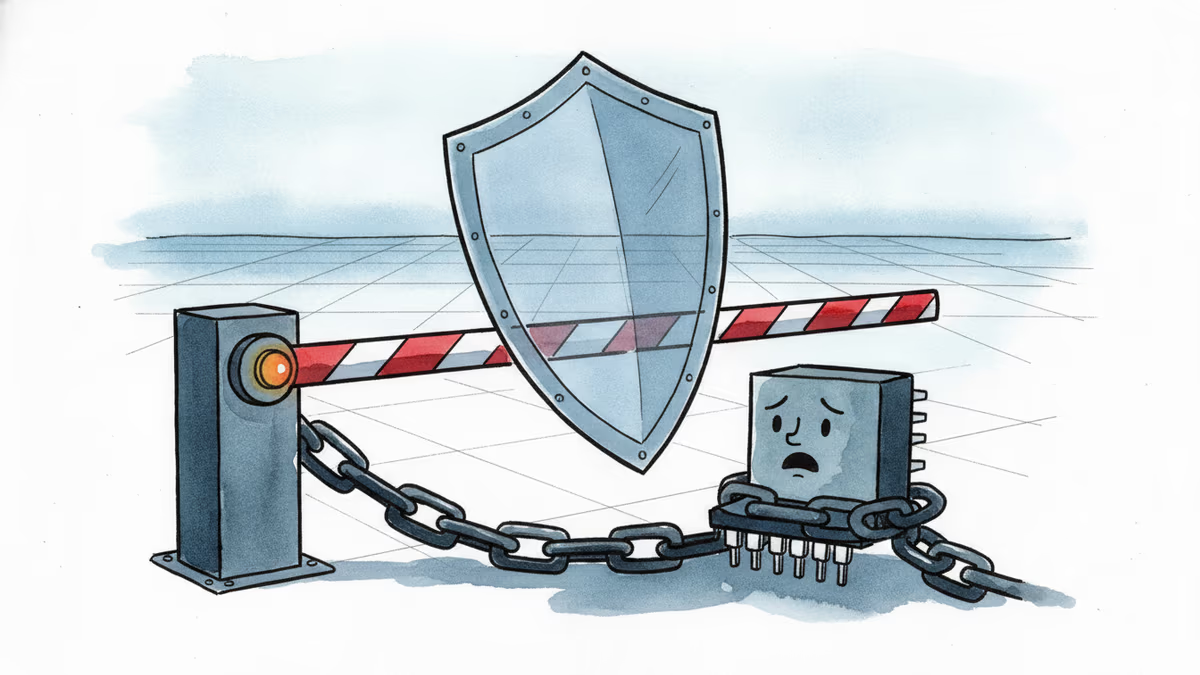
US AI-chip export controls split into three layers in the first half of 2026 — January easing, a May crackdown on circumvention, and a pending bill. Nvidia erased China from its guidance and still posted a record $81.6 billion quarter. A look at the export policy that both shields and cages it.
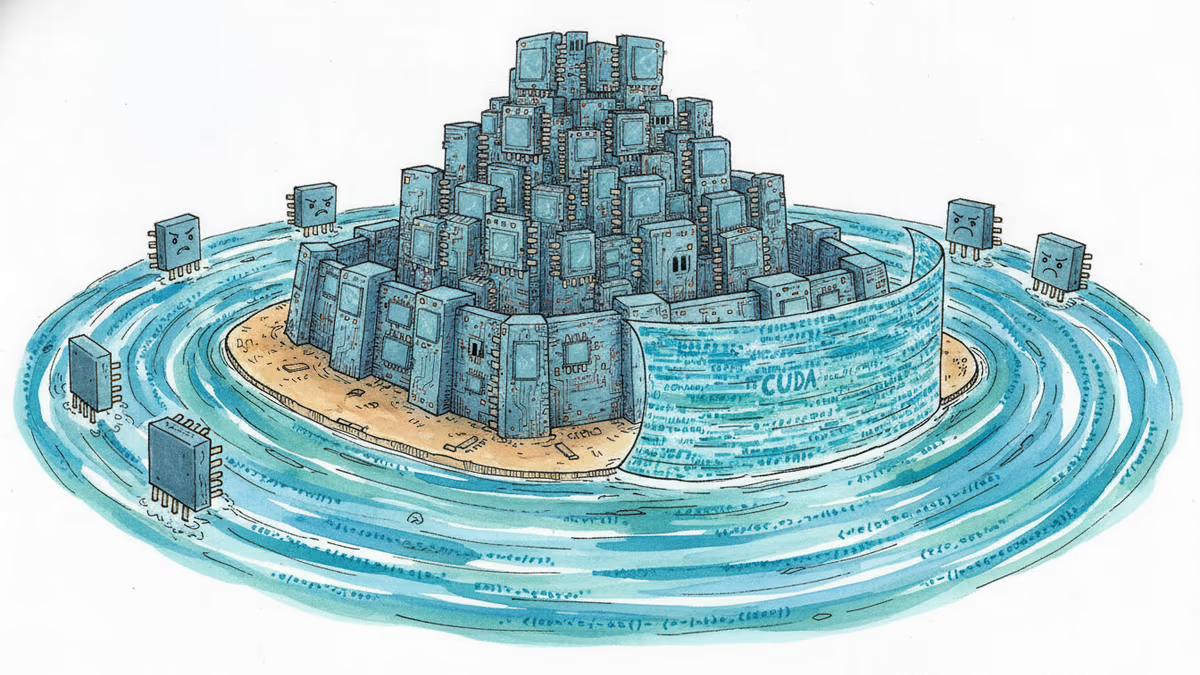
AMD's MI325X matches or beats Nvidia on memory and bandwidth — yet Nvidia's 86-92% share holds. The real moat is CUDA, 20 years in the making. Part 1 of 4.
Samsung Electronics' union branch revealed that 84% of survey respondents oppose the government's roughly $290 billion (₩400 trillion) semiconductor megaproject in Gwangju. Government, management, the union and shareholders are all reading the same national project in sharply different ways.
Nvidia shipped roughly a billion RISC-V cores in 2024, then announced it would run CUDA on the open standard. We break down how royalty-free instruction sets and open software stacks are trying to route around CUDA's lock-in. Part 2 of the Semiconductor Sovereignty series.
US AI-chip export controls split into three layers in the first half of 2026 — January easing, a May crackdown on circumvention, and a pending bill. Nvidia erased China from its guidance and still posted a record $81.6 billion quarter. A look at the export policy that both shields and cages it.
AMD's MI325X matches or beats Nvidia on memory and bandwidth — yet Nvidia's 86-92% share holds. The real moat is CUDA, 20 years in the making. Part 1 of 4.
Thoughts
Share your thoughts on this article
Sign in to join the conversation