
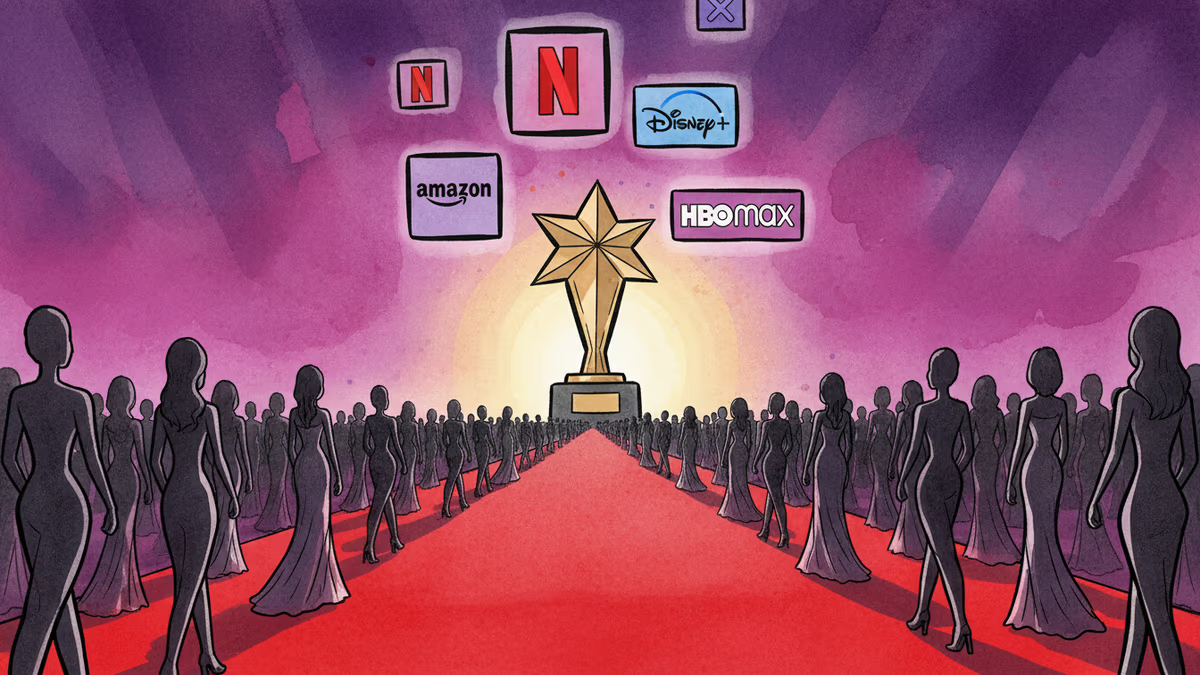
Baeksang 2026: Reading Korea's Content Map Through a Red Carpet
The 62nd Baeksang Arts Awards convened at COEX on May 8, 2026. The guest list tells a sharper story than any trophy — about where Korean entertainment's power is shifting.
A red carpet doesn't lie. The names on the guest list, the platforms that put them there, the MC trio chosen to hold the room — every detail is a data point.
What Happened at COEX on May 8
The 62nd Baeksang Arts Awards held its ceremony at COEX in Seoul on May 8, 2026, with Shin Dong Yup, Suzy, and Park Bo Gum sharing MC duties. The red carpet drew an unusually wide cross-section of Korean entertainment: film veterans like Son Ye Jin, Hyun Bin, Ryu Seung Ryong, and Yoo Hae Jin walked alongside TV drama mainstays Ji Sung, Jeon Mi Do, and Lee Junho, with newer OTT-era names like Hong Kyung, Shin Hyun Been, and Park Ji Hyun filling in the generational middle.
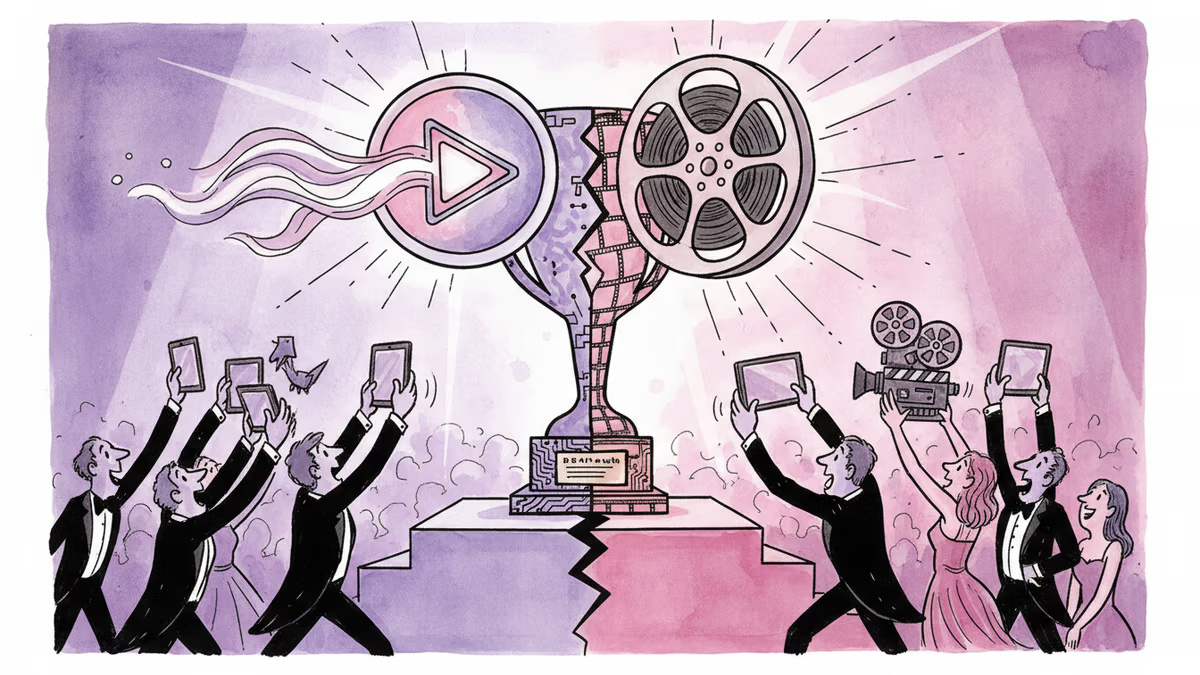
Founded in 1964, Baeksang is one of Korea's few integrated awards covering both film and television under one roof. That dual mandate makes it a uniquely useful lens: unlike Cannes or the Emmys, which operate in separate industrial universes, Baeksang sits at the intersection where Korean cinema and streaming drama now increasingly compete for the same talent, the same audiences, and — increasingly — the same production budgets.
The Guest List as Industry Map

Look at who showed up and the platform affiliations become clear. Koo Kyo Hwan, Hong Kyung, Lee Junho, Park Ji Hyun, Shin Hyun Been — this cluster of names represents the OTT generation, actors whose profiles were built or significantly amplified through Netflix, Tving, or Wavve originals in the past two to three years. Set against them, presences like Yoo Jae Myung, Yeom Hye Ran, and Lee Hye Young signal that terrestrial and cable drama still anchor the mid-career trajectory for serious dramatic actors in Korea.
Lim Yoona's attendance carries its own subtext. A Girls' Generation alumna with a sustained drama career, she represents the idol-to-actor pipeline that IU's Hotel del Luna (2019) turned into a recognized industrial route. Baeksang's red carpet functions, in part, as the pipeline's credentialing stage — the moment where fan-driven casting choices get placed alongside industry-validated performance careers.
The film side — Hyun Bin, Son Ye Jin, Ryu Seung Ryong, Yoo Hae Jin — reflects Korean cinema's ongoing post-pandemic recovery, but also its growing definitional anxiety. As Netflix and Tving increasingly fund feature-length films with theatrical windows measured in days rather than months, Baeksang's eligibility criteria and judging standards face quiet pressure to evolve.
The MC Calculus
The Shin Dong Yup – Suzy – Park Bo Gum trio is worth unpacking. Shin Dong Yup provides variety-show fluency and institutional gravitas. Suzy brings global fandom reach — her name recognition extends well beyond Korea into Southeast Asia and beyond. Park Bo Gum anchors the prestige drama audience. Placing all three on the same stage isn't accidental; it's a broadcast strategy designed for a media environment where the ceremony itself is content, consumed in clips across YouTube, TikTok, and Instagram long after the live broadcast ends.
This shift — from event to content asset — has reshaped how Korean broadcasters and OTT platforms negotiate the value of awards shows. JTBC, which airs Baeksang, must now think about clip rights, highlight packaging, and social virality as core parts of the ceremony's commercial logic, not afterthoughts.
This content is AI-generated based on source articles. While we strive for accuracy, errors may occur. We recommend verifying with the original source.
Related Articles
Lim Ji-yeon-led My Royal Nemesis reportedly hit No. 1 on Netflix's global non-English chart in its opening week. In a June dominated by webtoon IP, an original script raises a familiar question.
Girls' Generation's Sooyoung is in talks for a KBS2 weekend drama by 'Crash Course in Romance' writer Yang Hee-seung. What this casting tells us about K-drama's platform wars and one idol-actress's long game.
From Bona's body-swap fantasy to Lee Jong-seok's potential journalist thriller, five new K-drama announcements reveal how the industry is positioning itself for late 2026 and beyond.
The 62nd Baeksang Arts Awards crowned Ryu Seung Ryong and Yoo Hae Jin as Grand Prize winners. But the real story is how OTT dominance and indie cinema reshaped Korea's most prestigious night in entertainment.
Lim Ji-yeon-led My Royal Nemesis reportedly hit No. 1 on Netflix's global non-English chart in its opening week. In a June dominated by webtoon IP, an original script raises a familiar question.
Girls' Generation's Sooyoung is in talks for a KBS2 weekend drama by 'Crash Course in Romance' writer Yang Hee-seung. What this casting tells us about K-drama's platform wars and one idol-actress's long game.
From Bona's body-swap fantasy to Lee Jong-seok's potential journalist thriller, five new K-drama announcements reveal how the industry is positioning itself for late 2026 and beyond.
The 62nd Baeksang Arts Awards crowned Ryu Seung Ryong and Yoo Hae Jin as Grand Prize winners. But the real story is how OTT dominance and indie cinema reshaped Korea's most prestigious night in entertainment.
Thoughts
Share your thoughts on this article
Sign in to join the conversation