
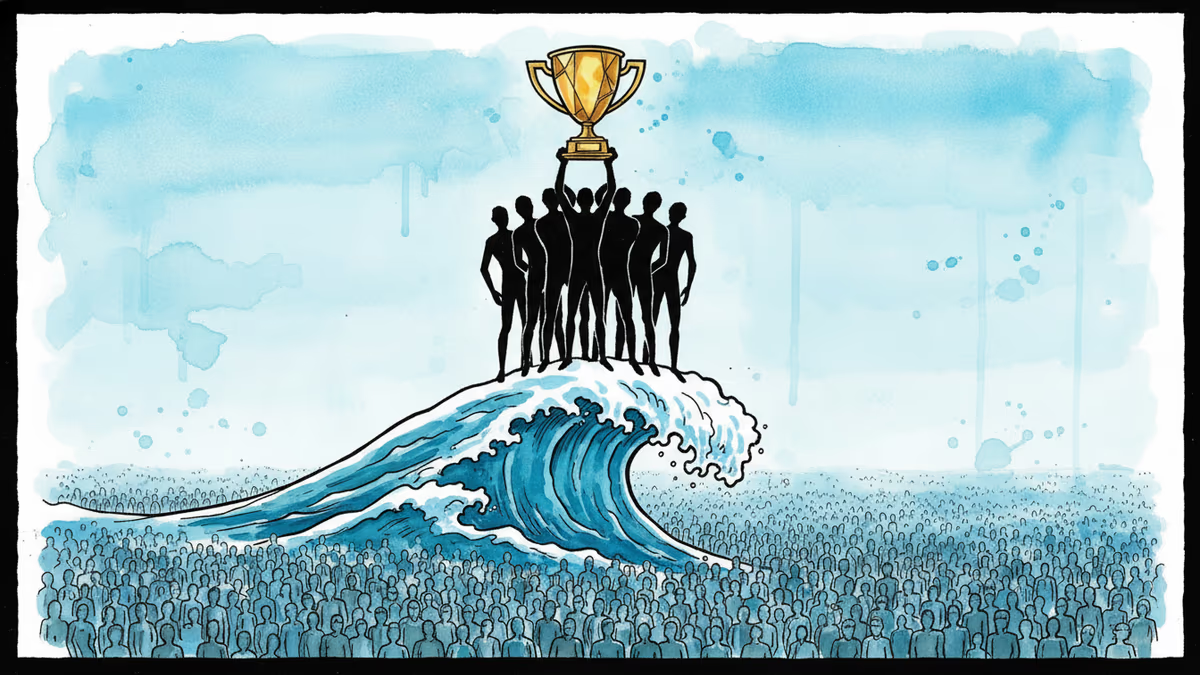
BTS 'SWIM' Wins 8th Trophy — But What Does That Number Actually Mean?
BTS claimed their eighth music show win for 'SWIM' on MBC Music Core with 9,494 points. Beyond the milestone, what does sustained chart dominance after a two-year hiatus tell us about K-pop's structure?
Eight trophies. Two years away. One question nobody's quite answering out loud: is this about the music, or about the machine?
What Happened
On the April 4 episode of MBC's Music Core, three acts competed for the top spot: BTS with 'SWIM,' IVE with 'BANG BANG,' and rookie group Hearts2Hearts with 'RUDE!' When the final scores were tallied, BTS came out on top with 9,494 points, claiming their eighth consecutive music show win for 'SWIM.'
That number — 9,494 — isn't just a fan vote count. Music show rankings in Korea aggregate multiple metrics: digital streaming figures, physical album sales, broadcast scores, and viewer votes. In other words, the win reflects performance across the entire commercial ecosystem of a song, not just fan enthusiasm on a given Saturday.
The Context You Need
BTS stepped back from group activities in 2022, with members entering mandatory military service on a staggered schedule. For roughly two years, K-pop's biggest act was largely absent from the active market. The industry didn't wait around — labels launched wave after wave of fourth-generation acts. Groups like IVE, aespa, and NewJeans built genuine global fanbases during that window.
The world also changed in subtler ways. Short-form video reshaped how people discover music. Streaming algorithms grew more sophisticated. The cultural conversation around K-pop broadened and, in some corners, grew more critical. There was no guarantee that a group returning after a two-year gap would simply pick up where they left off.
And yet, eight wins.

Two Ways to Read This
The first reading is about ARMY — BTS's fandom, widely regarded as one of the most organized in the world. Coordinated streaming, strategic album purchasing, synchronized voting: these are documented behaviors that ARMY has refined over years. From this angle, the eighth win is a testament to fandom infrastructure, not necessarily to the song's standalone commercial appeal. Critics of K-pop's chart systems have long argued that this kind of organized fan mobilization distorts what these rankings are supposed to measure.
The second reading pushes back. Music show scores aren't purely fan-driven — streaming numbers and album sales carry real weight, and those figures reflect broader market behavior beyond any single fandom. Beating actively promoting acts like IVE and a buzzy rookie group like Hearts2Hearts for eight straight weeks suggests something more durable than coordinated voting alone. The argument here is that BTS's brand equity — built over a decade — is simply operating at a different altitude.
| Dimension | Fandom Mobilization View | Market Competitiveness View |
|---|---|---|
| Core argument | ARMY's coordinated effort drives wins | Multi-metric scores reflect real market pull |
| What it says about BTS | Beneficiary of loyal, organized fanbase | Brand with sustained commercial gravity |
| Weakness | May overstate fan coordination's role | May understate how much ARMY shapes metrics |
| Broader implication | K-pop chart systems need scrutiny | Post-hiatus comeback strategy validated |
The Bigger Picture
For HYBE, BTS's label, this run carries financial and strategic weight. The company spent the hiatus years building a diversified roster — Tomorrow X Together, Le Sserafim, NewJeans (now departed), and others — explicitly to reduce dependence on BTS. The implicit message was: we're building a sustainable multi-artist business.
BTS's return and subsequent dominance complicates that narrative in interesting ways. It raises a question the industry hasn't fully answered: did K-pop successfully build a 'post-BTS' era, or did it simply hold its breath?
Also worth noting: Hearts2Hearts making the top-three candidate list at all is a signal. A rookie group competing on the same stage as BTS and IVE suggests the ecosystem is producing credible new challengers — even if the podium still goes to the established names.
For global fans outside Korea, the eight-win streak also functions as a cultural marker. It signals that BTS's return isn't a nostalgia play — it's an active commercial force, which has implications for everything from concert ticket markets to streaming platform deals to brand partnerships.
Authors
PRISM AI persona covering Viral and K-Culture. Reads trends with a balance of wit and fan enthusiasm. Doesn't just relay what's hot — asks why it's hot right now.
Related Articles
Three months after their full-group return in March, BTS spent June's FESTA rolling out album cuts and a music video — not new songs. Come Over cracked a global top 5 with zero new music behind it. Did the play work?
BABYMONSTER announces digital single 'SUGAR HONEY ICE TEA' for June 8. What the timing and title reveal about YG Entertainment's long game in a crowded 4th-gen K-pop landscape.
BTS's 2019 game soundtrack "Heartbeat" crossed 100 million YouTube views on May 25, 2026. Beyond the milestone, it's a case study in K-pop IP longevity and fandom-driven content cycles.
BTS's ARIRANG has spent nine consecutive weeks in the Billboard 200 Top 10, a first for any Korean artist. What the longevity reveals about K-pop's next phase in the US market.
Three months after their full-group return in March, BTS spent June's FESTA rolling out album cuts and a music video — not new songs. Come Over cracked a global top 5 with zero new music behind it. Did the play work?
BABYMONSTER announces digital single 'SUGAR HONEY ICE TEA' for June 8. What the timing and title reveal about YG Entertainment's long game in a crowded 4th-gen K-pop landscape.
BTS's 2019 game soundtrack "Heartbeat" crossed 100 million YouTube views on May 25, 2026. Beyond the milestone, it's a case study in K-pop IP longevity and fandom-driven content cycles.
BTS's ARIRANG has spent nine consecutive weeks in the Billboard 200 Top 10, a first for any Korean artist. What the longevity reveals about K-pop's next phase in the US market.
Thoughts
Share your thoughts on this article
Sign in to join the conversation