

AWS Aumovio Expand AI Self-Driving Vehicle Tech 2026
AWS and Aumovio expand their AI collaboration in 2026 to accelerate self-driving vehicle development. Discover how cloud-driven training is cutting model development time by 50%.
While some players scale back, others find a higher gear in the cloud. According to Reuters, Amazon Web Services (AWS) and Aumovio have announced a significant expansion of their partnership to accelerate the development of AI-driven self-driving vehicles. The move signals a major bet on using massive cloud computing power to solve the final hurdles of full autonomy.
AWS Aumovio Self-Driving AI Collaboration Scales Training
Training a vehicle to think like a human requires processing petabytes of sensor data. By leveraging AWS's robust infrastructure, Aumovio aims to cut AI model training times by up to 50%. This integration allows for more complex simulations that mirror unpredictable urban environments, improving the safety and reliability of their autonomous stack.

Industry analysts suggest that this cloud-first approach is becoming the standard for the industry. Aumovio reported that the scalability of AWS enables them to run millions of virtual test miles simultaneously. However, critics remind that software prowess must still meet rigorous real-world hardware validation and evolving safety regulations before these vehicles hit public roads at scale.
Authors
Related Articles
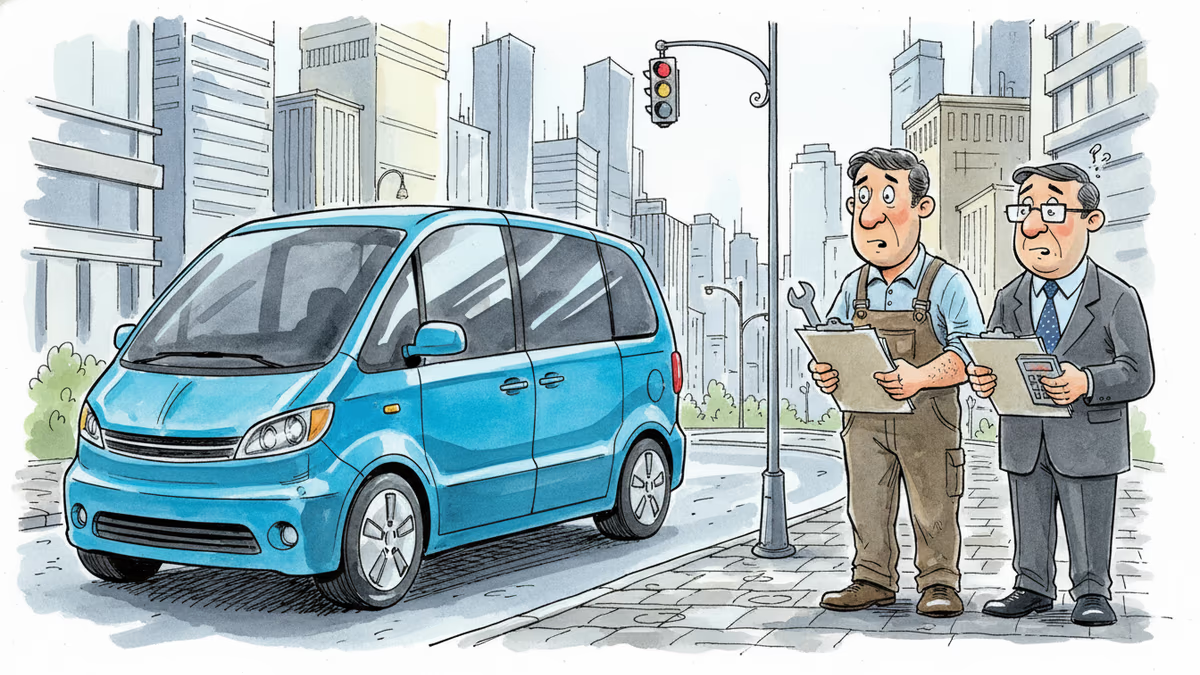
Waymo's new Ojai robotaxi isn't just a vehicle upgrade. It's the company's most serious attempt yet at cracking the cost problem that has kept autonomous vehicles from scaling. Here's what's really at stake.

Snowflake's new $6 billion AWS contract is about more than cloud spending. It signals a shift in AI infrastructure—away from Nvidia GPUs and toward cheaper, homegrown chips for the agent era.
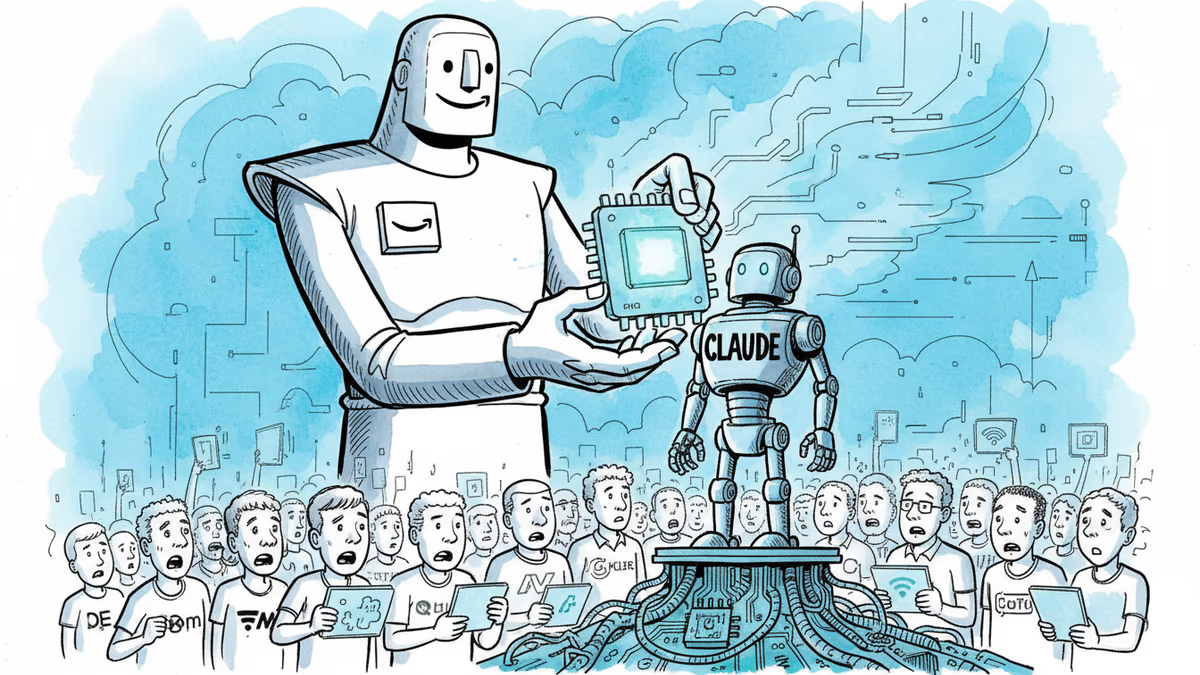
Amazon has poured an additional $5 billion into Anthropic, bringing its total stake to $13 billion—with up to $20 billion more on the table. Here's what the deal really signals about the AI infrastructure race.
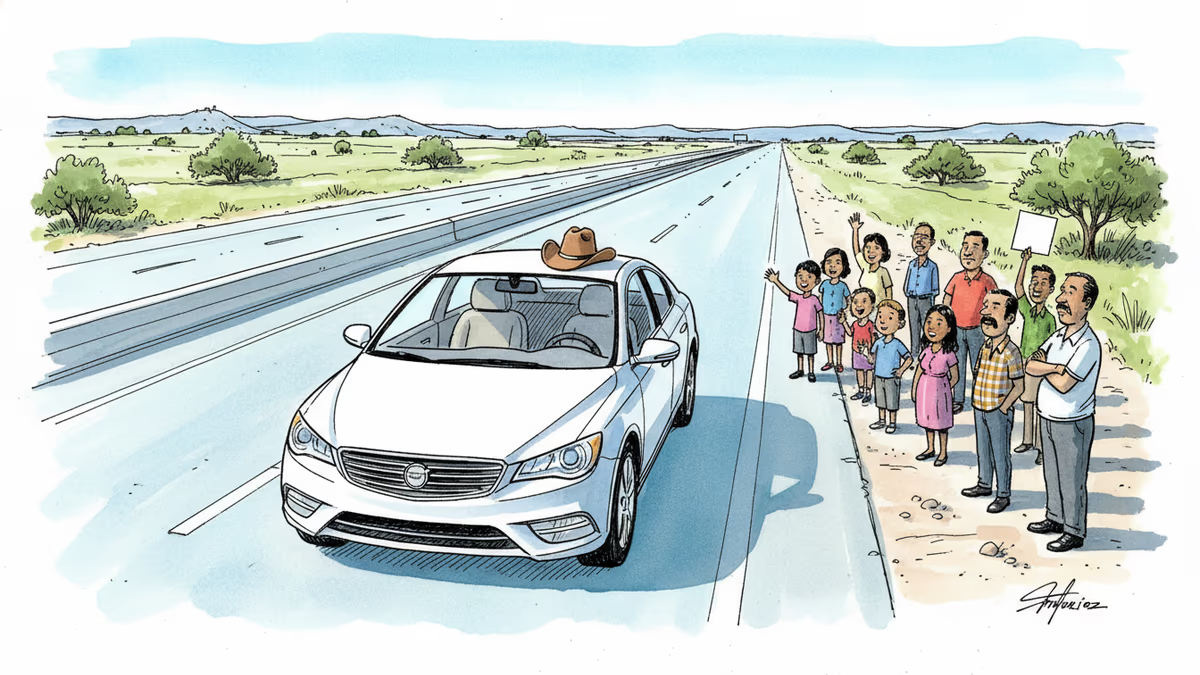
Tesla expanded its driverless robotaxi to Dallas and Houston, even after reporting 14 crashes in Austin. What does this tell us about how autonomous vehicles actually get built?
Waymo's new Ojai robotaxi isn't just a vehicle upgrade. It's the company's most serious attempt yet at cracking the cost problem that has kept autonomous vehicles from scaling. Here's what's really at stake.
Snowflake's new $6 billion AWS contract is about more than cloud spending. It signals a shift in AI infrastructure—away from Nvidia GPUs and toward cheaper, homegrown chips for the agent era.
Amazon has poured an additional $5 billion into Anthropic, bringing its total stake to $13 billion—with up to $20 billion more on the table. Here's what the deal really signals about the AI infrastructure race.
Tesla expanded its driverless robotaxi to Dallas and Houston, even after reporting 14 crashes in Austin. What does this tell us about how autonomous vehicles actually get built?
Thoughts
Share your thoughts on this article
Sign in to join the conversation