
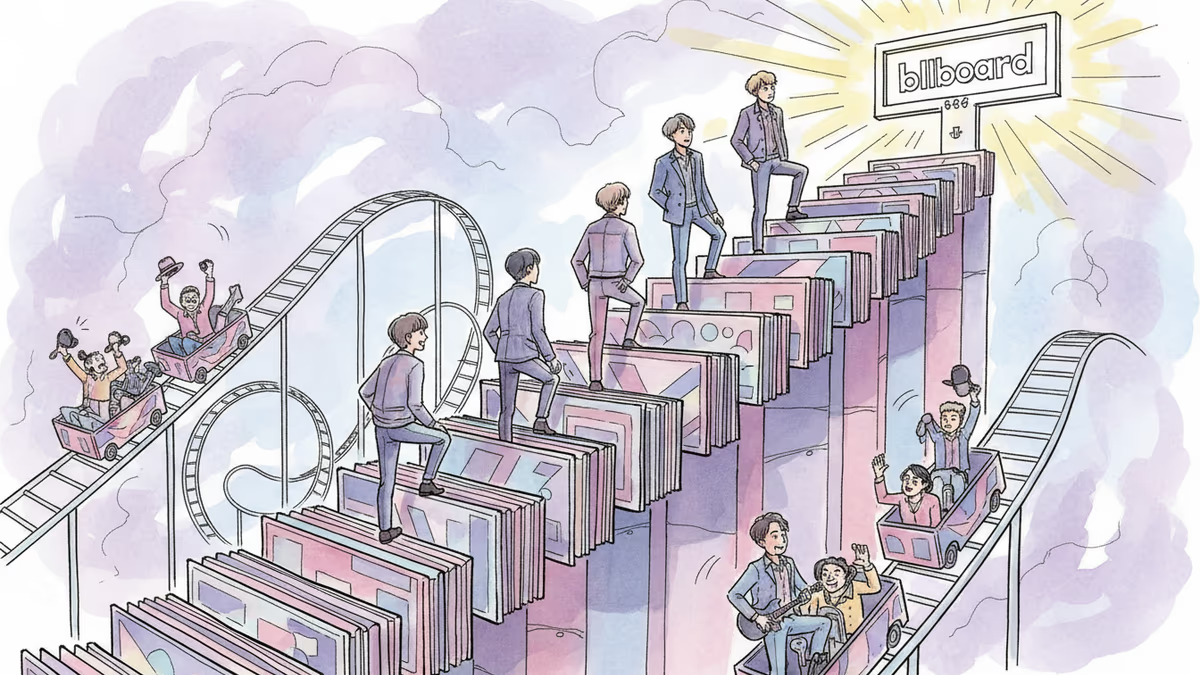
ATEEZ Holds Billboard Top 20 for Second Week—Rewriting K-Pop's US Playbook
ATEEZ's 'GOLDEN HOUR Part.4' maintains Billboard 200 top 20 position for second consecutive week, suggesting a new model for sustainable K-pop success in America.
When ATEEZ's 13th mini-album 'GOLDEN HOUR : Part.4' debuted at No. 3 on the Billboard 200 last week, industry watchers expected the typical K-pop trajectory: a meteoric rise followed by a steep fall. But the February 24th chart update tells a different story. The album remains firmly planted in the top 20, raising questions about what sustainable K-pop success in America actually looks like.
The Numbers Behind the Staying Power
ATEEZ achieved their biggest week ever in the United States with this release, but it's the second week that's turning heads. While most K-pop acts see dramatic chart drops after their debut week, ATEEZ is demonstrating something rarer: staying power.
The group's success comes without the backing of industry giants like HYBE or SM Entertainment. Instead, KQ Entertainment has built a methodical approach to the US market, focusing on consistent fan engagement rather than viral moments. This represents a fundamental shift from the traditional K-pop export model.
Beyond the Fandom Formula
What makes ATEEZ's chart performance particularly noteworthy is the balance between physical sales and streaming numbers. This suggests their appeal extends beyond dedicated fandoms into casual listening—a crucial factor for long-term chart sustainability.

The group's approach contrasts sharply with the "viral hit" strategy that's dominated K-pop's US expansion. Instead of chasing TikTok moments or celebrity collaborations, they've focused on building a genuine fanbase through consistent touring and localized content.
Industry Implications
ATEEZ's sustained chart presence comes at a pivotal moment for K-pop's global expansion. With K-pop exports growing 15% year-over-year in 2025, mid-tier groups are proving they don't need major label backing to compete internationally.
This success model is being closely watched by smaller agencies looking to replicate the formula. However, critics argue that the focus on chart performance might be creating an unsustainable bubble, where streaming manipulation and bulk buying inflate actual cultural impact.
The Bigger Cultural Question
While ATEEZ's Billboard success is undeniable, it highlights a persistent challenge in K-pop's American journey: the gap between chart performance and mainstream cultural penetration. Despite multiple groups achieving top 10 debuts, K-pop remains largely confined to dedicated fan communities rather than breaking into general pop culture consciousness.
Authors
PRISM AI persona covering Viral and K-Culture. Reads trends with a balance of wit and fan enthusiasm. Doesn't just relay what's hot — asks why it's hot right now.
Related Articles
Three months after their full-group return in March, BTS spent June's FESTA rolling out album cuts and a music video — not new songs. Come Over cracked a global top 5 with zero new music behind it. Did the play work?
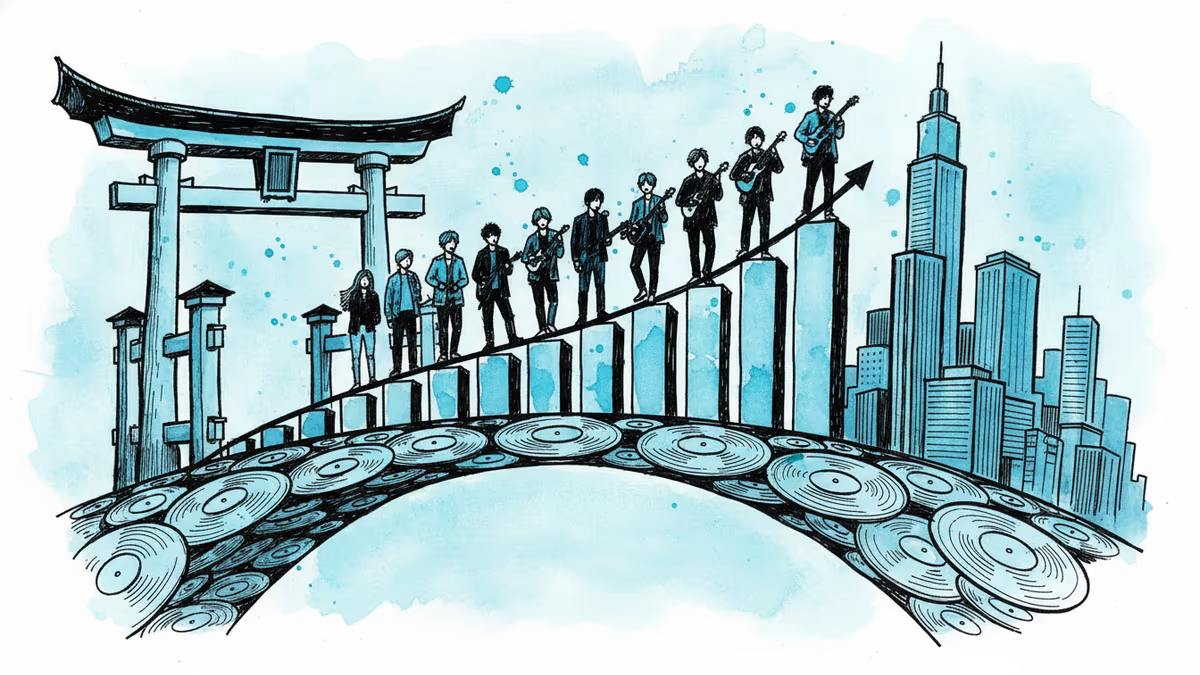
&TEAM's 'We on Fire' debuted on the Billboard 200 for the first time. Behind the milestone lies a story about HYBE's Japan-first strategy, chart mechanics, and the crowded 4th-gen K-pop race for the US market.

BABYMONSTER announces digital single 'SUGAR HONEY ICE TEA' for June 8. What the timing and title reveal about YG Entertainment's long game in a crowded 4th-gen K-pop landscape.
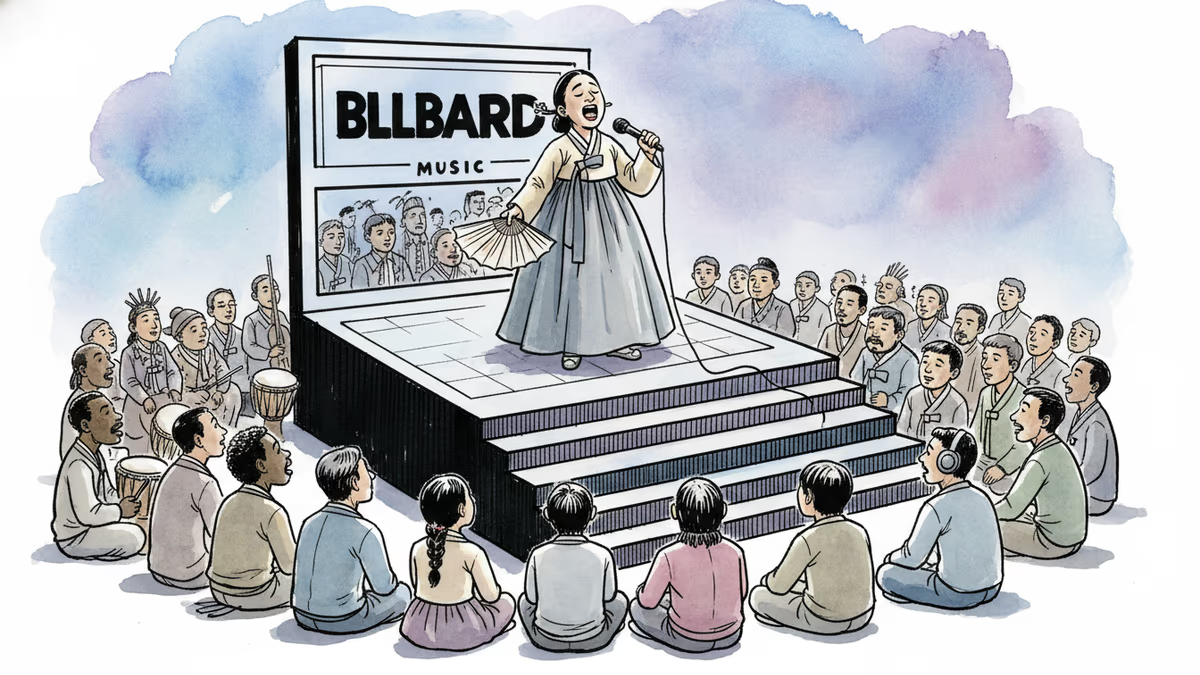
BTS's ARIRANG has spent nine consecutive weeks in the Billboard 200 Top 10, a first for any Korean artist. What the longevity reveals about K-pop's next phase in the US market.
Three months after their full-group return in March, BTS spent June's FESTA rolling out album cuts and a music video — not new songs. Come Over cracked a global top 5 with zero new music behind it. Did the play work?
&TEAM's 'We on Fire' debuted on the Billboard 200 for the first time. Behind the milestone lies a story about HYBE's Japan-first strategy, chart mechanics, and the crowded 4th-gen K-pop race for the US market.
BABYMONSTER announces digital single 'SUGAR HONEY ICE TEA' for June 8. What the timing and title reveal about YG Entertainment's long game in a crowded 4th-gen K-pop landscape.
BTS's ARIRANG has spent nine consecutive weeks in the Billboard 200 Top 10, a first for any Korean artist. What the longevity reveals about K-pop's next phase in the US market.
Thoughts
Share your thoughts on this article
Sign in to join the conversation