
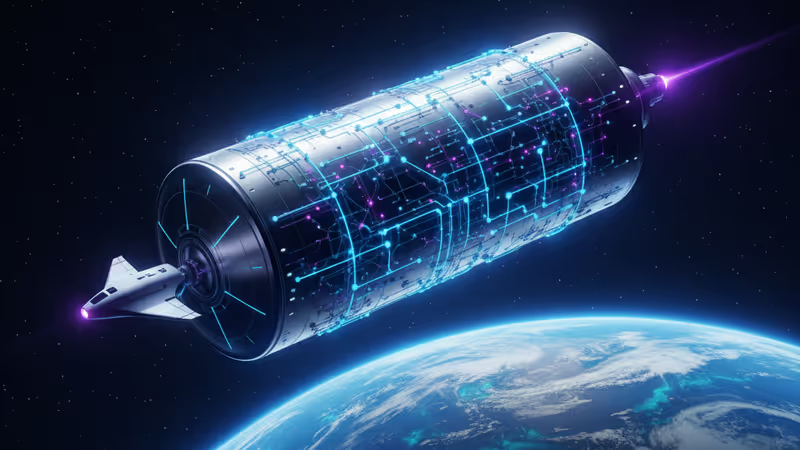
Vast Haven-1 Commercial Space Station 2026: The New Frontier for Orbital Tourism
Scheduled for launch in May 2026, the Vast Haven-1 commercial space station marks a turning point in space tourism. Explore the design and future plans with PRISM.
For decades, orbit was the exclusive domain of national space agencies. That's about to change. In May 2026, the California-based company Vast plans to launch the Haven-1, marking the start of a new era where private citizens and sovereign nations can lease a room in the stars.
Inside the Vast Haven-1 Commercial Space Station 2026
Leading the charge is Drew Feustel, a former NASA astronaut with 226 days of space experience. As Vast's lead astronaut, he's optimizing everything from sleep pods to window placement. He noted that the station will feature an inflatable bladder system designed to emulate the pressure of gravity, providing a more comfortable sleep experience for visitors who will arrive via a SpaceX Dragon spacecraft for 10-day stays.

Bridging the Gap: From ISS to Haven-2
As the ISS prepares for decommissioning by 2030 after 30 years of service, NASA intends to transition research to commercial platforms. Vast's roadmap includes launching Haven-2 modules starting in 2028, aiming for a permanent facility by the end of the decade. This shift moves the financial burden of maintenance to the private sector while expanding orbital access to more nations.
Authors
Related Articles
American Airlines just signed Starlink for 500+ aircraft. It's not just about faster inflight internet — it's a calculated move in the run-up to what could be the largest IPO in history.

SpaceX's upgraded Starship V3 completed its first test flight, deploying 20 Starlink simulators but losing the Super Heavy booster. With an IPO weeks away, the stakes just got higher.

SpaceX's IPO filing puts AI at the center, claiming a $26.5 trillion market opportunity. But can Grok compete with OpenAI and Anthropic for enterprise customers?
SpaceX filed a nearly 400-page S-1 with the SEC, targeting an IPO as early as June 12. Here's what the filing reveals—and what it doesn't.
American Airlines just signed Starlink for 500+ aircraft. It's not just about faster inflight internet — it's a calculated move in the run-up to what could be the largest IPO in history.
SpaceX's upgraded Starship V3 completed its first test flight, deploying 20 Starlink simulators but losing the Super Heavy booster. With an IPO weeks away, the stakes just got higher.
SpaceX's IPO filing puts AI at the center, claiming a $26.5 trillion market opportunity. But can Grok compete with OpenAI and Anthropic for enterprise customers?
SpaceX filed a nearly 400-page S-1 with the SEC, targeting an IPO as early as June 12. Here's what the filing reveals—and what it doesn't.
Thoughts
Share your thoughts on this article
Sign in to join the conversation