
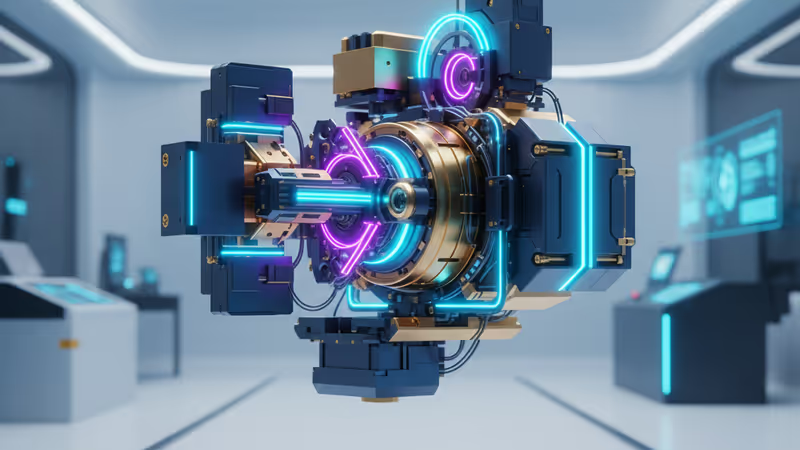
ASML Market Cap Hits $500 Billion as TSMC Ramps Up Spending
ASML market cap reaches $500 billion as TSMC plans to spend more on advanced chip production. Explore the dynamics of the semiconductor equipment monopoly.
The king of semiconductor equipment has just entered the exclusive half-trillion-dollar club. The Dutch lithography giant ASML saw its market valuation surge past the $500 billion milestone. According to Reuters, this rally was fueled by TSMC's latest commitment to increase capital expenditure to keep pace with the insatiable demand for AI-driven chips.
Why the ASML Market Cap 500 Billion Milestone Matters
The correlation is simple: when TSMC spends more, ASML makes more. As the sole manufacturer of Extreme Ultraviolet (EUV) lithography machines, ASML acts as a strategic bottleneck. Each of these massive machines can cost upwards of $200 million, and foundry leaders are in a constant race to secure their spots in the production queue.

A Monopoly Sustained by High-End Demand
While rivals like Nikon and Canon remain in the game for older technologies, ASML maintains a 100% market share in the advanced EUV segment. Looking toward 2026, the deployment of next-generation High-NA EUV systems is expected to widen this moat even further. Investors aren't just betting on a company; they're betting on the only tool available to print the future of computing.
Authors
Related Articles

The US government invested $2 billion in quantum computing startups, but Congress says the money was never authorized for that purpose. The fate of IBM-backed Anderon hangs in the balance.
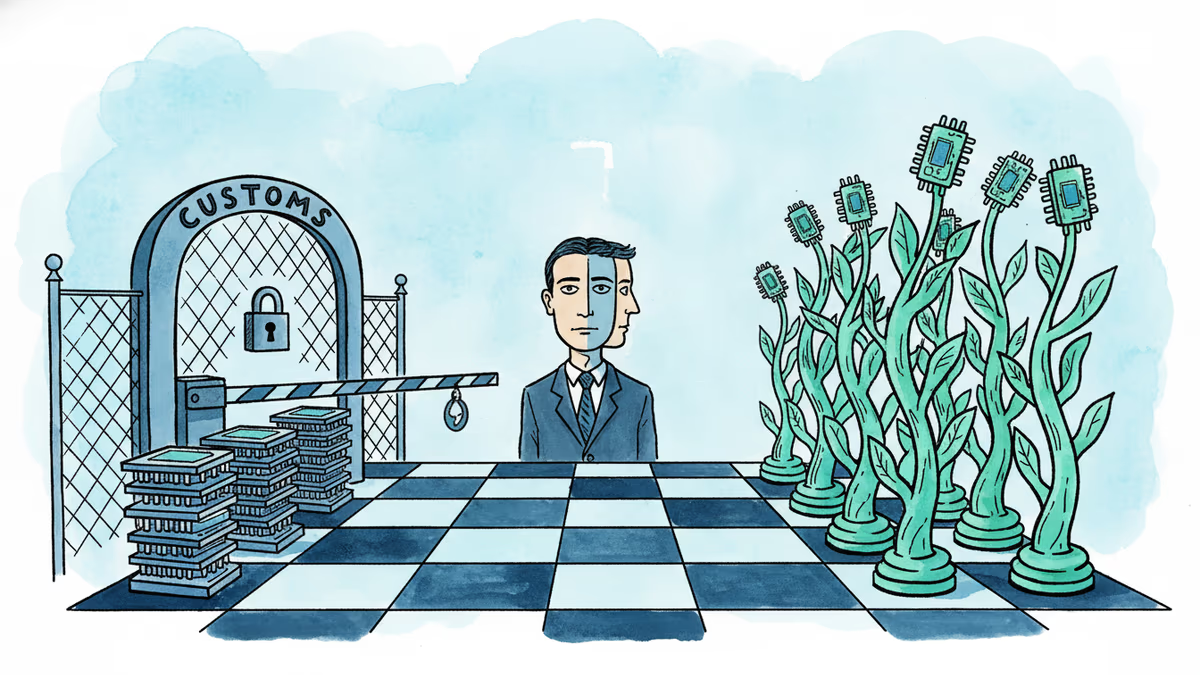
Beijing added an Nvidia gaming chip to its customs ban list the same week Jensen Huang visited China with Trump. Here's what it means for the chip war—and who actually wins.
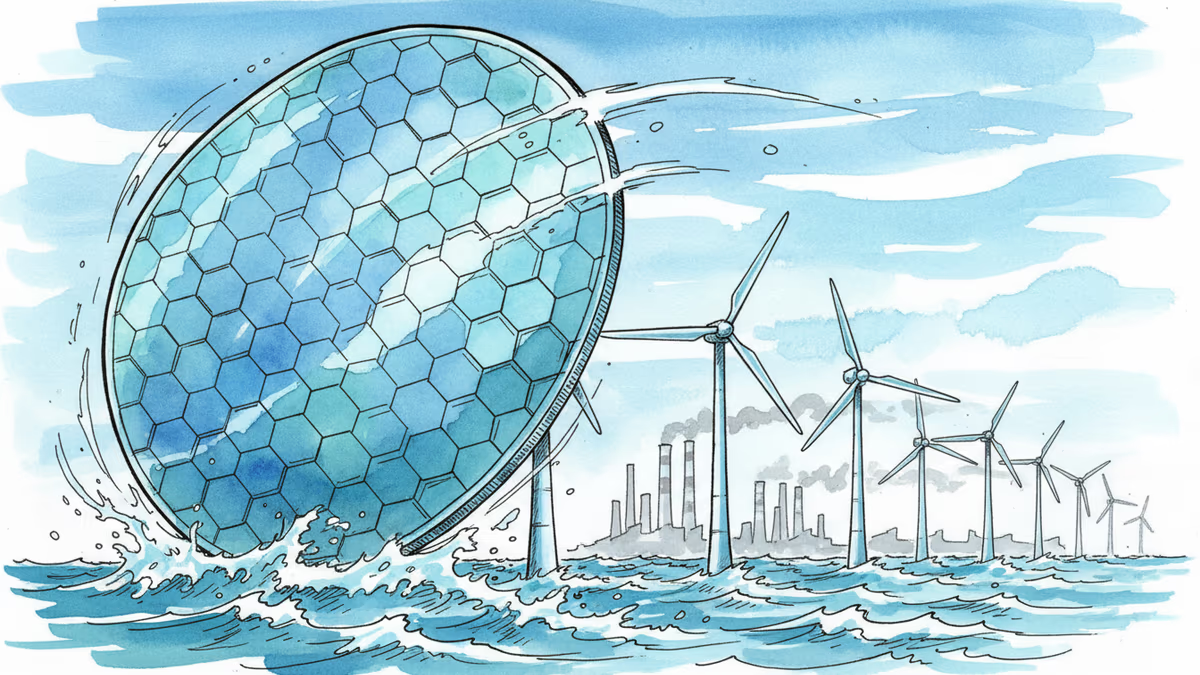
TSMC has signed a 30-year power purchase agreement for 100% of output from Taiwan's Hai Long offshore wind project. The 1GW deal reveals how chipmakers are quietly becoming energy companies.
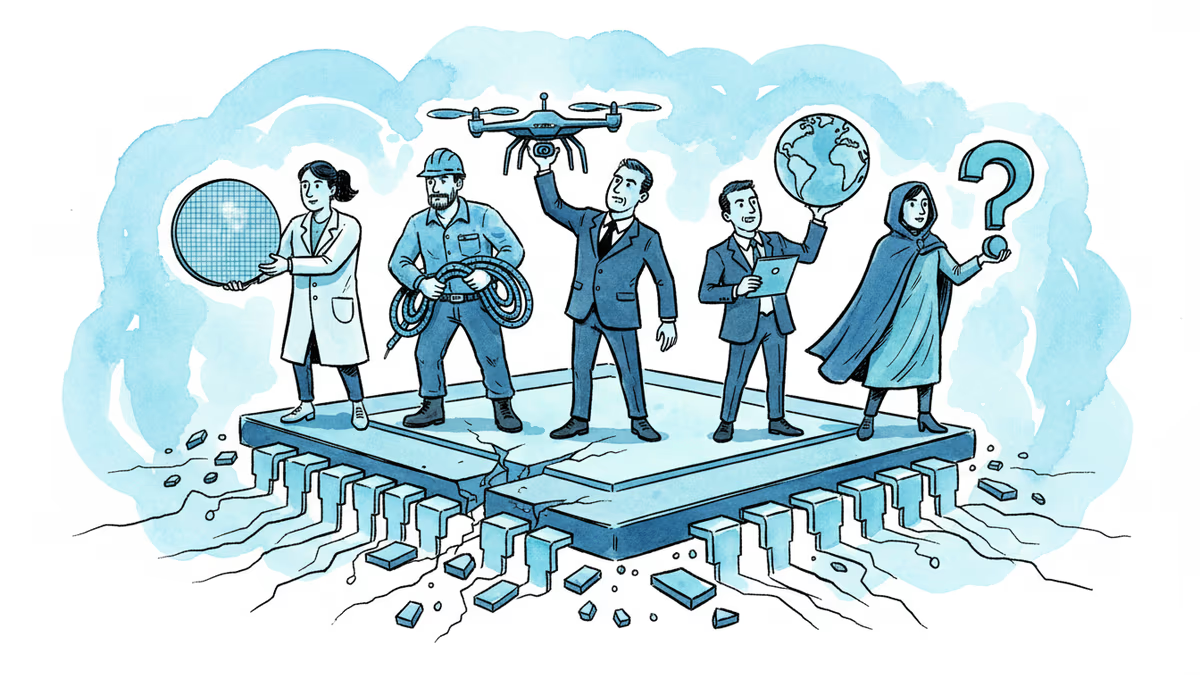
At Milken 2026, five AI insiders—from the CEO of ASML to a quantum physicist challenging LLMs—laid out the physical, energy, and geopolitical limits the AI boom is running into.
The US government invested $2 billion in quantum computing startups, but Congress says the money was never authorized for that purpose. The fate of IBM-backed Anderon hangs in the balance.
Beijing added an Nvidia gaming chip to its customs ban list the same week Jensen Huang visited China with Trump. Here's what it means for the chip war—and who actually wins.
TSMC has signed a 30-year power purchase agreement for 100% of output from Taiwan's Hai Long offshore wind project. The 1GW deal reveals how chipmakers are quietly becoming energy companies.
At Milken 2026, five AI insiders—from the CEO of ASML to a quantum physicist challenging LLMs—laid out the physical, energy, and geopolitical limits the AI boom is running into.
Thoughts
Share your thoughts on this article
Sign in to join the conversation