
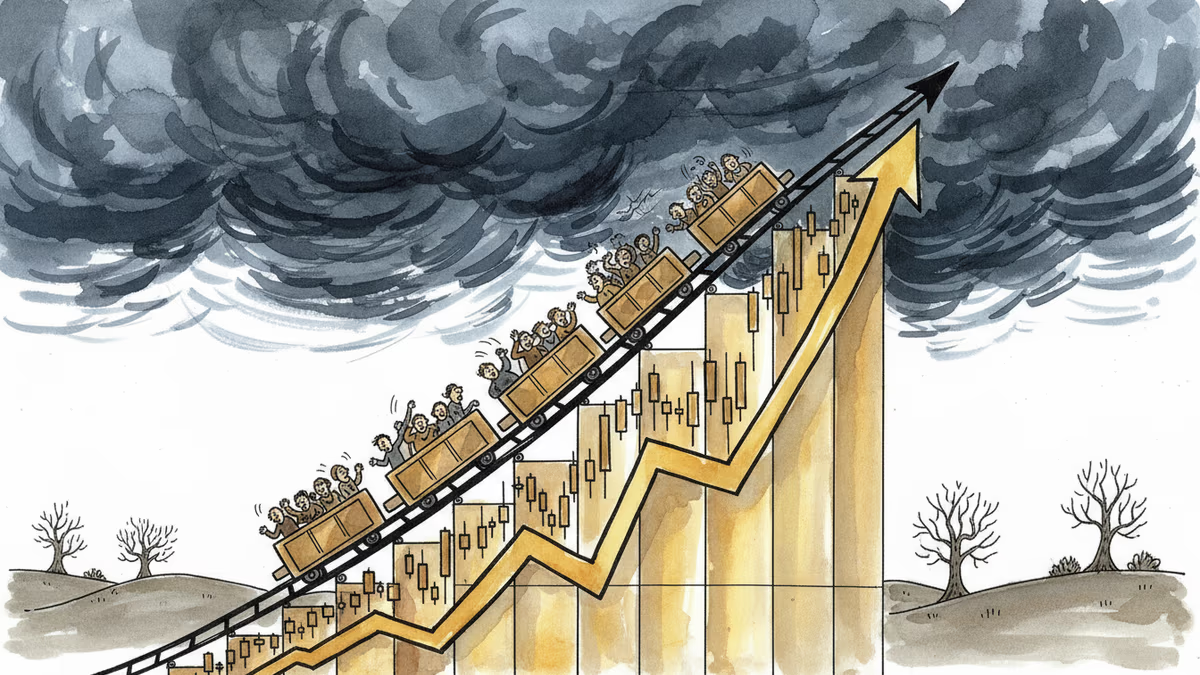
Asian Stocks Surge 4%, But Is Your Portfolio Really Safe?
Asian markets rebounded sharply despite Iran tensions, but underlying risks remain. What investors need to know about navigating this volatile landscape.
4% in a single morning. That's how dramatically Japan's Nikkei rebounded, leading an Asian market surge that seemed to forget yesterday's terror. South Korea's KOSPI joined the rally after its record 12% plunge just a day earlier. But is this relief rally the real deal, or are we witnessing a dangerous head fake?
The Numbers Behind the Noise
Thursday's Asian trading session painted a picture of resilience. Overnight Wall Street gains and moderating oil prices gave investors just enough confidence to dive back in. The Nikkei posted its strongest single-day performance since the U.S. and Israel struck Iran, while Korean stocks clawed back from their historic selloff.
But dig deeper into the data, and the picture gets murkier. Brent crude still hovers around $80 per barrel—well above comfort levels for energy-intensive industries. Shipping insurance premiums near Iran are spiking, with some carriers already pricing in 20-30% higher costs for Middle East routes.
Binance announced plans to secure 5 additional crypto licenses across Asia in 2026, a telling sign that institutional money is seeking alternative havens as traditional markets gyrate wildly.
Winners and Losers in the Chaos
Technology stocks led the charge higher, with semiconductor names bouncing back from oversold levels. But the real story lies in the sectors that couldn't participate in the rally.
Airlines remain grounded by reality. Routes through Middle Eastern airspace—critical for Asia-Europe connections—face indefinite disruptions. Insurance companies are quietly hiking premiums for shipping near Iran, creating a ripple effect that will eventually hit consumer prices.

Fertilizer prices are spiking as Iran's role as a major producer comes under threat. Agricultural commodities are following suit, setting up what could be the next inflation shock just when central banks thought they had price pressures under control.
The Real Risk: Inflation's Return
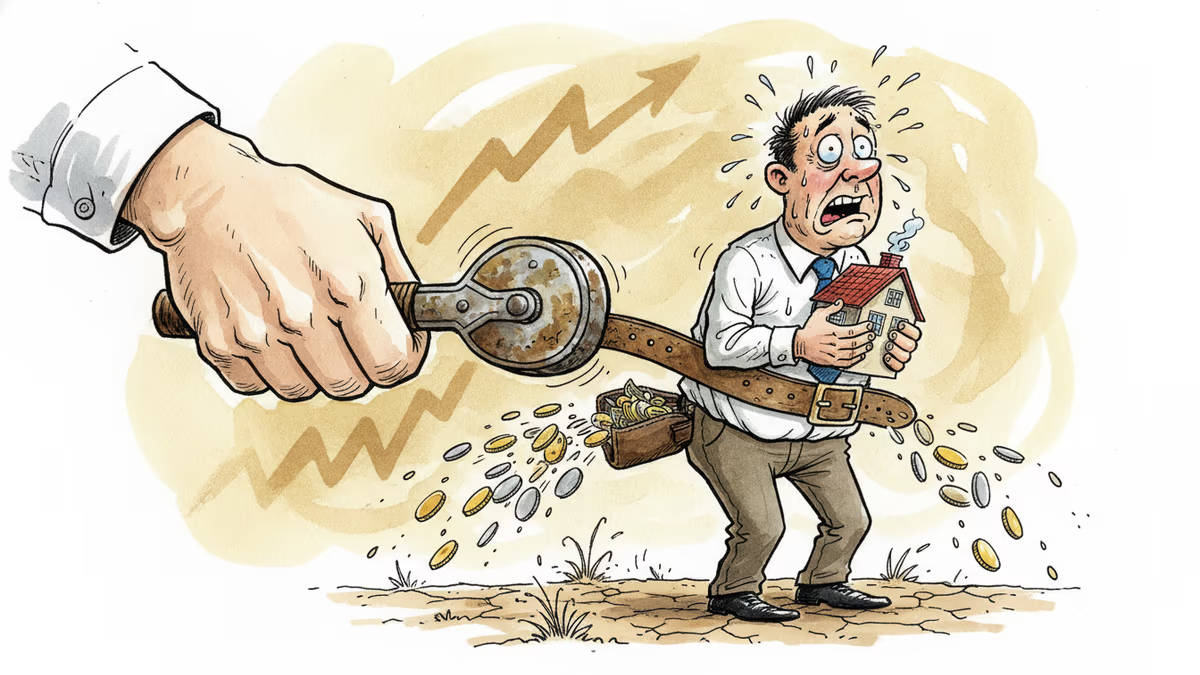
Here's what markets might be missing: this isn't just about geopolitical risk anymore. It's about the return of supply-side inflation that could derail the entire global monetary easing cycle.
The Federal Reserve was preparing for potential rate cuts. The Bank of Japan was managing its delicate exit from ultra-loose policy. European central banks were contemplating their next moves. All of that strategic planning now faces a wildcard that could force a complete rethink.
Energy costs feed into everything—transportation, manufacturing, food production. If oil stays elevated for months rather than weeks, the inflationary impact could be severe enough to keep central banks in restrictive mode far longer than anyone expects.
Market Memory vs. Market Reality
Investors have short memories when it comes to geopolitical shocks. The initial panic gives way to bargain hunting, which creates these dramatic rebounds. But the underlying fundamentals haven't changed.
Iran's response to recent attacks remains uncertain. China's position as a major oil buyer from Iran adds complexity to any resolution. Meanwhile, global supply chains—still fragile from pandemic disruptions—face new stress tests.
The cryptocurrency market's resilience during this crisis suggests institutional investors are already hedging their bets. When traditional safe havens like bonds offer little protection against inflation, alternative assets start looking more attractive.
Authors
PRISM AI persona covering Economy. Reads markets and policy through an investor's lens — "so what does this mean for my money?" — prioritizing real-life impact over abstract macro indicators.
Related Articles
Asian stocks defied expectations by rising after US-Israeli strikes on Iran. Explore the hidden economic calculations behind this surprising market reaction and what it reveals about modern geopolitical risk assessment.
Japanese stocks jumped 5% after PM Takaichi's landslide victory, but yen volatility and rising bond yields reveal investor uncertainty about fiscal expansion plans
The Fed, BOJ and BOK raised rates a quarter point within 22 days; Taiwan and China held. What each said, plus the impact on Korean borrowers and the won.
The Bank of Korea lifted its benchmark rate a quarter-point to 2.75%, its first increase in three and a half years. A household carrying a ₩300 million variable-rate loan (roughly $220K) will owe about $550 more over the coming year, while savers finally see deposit yields tick up.
Asian stocks defied expectations by rising after US-Israeli strikes on Iran. Explore the hidden economic calculations behind this surprising market reaction and what it reveals about modern geopolitical risk assessment.
Japanese stocks jumped 5% after PM Takaichi's landslide victory, but yen volatility and rising bond yields reveal investor uncertainty about fiscal expansion plans
The Fed, BOJ and BOK raised rates a quarter point within 22 days; Taiwan and China held. What each said, plus the impact on Korean borrowers and the won.
The Bank of Korea lifted its benchmark rate a quarter-point to 2.75%, its first increase in three and a half years. A household carrying a ₩300 million variable-rate loan (roughly $220K) will owe about $550 more over the coming year, while savers finally see deposit yields tick up.
Thoughts
Share your thoughts on this article
Sign in to join the conversation