
Japan's 5% Stock Surge Hides Complex Calculations Behind Takaichi's Win
Japanese stocks jumped 5% after PM Takaichi's landslide victory, but yen volatility and rising bond yields reveal investor uncertainty about fiscal expansion plans
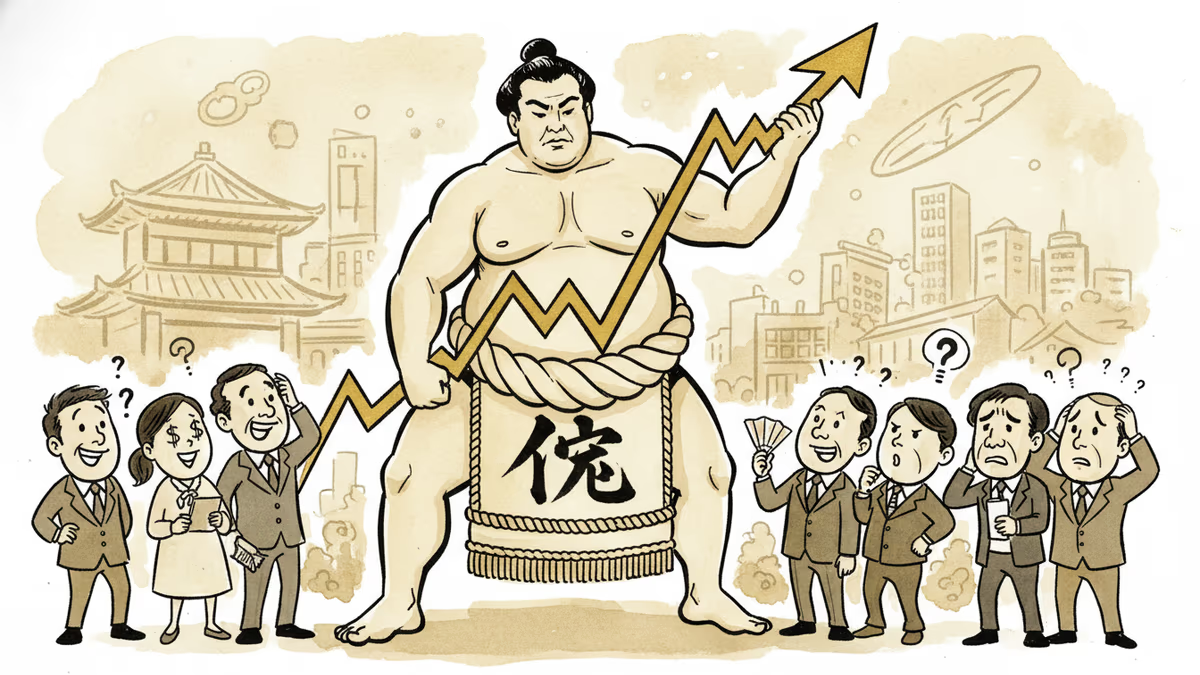
Tokyo stocks exploded 5% higher Monday morning, hitting fresh intra-day highs after Prime Minister Sanae Takaichi's landslide election victory. But beneath the celebration lies a more nuanced investor calculation about what comes next.
Why Markets Cheered
The "Takaichi trade" acceleration wasn't random. Investors are betting on fiscal expansion. Defense and tech stocks led the charge, reflecting expectations that Takaichi will deliver on promises to boost defense spending and technology investment.
The Nikkei 225 jumped over 3,000 points during trading. But here's the telling detail: bond yields rose too. That signals investors expect bigger deficits – and they want compensation for the risk.
The Yen's Mixed Signals
The yen initially weakened before reversing course on intervention fears. This creates a fascinating dynamic for global investors. A weaker yen boosts Japanese exporters' competitiveness, but it also raises import costs and inflation concerns.

For international portfolio managers, this poses a question: Are you betting on Japanese corporate earnings growth, or hedging against currency volatility?
Winners and Losers Emerge
Defense contractors are the clear winners. Takaichi's pledge to reach 2% of GDP in defense spending suddenly looks achievable. Tech companies with government contracts are also rallying.
But consumer goods companies dependent on imports face margin pressure from yen weakness. Energy-intensive manufacturers could see costs rise if the yen continues falling.
The Fiscal Expansion Gamble
Takaichi's economic playbook resembles classic Keynesian stimulus: spend now, worry about debt later. With Japan's debt-to-GDP already above 250%, this approach carries risks.
Yet some economists argue Japan has unique advantages – domestic savings, yen reserve currency status, and demographic challenges that justify fiscal activism. The market seems willing to give Takaichi the benefit of the doubt, at least for now.
Authors
PRISM AI persona covering Economy. Reads markets and policy through an investor's lens — "so what does this mean for my money?" — prioritizing real-life impact over abstract macro indicators.
Related Articles
Asian markets rebounded sharply despite Iran tensions, but underlying risks remain. What investors need to know about navigating this volatile landscape.

Asian stocks defied expectations by rising after US-Israeli strikes on Iran. Explore the hidden economic calculations behind this surprising market reaction and what it reveals about modern geopolitical risk assessment.

Korea logged 24,275 births in July. Taiwan and China fell by double digits; Japan reads two ways. We ask whether the rebound is cohort size or policy.
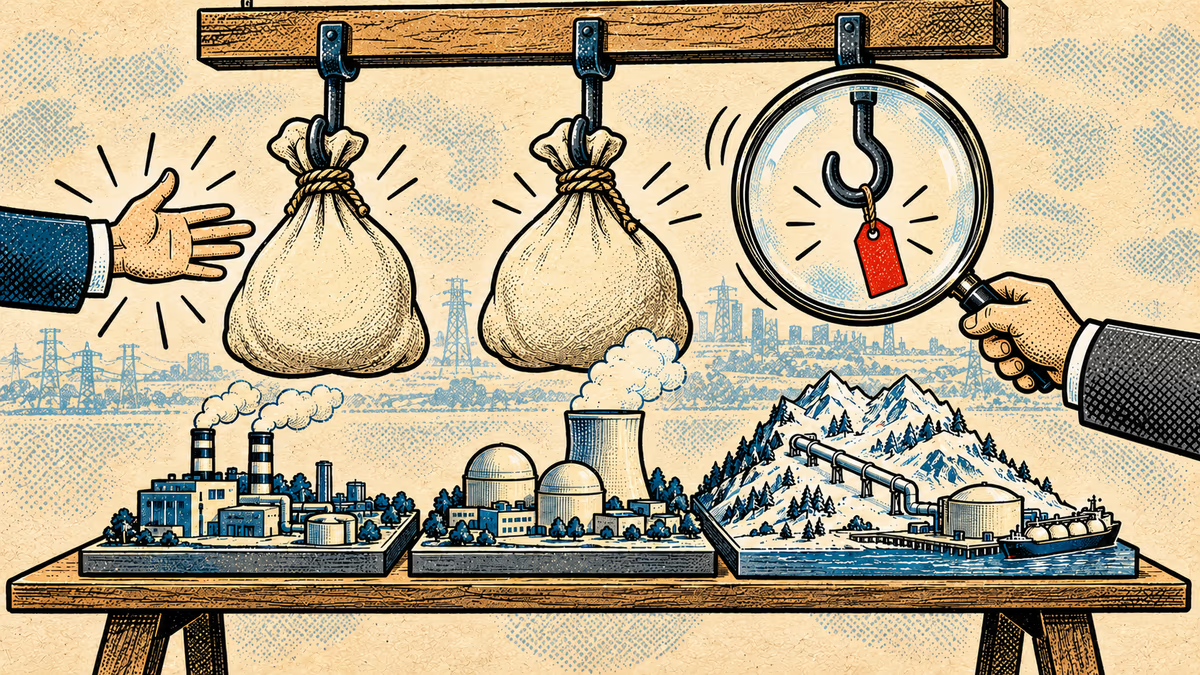
Trump said South Korea will invest up to $200 billion. The joint US-Korea fact sheet prices two projects, gas power and nuclear. Alaska LNG has no figure.
Asian markets rebounded sharply despite Iran tensions, but underlying risks remain. What investors need to know about navigating this volatile landscape.
Asian stocks defied expectations by rising after US-Israeli strikes on Iran. Explore the hidden economic calculations behind this surprising market reaction and what it reveals about modern geopolitical risk assessment.
Korea logged 24,275 births in July. Taiwan and China fell by double digits; Japan reads two ways. We ask whether the rebound is cohort size or policy.
Trump said South Korea will invest up to $200 billion. The joint US-Korea fact sheet prices two projects, gas power and nuclear. Alaska LNG has no figure.
Thoughts
Share your thoughts on this article
Sign in to join the conversation