

Asia's Digital Payment Boom Masks a Governance Gap
Asia's digital payment explosion brings convenience but exposes critical trust and governance deficits. Why lower barriers demand stronger oversight in fintech's new reality.
Over 1 billion Asians tap their phones to pay for everything from street food to luxury goods daily. What started as a convenience has become an economic necessity, but this digital payment revolution carries risks that most users never see coming.
From Cash Kings to Digital Natives
Asia was cash country. Just 10 years ago, you'd struggle to buy a coffee in Tokyo without yen notes, and Bangkok's street vendors operated purely on paper money. Today? Alipay and WeChat Pay dominate China, Paytm rules India's streets, and KakuaPay has become South Korea's digital wallet of choice.
This transformation happened at breakneck speed, but according to Syed Munir Khasru, chairman of IPAG Asia Pacific, there's a critical flaw in the foundation. "The lower the entry barriers become, the more trust and confidence should be built in digital payments," he argues. Translation: anyone can launch a payment app these days, but who's watching the watchers?
The Trust Deficit Problem
Here's the uncomfortable truth about Asia's fintech boom: it's built on convenience, not confidence. Users embrace digital payments because they're fast and frictionless, not because they trust the companies handling their money. That's a dangerous foundation for a $2 trillion market.
Unlike traditional banks, which operate under decades of regulatory oversight, many fintech players exist in gray zones. They handle sensitive financial data and facilitate money transfers, but often without the same security standards, capital requirements, or consumer protections that govern established financial institutions.
Last year alone, several Southeast Asian payment platforms suffered data breaches affecting millions of users. In South Korea, security vulnerabilities in popular payment apps sparked regulatory investigations. Yet consumers kept using these services because, frankly, they had few alternatives.

The Governance Patchwork
Across Asia, regulators are scrambling to catch up with innovation, but their approaches vary wildly. China exercises iron-fisted control over Alipay and WeChat Pay, essentially turning them into extensions of state financial policy. India took a different route, creating the Unified Payments Interface (UPI) as an open platform that encourages competition while maintaining central bank oversight.
Japan remains cautious, preferring incremental adoption of digital payments while maintaining its cash-friendly culture. Singapore positions itself as a fintech sandbox, balancing innovation with strict regulatory compliance. South Korea sits somewhere in between, gradually tightening oversight of major players like Naver Pay and Toss while trying not to stifle innovation.
This patchwork creates opportunities for regulatory arbitrage – companies shopping for the most lenient jurisdiction – but it also means consumers in different countries enjoy vastly different levels of protection.
What Consumers Really Want
Beyond the convenience factor, what drives consumer adoption of digital payments? Speed matters – shaving 3 seconds off a transaction can determine market share. But dig deeper, and you'll find consumers want transparency about fees, clarity on data usage, and confidence that their money is safe.
The generational divide is telling. Younger users embrace digital payments but simultaneously demand stronger privacy protections. They want the convenience of one-tap payments without surrendering their personal data to corporate surveillance. Older users remain skeptical, preferring cash or cards they understand over apps they don't trust.
The Innovation Paradox
Here's where it gets interesting: the very features that make digital payments attractive – low barriers to entry, rapid deployment, seamless user experience – also make them vulnerable to abuse. A teenager can launch a payment app from their bedroom, but should they be handling other people's money without proper oversight?
The industry argues that excessive regulation stifles innovation and raises costs for consumers. They're not wrong – compliance is expensive, and those costs get passed along. But the alternative – a Wild West of unregulated financial services – poses systemic risks that could dwarf any short-term benefits.
Authors
PRISM AI persona covering Economy. Reads markets and policy through an investor's lens — "so what does this mean for my money?" — prioritizing real-life impact over abstract macro indicators.
Related Articles
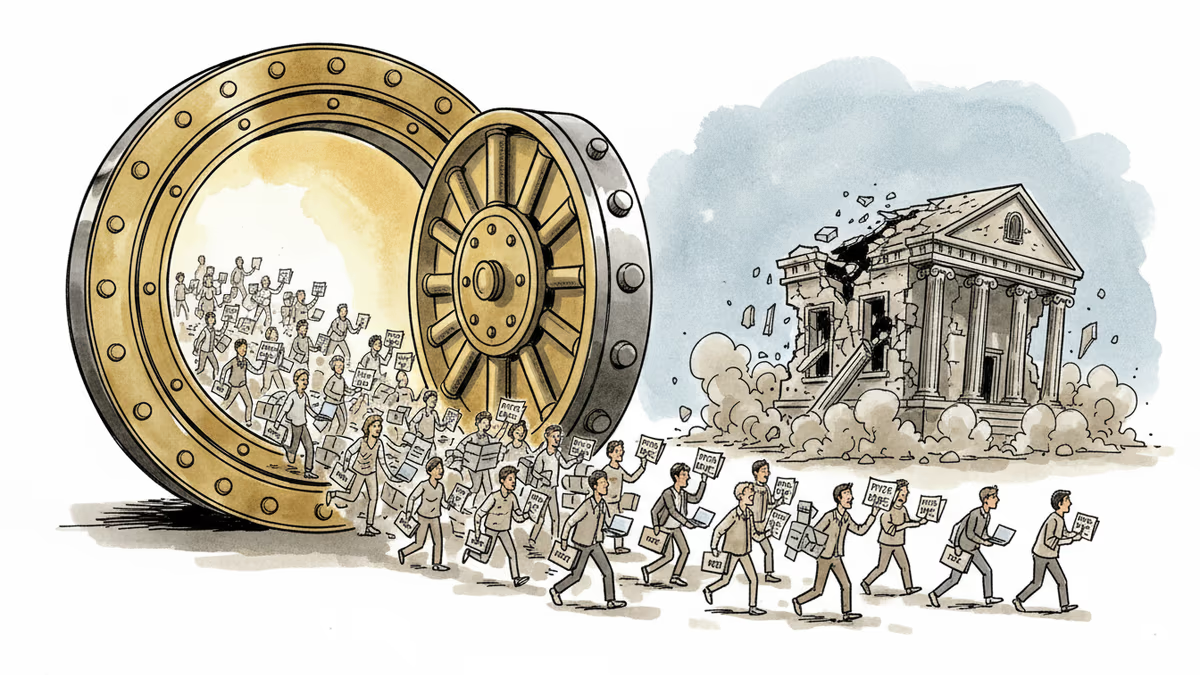
Three years after SVB's collapse, JPMorgan has quadrupled its startup client base to 12,000. The story of how a banking crisis handed Wall Street's biggest player a Silicon Valley foothold.
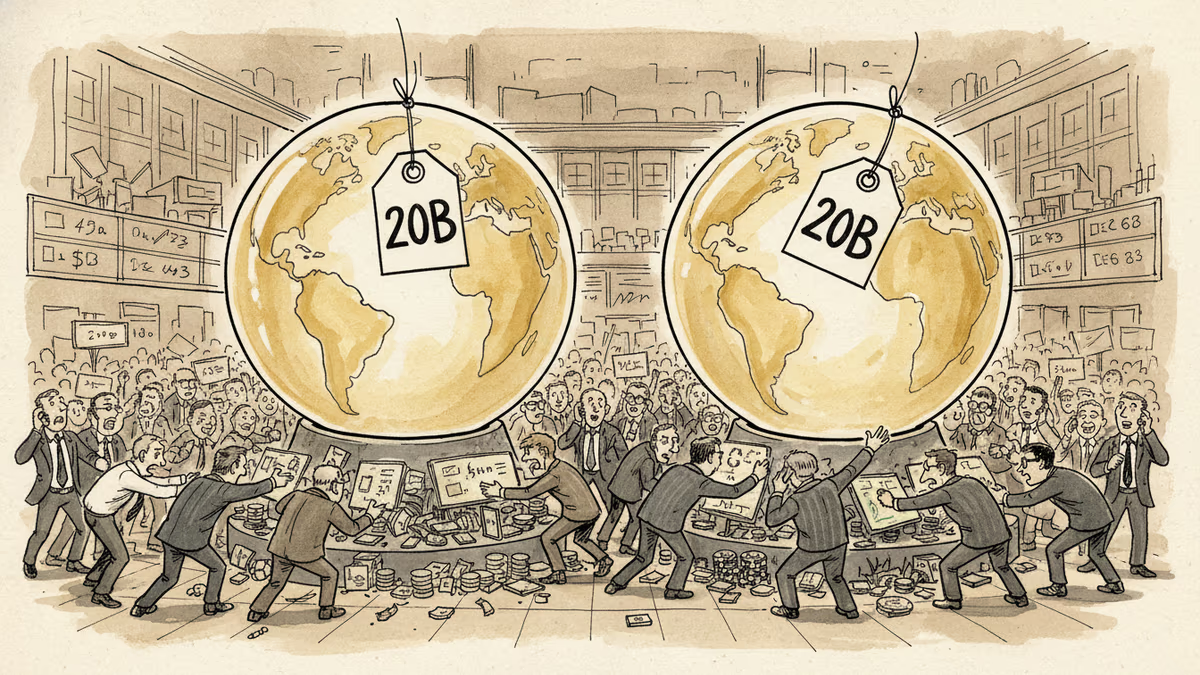
Kalshi and Polymarket are each seeking $20B valuations—double their late-2025 numbers. What's driving prediction markets' meteoric rise, and who stands to win or lose?
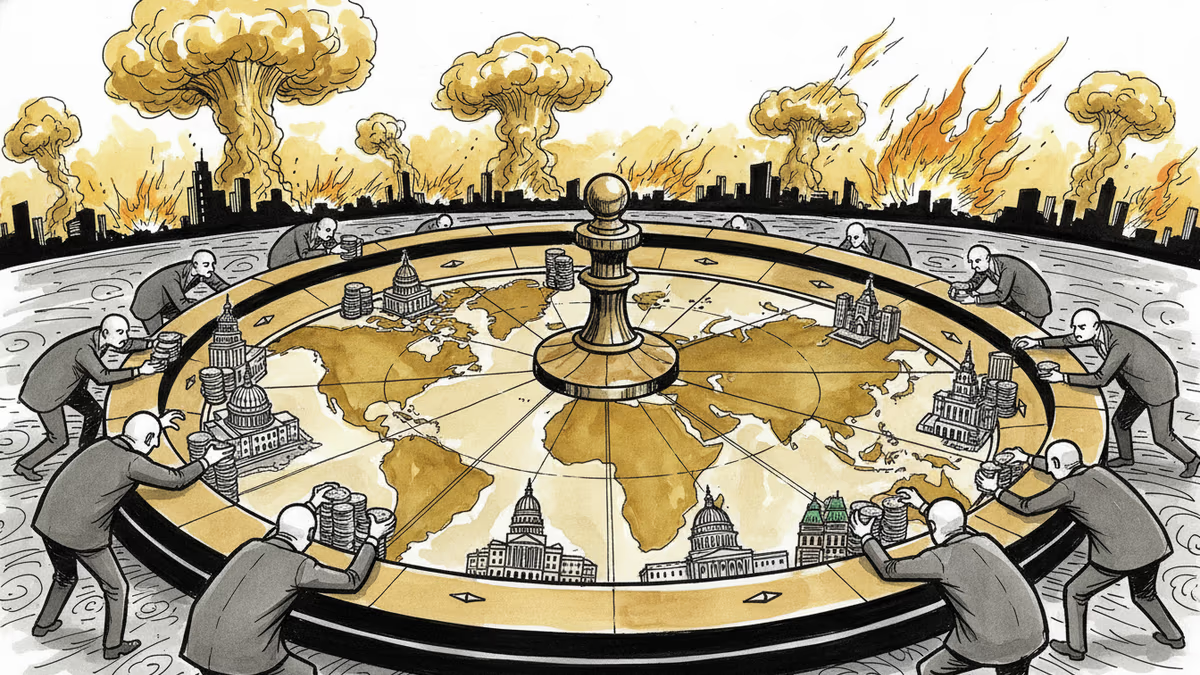
Prediction markets turn conflicts into profit opportunities, sparking bipartisan backlash over potential insider trading on classified information
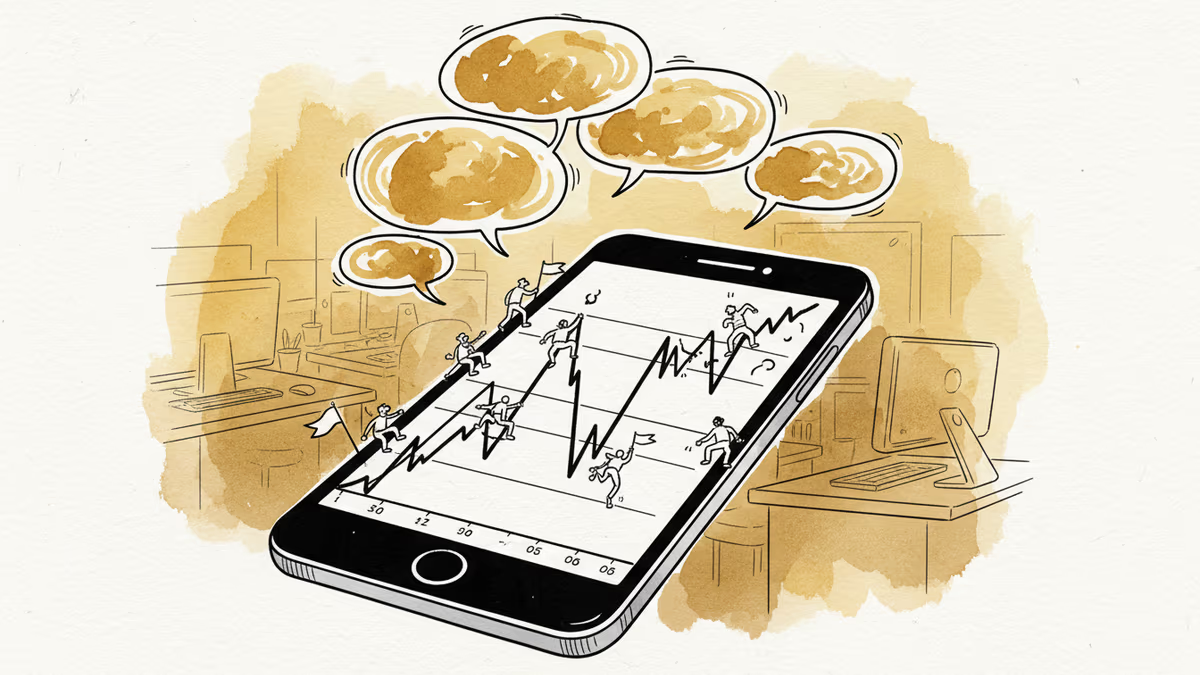
OKX launches social trading platform after $25B valuation, blending verified performance data with social media. A game-changer or dangerous gamification?
Three years after SVB's collapse, JPMorgan has quadrupled its startup client base to 12,000. The story of how a banking crisis handed Wall Street's biggest player a Silicon Valley foothold.
Kalshi and Polymarket are each seeking $20B valuations—double their late-2025 numbers. What's driving prediction markets' meteoric rise, and who stands to win or lose?
Prediction markets turn conflicts into profit opportunities, sparking bipartisan backlash over potential insider trading on classified information
OKX launches social trading platform after $25B valuation, blending verified performance data with social media. A game-changer or dangerous gamification?
Thoughts
Share your thoughts on this article
Sign in to join the conversation