
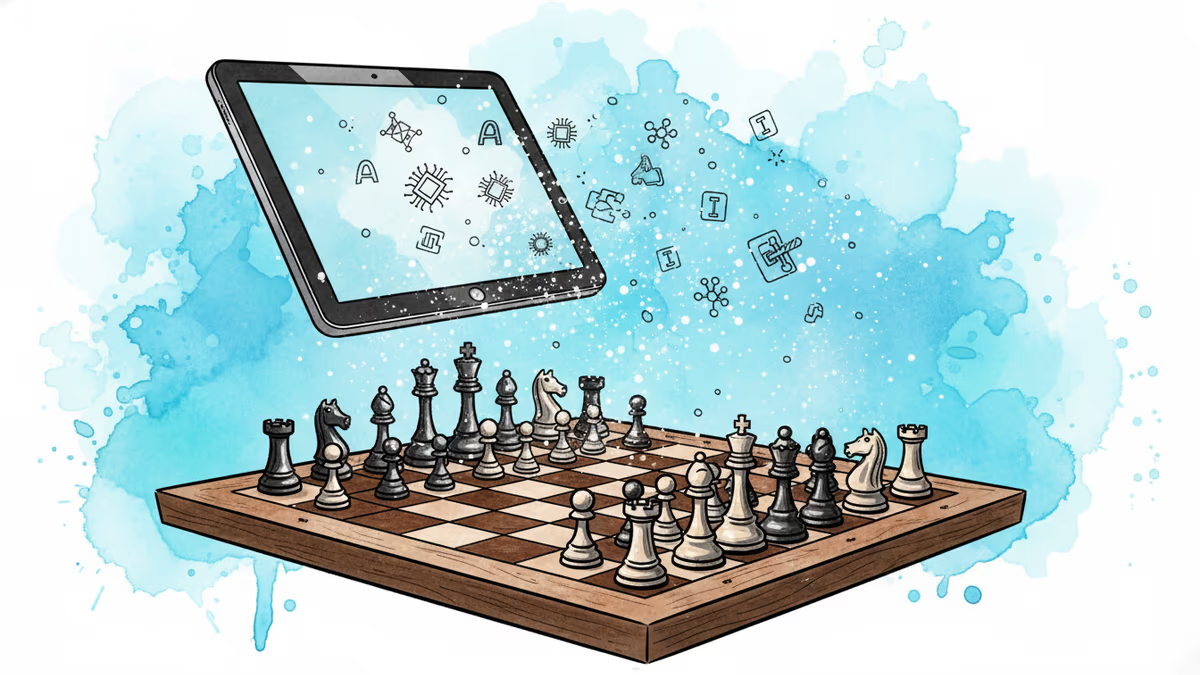
Apple's M4 iPad Air: The Quiet AI Revolution in Your Hands
Apple's new M4 iPad Air brings serious AI power at the same $599 price. But is this tablet upgrade or a strategic chess move against competitors?
The $599 price tag hasn't budged. But everything else about Apple's iPad Air just got a serious upgrade that most people won't notice—until they do.
Apple quietly dropped its new M4 iPad Air on Monday, and while the exterior looks identical to last year's model, the silicon inside tells a different story. This isn't just another spec bump. It's Apple's bet that AI computing will happen in your hands, not just in the cloud.
The Numbers Game: Performance That Actually Matters
The M4 chip brings some impressive math to the table. The new Air is 30% faster than its M3 predecessor and 2.3x faster than the M1 version. But here's what those numbers really mean: the unified memory jumped 50% to 12GB, while memory bandwidth hit 120GB/s.
Why does this matter? Those specs aren't just for bragging rights—they're the foundation for running AI models locally on your device. The 16-core Neural Engine is 3x faster than the M1's version, which means tasks like real-time photo editing, voice processing, and predictive text can happen without sending your data to Apple's servers.
The device keeps the same 9.74 x 7.02 inches footprint for the 11-inch model and 11.04 x 8.46 inches for the 13-inch version. But inside, you're getting an 8-core CPU and 9-core GPU that can handle serious creative work—and increasingly, serious AI work.
Strategic Timing: MWC and the AI Arms Race
The timing isn't coincidental. While Samsung, Xiaomi, and Honor showcase their latest innovations at Mobile World Congress in Barcelona, Apple chose this week to quietly revolutionize its tablet lineup. The company doesn't do trade shows—it prefers controlled environments where it can tell its own story.

But this move reveals something deeper. As Android manufacturers push AI-powered smartphones with dedicated NPUs and cloud-connected features, Apple is betting on a different approach: powerful local processing that keeps your data on your device.
The new Air also brings Wi-Fi 7 and Bluetooth 6 support, powered by Apple's custom N1 and C1X chips. It's not just about speed—it's about building an ecosystem where devices work together seamlessly, without relying on external servers for basic AI tasks.
The Consumer Paradox: Power They Don't Know They Need
Here's the interesting part: most iPad Air buyers probably don't care about neural engines or memory bandwidth. They want a tablet that works well for Netflix, note-taking, and the occasional creative project.
But Apple is playing a longer game. As AI features become standard in everything from photo editing to document scanning, the M4's capabilities will feel less like overkill and more like necessity. The 12MP Center Stage camera and 12MP Wide rear camera aren't just for video calls—they're sensors for AI-powered features we haven't seen yet.
The device supports familiar accessories like the Magic Keyboard and Apple Pencil Pro, maintaining the creative workflow that made the Air popular with designers and students. Educational customers get the usual discount, bringing the 11-inch model down to $549.
The Bigger Picture: AI Without the Cloud
While competitors rush to connect everything to cloud-based AI services, Apple is doubling down on device-side processing. The M4's neural engine can run complex models without an internet connection, which matters for privacy-conscious users and professionals working with sensitive data.
This approach also insulates Apple from the regulatory scrutiny facing cloud AI providers. When your AI runs locally, there's less data to regulate, fewer privacy concerns, and more control for users.
The new Air launches alongside the iPhone 17e and updated MacBook lineup, suggesting Apple is coordinating an AI-capable ecosystem refresh rather than just updating individual products.
Authors
Related Articles
After 15 years of fragmented mobile messaging, Apple and Google are rolling out end-to-end encrypted RCS messaging between iPhones and Android devices. Here's what changed, why it took so long, and what it means for your privacy.
Apple agreed to pay $250 million to settle claims it misled iPhone 16 buyers about Apple Intelligence features. What this means for consumers, Big Tech marketing, and the AI industry.
Apple quietly removed the entry-level $599 Mac Mini, raising the starting price to $799 — just one day after Tim Cook warned of chip supply constraints on the earnings call.

Apple names John Ternus, its hardware engineering chief, as the next CEO. The shift from operator to product person signals where Apple thinks its next decade of growth will come from — and raises real questions about what comes next.
After 15 years of fragmented mobile messaging, Apple and Google are rolling out end-to-end encrypted RCS messaging between iPhones and Android devices. Here's what changed, why it took so long, and what it means for your privacy.
Apple agreed to pay $250 million to settle claims it misled iPhone 16 buyers about Apple Intelligence features. What this means for consumers, Big Tech marketing, and the AI industry.
Apple quietly removed the entry-level $599 Mac Mini, raising the starting price to $799 — just one day after Tim Cook warned of chip supply constraints on the earnings call.
Apple names John Ternus, its hardware engineering chief, as the next CEO. The shift from operator to product person signals where Apple thinks its next decade of growth will come from — and raises real questions about what comes next.
Thoughts
Share your thoughts on this article
Sign in to join the conversation