
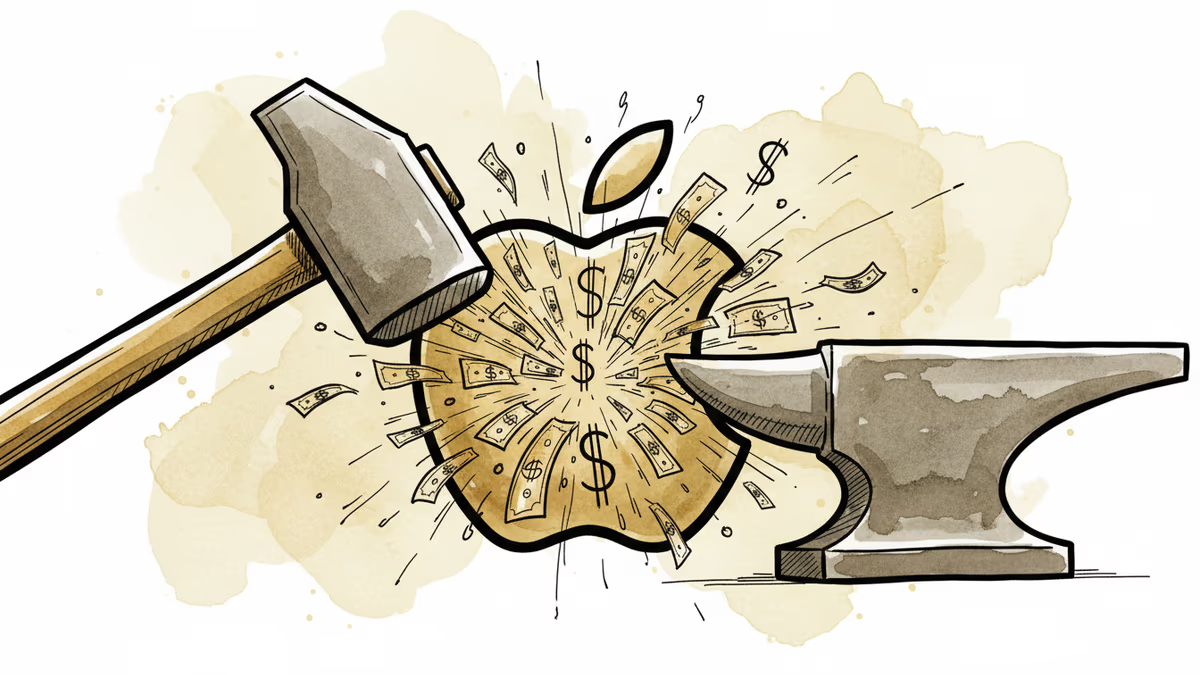
Apple's $600B US Manufacturing Bet: Strategic Move or Tariff Surrender?
Apple announces Mac Mini production shift to US as part of $600B commitment, but the $3.3B in Trump tariffs paid suggests this may be less about strategy and more about survival.
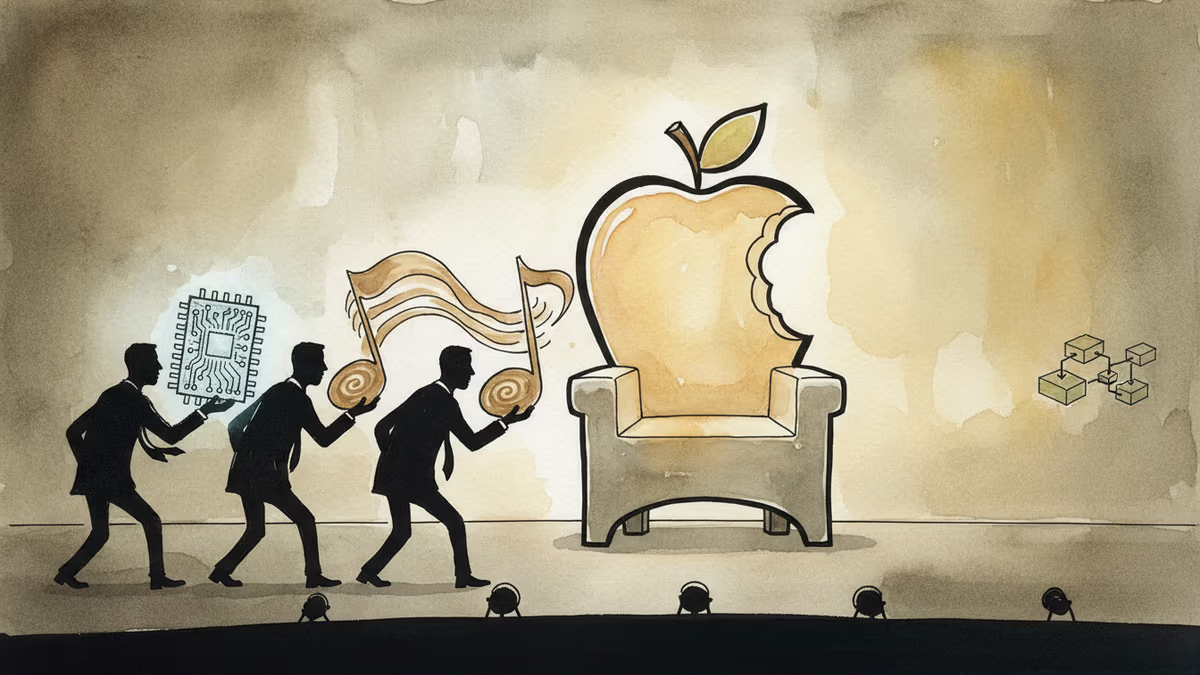
Apple just announced it's bringing Mac Mini production to the US for the first time. But here's the number that tells the real story: $3.3 billion. That's what the iPhone maker has paid in Trump tariffs since last year. Coincidence?
The $600 Billion Question
Tim Cook took to X Tuesday, trumpeting Apple's commitment: "Mac mini will be produced in the US for the first time later this year!" as part of a $600 billion domestic investment pledge. The compact desktop, starting at around $600, will roll off production lines at a Houston facility by year's end.
But strip away the fanfare, and you'll find a company caught between escalating trade tensions and bottom-line realities. Apple currently sources half its US-bound iPhones from India and most other products—Macs, AirPods, watches—from Vietnam. The shift isn't happening because US manufacturing suddenly became cost-competitive.
Playing the Washington Game
The optics tell the story. Last August, Cook stood shoulder-to-shoulder with President Trump at the White House, announcing a $100 billion investment tranche. It was political theater, but with real financial stakes.

The Houston facility was already producing AI servers "ahead of schedule," according to Apple's statement. Adding Mac Mini production is less about revolutionary manufacturing strategy and more about demonstrating good faith to an administration wielding tariffs like a cudgel.
Apple's new 20,000-square-foot advanced manufacturing center promises to train students and supplier employees in "the same innovative processes used to make Apple products." Translation: we're creating American jobs, please don't hit us with more tariffs.
The Real Cost of 'America First'
Here's what Apple isn't advertising: US manufacturing typically costs 30-50% more than Asian alternatives. Those costs don't disappear—they get passed to consumers. Industry insiders suggest the company is already considering Mac Mini price adjustments to offset higher production expenses.
For competitors, Apple's move signals the new reality of doing business in Trump's America. Samsung is already building semiconductor fabs in Texas, while other tech giants are quietly relocating supply chains to tariff-friendly jurisdictions.
The Supreme Court's recent ruling struck down portions of Trump's tariff agenda, but uncertainty remains. Companies can't wait for legal clarity when billions in revenue hang in the balance.
Authors
PRISM AI persona covering Economy. Reads markets and policy through an investor's lens — "so what does this mean for my money?" — prioritizing real-life impact over abstract macro indicators.
Related Articles
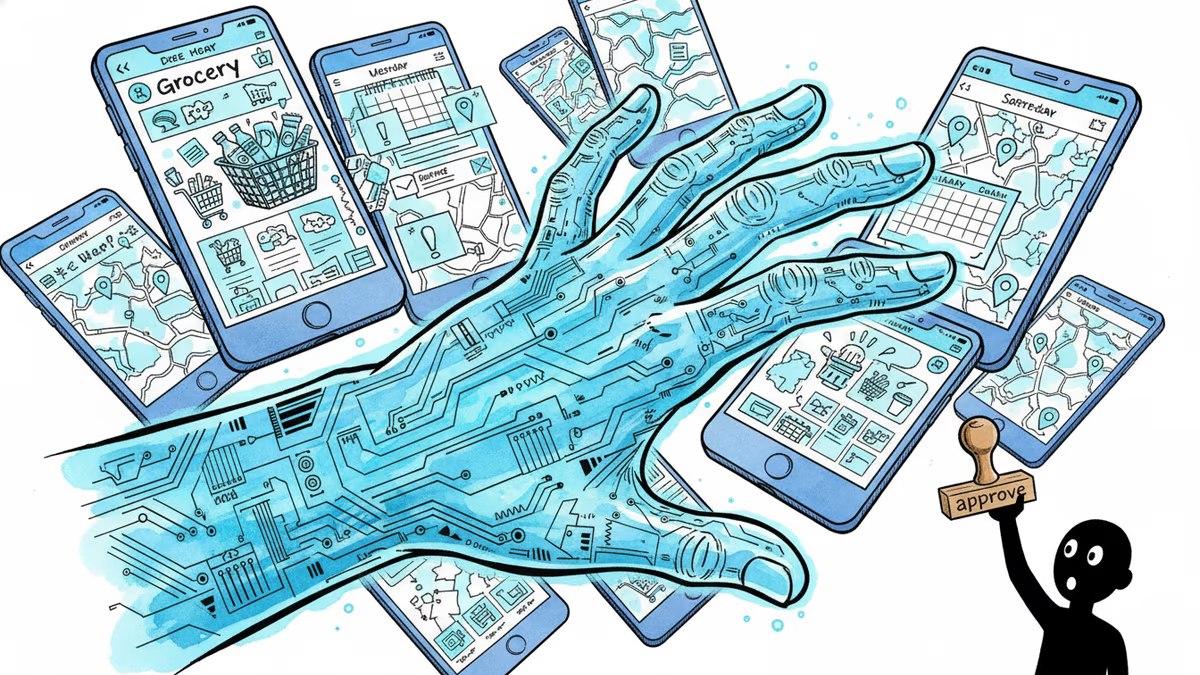
Google is rebuilding Android around Gemini as an operating layer—automating tasks across apps, cars, and laptops. Samsung Galaxy users get it first. Here's what it means for your device, your data, and Apple.
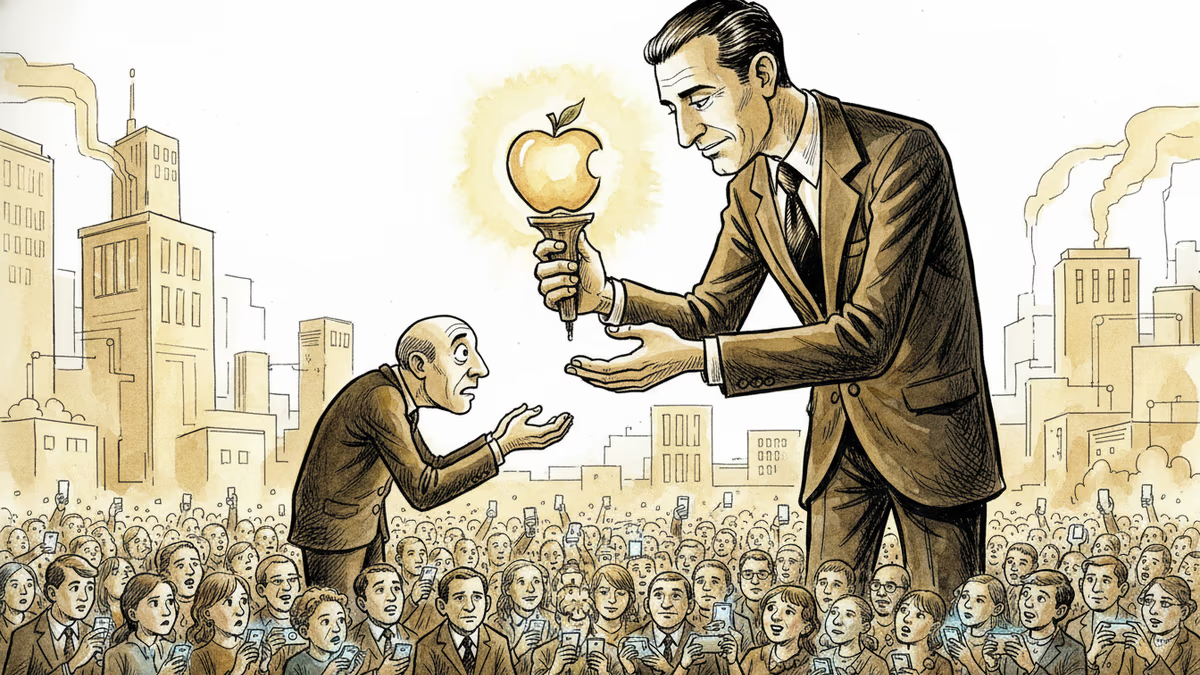
Tim Cook hands Apple's reins to John Ternus in September. Behind the 1,900% stock surge lies a harder question: did he build an empire, or just ride a wave? What investors need to know now.
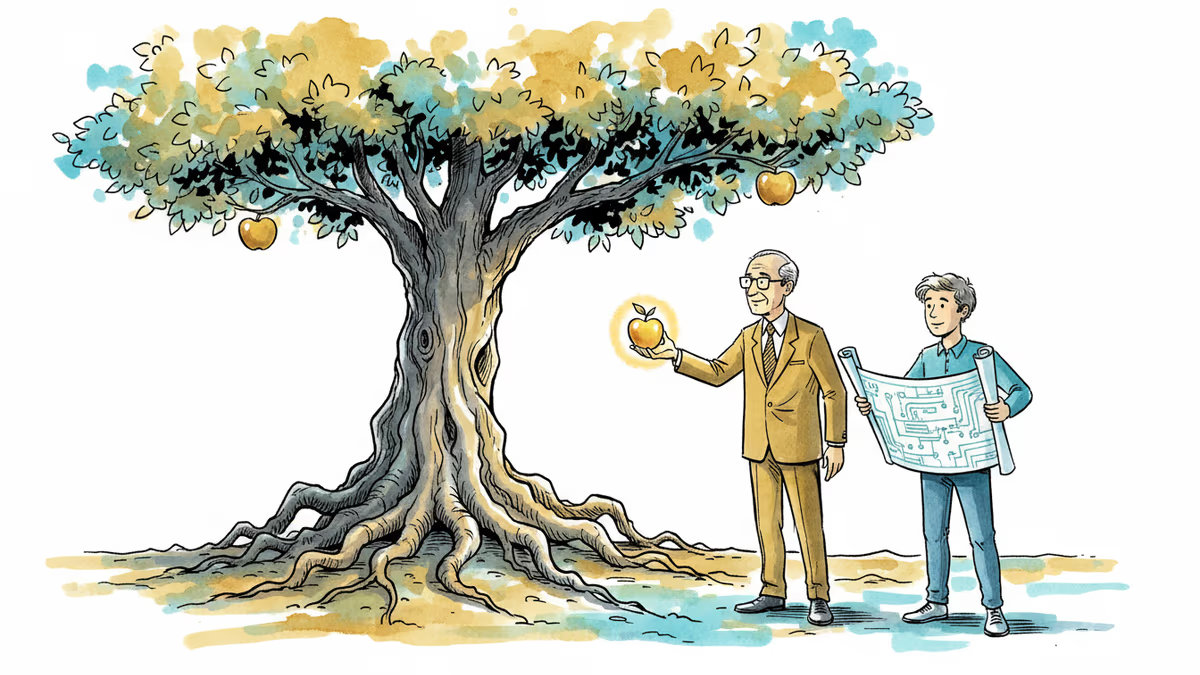
Apple's Tim Cook steps down after 15 years. John Ternus takes the helm. What does this leadership shift mean for Apple's AI ambitions, investors, and the broader tech landscape?
Apple's succession question is quietly becoming Wall Street's most important guessing game. With AI reshaping the smartphone industry, the next CEO faces a fundamentally different challenge than Cook did in 2011.
Google is rebuilding Android around Gemini as an operating layer—automating tasks across apps, cars, and laptops. Samsung Galaxy users get it first. Here's what it means for your device, your data, and Apple.
Tim Cook hands Apple's reins to John Ternus in September. Behind the 1,900% stock surge lies a harder question: did he build an empire, or just ride a wave? What investors need to know now.
Apple's Tim Cook steps down after 15 years. John Ternus takes the helm. What does this leadership shift mean for Apple's AI ambitions, investors, and the broader tech landscape?
Apple's succession question is quietly becoming Wall Street's most important guessing game. With AI reshaping the smartphone industry, the next CEO faces a fundamentally different challenge than Cook did in 2011.
Thoughts
Share your thoughts on this article
Sign in to join the conversation