
Your AI Chatbot Can Now Send Slack Messages and Edit Figma Designs
Anthropic's Claude now integrates directly with workplace apps like Slack, Figma, and Box, blurring the lines between AI assistance and direct tool manipulation.
Sending Slack messages, editing Figma designs, and accessing cloud files—all from within a chat interface. That's what Claude users can now do, thanks to a new feature announced by Anthropic on Monday.
The AI company has launched interactive app integrations that allow users to call up workplace tools directly within the Claude chatbot interface. The initial lineup focuses on enterprise applications: Slack, Canva, Figma, Box, and Clay, with Salesforce integration expected soon.
When Chat Becomes Command Center
The key innovation lies in how these integrations work. Each app provides a logged-in instance that's accessible to Claude, enabling the AI to perform actual actions rather than just providing suggestions. Ask Claude to "send a meeting reminder to the team on Slack," and it will compose and send the message. Request "find last week's report in Box and create a chart," and Claude will locate the file, analyze it, and generate visualizations.
"Analyzing data, designing content, and managing projects all work better with a dedicated visual interface," Anthropic explained in their announcement. "Combined with Claude's intelligence, you can work and iterate faster than either could offer alone."
The feature is available to Pro, Max, Team, and Enterprise subscribers—notably excluding free users. Eligible users can activate these tools at claude.ai/directory.
The Agent Revolution Accelerates
What makes this particularly significant is its potential integration with Claude Cowork, the all-purpose agent tool Anthropic launched last week. Cowork handles complex, multi-stage tasks that previously required terminal commands, operating on large and open-ended datasets.

When combined with app integrations—which Anthropic says is "coming soon"—Cowork could execute sophisticated workflows like "update the marketing graphic in Figma using new data from our Box instance, then notify the team via Slack." This represents a fundamental shift from AI as advisor to AI as executor.
The technical foundation for these integrations rests on the Model Context Protocol (MCP), an open standard introduced by Anthropic in 2024. Interestingly, OpenAI launched a similar Apps system in October, also built on MCP—suggesting this isn't just an Anthropic innovation but an industry-wide evolution.
The Double-Edged Sword of Automation
Yet with great power comes significant responsibility. Anthropic's own safety documentation for Cowork reveals the company's awareness of potential risks. They explicitly recommend users "monitor the agent closely and not grant any unnecessary permissions."
"Be cautious about granting access to sensitive information like financial documents, credentials, or personal records," the company warns. "Consider creating a dedicated working folder for Claude rather than granting broad access."
These aren't merely legal disclaimers—they reflect genuine concerns about agentic systems' unpredictability. When AI can directly manipulate your work tools, a misunderstood instruction could send the wrong message to clients, delete important files, or make unauthorized changes to shared documents.
Redefining Human-AI Collaboration
This development signals a broader transformation in how we interact with AI. Previously, the workflow was: ask AI for help, receive suggestions, manually implement them. Now it's: ask AI to do something, and it does it directly in your tools.
For enterprise users, this could dramatically reduce context switching and manual data entry. But it also raises questions about control, accountability, and trust. When Claude sends a Slack message on your behalf, who's responsible for its contents? When it modifies a Figma design, how do you verify the changes align with your intent?
The implications extend beyond individual productivity. As AI agents gain direct access to workplace tools, they're essentially becoming digital employees with specific capabilities and permissions. This shifts the conversation from "How can AI help me work better?" to "How do I manage my AI colleagues?"
Authors
Related Articles
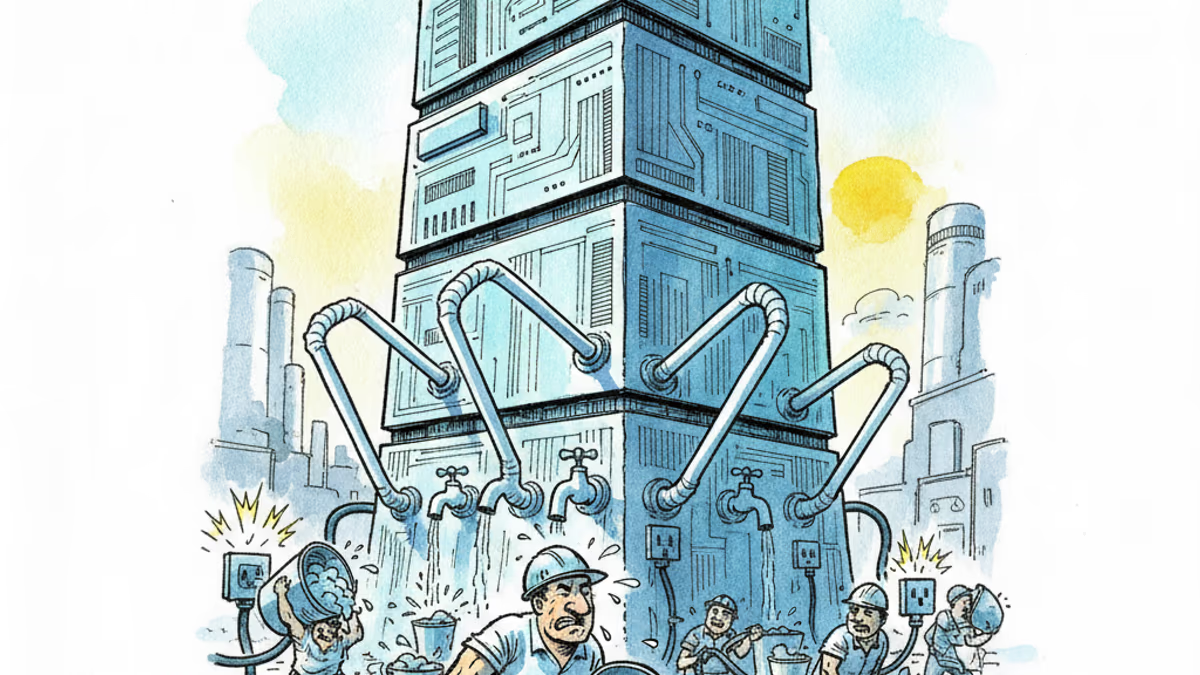
Samsung and SK unveiled a chip and AI investment package worth thousands of trillions of won on June 29. The headline number swings wildly by outlet, but the real contest isn't capital — it's water and power.
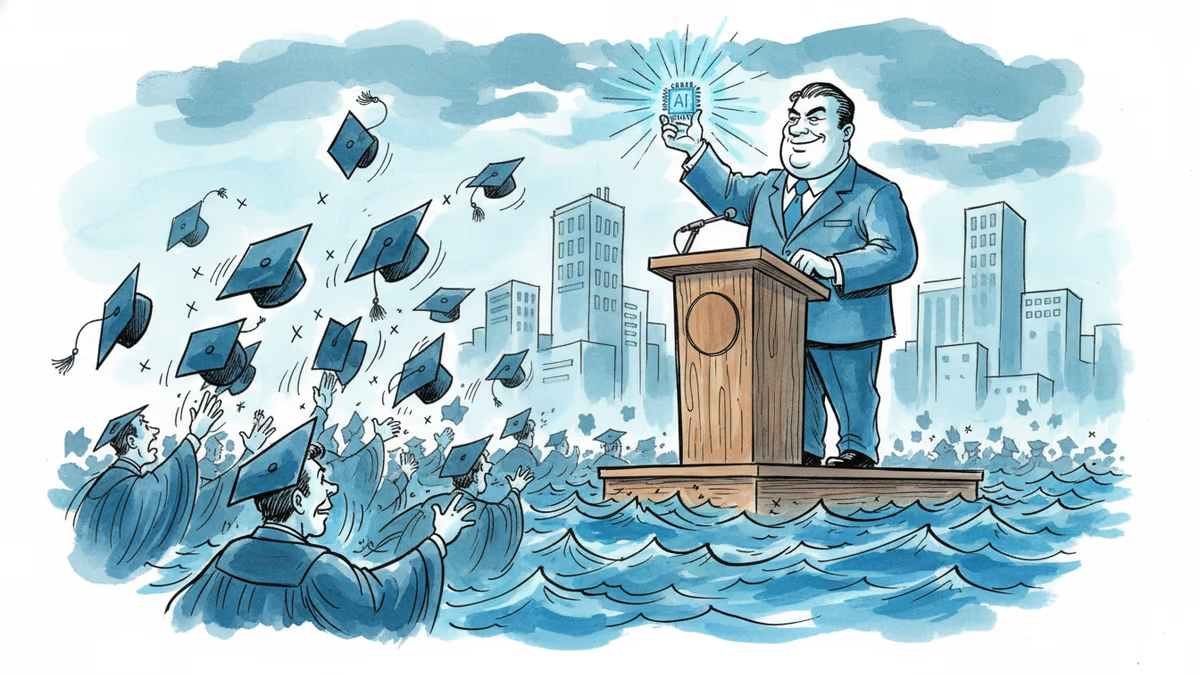
Viral videos show 2026 graduates jeering executives who praise AI at commencement ceremonies. It's not just rudeness — it's a signal about who pays for technological optimism.
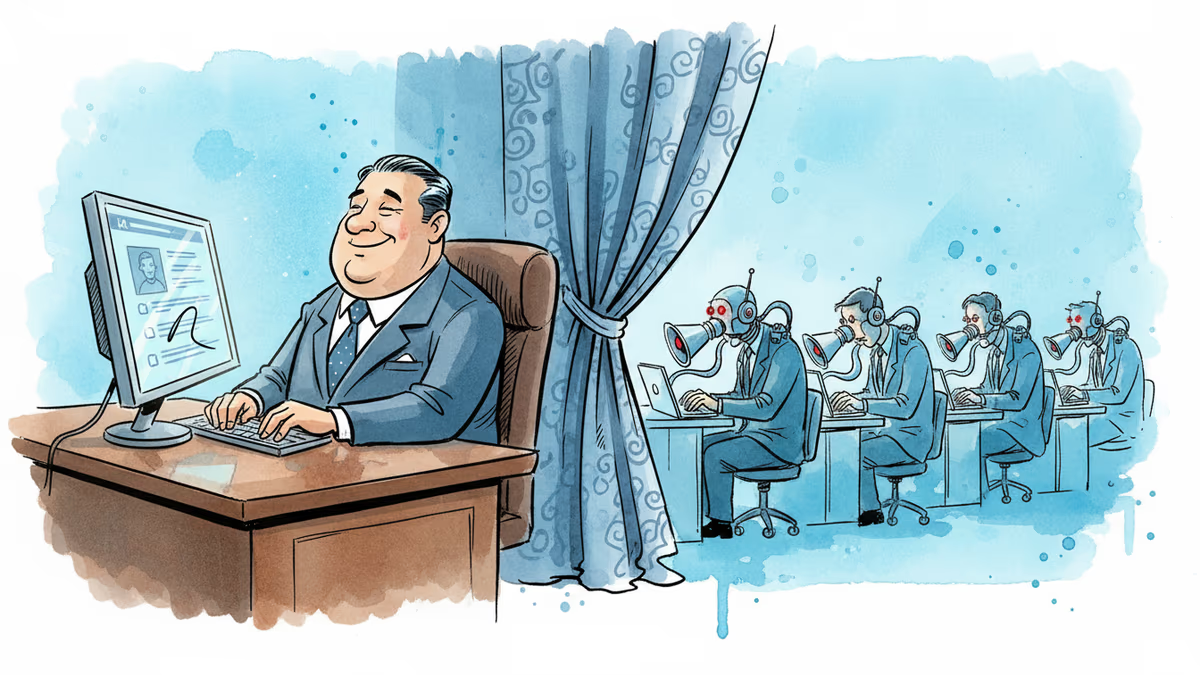
Filipino virtual assistants using AI to ghost-manage LinkedIn profiles for executives is now a structured industry. 30 comments a day, fake engagement rings, and a platform struggling to tell real from fabricated.
Two commencement speakers learned the hard way that AI enthusiasm doesn't land well with today's graduates. The backlash reveals a widening gap between tech optimism and Gen Z's economic reality.
Samsung and SK unveiled a chip and AI investment package worth thousands of trillions of won on June 29. The headline number swings wildly by outlet, but the real contest isn't capital — it's water and power.
Viral videos show 2026 graduates jeering executives who praise AI at commencement ceremonies. It's not just rudeness — it's a signal about who pays for technological optimism.
Filipino virtual assistants using AI to ghost-manage LinkedIn profiles for executives is now a structured industry. 30 comments a day, fake engagement rings, and a platform struggling to tell real from fabricated.
Two commencement speakers learned the hard way that AI enthusiasm doesn't land well with today's graduates. The backlash reveals a widening gap between tech optimism and Gen Z's economic reality.
Thoughts
Share your thoughts on this article
Sign in to join the conversation