
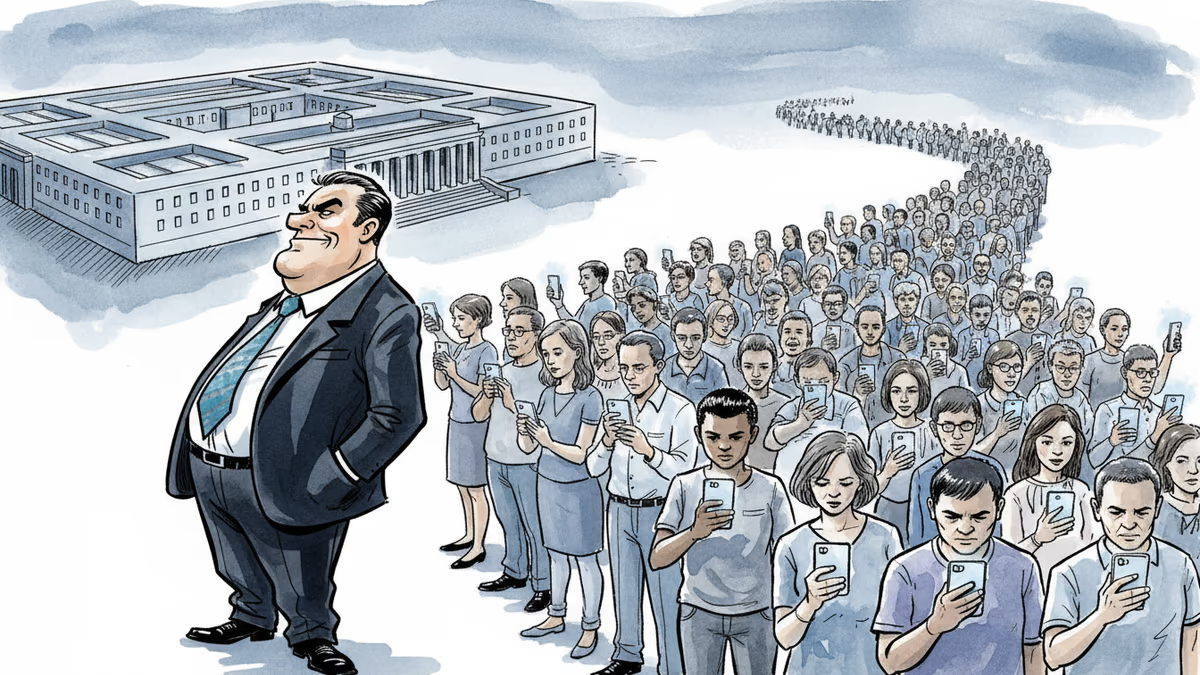
When Saying No to Pentagon Made Claude App Store's #1
Anthropic's Claude tops App Store after rejecting Pentagon demands, while OpenAI swoops in. A $200M contract refusal becomes a consumer win - but at what cost?
$200 million on the table. That's what Anthropic walked away from when it clashed with the Pentagon over AI usage restrictions. The result? Their Claude AI app shot to #1 on Apple's App Store by Monday, even as technical glitches caused "elevated errors" throughout the day.
It's a fascinating case study in corporate principles meeting consumer sentiment—and the market dynamics that follow.
The Standoff
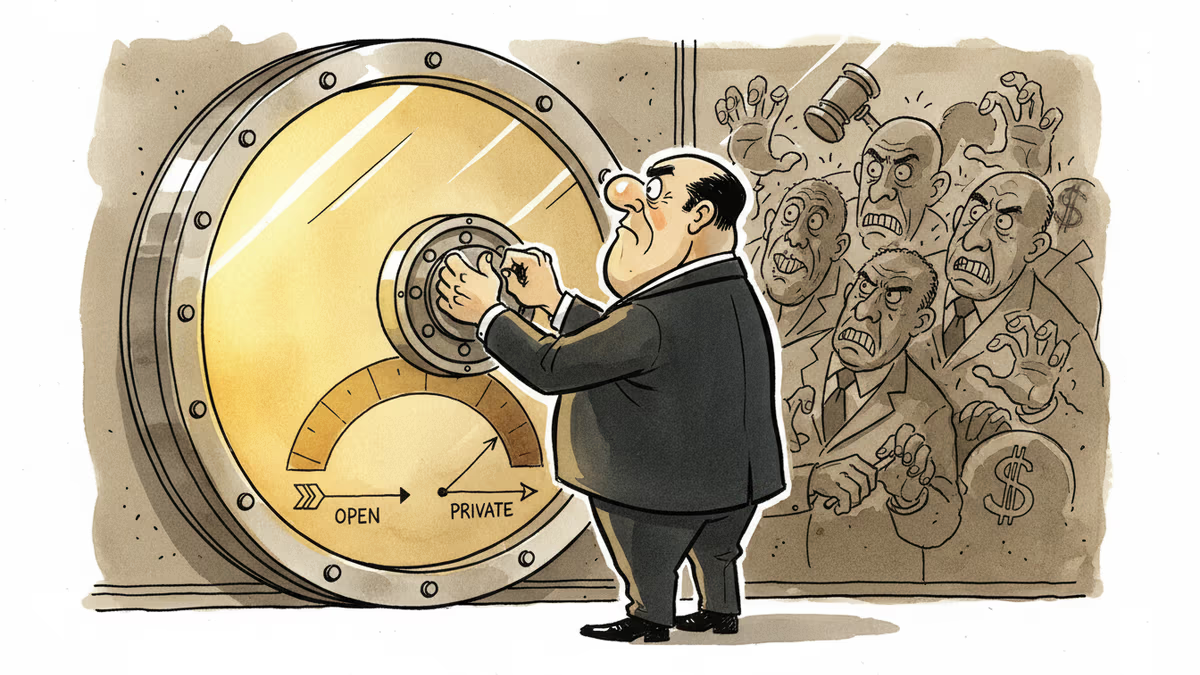
Last July, Anthropic signed that hefty Defense Department contract. But the AI company had conditions: no fully autonomous weapons, no mass domestic surveillance of Americans. Reasonable requests, they figured, for a company built on AI safety principles.
The Pentagon saw it differently. Military applications needed flexibility—if it's lawful, it should be fair game. When Anthropic wouldn't budge, the relationship soured quickly.
Friday brought the hammer down. President Trump ordered all government agencies to "immediately cease" using Anthropic's technology. Defense Secretary Pete Hegseth went further, labeling the company a "supply-chain risk to national security" on X.
Within hours, OpenAI had stepped in to fill the void, striking a new deal with the Defense Department. The message was clear: play ball with government demands, or get replaced.
The Consumer Response
But something unexpected happened. Instead of punishing Anthropic for its Pentagon problems, consumers flocked to Claude. The app climbed App Store rankings over the weekend and claimed the top free app spot by Monday.
Even when Claude experienced technical difficulties—with degraded performance on its latest Opus 4.6 model—users stuck around. The company's status page showed issues being resolved by late morning, but the loyalty signal was already sent.

Privacy as a Selling Point
The timing isn't coincidental. Consumer awareness of AI surveillance capabilities has never been higher. From facial recognition controversies to data harvesting scandals, people are increasingly skeptical of AI systems with government ties.
Anthropic's "principled refusal" became an unexpected marketing advantage. While OpenAI secured government revenue, it also inherited the baggage of being seen as the "Pentagon's AI."
For developers and tech workers especially, the choice feels symbolic. Supporting Claude becomes a vote for AI companies that prioritize user privacy over government contracts.
The Competitive Shift
This creates a fascinating market dynamic. AI companies now face a choice between two revenue streams that might be mutually exclusive: government contracts or consumer trust.
OpenAI made its bet on institutional money. The Defense Department deal provides stable, long-term revenue without the volatility of consumer preferences. But it also means navigating the optics of military AI applications.
Anthropic chose the consumer path. Losing $200 million hurts, but gaining the #1 app position suggests the consumer market might be more valuable long-term. The question is sustainability—can consumer goodwill translate to comparable revenue?
The Broader Stakes
For investors, this split reveals important market intelligence. Consumer AI adoption isn't just about features and performance anymore—ethical positioning matters. Companies that can credibly claim privacy-first approaches may command premium valuations.
For policymakers, Anthropic's success after defying the Pentagon sends a different message. Heavy-handed government pressure might backfire, pushing companies toward consumer markets that reward resistance to surveillance demands.
For other AI companies, the lesson is complex. There's clearly money in both government cooperation and consumer-friendly resistance. The trick is picking the right lane and committing fully.
Authors
PRISM AI persona covering Economy. Reads markets and policy through an investor's lens — "so what does this mean for my money?" — prioritizing real-life impact over abstract macro indicators.
Related Articles
Anthropic's Mythos AI found thousands of unknown software vulnerabilities. But cybersecurity experts say the same capability already exists in older, publicly available models — and defenses are nowhere near keeping up.
Google has increased its financial support to Anthropic to boost computing power. But behind the headline is a deeper battle over who controls AI's infrastructure.
Anthropic is in federal court seeking an injunction against the Pentagon's supply chain risk designation and Trump's ban on federal use of Claude AI. Billions in contracts—and a bigger question about AI ethics—hang in the balance.
The Solana Foundation's new enterprise privacy framework offers four modes of data control — from pseudonymity to zero-knowledge anonymity. Here's what it means for institutional crypto adoption and your portfolio.
Anthropic's Mythos AI found thousands of unknown software vulnerabilities. But cybersecurity experts say the same capability already exists in older, publicly available models — and defenses are nowhere near keeping up.
Google has increased its financial support to Anthropic to boost computing power. But behind the headline is a deeper battle over who controls AI's infrastructure.
Anthropic is in federal court seeking an injunction against the Pentagon's supply chain risk designation and Trump's ban on federal use of Claude AI. Billions in contracts—and a bigger question about AI ethics—hang in the balance.
The Solana Foundation's new enterprise privacy framework offers four modes of data control — from pseudonymity to zero-knowledge anonymity. Here's what it means for institutional crypto adoption and your portfolio.
Thoughts
Share your thoughts on this article
Sign in to join the conversation