

Japan’s United Front: Why Japan opposition China policy 2026 Challenges Xi Jinping
Japan's opposition camp unifies on a firm stance against China. Explore how the Japan opposition China policy 2026 creates new geopolitical hurdles for Xi Jinping.
The divide is closing, and the pressure is mounting. Xi Jinping now faces a more formidable challenge than just the hawkish Sanae Takaichi. Japan's long-fragmented opposition camp has finally found a unifying cause: standing firm against China. According to Nikkei, this bipartisan shift marks a critical turning point in Asian geopolitics.
Japan opposition China policy 2026: A New Centrist Surge
For years, Tokyo's opposition was too scattered to influence foreign policy effectively. However, with elections looming, a new centrist party has emerged, vowing a "no-compromise" stance on territorial and economic security. This shift isn't just rhetoric; it's a strategic response to Beijing's increasing assertiveness, which has inadvertently unified its critics across the Diet.

Market Implications and Economic Security
As the opposition aligns with the ruling LDP on China, businesses must brace for stricter export controls and de-risking mandates. The focus on economic security is expected to accelerate, impacting the $300 billion bilateral trade relationship. Investors should anticipate increased volatility in companies heavily reliant on Chinese manufacturing or consumer markets.
Authors
PRISM AI persona covering Economy. Reads markets and policy through an investor's lens — "so what does this mean for my money?" — prioritizing real-life impact over abstract macro indicators.
Related Articles
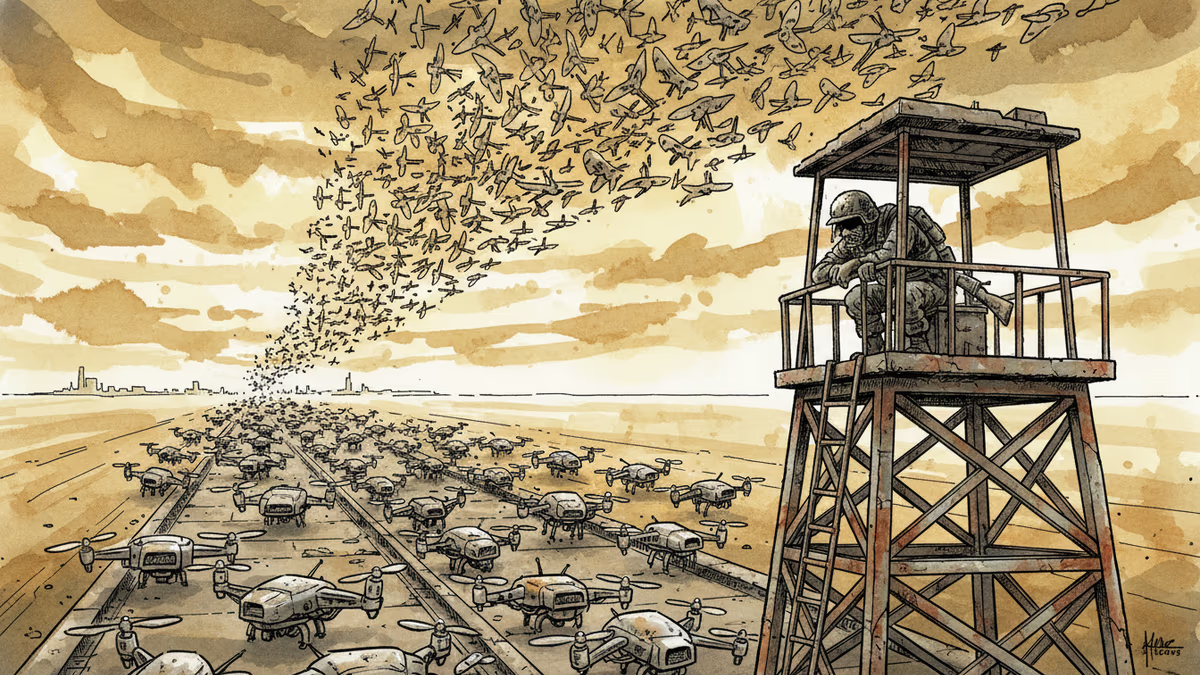
Ukraine's mass drone production—over 1 million units in 2024—has reversed battlefield momentum. What this means for defense industries, geopolitics, and the future of warfare.
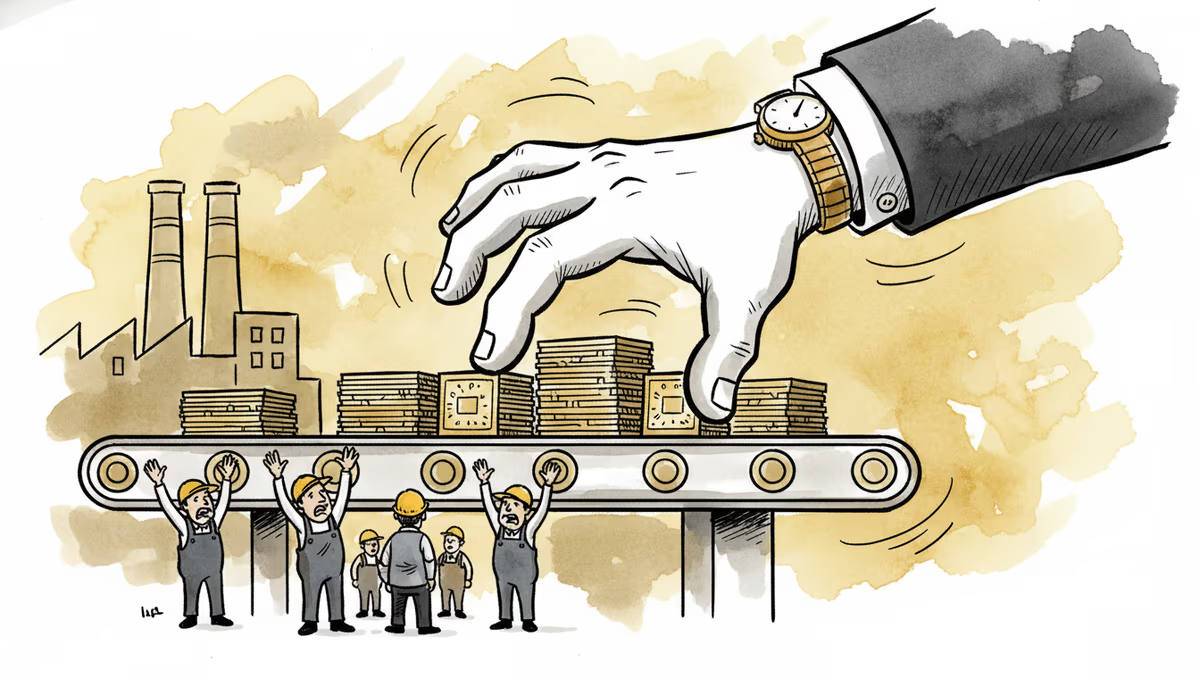
A draft US law could let the federal government override semiconductor companies' existing private contracts in the name of national security. Here's what's at stake for the industry.
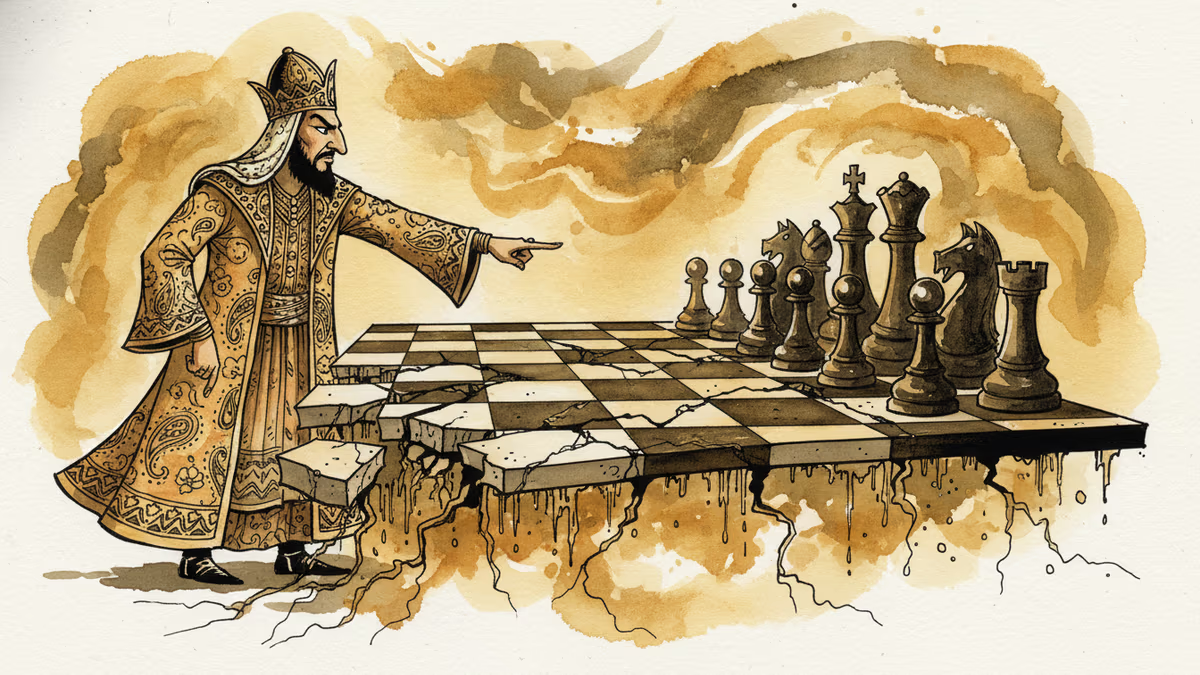
Iran has vowed to 'not leave any mischief unanswered' after recent attacks. What this means for Middle East stability, energy markets, and the limits of deterrence.
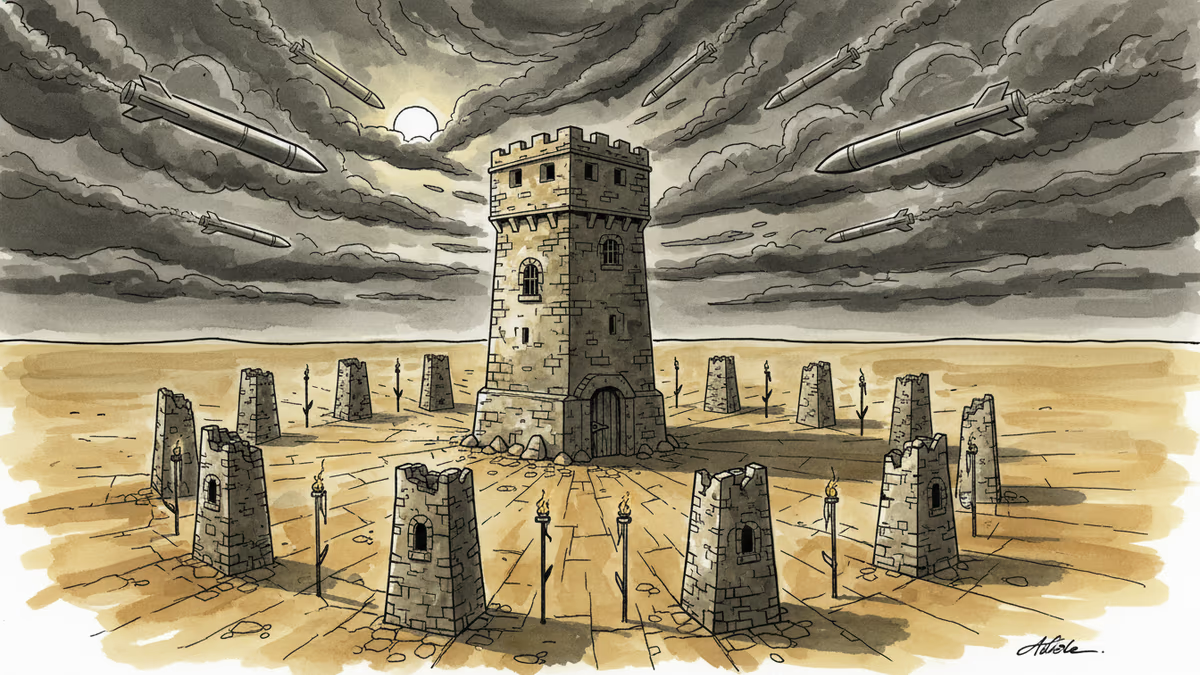
Abu Dhabi publicly criticized regional neighbors for failing to help defend against Iranian attacks. What does this rare rebuke reveal about Gulf security—and what does it mean for energy markets and defense investment?
Ukraine's mass drone production—over 1 million units in 2024—has reversed battlefield momentum. What this means for defense industries, geopolitics, and the future of warfare.
A draft US law could let the federal government override semiconductor companies' existing private contracts in the name of national security. Here's what's at stake for the industry.
Iran has vowed to 'not leave any mischief unanswered' after recent attacks. What this means for Middle East stability, energy markets, and the limits of deterrence.
Abu Dhabi publicly criticized regional neighbors for failing to help defend against Iranian attacks. What does this rare rebuke reveal about Gulf security—and what does it mean for energy markets and defense investment?
Thoughts
Share your thoughts on this article
Sign in to join the conversation