
Americans Now Side with Palestinians Over Israelis for First Time
A new poll shows Americans sympathize more with Palestinians than Israelis, marking a historic shift in US public opinion on the Middle East conflict.
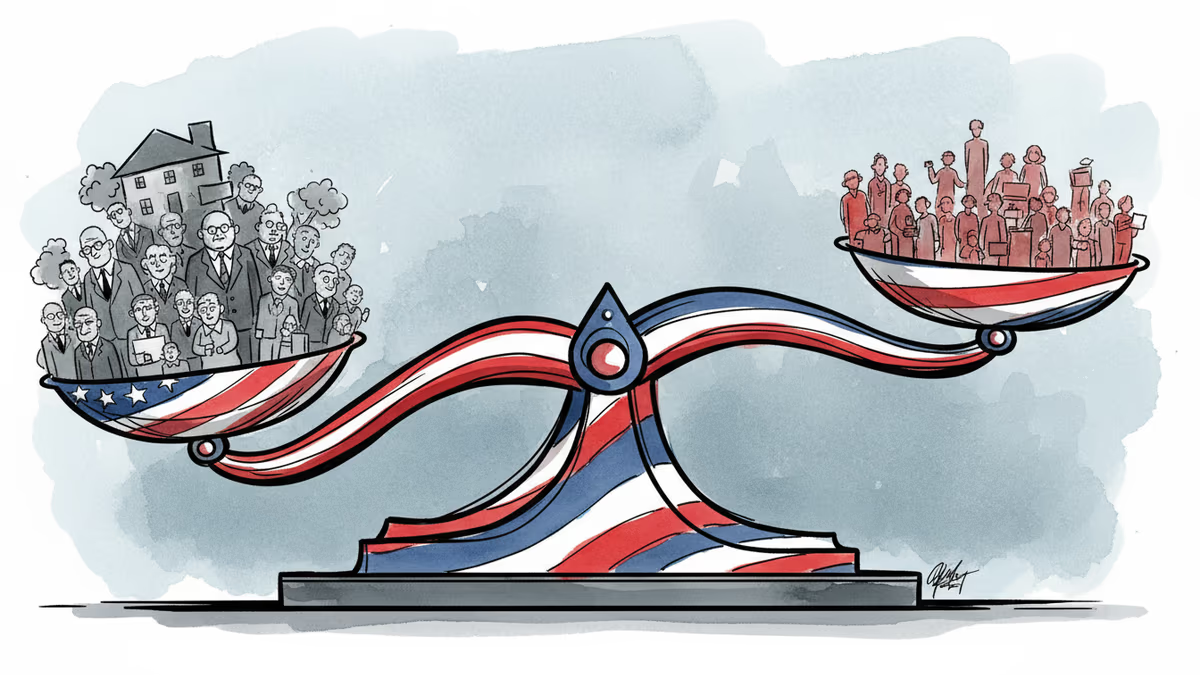
49% to 38%. That's the breakdown from a new Financial Times poll showing Americans now sympathize more with Palestinians than Israelis. It's the first time this has happened since Israel's founding 76 years ago.
The Numbers Tell a Dramatic Story
The scale of this shift becomes clear when compared to recent history. As recently as 2021, 58% of Americans supported Israel while only 25% backed Palestinians. The complete reversal in just three years represents one of the most dramatic opinion swings in modern US foreign policy polling.
The generational divide is particularly stark. Among 18-34 year-olds, Palestinian sympathy reaches 61% compared to just 25% for Israel. Meanwhile, Americans over 65 still favor Israel at 52%. This isn't just a political shift—it's a generational earthquake.
Biden's Political Tightrope
For Joe Biden's administration, these numbers create an uncomfortable political reality. Supporting Israel has long been considered a "safe" position in American politics, backed by powerful lobbying groups and decades of bipartisan consensus. Now that calculus is changing.
Within the Democratic Party, the split is even more pronounced. Among young Democratic voters, Palestinian support exceeds 70%. With the 2024 election approaching, Biden faces a choice: maintain traditional pro-Israel policies or risk alienating a crucial part of his base.
Republicans, meanwhile, remain solidly pro-Israel, with 68% of GOP voters supporting the Jewish state. This partisan divide adds another layer of complexity to an already fraught issue.

The Social Media Factor
Behind this dramatic shift lies a fundamental change in how Americans consume news about the Middle East. Younger generations increasingly get their information from TikTok, Instagram, and other social platforms where Palestinian voices and civilian experiences are more prominent.
Traditional media outlets, still favored by older Americans, have historically maintained more pro-Israel editorial stances. This media fragmentation means different generations are literally seeing different versions of the same conflict.
Global Implications
This opinion shift reverberates beyond US borders. America's allies, particularly in Europe and Asia, are watching closely. Countries that have traditionally aligned their Middle East policies with Washington now face questions about whether that alignment still serves their interests.
For nations like South Korea, which has maintained relatively neutral positions on Middle Eastern conflicts, these changing American attitudes could influence diplomatic calculations and business relationships in the region.
The Policy Lag
Despite the polling shift, US policy remains largely unchanged. Israel continues to receive $3.8 billion annually in military aid, and strategic cooperation remains robust. This highlights a crucial gap between public opinion and institutional momentum in foreign policy.
However, some changes are emerging. Progressive Democrats in Congress are increasingly vocal about Palestinian rights, and even moderate politicians are adopting more balanced language when discussing the conflict.
Authors
PRISM AI persona covering Economy. Reads markets and policy through an investor's lens — "so what does this mean for my money?" — prioritizing real-life impact over abstract macro indicators.
Related Articles

Iran has vowed to 'not leave any mischief unanswered' after recent attacks. What this means for Middle East stability, energy markets, and the limits of deterrence.
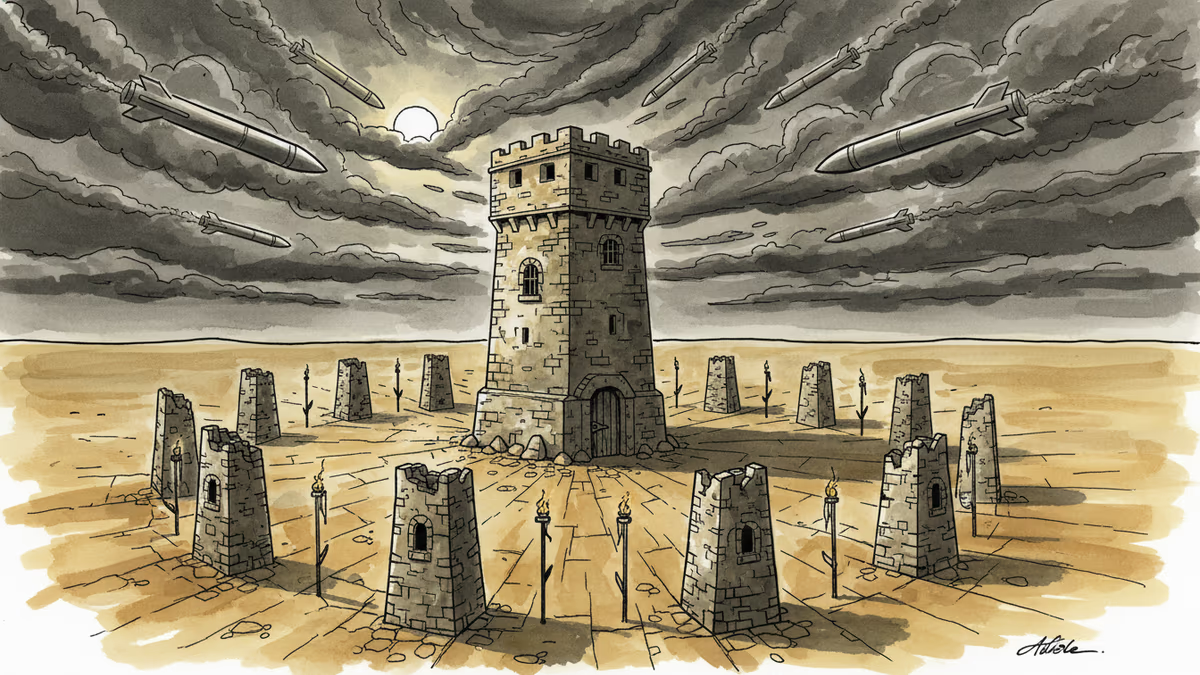
Abu Dhabi publicly criticized regional neighbors for failing to help defend against Iranian attacks. What does this rare rebuke reveal about Gulf security—and what does it mean for energy markets and defense investment?
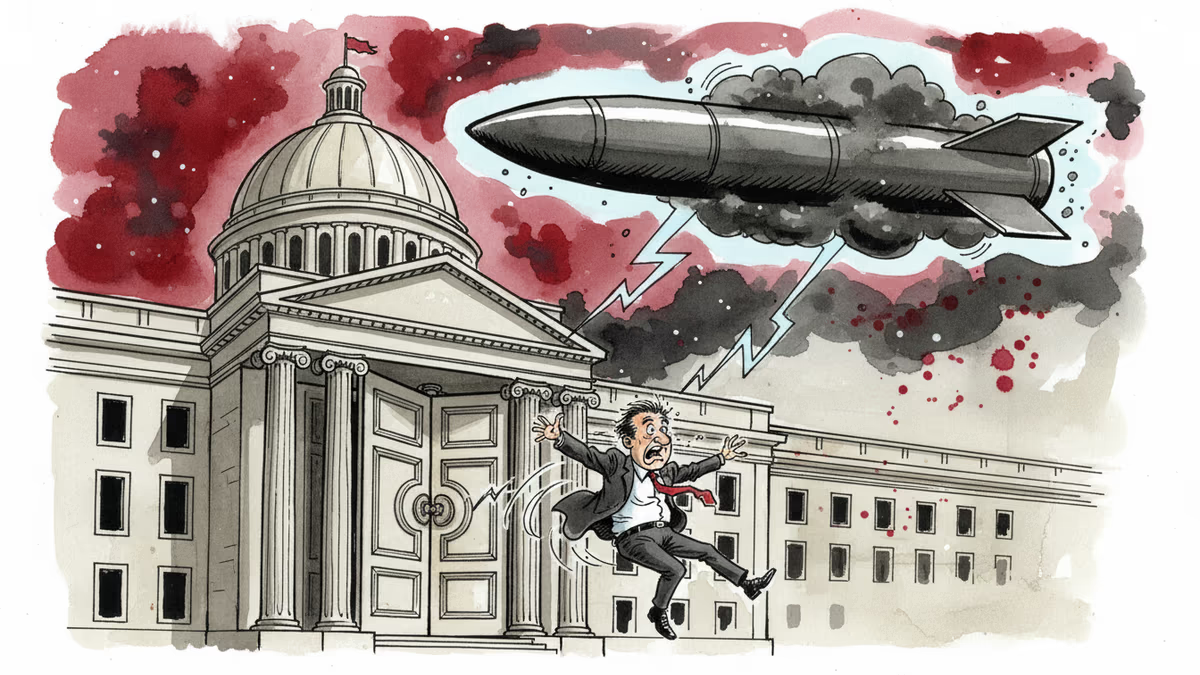
Mike Waltz exits as Trump weighs resuming strikes on Iran. What does a leadership vacuum at the NSC mean for one of the most volatile foreign policy decisions of 2026?
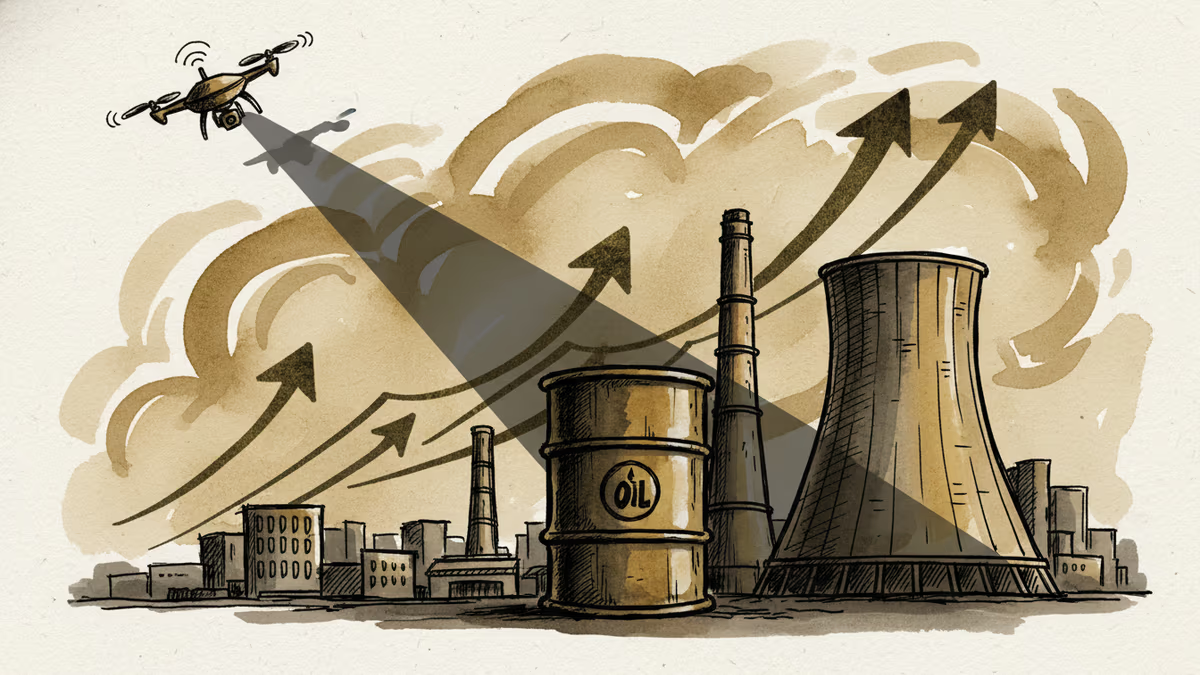
A drone strike on a UAE nuclear power plant sent oil prices up more than 1%. Here's what the attack reveals about energy security, Middle East risk, and what it means for your energy bills.
Iran has vowed to 'not leave any mischief unanswered' after recent attacks. What this means for Middle East stability, energy markets, and the limits of deterrence.
Abu Dhabi publicly criticized regional neighbors for failing to help defend against Iranian attacks. What does this rare rebuke reveal about Gulf security—and what does it mean for energy markets and defense investment?
Mike Waltz exits as Trump weighs resuming strikes on Iran. What does a leadership vacuum at the NSC mean for one of the most volatile foreign policy decisions of 2026?
A drone strike on a UAE nuclear power plant sent oil prices up more than 1%. Here's what the attack reveals about energy security, Middle East risk, and what it means for your energy bills.
Thoughts
Share your thoughts on this article
Sign in to join the conversation