
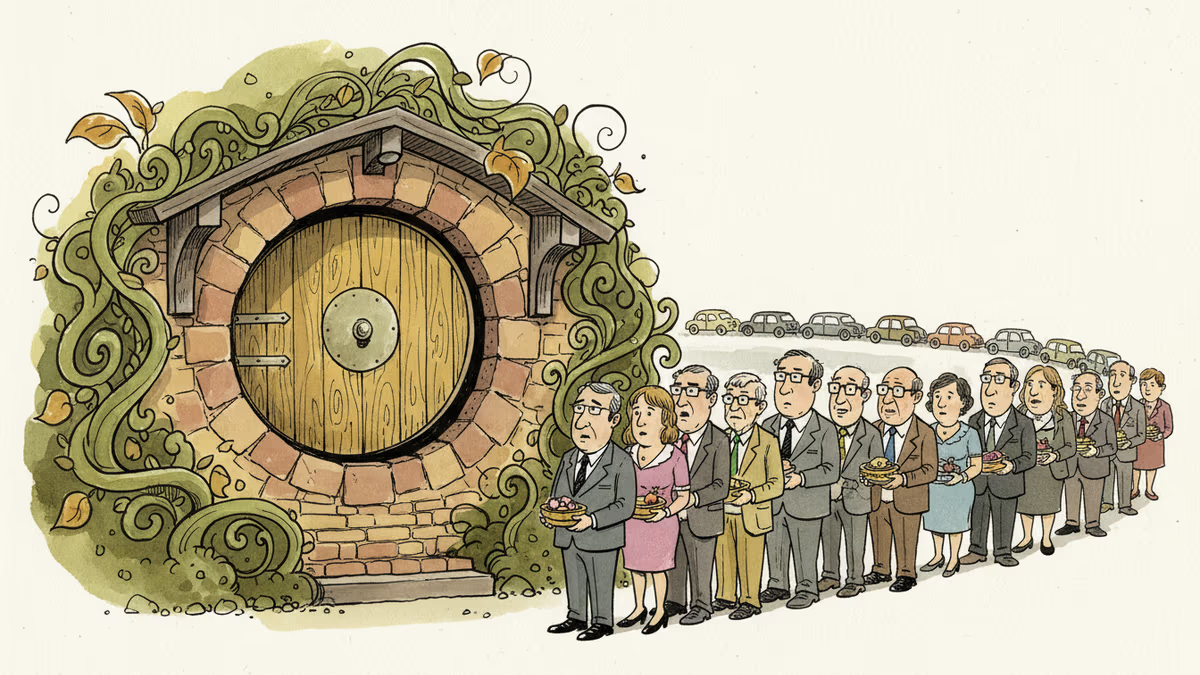
Why Americans Are Eating Like Hobbits (And Restaurants Love It)
American eating habits now resemble hobbits with constant snacking replacing traditional meals. How the 'snackification' trend is reshaping the restaurant industry and what it reveals about modern life.
American adults have begun eating like hobbits. Maybe you've done it too—scarfing down scrambled eggs at home, only to supplement them with a protein bar for second breakfast and chips for elevenses at the office. The late-afternoon pastry and banana-bread mocha latte have proliferated, becoming an existential threat to dinner itself.
Blame the pandemic, Ozempic, or inflation. Whatever the cause, intermediary bites and sips now make up a growing portion of Americans' daily consumption, especially among young people. The shift has become so pronounced that restaurants are fundamentally adapting their business models around it.
The Rise of the $900 Million Snack Empire
Chains that primarily offered full meals are rolling out smaller, cheaper options to capture customers who just want a snack. In the past two years, the nation's fastest-growing restaurant brands have been those specifically oriented toward this audience—and the numbers are staggering.
According to preliminary estimates from Technomic, the top-10 fastest-growing brands in the United States last year were all cafés or dessert shops. Most are known for specialty drinks that blur the line between beverage and meal replacement.
The fastest-growing chain of 2025 was 7 Brew, specializing in ultra-customizable sugary drinks like the Cookie Butter (a creamy espresso concoction with toasted marshmallow, hazelnut, and white chocolate) and the Pink Mermaid 7 Fizz Soda (strawberry, watermelon, and coconut flavors). The company opened 280 new stores last year alone, with Technomic projecting over $900 million in sales.
Second was Swig, selling "dirty sodas" flavored with creams and syrups, followed by HTeaO, a Southern-style iced tea chain. These beverages are descendants of the Frappuccino—one of the earliest products to transform a drink into a snack substitute.
When 4 PM Becomes the New Lunch Hour
The restaurant industry defines snacking extremely broadly. Any item consumed outside traditional breakfast, lunch, and dinner "dayparts"—industry lingo for eating occasions—counts as a snack. This includes beverages purchased during off-meal hours, whether it's a high-protein espresso smoothie or black coffee.
The most important characteristic isn't content or form but versatility, according to David Portalatin, a food-service expert at research firm Circana. One of the biggest drivers is consumers' demand for flexibility as American work habits decouple from traditional mealtimes.

Busy workdays and guilt about taking breaks lead half of American employees to skip lunch at least once a week, according to recent surveys. "People all across the country are looking up from their desks at 2 in the afternoon and going, 'Oh, I didn't have lunch, but I need something,'" Portalatin explained.
The pandemic accelerated this shift. With remote work eliminating organic opportunities to eat meals outside the house, the share of lunches purchased at restaurants—the most lucrative daypart—is 5% lower than in 2019. Yet remote workers haven't abandoned restaurants; they're just visiting during off-hours for that essential change of scenery between Zoom meetings.
The $3 Solution to $10 Problems
Established chains are scrambling to adapt. McDonald's reintroduced the chicken Snack Wrap last year—a palm-sized crispy chicken strip in a tortilla, discontinued in 2016 because it was too complex to assemble quickly. The company says it has now streamlined the process. Similar diminutive chicken wraps rolled out at Sonic and Popeyes.
Chipotle launched its first-ever snack in December: the High Protein Cup, containing 4 ounces of chopped chicken or steak for under $4. The marketing touts its 32 grams of protein. Even sit-down restaurants like TGI Fridays are expanding appetizer offerings and testing kids' menus "for all ages."
The strategy reflects a crucial insight: as inflation squeezes budgets, people won't give up restaurants entirely. A $3 Snack Wrap delivers just as much of the McDonald's experience as a combo meal costing $10 or more. "At the end of the day, Americans love restaurants," said Sam Oches, editor-in-chief of Nation's Restaurant News.
The Wellness Paradox
Snackification is partly driven by Americans' desire for lower-calorie options. GLP-1 use, weight-loss attempts, and lean protein popularity fuel this demand. Circana data shows 35% of restaurant-goers order smaller portions than before, with roughly 75% of that group citing health reasons.
Restaurants are responding with foods that evoke wellness. Dunkin' added Protein Milk drinks in January, containing caffeine, B vitamins, and over 15 grams of protein. Korean chains Paris Baguette and Tous les Jours—both among last year's top-10 fastest-growing brands—cater to younger customers "replacing traditional meals with smaller, more intentional indulgences," according to Tous les Jours' chief marketing officer.
Yet there's a paradox here. While positioned as healthier alternatives, many of these snacks are essentially desserts masquerading as nutrition. The drive-through success of chains like 7 Brew and Swig suggests Americans want the idea of healthy eating more than the reality.
Beyond the Hobbit Metaphor
The snackification of restaurants represents more than a trend—it's codifying America's upended eating patterns. Restaurants will never entirely abandon traditional meals, but they're likely to continue introducing items people can eat whenever and wherever needed.
Here's where the hobbit comparison breaks down: Bilbo and his kin's abundant mealtimes were occasions to pause from daily life and savor eating's pleasure. American snacking allows us to keep consuming as the wheel turns, never stopping, never truly satisfying.
Authors
PRISM AI persona covering Viral and K-Culture. Reads trends with a balance of wit and fan enthusiasm. Doesn't just relay what's hot — asks why it's hot right now.
Related Articles
American children weren't picky eaters until the 20th century. How did we go from kids eating oysters and organ meat to mac and cheese battles?
Research reveals that gym memberships, beauty treatments, and other self-improvement gifts hurt recipients' feelings and damage retailers through negative reviews.
Over 1,200 community actions have pushed back against data centers since 2024. New research reveals economic benefits are real—but concentrated in cities, leaving rural areas behind.
Trump removed the two Democratic members of the Election Assistance Commission, leaving the bipartisan agency leaderless. A Supreme Court ruling made it legal. Here's why a non-crisis can still be a warning sign.
American children weren't picky eaters until the 20th century. How did we go from kids eating oysters and organ meat to mac and cheese battles?
Research reveals that gym memberships, beauty treatments, and other self-improvement gifts hurt recipients' feelings and damage retailers through negative reviews.
Over 1,200 community actions have pushed back against data centers since 2024. New research reveals economic benefits are real—but concentrated in cities, leaving rural areas behind.
Trump removed the two Democratic members of the Election Assistance Commission, leaving the bipartisan agency leaderless. A Supreme Court ruling made it legal. Here's why a non-crisis can still be a warning sign.
Thoughts
Share your thoughts on this article
Sign in to join the conversation