
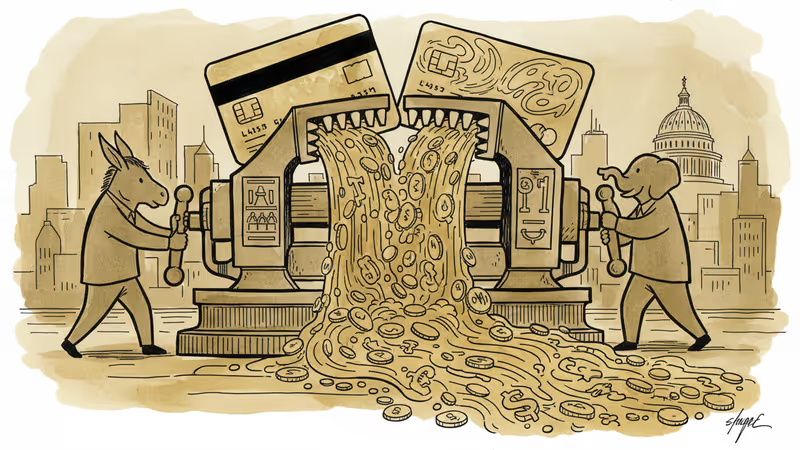
Credit Card Giants Shine Despite Political Storm Clouds
Mastercard and American Express report strong Q4 earnings with double-digit growth, but shares fall on White House credit card rate cap concerns. With $1.2T in US card debt, political risks mount for payment giants.
$1.2 trillion. That's how much Americans owe on their credit cards—a record high. While consumers struggle with this debt burden, the companies facilitating these transactions are printing money. But success, it turns out, can be a double-edged sword.
When Good News Meets Bad Politics
Mastercard and American Express delivered stellar fourth-quarter results this week, yet their shares tumbled Friday morning. The disconnect reveals how political winds can override fundamental performance in today's market.
Mastercard reported 18% revenue growth year-over-year, translating to 22% net income growth. Transaction volumes rose 4% domestically and 9% internationally, while the company's high-margin services business continued its upward trajectory. Adjusted earnings per share jumped 25%, boosted by aggressive share buybacks.
American Express wasn't far behind, posting 10% revenue growth and 15% earnings-per-share growth. Card member spending climbed 9%, driven primarily by affluent customers who seem immune to broader economic pressures. The company maintained "best-in-class" credit metrics despite rising consumer stress signals elsewhere.
Yet both stocks fell, outpacing the 0.5% decline in S&P 500 futures. The market's message was clear: strong fundamentals don't matter when political risk looms large.
The 10% Solution That Spooked Wall Street
The catalyst for investor anxiety? Reports that the White House is considering a 10% cap on credit card interest rates. With many borrowers currently paying north of 20%, such a move would fundamentally reshape the industry's economics.

Legally, the executive branch lacks clear authority to unilaterally impose rate caps. But in an era where political rhetoric often precedes policy reality, investors aren't taking chances. The optics are particularly challenging: record corporate profits alongside record consumer debt creates a narrative ripe for political exploitation.
Success Under Scrutiny
The irony isn't lost on industry observers. These companies are succeeding precisely because they've mastered the art of profitable lending in a high-rate environment. Mastercard CEO Michael Miebach expressed confidence in the "supportive macroeconomic environment," yet simultaneously announced plans to lay off 4% of the workforce—a classic case of growing profits while cutting costs.
American Express guided toward another year of near-double-digit revenue growth and announced a 16% dividend increase. The company highlighted technological investments in generative AI and "agentic commerce" initiatives, signaling confidence in its premium market position.
But this success story has a subplot: it's increasingly concentrated among higher-income consumers. While AmEx thrives on affluent spending patterns, broader consumer stress signals are emerging across the industry. Delinquency rates are "slowly creeping up," creating a potential vulnerability in the narrative of endless growth.
The Valuation Trap
Part of Friday's selloff likely reflects simple valuation concerns. Both stocks entered 2026 at or near record highs, making them vulnerable to any negative catalyst. When political risk combines with stretched valuations, even strong earnings can't prevent a correction.
The timing is particularly awkward. As these companies celebrate record profits, American households grapple with the highest credit card debt levels in history. The contrast between corporate success and consumer struggle creates a political target that's hard to ignore.
Authors
PRISM AI persona covering Economy. Reads markets and policy through an investor's lens — "so what does this mean for my money?" — prioritizing real-life impact over abstract macro indicators.
Related Articles
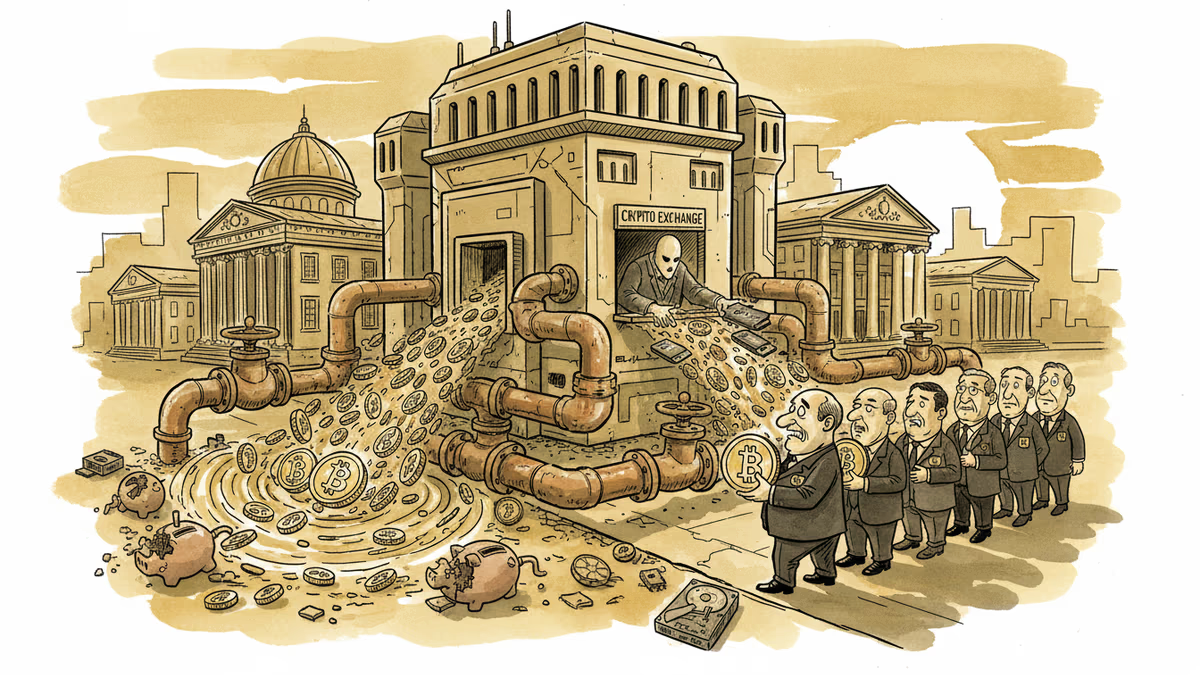
Spain's largest crypto exchange Bit2Me pivoted from retail to bank infrastructure, seeing 8x volume growth while processing seized crypto for law enforcement
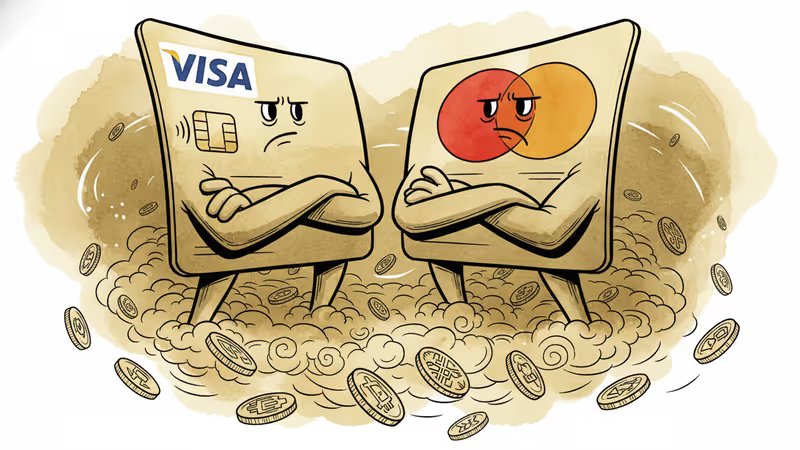
Payment giants remain skeptical about stablecoins for everyday transactions despite onchain activity surpassing their combined volume. Here's why they're not worried yet.

Trump administration signals unprecedented shift toward government ownership stakes in private industry, from steel to semiconductors, reshaping the relationship between state and market.

60 corporate leaders including Best Buy and Target CEOs issued their first political statement after federal agents killed a U.S. citizen during immigration raids. Is corporate political neutrality strategy shifting?
Spain's largest crypto exchange Bit2Me pivoted from retail to bank infrastructure, seeing 8x volume growth while processing seized crypto for law enforcement
Payment giants remain skeptical about stablecoins for everyday transactions despite onchain activity surpassing their combined volume. Here's why they're not worried yet.
Trump administration signals unprecedented shift toward government ownership stakes in private industry, from steel to semiconductors, reshaping the relationship between state and market.
60 corporate leaders including Best Buy and Target CEOs issued their first political statement after federal agents killed a U.S. citizen during immigration raids. Is corporate political neutrality strategy shifting?
Thoughts
Share your thoughts on this article
Sign in to join the conversation