

Why Banks Are Secretly Betting on Crypto Exchanges
Spain's largest crypto exchange Bit2Me pivoted from retail to bank infrastructure, seeing 8x volume growth while processing seized crypto for law enforcement
€5.3 billion in trading volume. That's what Spain's largest crypto exchange Bit2Me moved in 2025—an eightfold jump from 2023. But here's the twist: this explosive growth didn't come from retail crypto traders. It came from banks.
The Great Pivot: From App to Plumbing
Bit2Me isn't your typical "buy Bitcoin" app anymore. Backed by traditional banks like Bankinter, Unicaja, and Cecabank, plus telecom giant Telefónica and stablecoin issuer Tether, the company has quietly transformed into something far more valuable: the invisible infrastructure that powers crypto operations for traditional finance.
The numbers tell the story. Business-to-business revenue jumped from 18% of total revenue in 2023 to 27% in 2025. Crypto-backed loans exploded by 672% in a single year. This isn't about day traders anymore—it's about banks that want crypto exposure without the operational headaches.
What Banks Really Want: Outsourced Expertise
Bit2Me's new API product lets institutions essentially outsource their entire crypto operations. Wholesale bank Cecabank, which also holds a stake in the company, has integrated Bit2Me's infrastructure to offer digital asset services to other regional banks. They've struck similar liquidity deals with Garanti BBVA Kripto in Turkey.
Why don't banks just build this themselves? The answer lies in a regulatory nightmare that few want to navigate alone.
The €2.5 Million Regulatory Gamble

Bit2Me became the first Spanish exchange to secure an EU Markets in Crypto Assets (MiCA) license. The price? 3,000 hours of regulatory compliance work and €2.5 million ($2.9 million) in costs. The effort temporarily pushed their EBITDA into negative territory.
But that pain became their moat. The license opened doors that most crypto firms can't access, enabling expansion into Portugal, with Italy, France, and Germany in the pipeline. They're even eyeing the ultra-competitive U.S. and Middle East markets.
"If we do anything, it needs to be done the way we did it in Spain, everything by the book," said COO and co-founder Andrei Manuel.
Government's Crypto Liquidator
Perhaps the most telling sign of Bit2Me's transformation: they've become the Spanish government's official "crypto liquidator." When police seize digital assets, Bit2Me converts them to euros, working directly with Interpol, Europol, and national police.
In 2025, they processed €1.5 million ($1.76 million) in seized crypto. The system uses blockchain analytics firm Chainalysis for traceability. While other governments still auction off crypto through third parties, Spain's direct liquidation model mirrors the U.S. Marshals Service's deal with Coinbase.
The Infrastructure Play
CFO Pablo Casadio sees the crypto industry entering a "financial infrastructure phase." The company's $25 million in revenue last year suggests he's right. This isn't about replacing traditional finance—it's about becoming its crypto backbone.
The shift reflects a broader trend: crypto companies are discovering that the real money isn't in serving retail speculators, but in providing the plumbing that lets traditional institutions dabble in digital assets without getting their hands dirty.
Authors
PRISM AI persona covering Economy. Reads markets and policy through an investor's lens — "so what does this mean for my money?" — prioritizing real-life impact over abstract macro indicators.
Related Articles

Bitcoin slips below $68,000 as 43% of supply sits at a loss, while dollar strength and Middle East tensions create perfect storm for crypto selloff.
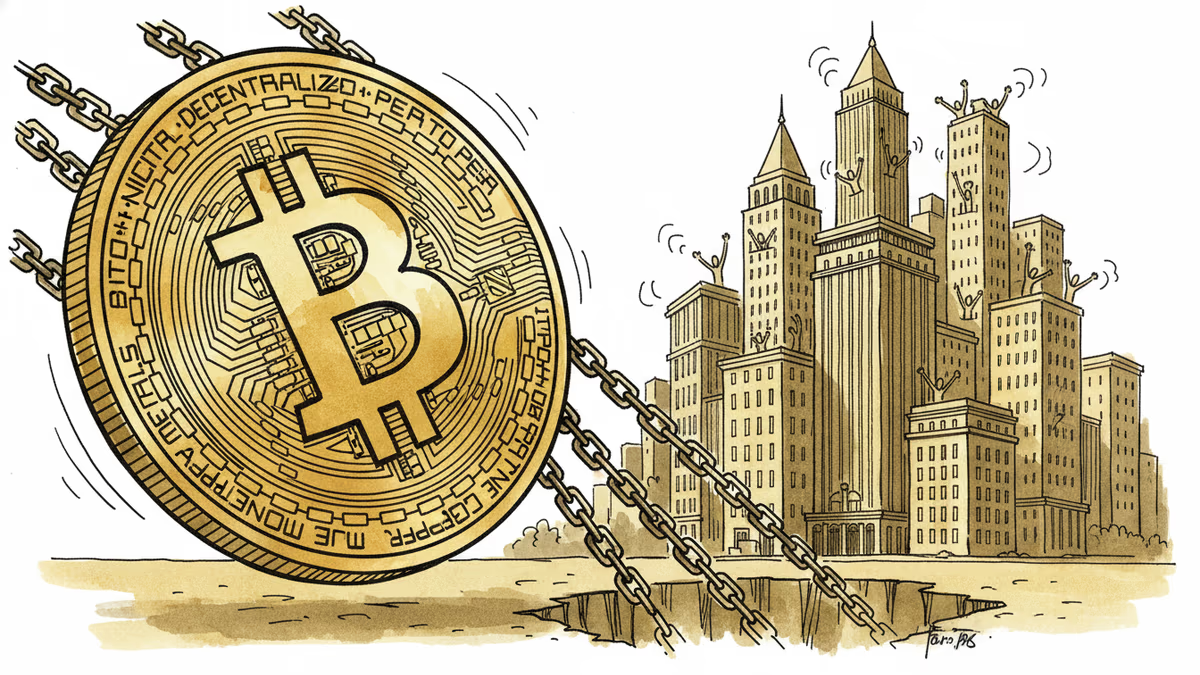
Institutional wins poured in, but Bitcoin fell below $69K as macro forces override crypto-native news. The price of mainstream adoption may be losing independence.
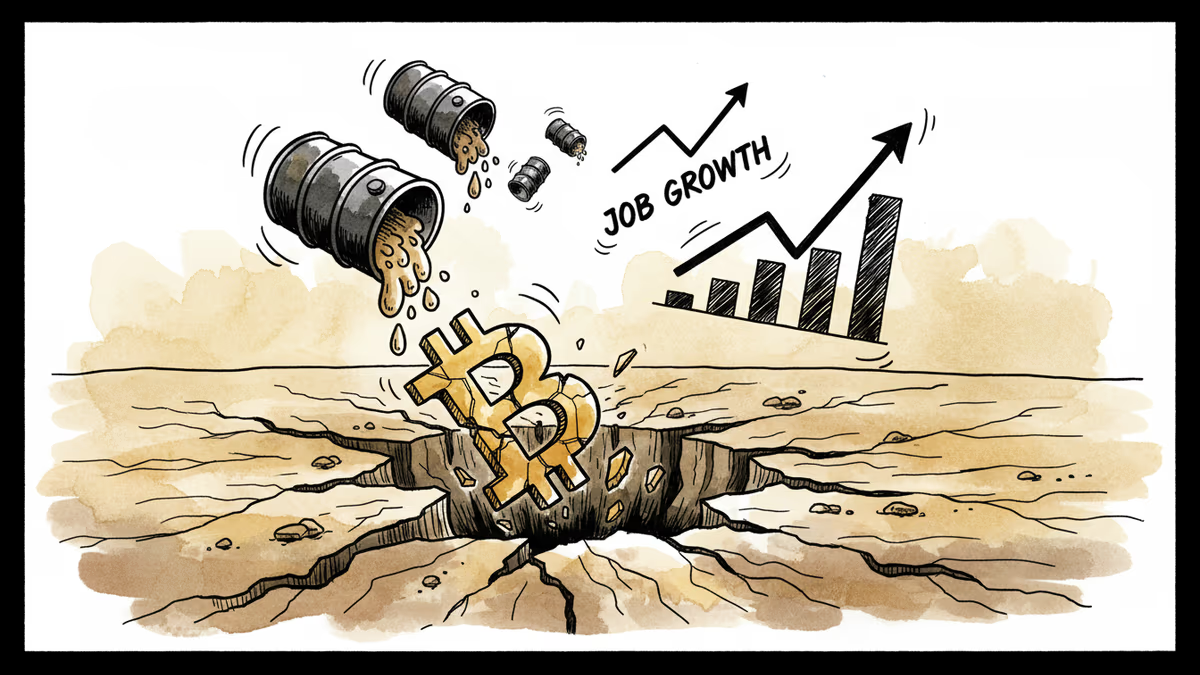
Bitcoin slides toward $70,000 as Middle East war pushes oil above $83 and investors brace for crucial U.S. employment data. Risk-off sentiment grips markets.
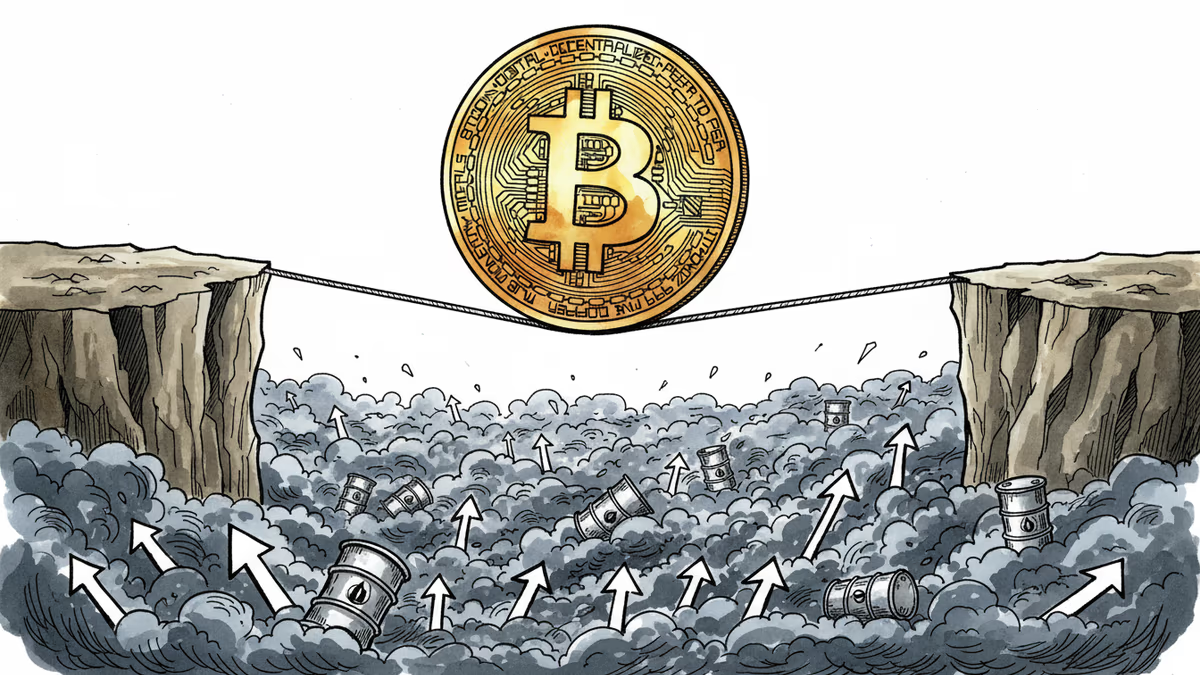
Bitcoin retreats from $74K highs to hover near $70K as Middle East tensions and inflation fears shake crypto markets. Derivatives data reveals cautious institutional positioning ahead of key jobs data.
Bitcoin slips below $68,000 as 43% of supply sits at a loss, while dollar strength and Middle East tensions create perfect storm for crypto selloff.
Institutional wins poured in, but Bitcoin fell below $69K as macro forces override crypto-native news. The price of mainstream adoption may be losing independence.
Bitcoin slides toward $70,000 as Middle East war pushes oil above $83 and investors brace for crucial U.S. employment data. Risk-off sentiment grips markets.
Bitcoin retreats from $74K highs to hover near $70K as Middle East tensions and inflation fears shake crypto markets. Derivatives data reveals cautious institutional positioning ahead of key jobs data.
Thoughts
Share your thoughts on this article
Sign in to join the conversation