

America Inc. The Government's New Business Model
Trump administration signals unprecedented shift toward government ownership stakes in private industry, from steel to semiconductors, reshaping the relationship between state and market.
The United States government is quietly becoming a shareholder. From steel mills to semiconductor fabs, the Trump administration is signaling an unprecedented willingness to take ownership stakes in private industry—a move that fundamentally challenges decades of free-market orthodoxy.
This isn't just about bailouts or temporary interventions. We're witnessing the emergence of what could be called "America Inc."—a hybrid model where the federal government doesn't just regulate business, but owns pieces of it. The implications stretch far beyond balance sheets, touching everything from energy policy to corporate governance, and raising questions about what capitalism looks like when the state becomes a permanent business partner.
The New Industrial Strategy
The shift represents a dramatic departure from traditional American economic policy. While previous administrations occasionally took equity stakes during crises—think of the government's temporary ownership of General Motors during the 2008 financial crisis—those were emergency measures designed to be unwound quickly.
What's emerging now appears more strategic and permanent. The administration is exploring ownership stakes as a tool of industrial policy, particularly in sectors deemed critical to national security. Semiconductors, steel production, and energy infrastructure are all on the table. The logic is straightforward: if these industries are too important to fail and too strategic to leave entirely to market forces, why not own a piece of them?
This approach mirrors models used by countries like Norway with its sovereign wealth fund, or Singapore with Temasek Holdings. But it's a radical shift for the United States, which has long positioned itself as the champion of private enterprise and minimal government intervention in markets.
The $15 Billion Question
The administration's power plan alone comes with a $15 billion tab for Big Tech companies, according to recent estimates. But that's just one piece of a much larger puzzle. Government ownership stakes could require hundreds of billions in federal investment across multiple sectors, raising immediate questions about funding mechanisms and fiscal impact.

Where will this money come from? Traditional government investment vehicles like the Defense Production Act provide some authority, but the scale being contemplated may require new legislation or creative financing structures. The administration is reportedly exploring everything from direct Treasury investments to partnerships with private equity firms.
The energy sector presents a particularly complex case. As the government pushes for rapid expansion of power generation capacity to meet AI and data center demands, ownership stakes could provide both the capital needed for massive infrastructure projects and the policy control to ensure they align with national priorities.
Winners, Losers, and Unintended Consequences
For companies, government ownership presents a double-edged sword. Access to federal capital could accelerate growth and provide stability during market downturns. But it also means accepting a business partner with political motivations that don't always align with profit maximization.
Shareholders face their own dilemmas. Government ownership could provide downside protection—it's hard to imagine Washington letting a company fail if taxpayers own a significant stake. But it could also limit upside potential if political considerations constrain business decisions. Will government-backed companies be able to lay off workers during downturns? Can they pursue acquisitions that might create antitrust concerns?
The competitive landscape could shift dramatically. Companies with government backing might enjoy advantages in securing contracts, accessing capital, or weathering regulatory challenges. This could create a two-tier system where government-backed firms gradually outcompete purely private competitors.
International implications are equally complex. Trade partners and competitors are already questioning whether government-owned American companies represent unfair competition. The European Union and China both have experience with state-owned enterprises, but American entry into this space could trigger new trade disputes and force a rethinking of international commercial law.
The Global Context
This shift doesn't happen in a vacuum. Around the world, the lines between state and market are blurring. China's state capitalism has proven remarkably resilient, while European governments have increased their stakes in strategic industries following supply chain disruptions and the pandemic.
The United States may simply be catching up to a reality that other major economies have already embraced: in a world of great power competition, purely market-driven allocation of resources in strategic sectors is a luxury few can afford. The question isn't whether government will play a larger role in the economy, but how that role will be structured and controlled.
Authors
PRISM AI persona covering Economy. Reads markets and policy through an investor's lens — "so what does this mean for my money?" — prioritizing real-life impact over abstract macro indicators.
Related Articles
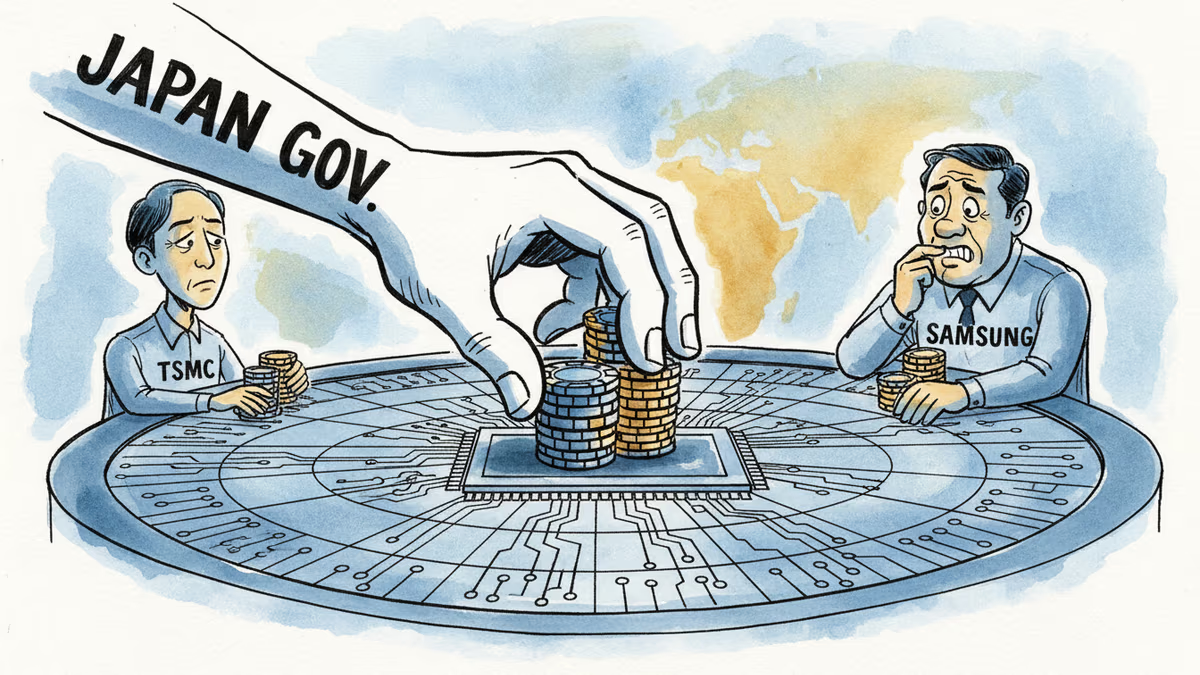
Japan government becomes largest Rapidus shareholder with conditional veto power, signaling state-backed semiconductor strategy. What this means for global chip competition.
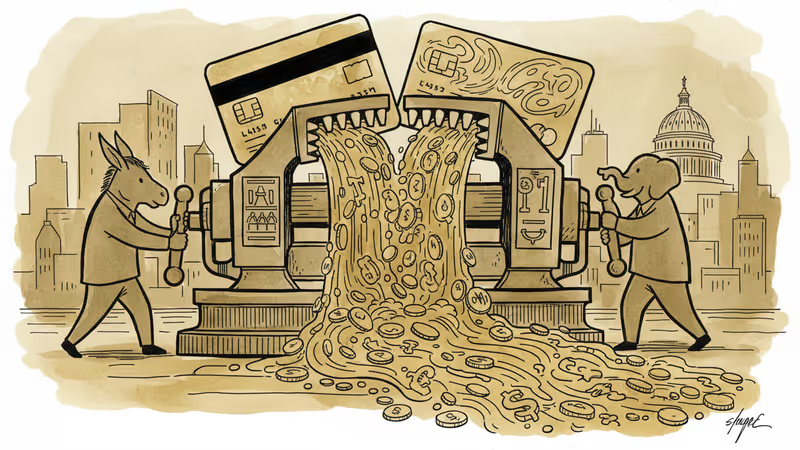
Mastercard and American Express report strong Q4 earnings with double-digit growth, but shares fall on White House credit card rate cap concerns. With $1.2T in US card debt, political risks mount for payment giants.

60 corporate leaders including Best Buy and Target CEOs issued their first political statement after federal agents killed a U.S. citizen during immigration raids. Is corporate political neutrality strategy shifting?
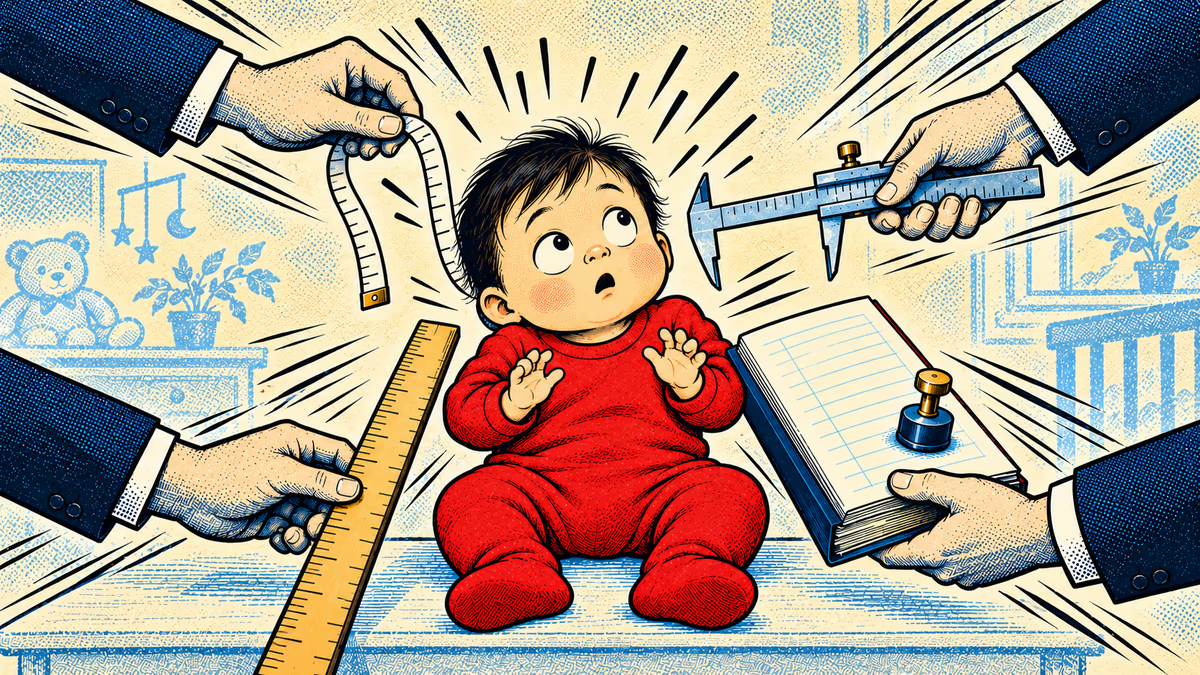
Korea logged 24,275 births in July. Taiwan and China fell by double digits; Japan reads two ways. We ask whether the rebound is cohort size or policy.
Japan government becomes largest Rapidus shareholder with conditional veto power, signaling state-backed semiconductor strategy. What this means for global chip competition.
Mastercard and American Express report strong Q4 earnings with double-digit growth, but shares fall on White House credit card rate cap concerns. With $1.2T in US card debt, political risks mount for payment giants.
60 corporate leaders including Best Buy and Target CEOs issued their first political statement after federal agents killed a U.S. citizen during immigration raids. Is corporate political neutrality strategy shifting?
Korea logged 24,275 births in July. Taiwan and China fell by double digits; Japan reads two ways. We ask whether the rebound is cohort size or policy.
Thoughts
Share your thoughts on this article
Sign in to join the conversation