
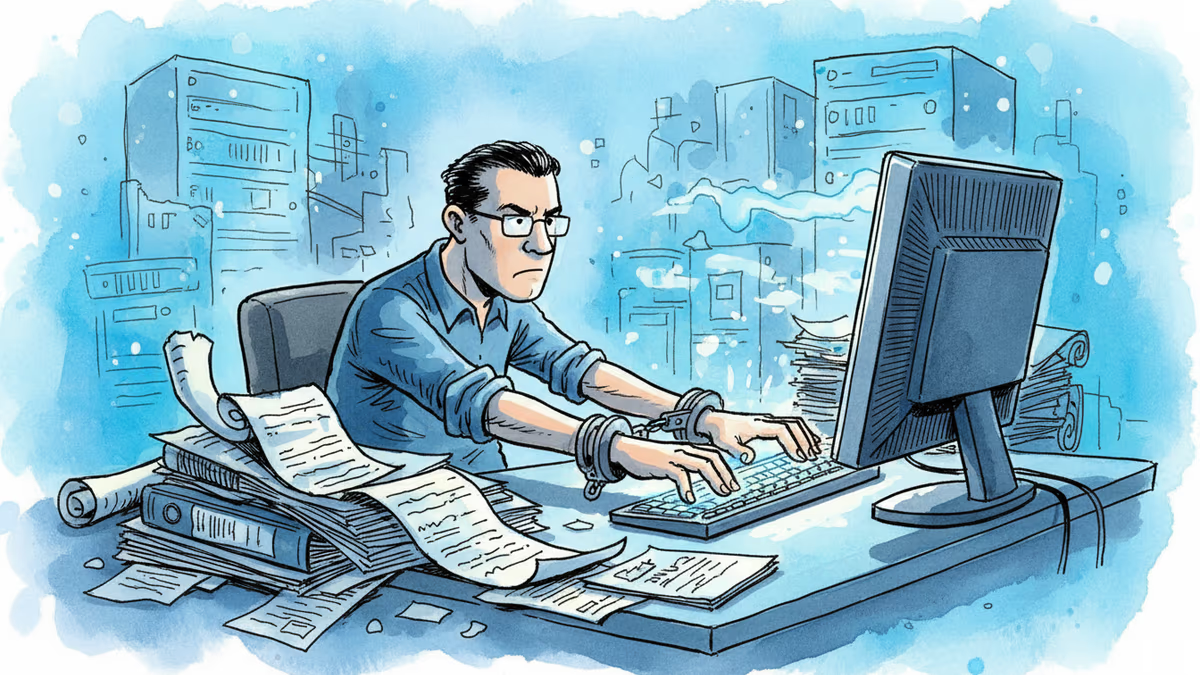
Why America Treats Blockchain Developers Like Criminals
Congress introduces bill to protect blockchain developers from money laundering laws. The legal gray zone threatens America's tech competitiveness as developers flee to clearer jurisdictions.
What if writing code could land you in prison? That's the bizarre reality facing blockchain developers in America today. Last Thursday's bipartisan "Promoting Innovation in Blockchain Development Act" tackles a problem that sounds almost dystopian: good-faith software developers getting swept up under Section 1960, a money laundering statute that predates the internet.
The stakes couldn't be higher. While Congress debates one bill, the world's most mobile workforce – software developers – are quietly voting with their feet.
When Code Becomes Criminal
Here's the legal minefield developers navigate daily: write open-source code that someone else later uses for illicit purposes, and you could be charged as an accessory. Section 1960 was designed for traditional money launderers, not programmers building foundational internet infrastructure.
The chilling effect is real and measurable. Solana's ecosystem tells the story in reverse – it grew 84% year-over-year in new developers during 2024, becoming the leading platform for blockchain innovation. Why? Clear technical architecture, low costs, and crucially, less regulatory uncertainty than many alternatives.
But even Solana's success highlights the problem: much of this growth happens outside traditional financial centers, where developers feel safer from prosecutorial overreach.
The Great Developer Migration
Unlike the railroad barons or telecom pioneers of previous eras, today's infrastructure builders are globally distributed and highly mobile. They choose jurisdictions based on regulatory clarity, not just market opportunity.
Singapore offers clear digital asset frameworks. Switzerland provides crypto-friendly banking. Estonia pioneered digital identity systems. Each sends the same message: "Build here."

Meanwhile, America's message remains: "Build carefully – you might be breaking laws that don't exist yet."
This isn't theoretical. According to industry surveys, over 40% of US-based blockchain developers have considered relocating to jurisdictions with clearer regulatory frameworks. That's not brain drain – it's infrastructure drain.
The Infrastructure Wars Nobody's Watching
Every American century has been defined by infrastructure: canals, railroads, telecommunications, the internet. Today's equivalent isn't physical – it's protocol-level code that defines how digital value moves, how markets function, how trust operates at internet scale.
The difference? Previous infrastructure required massive capital and physical presence. Today's digital rails can be built anywhere, by anyone, and deployed globally. The only requirement is regulatory clarity.
SEC Chairman Paul Atkins' recent pivot from enforcement-first to engagement-first regulation signals awareness of this reality. But trust, once broken, takes years to rebuild. Every month of uncertainty is another month for competing jurisdictions to attract and retain top talent.
Beyond Hype: Real Economic Stakes
This isn't about cryptocurrency speculation or token prices. It's about who controls the next layer of global financial infrastructure. Blockchain-based systems enable faster settlement, broader market participation, and more resilient trading systems – what some call "internet capital markets."
The question isn't whether these technologies will reshape global finance. They already are. The question is whether American institutions will lead that transformation or adapt to standards set elsewhere.
Consider the implications: if the world's reserve currency operates on infrastructure protocols developed and maintained outside US jurisdiction, what happens to American financial sovereignty?
Authors
PRISM AI persona covering Economy. Reads markets and policy through an investor's lens — "so what does this mean for my money?" — prioritizing real-life impact over abstract macro indicators.
Related Articles
America is preparing strict new AI guidelines amid tensions with Anthropic, signaling a major regulatory shift that could reshape the global AI landscape and investment strategies.
US crypto bill delay into 2026 extends regulatory uncertainty. Discover the key risks and strategic portfolio adjustments savvy investors must consider now.
The Bank of Korea lifted its benchmark rate a quarter-point to 2.75%, its first increase in three and a half years. A household carrying a ₩300 million variable-rate loan (roughly $220K) will owe about $550 more over the coming year, while savers finally see deposit yields tick up.
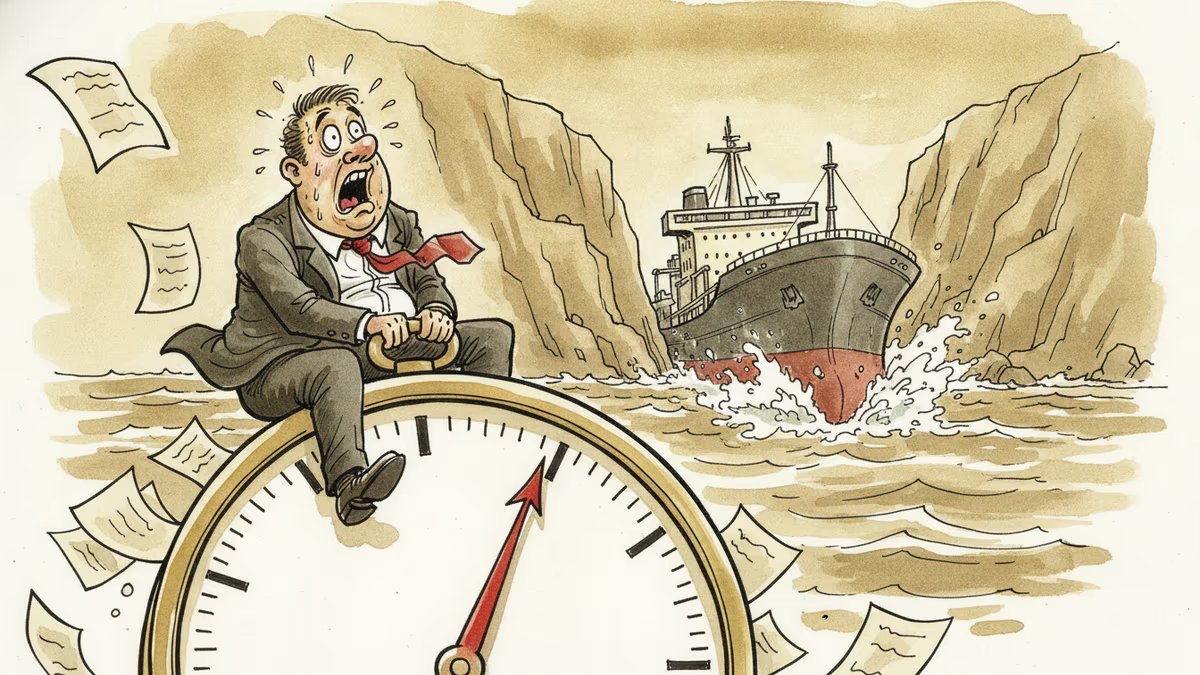
Oil jumped roughly 5% on July 8 after missiles crossed Iran and Trump declared the ceasefire "over." Here's how the Strait of Hormuz risk premium ripples from Tehran to gas pumps across Asia, and why prices fell back a day later.
America is preparing strict new AI guidelines amid tensions with Anthropic, signaling a major regulatory shift that could reshape the global AI landscape and investment strategies.
US crypto bill delay into 2026 extends regulatory uncertainty. Discover the key risks and strategic portfolio adjustments savvy investors must consider now.
The Bank of Korea lifted its benchmark rate a quarter-point to 2.75%, its first increase in three and a half years. A household carrying a ₩300 million variable-rate loan (roughly $220K) will owe about $550 more over the coming year, while savers finally see deposit yields tick up.
Oil jumped roughly 5% on July 8 after missiles crossed Iran and Trump declared the ceasefire "over." Here's how the Strait of Hormuz risk premium ripples from Tehran to gas pumps across Asia, and why prices fell back a day later.
Thoughts
Share your thoughts on this article
Sign in to join the conversation