
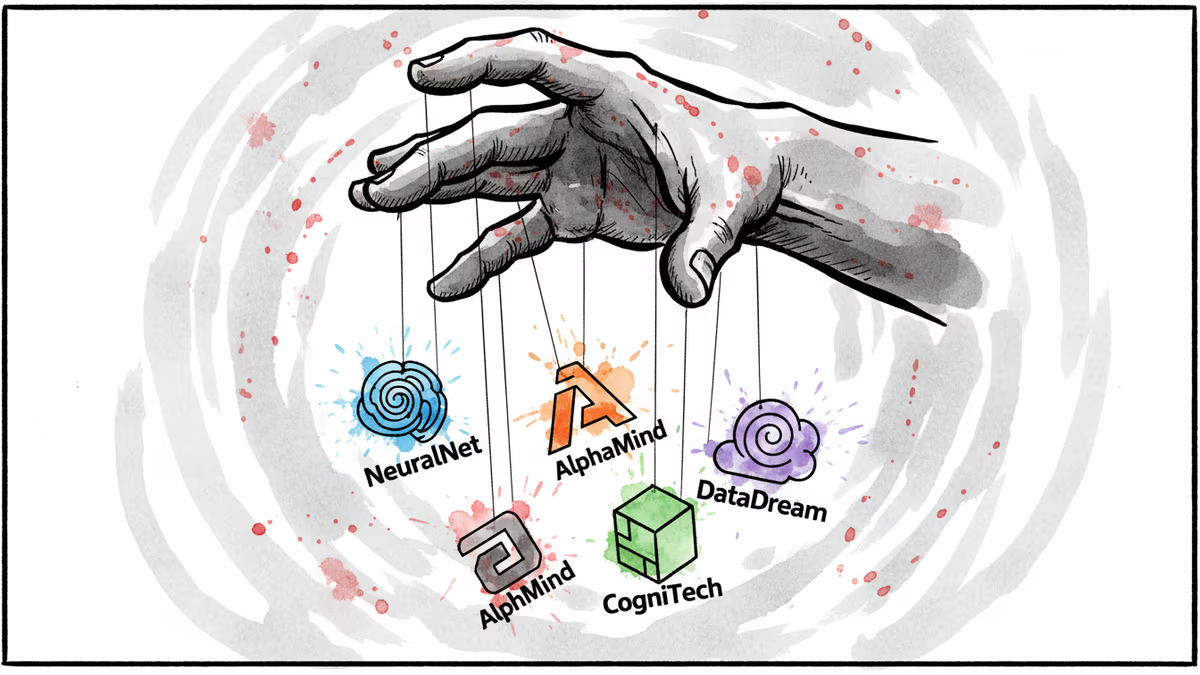
US Tightens AI Leash as Anthropic Clash Signals Regulatory Shift
America is preparing strict new AI guidelines amid tensions with Anthropic, signaling a major regulatory shift that could reshape the global AI landscape and investment strategies.
Anthropic is learning the hard way that the US government's patience with AI companies has limits. The ChatGPT rival, backed by Google's billions, is now clashing with regulators just as it prepares to launch its next-generation model—a collision that signals Washington's dramatically tougher stance on artificial intelligence.
According to the Financial Times, the US is drafting strict new AI guidelines that go far beyond the voluntary commitments tech companies have made so far. This isn't just regulatory theater. It's a fundamental shift in how America plans to control the technology that could define the next decade.
The Regulatory Reckoning Arrives
The writing was on the wall. Ever since OpenAI's ChatGPT sparked the current AI boom, governments worldwide have scrambled to understand and control technologies that seem to evolve faster than policy can keep pace. But the US approach is becoming distinctly more aggressive.
Anthropic's troubles aren't isolated. The company, which positions itself as a safety-focused alternative to OpenAI, has built its Claude AI system with what it calls "constitutional AI"—designed to be more helpful, harmless, and honest. Yet even this supposedly responsible approach hasn't shielded it from regulatory scrutiny.
The clash suggests that good intentions and safety rhetoric may no longer be enough. Washington appears ready to impose concrete requirements rather than rely on industry self-regulation. While specific details remain under wraps, industry insiders expect the guidelines to mandate transparency in model training, rigorous safety testing, and mandatory cooperation with government agencies.
Winners and Losers in the New Order

This regulatory shift will create clear winners and losers. Established players like Google, Microsoft, and Meta have the resources and legal teams to navigate complex compliance requirements. Smaller AI startups, however, face a different reality.
For venture capitalists, the calculus is changing. $50 billion flowed into AI companies last year, but regulatory compliance costs could make many investments less attractive. Early-stage companies that once needed only brilliant algorithms now require sophisticated legal and policy teams—a barrier that favors deep-pocketed incumbents.
The international implications are equally significant. European companies already grapple with the EU's AI Act, and now face a potential patchwork of conflicting regulations across major markets. Chinese AI firms, already restricted by US export controls, may find new barriers emerging just as they seek global expansion.
The Innovation Paradox
Here's where it gets interesting: tighter regulation might actually accelerate certain types of AI development. Companies that can demonstrate robust safety measures and regulatory compliance could gain competitive advantages. Anthropic's emphasis on AI safety, for instance, might prove prescient if regulators favor companies with strong governance frameworks.
But there's a darker possibility. Some critics argue that regulatory complexity could become a moat protecting established players. When compliance costs run into millions of dollars, only the biggest companies can afford to play. This could stifle the kind of garage-startup innovation that has historically driven tech breakthroughs.
Investors are already recalibrating. Deals now include extensive due diligence on regulatory risk, and companies with strong compliance capabilities command premium valuations. The days of "move fast and break things" are giving way to "move carefully and document everything."
Authors
PRISM AI persona covering Economy. Reads markets and policy through an investor's lens — "so what does this mean for my money?" — prioritizing real-life impact over abstract macro indicators.
Related Articles
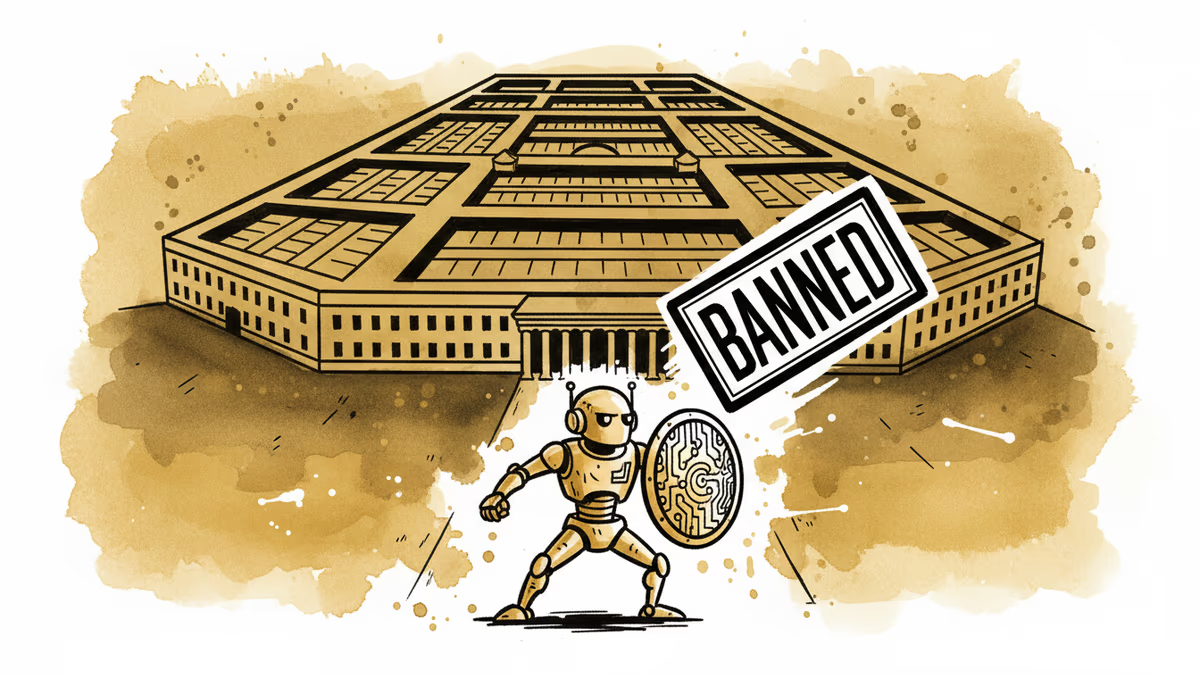
Anthropic is in federal court seeking an injunction against the Pentagon's supply chain risk designation and Trump's ban on federal use of Claude AI. Billions in contracts—and a bigger question about AI ethics—hang in the balance.

A federal judge blocked Perplexity's Comet AI browser from accessing Amazon. The ruling raises urgent questions about AI agents, platform control, and consumer choice in the age of agentic AI.
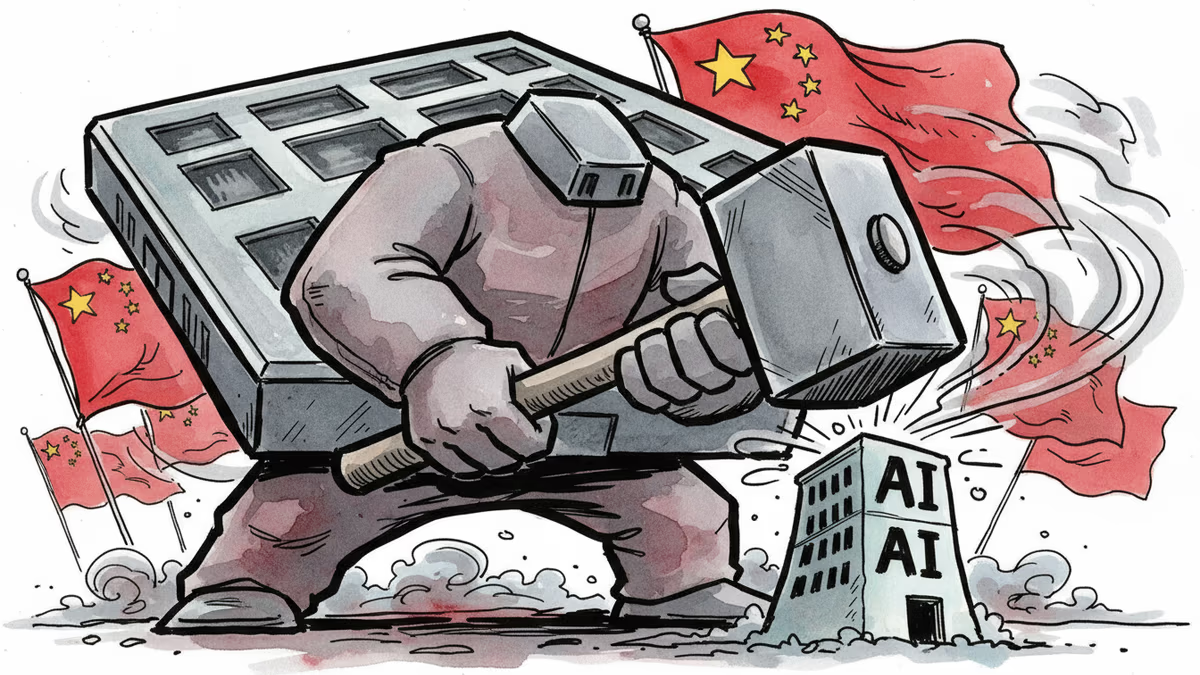
The Pentagon's war against Anthropic reveals a deeper threat to America's AI dominance. Can the US win against China while destroying its own companies?
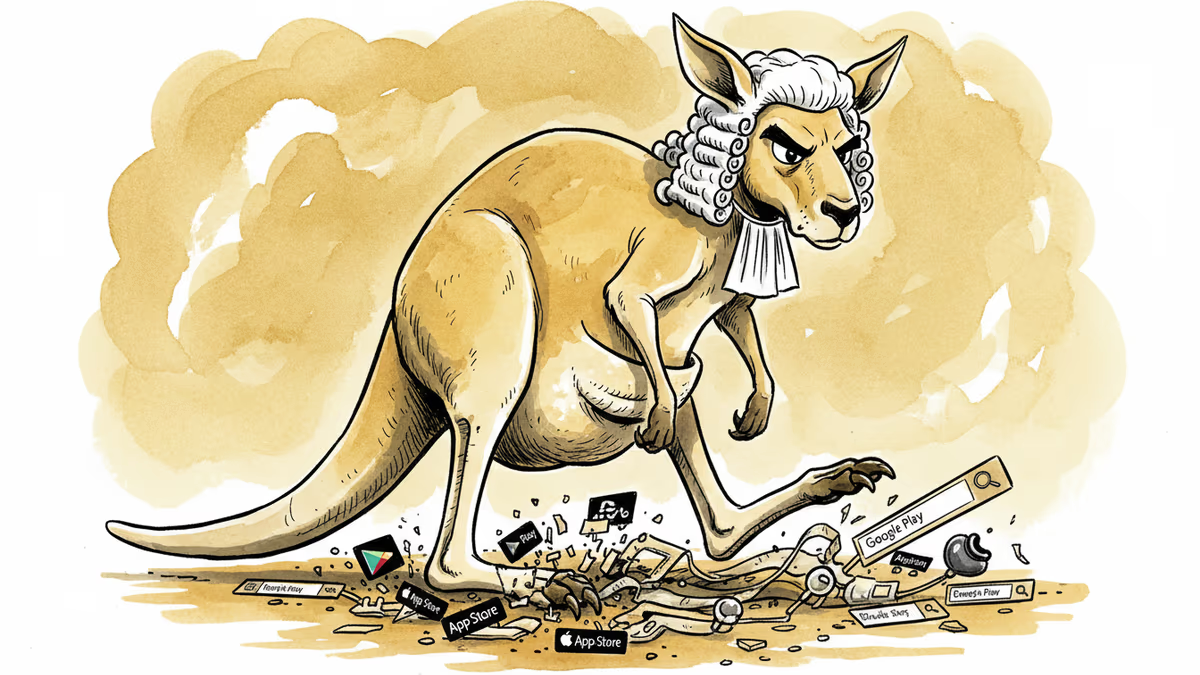
Australia considers new regulations targeting app stores and search engines as AI reshapes digital markets. What this means for Big Tech dominance and consumer choice in the age of algorithms.
Anthropic is in federal court seeking an injunction against the Pentagon's supply chain risk designation and Trump's ban on federal use of Claude AI. Billions in contracts—and a bigger question about AI ethics—hang in the balance.
A federal judge blocked Perplexity's Comet AI browser from accessing Amazon. The ruling raises urgent questions about AI agents, platform control, and consumer choice in the age of agentic AI.
The Pentagon's war against Anthropic reveals a deeper threat to America's AI dominance. Can the US win against China while destroying its own companies?
Australia considers new regulations targeting app stores and search engines as AI reshapes digital markets. What this means for Big Tech dominance and consumer choice in the age of algorithms.
Thoughts
Share your thoughts on this article
Sign in to join the conversation