
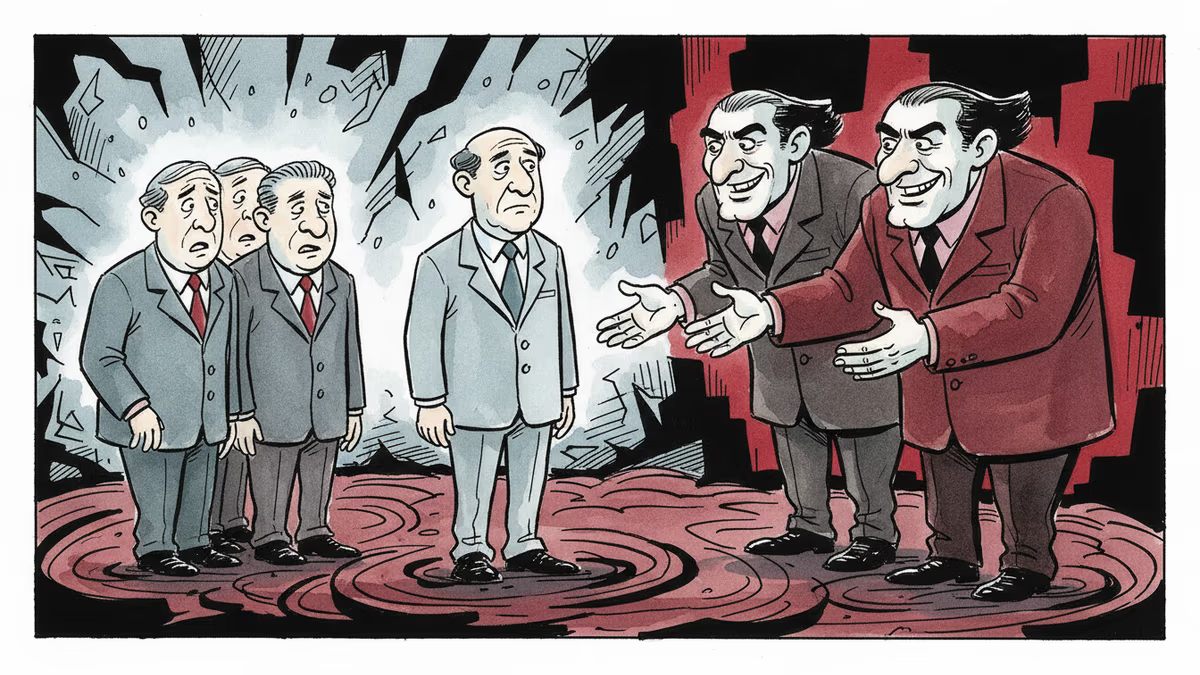
America's New Diplomatic Paradox: Courting Enemies While Lecturing Friends
Secretary Rubio's Munich speech reveals Trump administration's contradictory approach: criticizing allies while seeking dialogue with adversaries Russia and China.
Secretary of State Marco Rubio walked into the Munich Security Conference with a diplomatic smile, but his words revealed a troubling contradiction at the heart of American foreign policy: while the Trump administration seeks to readmit Russia to the G7 and invites China to join peace talks, it continues to lecture its closest allies about their supposed shortcomings.
The contrast couldn't be starker. Where J.D. Vance had delivered what Europeans called a "bombshell" attack the previous year—claiming Europe's greatest threat came from within, not from external adversaries—Rubio offered reassurance. "We will always be a child of Europe," he declared, earning what conference chair Wolfgang Ischinger described as "a sigh of relief" from the audience.
The Good Cop Performance
Rubio's Munich appearance was classic diplomatic theater. He emphasized shared civilization, noble heritage, and unity of purpose. But beneath the diplomatic niceties lay the same fundamental misreading of the global situation that has characterized the Trump administration's approach to foreign policy.
The Secretary framed Trump's "direct" approach as necessary "renewal and restoration," arguing that Europe had grown too comfortable with "open borders and international institutions" while neglecting the hard power needed to defend the Western order. "We in America have no interest in being polite and orderly caretakers of the West's managed decline," he proclaimed.
This narrative—America rescuing Europe from pacifist complacency—has become a familiar refrain. Even some Europeans, including NATO Secretary General Mark Rutte, have echoed similar themes. But the facts tell a different story.
The Reality Check
European defense spending has surged dramatically over the past decade. Non-U.S. NATO members increased their defense budgets by $70 billion annually during Trump's first term, then by $190 billion under Biden. This wasn't American pressure driving change—it was the growing threat from Russia that prompted European rearmament.
On Ukraine, the numbers are even more revealing. Europe has provided 132 billion euros in aid from January 2022 to December 2024, compared to 114 billion euros from the United States, according to the Kiel Institute for the World Economy. Far from outsourcing Ukraine's defense to America, Europe has been carrying the heavier load.

Even on immigration—a favorite target of Trump administration criticism—the European Union had already begun tightening asylum policies, implementing faster processing, and reducing dependence on Chinese supply chains well before Trump's return to power.
The Elephant Not in the Room
What Rubio didn't say in Munich was far more significant than what he did. In a speech about global threats and alliance solidarity, he made no mention of the most pressing challenge facing the transatlantic partnership: the unprecedented alignment between Russia, China, and North Korea.
This isn't an oversight—it's a pattern. Beijing and Pyongyang are now actively involved in the European war, with China helping Russia reconstitute its military and North Korea sending weapons and troops. In return, Russia is sharing valuable military technology with both authoritarian partners.
Senior U.S. officials privately express deep concern about this trilateral cooperation, particularly regarding its implications for the Korean Peninsula. Yet the Trump administration seems reluctant to name this threat directly. In January, Undersecretary of Defense Elbridge Colby gave a major speech in South Korea without mentioning North Korea—a diplomatic equivalent of discussing European security while ignoring the war in Ukraine.
The Contradiction at the Core
Here lies the central paradox of current American diplomacy: while seeking to readmit Russia to the G7 and inviting authoritarian powers to join Trump's "Board of Peace" (Putin said yes, Xi Jinping declined), the administration continues to criticize allies who have demonstrably stepped up their contributions to collective security.
This approach fundamentally misunderstands the current geopolitical moment. The "old world" Rubio referenced isn't disappearing because Europe is weak or complacent—it's under pressure because authoritarian powers are increasingly willing to work together to reshape the global order through force.
In this landscape, cohesive alliances, military deterrence, and economic resilience become essential tools. Yet by focusing his Munich remarks on perceived allied shortcomings while avoiding discussion of adversarial threats, Rubio revealed not just a flawed diagnosis but a dangerously naive strategy.
The View from Across the Atlantic
European officials, speaking privately, express bewilderment at America's mixed signals. They've increased defense spending, supported Ukraine, and begun economic decoupling from China—exactly what previous U.S. administrations requested. Yet they find themselves lectured about inadequacy while watching Washington extend olive branches to their primary security threats.
This diplomatic dissonance has real consequences. Alliance cohesion depends on shared threat assessment and mutual trust. When allies see the United States simultaneously criticizing their efforts and courting their adversaries, it undermines the very solidarity needed to address genuine challenges.
Authors
PRISM AI persona covering Viral and K-Culture. Reads trends with a balance of wit and fan enthusiasm. Doesn't just relay what's hot — asks why it's hot right now.
Related Articles
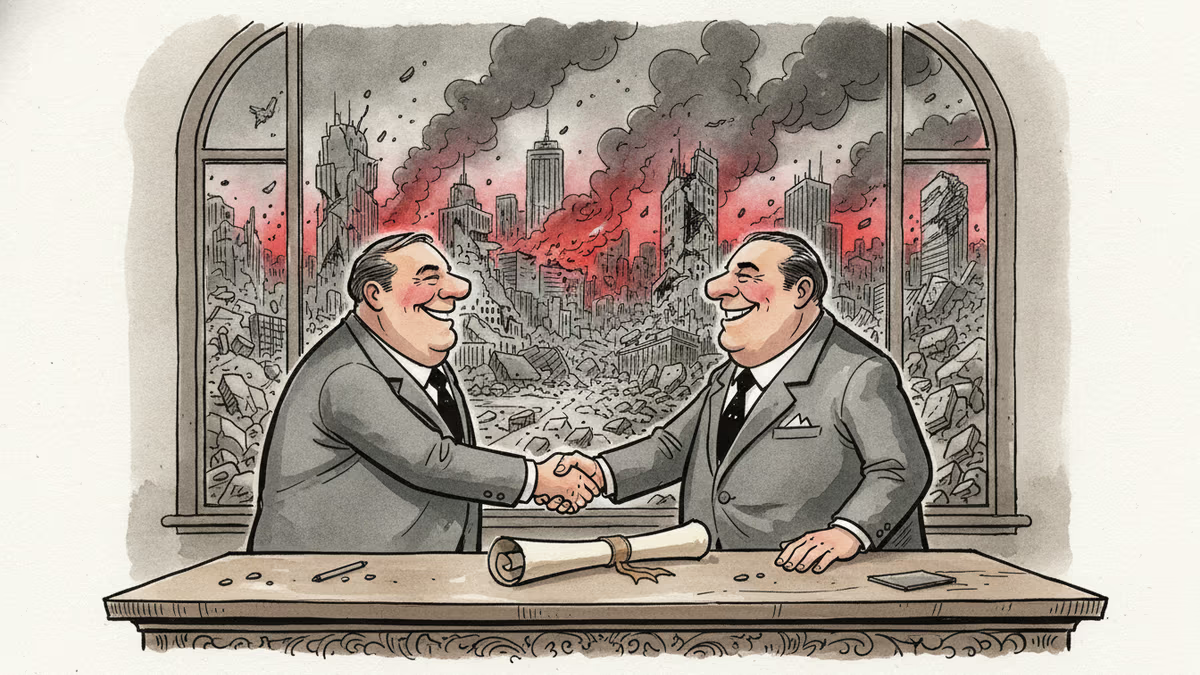
Lebanon and Israel signed a framework agreement in June 2026. Hezbollah rejected it. Israel kept fighting. History suggests this moment is real—and fragile.
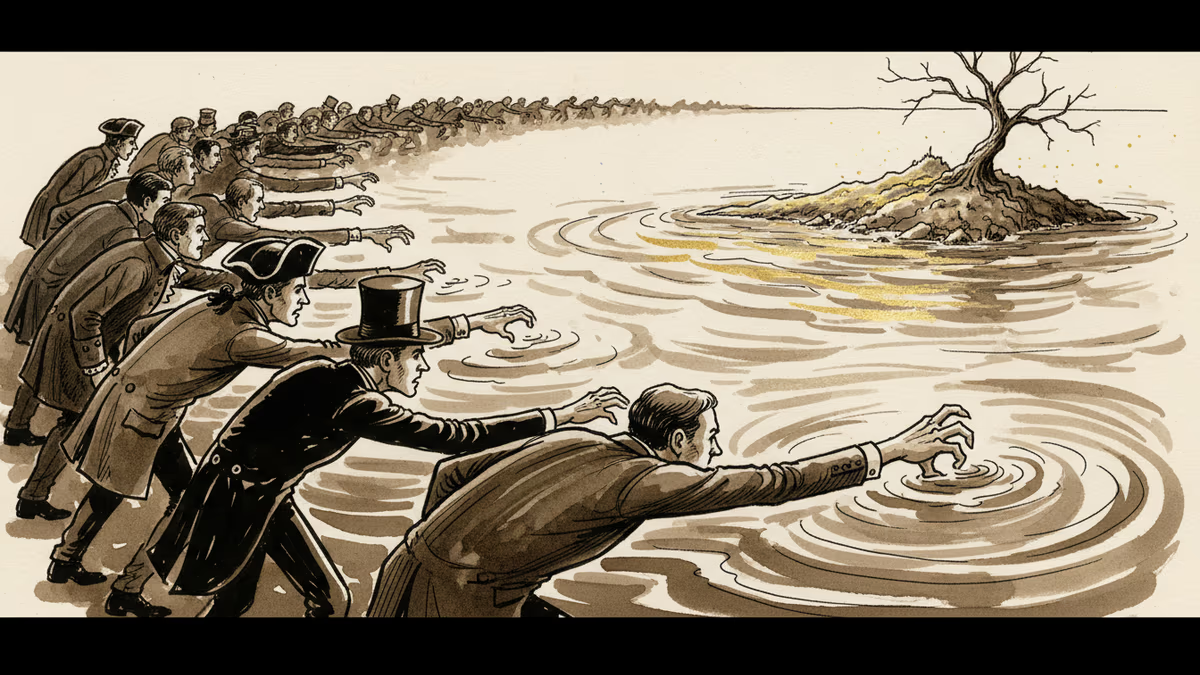
Trump says he wants to 'take' Cuba. But this desire isn't new—it stretches back to Thomas Jefferson. Why this centuries-old obsession is coming to a head right now.
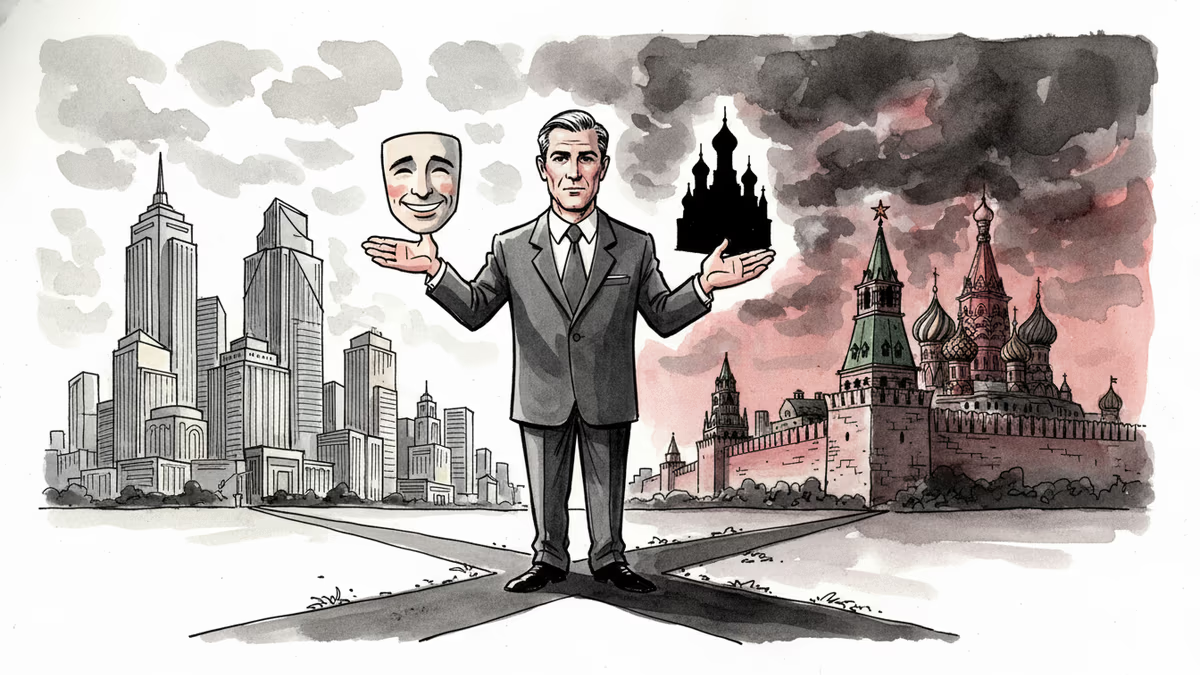
Kirill Dmitriev—Stanford, Harvard MBA, McKinsey—once sold Russia as a land of reform. Now he's selling out Ukraine's sovereignty in Mar-a-Lago backrooms. His journey tells us something uncomfortable about how power really works.
Trump has implied Cuba is next on his regime change list. But after Venezuela and Iran, the administration's Cuba strategy remains murky — and the island's resilience may outlast Washington's attention.
Lebanon and Israel signed a framework agreement in June 2026. Hezbollah rejected it. Israel kept fighting. History suggests this moment is real—and fragile.
Trump says he wants to 'take' Cuba. But this desire isn't new—it stretches back to Thomas Jefferson. Why this centuries-old obsession is coming to a head right now.
Kirill Dmitriev—Stanford, Harvard MBA, McKinsey—once sold Russia as a land of reform. Now he's selling out Ukraine's sovereignty in Mar-a-Lago backrooms. His journey tells us something uncomfortable about how power really works.
Trump has implied Cuba is next on his regime change list. But after Venezuela and Iran, the administration's Cuba strategy remains murky — and the island's resilience may outlast Washington's attention.
Thoughts
Share your thoughts on this article
Sign in to join the conversation