

AMD Brings AI to Desktop PCs, But Only for Businesses
AMD launches its first desktop AI processors, but they're exclusively for business PCs. What does this tell us about the real market for desktop AI?
18 Months Later, Desktop Finally Gets AI
AMD has been selling AI-powered laptop processors for a year and a half. Desktop users? They've been waiting. Until today.
The company just announced its first desktop AI processors—the Ryzen AI 400 series. These chips pack Zen 5 CPU cores, RDNA 3.5 graphics, and an NPU capable of 50 TOPS. They're AMD's first desktop chips to earn Microsoft's Copilot+ PC certification, unlocking Windows 11 features like Recall and Click to Do.
But here's the catch: you can't buy them.
Business Only, Consumers Need Not Apply
AMD isn't selling boxed versions to regular consumers. These processors are exclusively for business PCs, all bearing the "Ryzen Pro" branding that signals enterprise features.
The lineup includes:
- Ryzen AI 7 Pro 450G (65W)
- Ryzen AI 5 Pro 440G (65W)
- Ryzen AI 5 Pro 435G (65W)
- Low-power "GE" variants (35W)

All designed for IT departments managing fleets of computers. They're targeting businesses that need decent graphics without a dedicated GPU, plus local AI capabilities that don't require sending data to the cloud.
The Desktop AI Dilemma
AMD's business-first approach reveals something important: nobody's quite sure who needs desktop AI yet.
Gamers already have powerful graphics cards that handle AI workloads just fine. Casual users spend most of their time browsing and working with documents—hardly demanding AI tasks. Content creators and professionals often prefer cloud-based solutions with more processing power.
But businesses face different constraints. Security policies often prohibit sending sensitive data to external AI services. Having employees run document analysis, translation, or image generation locally could be valuable. Plus, the IT management features make deployment easier.
Reading the Market Tea Leaves
This launch strategy tells us AMD sees enterprise adoption driving desktop AI demand, not consumer enthusiasm. It's a conservative bet that makes financial sense.
Business customers pay premium prices for stability and support. They buy in volume. They upgrade on predictable cycles. Consumer desktop sales, meanwhile, have been declining for years as laptops and mobile devices take over.
The question is whether AMD is being pragmatic or missing an opportunity. Are there compelling consumer use cases for desktop AI that we haven't discovered yet?
Authors
Related Articles

AMD's MI325X matches or beats Nvidia on memory and bandwidth — yet Nvidia's 86-92% share holds. The real moat is CUDA, 20 years in the making. Part 1 of 4.
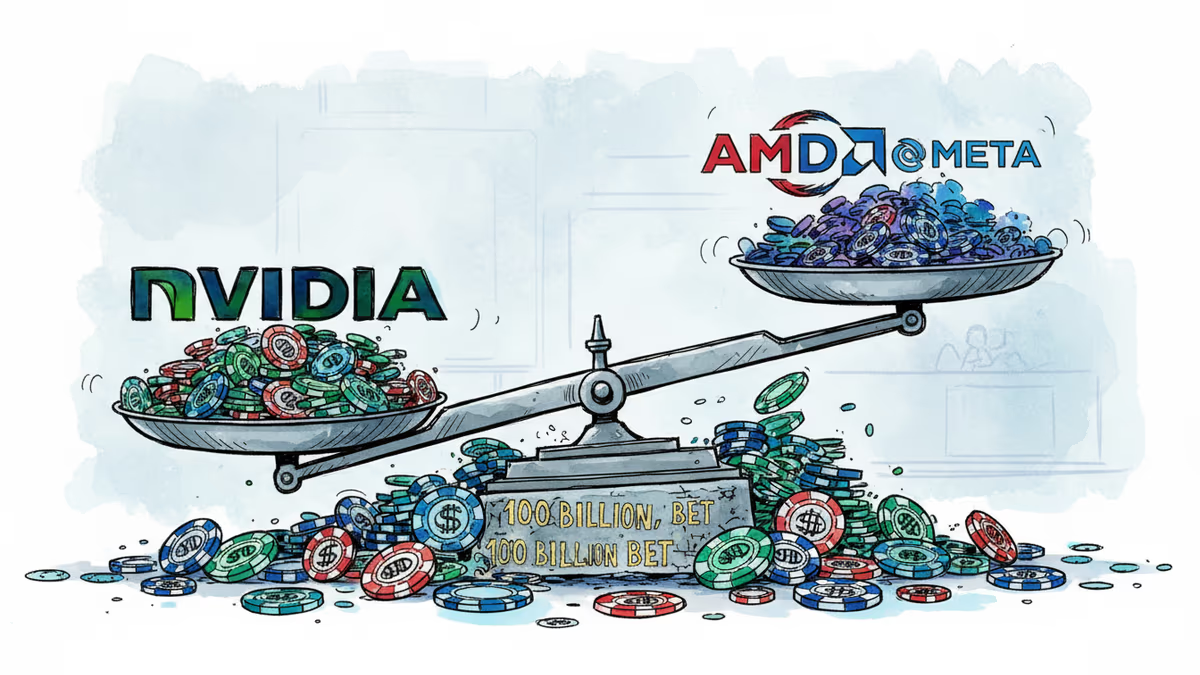
Meta's massive AMD partnership with equity warrants reveals a strategic shift in AI chip markets. Is this the beginning of the end for Nvidia's dominance?
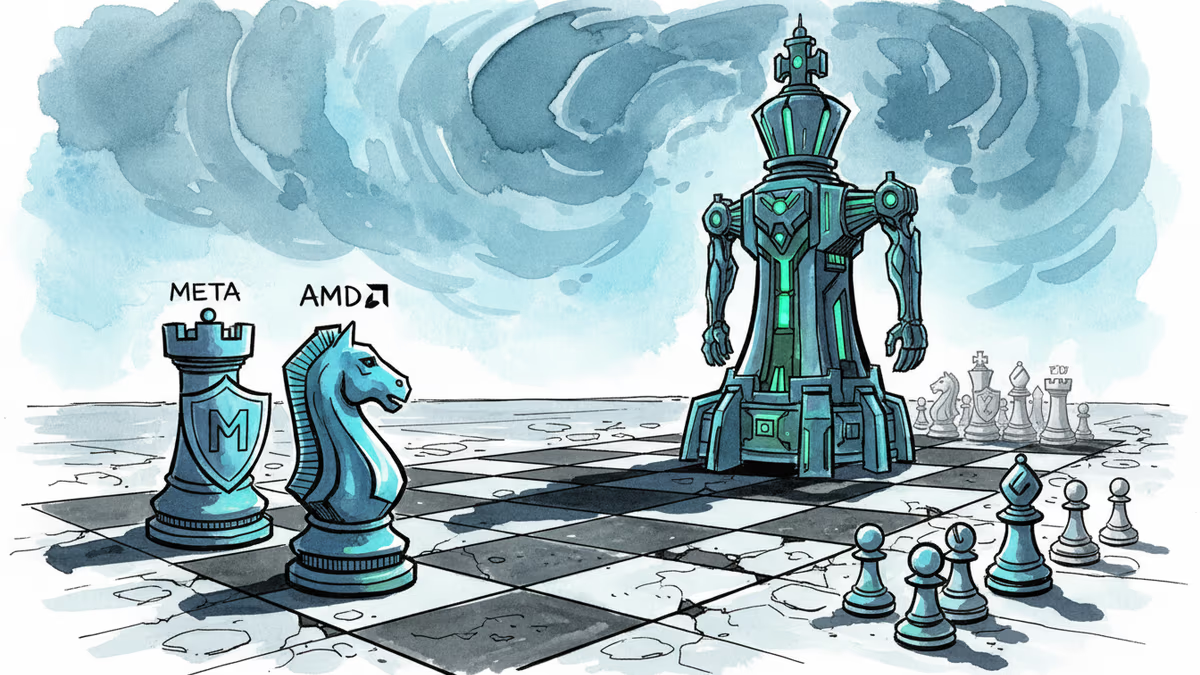
Meta strikes multi-billion dollar chip deal with AMD, considering 10% stake. Will this challenge Nvidia's AI dominance and reshape the semiconductor landscape?

HP's ZBook Ultra G1a packs AMD's latest APU and OLED display into a business laptop that challenges traditional categories. The line between work and performance is blurring.
AMD's MI325X matches or beats Nvidia on memory and bandwidth — yet Nvidia's 86-92% share holds. The real moat is CUDA, 20 years in the making. Part 1 of 4.
Meta's massive AMD partnership with equity warrants reveals a strategic shift in AI chip markets. Is this the beginning of the end for Nvidia's dominance?
Meta strikes multi-billion dollar chip deal with AMD, considering 10% stake. Will this challenge Nvidia's AI dominance and reshape the semiconductor landscape?
HP's ZBook Ultra G1a packs AMD's latest APU and OLED display into a business laptop that challenges traditional categories. The line between work and performance is blurring.
Thoughts
Share your thoughts on this article
Sign in to join the conversation