
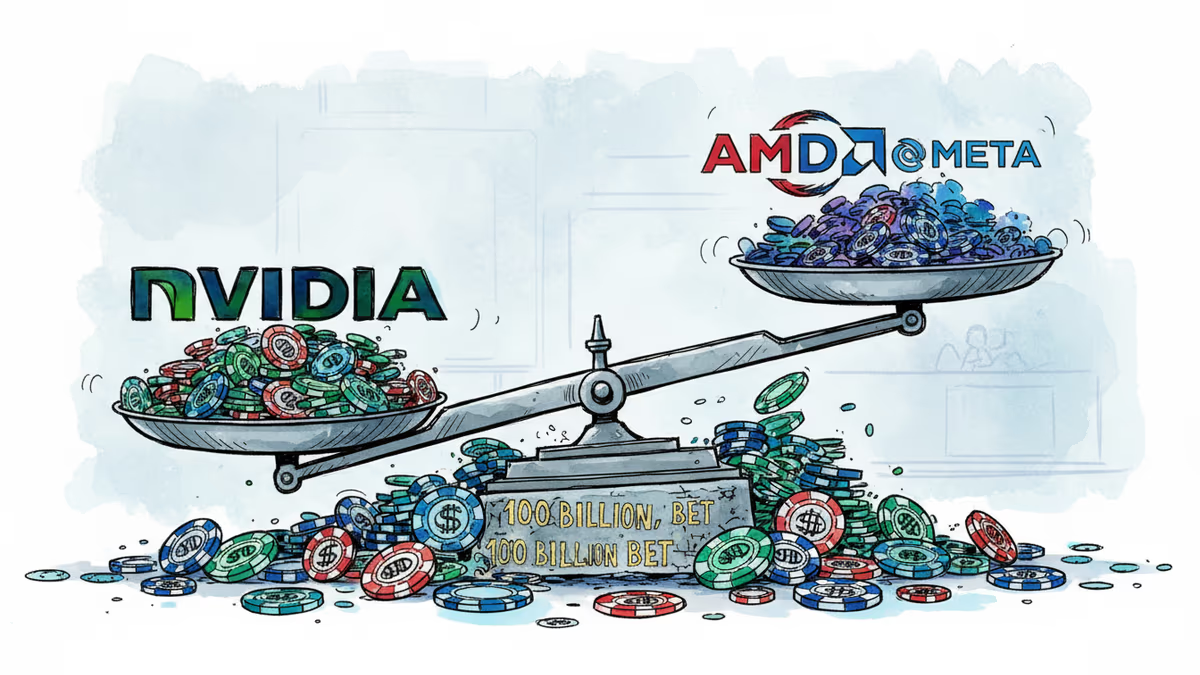
Meta's $100B AMD Bet Signals the End of Nvidia's Monopoly
Meta's massive AMD partnership with equity warrants reveals a strategic shift in AI chip markets. Is this the beginning of the end for Nvidia's dominance?
$100 billion. That's how much Meta is willing to bet on AMD over the next few years. But this isn't just a chip purchase—it's a declaration of independence from Nvidia's stranglehold on AI computing. The deal includes warrants for up to 160 million AMD shares, potentially giving Meta a 10% stake in the company.
The Cracks in Nvidia's Armor
For years, Nvidia has commanded premium prices for its AI chips, riding the GPU wave that powered the machine learning boom. But the game is changing. As AI workloads shift from training massive models to running inference at scale, CPUs are becoming increasingly important—and that's where AMD has been quietly building strength.
"The CPU market is absolutely on fire," AMD CEO Lisa Su declared during Tuesday's investor briefing. "There is significant demand... as inferencing scales, as agentic AI scales." The numbers back her up: CPUs are more efficient for inference tasks, easier to scale, and don't lock companies into Nvidia's ecosystem.
Meta's Strategic Gamble

This partnership comes just weeks after Meta signed another multiyear deal with Nvidia for millions of CPUs and GPUs. The message is clear: diversification over dependence. With Meta planning to spend at least $60 billion on U.S. data centers and AI infrastructure, and $135 billion in capital expenditure projected for 2026 alone, supplier diversity isn't just smart—it's essential.
But Meta's AMD bet comes with strings attached. The warrant structure means Meta only gets its full 10% stake if AMD's stock hits $600—more than triple its current $196.60 price. Meta isn't just buying chips; it's betting on AMD's future success.
The Ripple Effects
This deal signals a broader industry shift. OpenAI struck a similar equity-for-chips arrangement with AMD last October. The pattern is clear: AI companies are willing to trade ownership stakes for supply chain security and competitive pricing.
For investors, this raises questions about Nvidia's pricing power. If Meta—one of the biggest AI spenders—is actively diversifying away from Nvidia, how sustainable are those premium margins? For AMD, it's validation that their CPU-focused strategy is paying off in the AI era.
Meanwhile, Meta's own chip development efforts have reportedly hit delays, making these external partnerships even more critical for CEO Mark Zuckerberg's vision of "personal superintelligence."
Authors
Related Articles
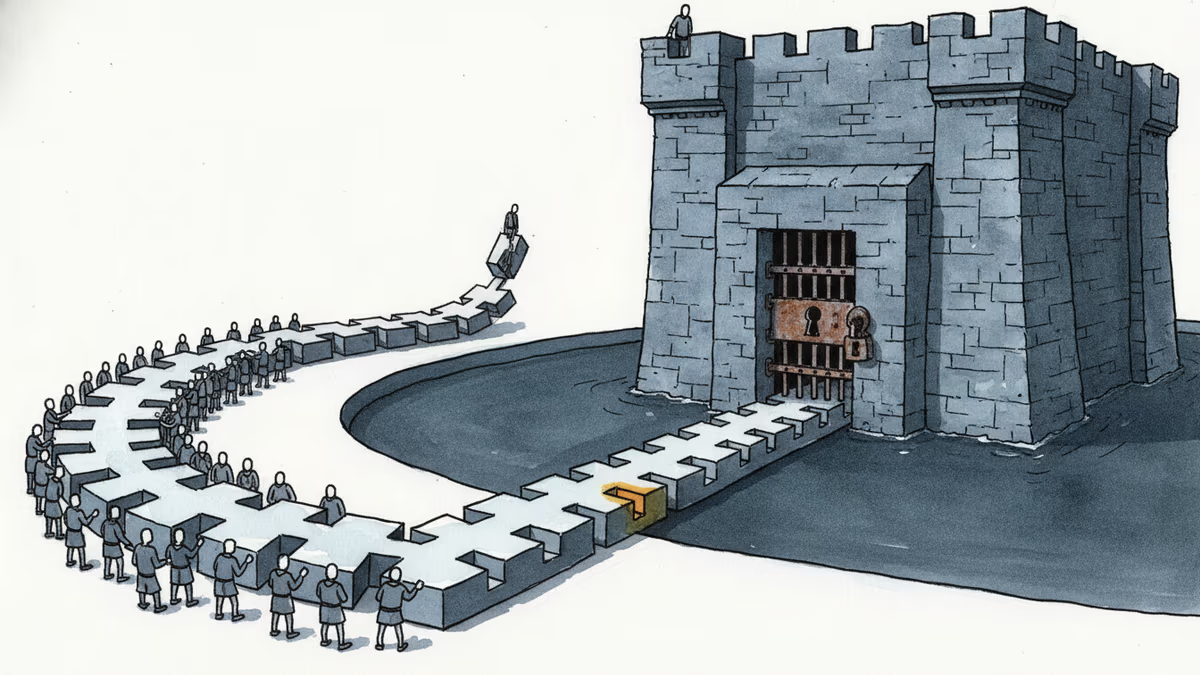
Nvidia shipped roughly a billion RISC-V cores in 2024, then announced it would run CUDA on the open standard. We break down how royalty-free instruction sets and open software stacks are trying to route around CUDA's lock-in. Part 2 of the Semiconductor Sovereignty series.
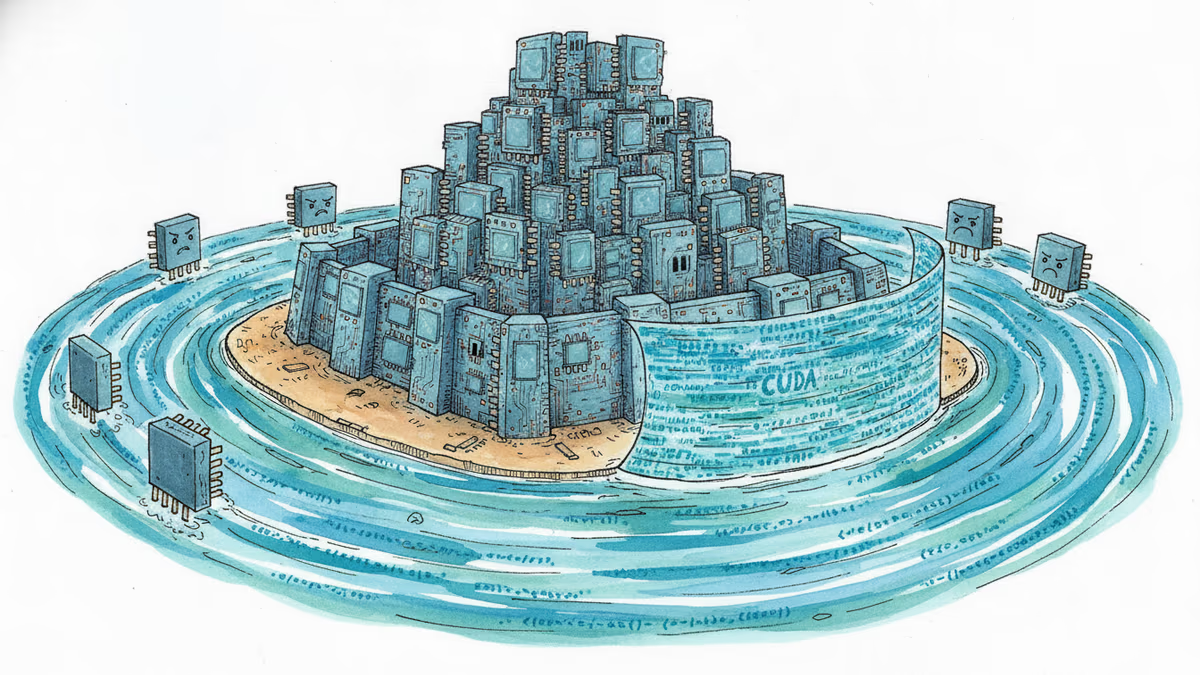
AMD's MI325X matches or beats Nvidia on memory and bandwidth — yet Nvidia's 86-92% share holds. The real moat is CUDA, 20 years in the making. Part 1 of 4.

A law firm marketing itself on AI-powered legal success submitted fake citations in a federal appeal. Now its lawyers face sanctions — and the broader AI legal industry faces a credibility crisis.
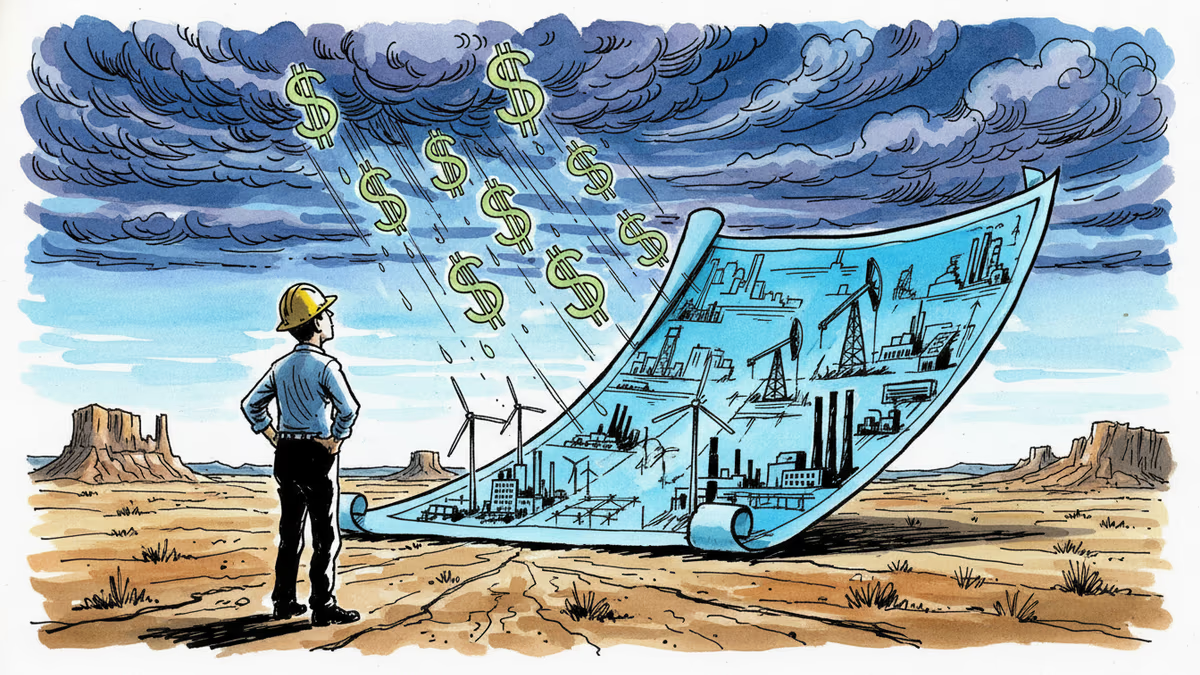
SpaceX plans to invest at least $55 billion in a Texas AI chip factory called Terafab, with total costs potentially reaching $119 billion. We break down what's real, what's at stake, and who wins or loses.
Nvidia shipped roughly a billion RISC-V cores in 2024, then announced it would run CUDA on the open standard. We break down how royalty-free instruction sets and open software stacks are trying to route around CUDA's lock-in. Part 2 of the Semiconductor Sovereignty series.
AMD's MI325X matches or beats Nvidia on memory and bandwidth — yet Nvidia's 86-92% share holds. The real moat is CUDA, 20 years in the making. Part 1 of 4.
A law firm marketing itself on AI-powered legal success submitted fake citations in a federal appeal. Now its lawyers face sanctions — and the broader AI legal industry faces a credibility crisis.
SpaceX plans to invest at least $55 billion in a Texas AI chip factory called Terafab, with total costs potentially reaching $119 billion. We break down what's real, what's at stake, and who wins or loses.
Thoughts
Share your thoughts on this article
Sign in to join the conversation