

When Business Laptops Outgun Gaming Rigs
HP's ZBook Ultra G1a packs AMD's latest APU and OLED display into a business laptop that challenges traditional categories. The line between work and performance is blurring.
32GB RAM and OLED in a 'Business' Laptop?
Most corporate laptops are beige boxes of mediocrity—bulk-purchased afterthoughts that IT departments foist upon employees. But HP's ZBook Ultra G1a breaks that mold. At first glance, it's another gray business machine. Look closer at the specs: AMD Strix Halo APU, generous RAM, OLED display, and—rare for AMD laptops—Thunderbolt 4 ports.
This isn't your typical enterprise drone. It's a sleeper that could embarrass many gaming laptops while maintaining corporate respectability.
The Workstation Identity Crisis
The ZBook Ultra G1a embodies a fundamental shift in what "business computing" means. Traditional workstations served a clear purpose: CAD work, 3D rendering, video editing. They were expensive, specialized tools for specific professionals.
Today's reality is messier. Marketing teams edit 4K videos. Analysts run AI models. Even accountants need multiple 4K monitors and real-time collaboration tools. The AMD Ryzen AI Max chipset recognizes this evolution, integrating CPU, GPU, and NPU (Neural Processing Unit) to handle modern workflows that blur the line between "regular work" and "creative work."
The result? A laptop that can run Blender renders during lunch breaks and Excel spreadsheets with equal competence.
The Corporate Buying Revolution

Enterprise IT departments are rethinking their laptop strategies. The old model—cheapest possible hardware that meets minimum requirements—is breaking down. Remote work exposed the productivity gap between employees with decent hardware and those stuck with corporate hand-me-downs.
Companies like Microsoft and Google already equip employees with high-end MacBooks or Surface devices. Traditional industries are catching up, driven by competitive pressure and employee demands. The ZBook Ultra represents this shift: enterprise-grade security and management wrapped around consumer-grade performance.
But there's a catch. These machines cost significantly more than basic business laptops. IT departments must justify spending $2,500-$4,000 per employee instead of the usual $800-$1,200.
The Enthusiast Dilemma
For individual buyers, workstation laptops present an interesting value proposition. They often pack more raw computing power than gaming laptops at similar price points, but without the RGB lighting and aggressive styling that screams "gamer" in professional settings.
The trade-offs are real. Gaming laptops prioritize frame rates and flashy aesthetics. Workstations focus on color accuracy, build quality, and long-term reliability. The ZBook's OLED display, for instance, isn't just pretty—it's calibrated for professional color work.
Yet many potential buyers hesitate. Why pay workstation premiums when a gaming laptop offers similar performance? The answer often comes down to context: where and how you'll use the machine.
The AMD Factor
AMD's presence in this space is noteworthy. For years, Intel dominated business laptops through corporate relationships and platform stability. AMD's Strix Halo APUs change the equation by offering integrated graphics performance that rivals discrete GPUs while maintaining the power efficiency businesses demand.
This matters for remote workers juggling video calls, content creation, and traditional productivity apps. The integrated NPU also future-proofs these machines for AI workloads that are becoming standard in business software.
Authors
Related Articles

AMD's MI325X matches or beats Nvidia on memory and bandwidth — yet Nvidia's 86-92% share holds. The real moat is CUDA, 20 years in the making. Part 1 of 4.

AMD launches its first desktop AI processors, but they're exclusively for business PCs. What does this tell us about the real market for desktop AI?
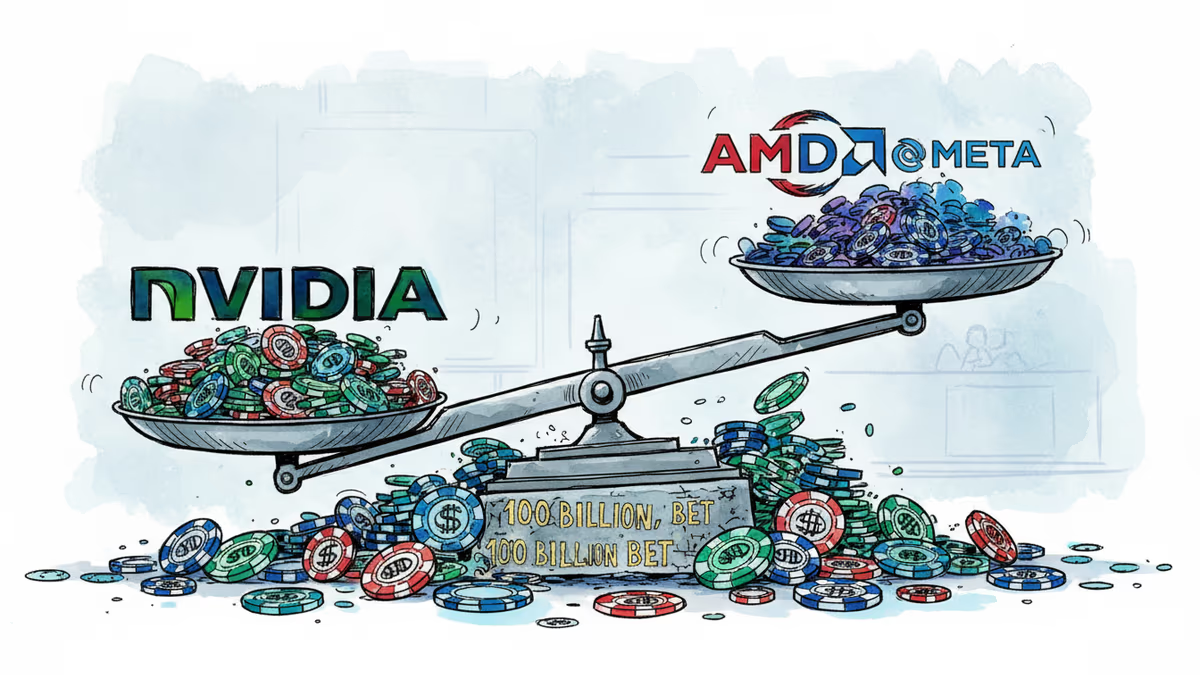
Meta's massive AMD partnership with equity warrants reveals a strategic shift in AI chip markets. Is this the beginning of the end for Nvidia's dominance?
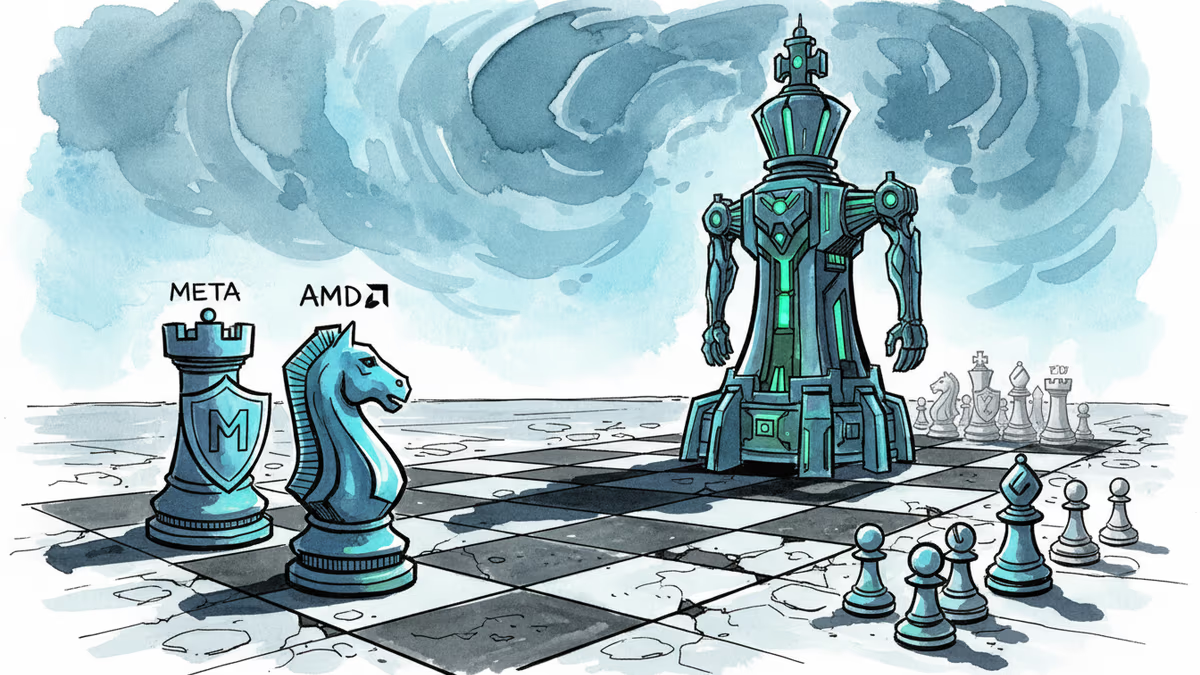
Meta strikes multi-billion dollar chip deal with AMD, considering 10% stake. Will this challenge Nvidia's AI dominance and reshape the semiconductor landscape?
AMD's MI325X matches or beats Nvidia on memory and bandwidth — yet Nvidia's 86-92% share holds. The real moat is CUDA, 20 years in the making. Part 1 of 4.
AMD launches its first desktop AI processors, but they're exclusively for business PCs. What does this tell us about the real market for desktop AI?
Meta's massive AMD partnership with equity warrants reveals a strategic shift in AI chip markets. Is this the beginning of the end for Nvidia's dominance?
Meta strikes multi-billion dollar chip deal with AMD, considering 10% stake. Will this challenge Nvidia's AI dominance and reshape the semiconductor landscape?
Thoughts
Share your thoughts on this article
Sign in to join the conversation